The AIA is pleased to present its 130th National Lecture Program, running from September 2025 through April 2026. Top scholars from North America and abroad are presenting a wide range of current archaeological topics and, as always, lectures are free to the public—everyone is welcome to attend.
Monthly (September-April) evening virtual presentations.
In-person (mostly) lectures at AIA Societies.
Available to AIA Local Societies, you can find more information about upcoming locally arranged lectures on your Society’s page.
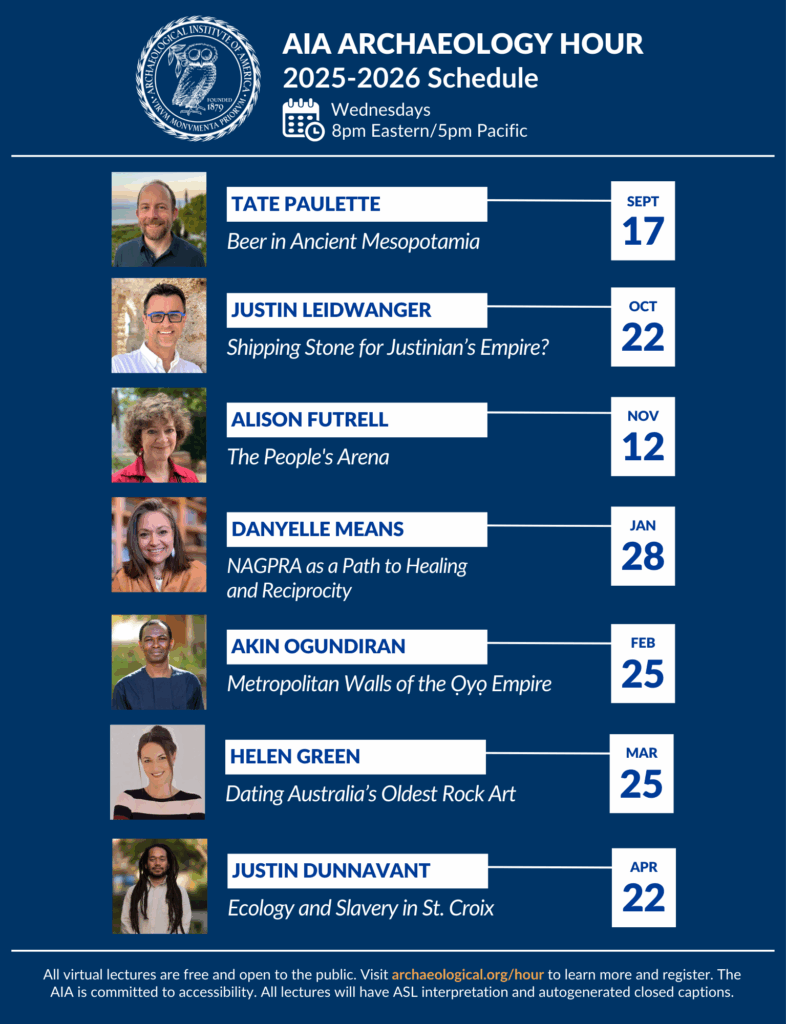
See National Lecture Program ad with schedules for AIA Archaeology Hour.
You can contact the AIA Lecture Coordinator at Lectures@archaeological.org for more information. We hope you are able to attend an AIA lecture, in whatever format it is, soon!
If you would like to nominate a colleague to lecture in the AIA’s National Lecture Program, please fill out this form. Be sure to alert your colleague that you have nominated them, as they will have to fill out their own form indicating their willingness to lecture for the AIA.
Learn how to support our lectures and other programs.
Click here to access forms/slides for AIA National Lecturers.