July 15, 2025
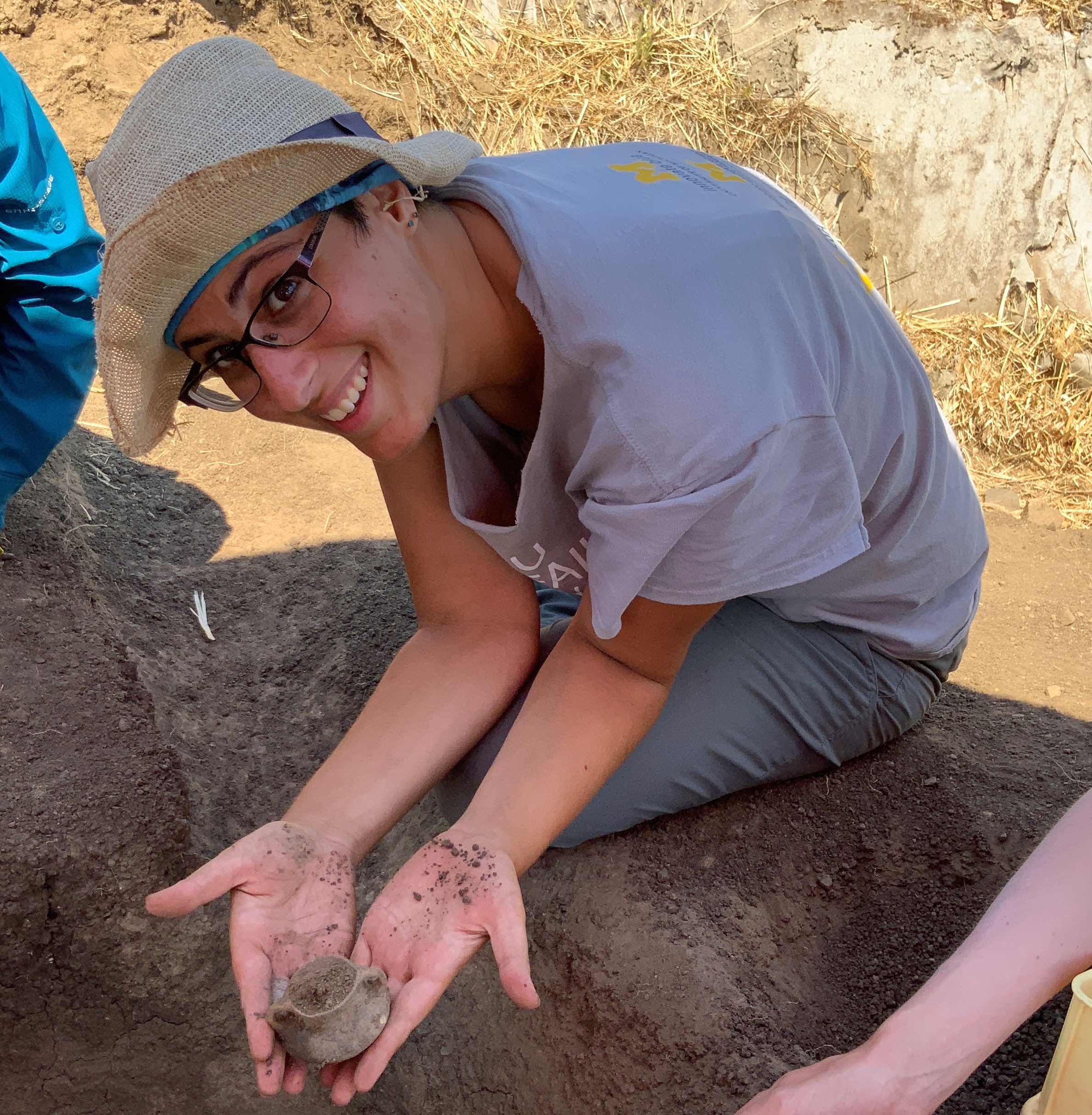
To celebrate our 2025 Grant recipients, we contacted our winners to learn about their projects and and share their unique experiences in the world of archaeology. We’re thrilled to announce Sheira Cohen, the winner of the prestigious Kathleen and David Boochever Endowment for Fieldwork and Scientific Analyses Grant for 2025!
Kathleen and David Boochever Endowment for Fieldwork and Scientific Analyses Grant Winner: Sheira Cohen (University of North Carolina at Chapel Hill)
With funding from the Kathleen and David Boochever Endowment for Fieldwork and Scientific Analyses, Dr. Sheira Cohen seeks to better understand the pastoral communities of Pre-Roman Italy. Her project, “Shepherds at the Crossroads: Stable Isotope Analysis and Seasonal Mobility at Frosinone, Italy,” will utilize biochemical analysis of the teeth of ancient humans from central Italy to map the journeys that individuals took during their lifetimes. Studying these movements, such as shepherding livestock to greener pastures each summer or moving to another region entirely, will provide a glimpse into how ordinary people responded to both their economic realities and their settled, urban neighbors. Until now, the pastoral economy and the movement of pastoralists have remained an enigma in early Italian studies due to limited archaeological evidence. Dr. Cohen’s project will breakdown the long-held distinctions between mobile and sedentary ways of life while demonstrating how the constant relatively small moves across the landscape that characterized pre-Roman Italy’s economy played an important role in connecting nearby communities.
How did you get your start in archaeology?
I got my start in archaeology in university in New Zealand. Because there isn’t much Mediterranean archaeology taught in New Zealand, my first experiences were with indigenous Maori sites, both classes and my first field school, and I was taught in the Anthropological tradition. This is where I first got interested in mobility and migration, which is a big topic in the archaeology of the Pacific. My experience with Rome and the ancient world was through history classes primarily. I saved up all my bar-tending wages to come to Italy and go to the Gabii Project fieldschool in my second year. I was lucky enough to have professors who encouraged me to explore material culture even though it wasn’t their specialty.
Where in the world has archaeology brought you (fieldwork, research, conference travel, etc.)?
Archaeology brought me to the US for graduate school at University of Michigan. I have done all my fieldwork in Italy since then, mostly at Gabii. Conferences have let me travel all around the US and to Europe, as well as provide an excuse to head back to Australia and New Zealand occasionally. For this project, sample collection gave me an opportunity to get up into the wildernesses of the Apennines and Lepini mountains in central Italy – climbing mountains to find uncontaminated plant samples – and that has been incredibly fun as I would never have explored some of these tiny towns and dirt roads otherwise.
What is one of the most memorable things that has happened to you in the field?
My very first fieldschool was on an island off the coast of New Zealand and a tropical storm came through – we had to rush to finish documenting the section of one of our pits while the rain was already falling. When we came back the next day, tents were up in trees and the whole pit was full to the brim with water and collapsing so it was a good thing we got there in time.
More recently, every infant burial I have been involved in excavating has been a surreal experience – in one case, it was a total shock as we thought it was a fortification ditch right up until we found the first grave-good. In hindsight, a deep rectangular pit was a bit of a dead giveaway.
How has the AIA contributed to your success/professional goals?
Getting to see so many successful archaeologists and hear about such diverse research projects has always been very inspiring for me and something I never had much exposure to before I came to the US. There is always such interesting methodological approaches being deployed elsewhere in the Mediterranean and the AIA is a great place to see it all in one place. It is a good reminder of why I love doing what I do, especially in the middle of the winter when the field seems so far away. This grant is a huge honor – there aren’t a lot of funding sources like the Boochever and I’m excited to see how the results of my analyses stack up against my expectations (even if I’m wrong!).
Learn more about what Fellowship and Grant opportunities are available through the AIA.