December 11, 2025
Congratulations to all the individuals, projects, and publications honored with AIA Awards! These outstanding contributors to our field will be formally celebrated at the 2026 AIA Awards Ceremony during the 127th Annual Meeting. We’ve reached out to this year’s winners to learn more about the discoveries that drove their projects, the experiences that shaped their journeys, and the inspirations that sparked their passion for archaeology. Stay tuned as we share their stories!
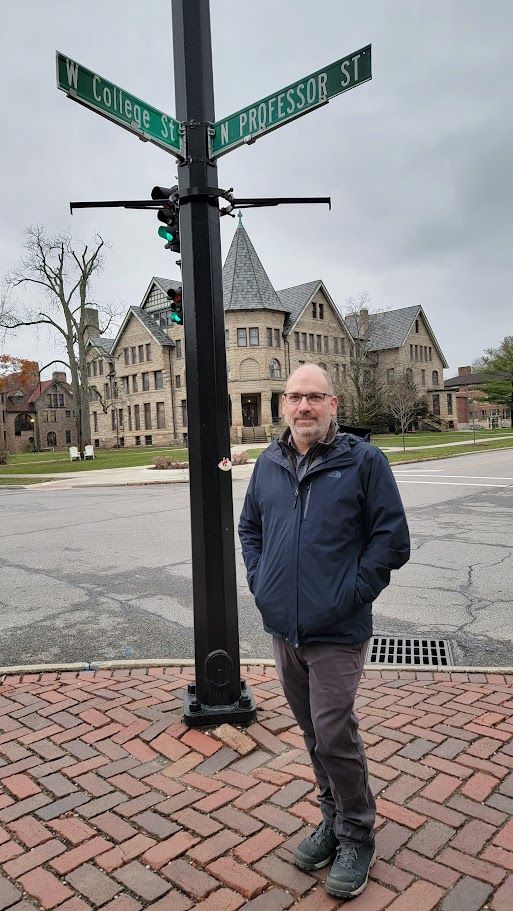
Scott Pike (Willamette University)
Award: Excellence in Undergraduate Teaching Award
What drew you to archaeology?
As far back as I can remember, I have been captivated by the history of the environments around me. My first school was housed in an old mansion, and I was fascinated by hidden stairwells, tucked-away closets, and clues to where walls once stood. Even then, I sensed that the spaces I moved through were shaped by decisions and activities that happened before my time. When I traveled with my parents, I was the child always looking down at the ground, finding pennies, studying stones, and peering into any pit or cut in the landscape to see what lay beneath the surface. I began to understand that what I saw above was connected to what had occurred below. At the time, I had no idea that these small curiosities were leading me toward archaeology. It was not until college that I realized my lifelong interest in how past human actions shape the physical world was something I could study, pursue, and eventually build a career around.
Tell us about your history with the AIA:
I first joined the AIA while conducting research at the newly founded Wiener Laboratory at the American School of Classical Studies at Athens. Many of my colleagues were attending the annual meetings during the holiday break, and it was not long before I began participating as well. A fun piece of history is that, as a graduate student, I received the inaugural best poster paper prize, which made those early meetings especially meaningful. Since then, I have maintained continuous membership in the AIA and have been active in its local societies. I previously served as an officer in the Lynchburg, Virginia Society and now have the privilege of serving as President of the Salem Society.
What’s next for you professionally?
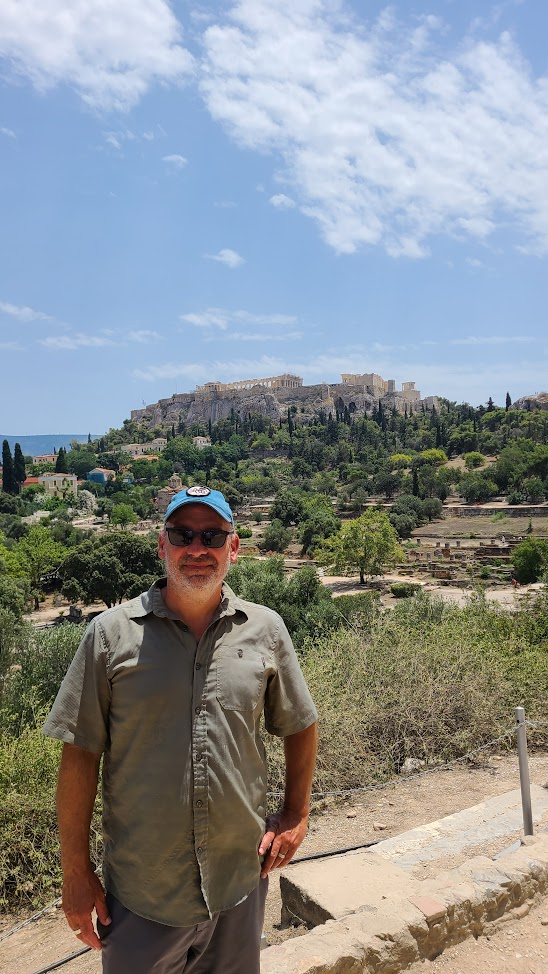
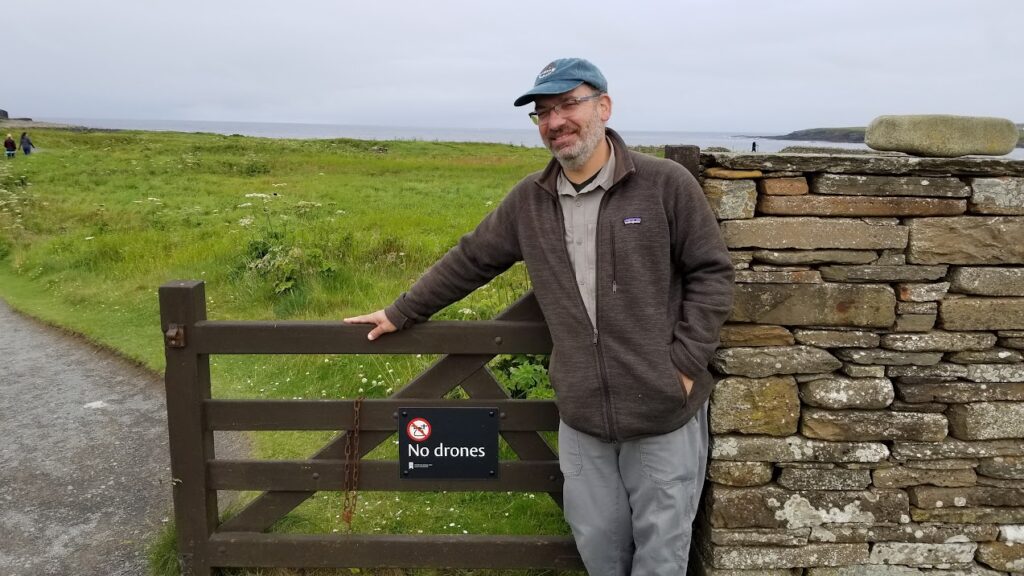
In recent years I have developed a program that uses unmanned aerial systems to monitor and evaluate cultural landscapes. This work has taken me from my home state of Oregon to Orkney, Scotland and to several regions in Greece. In Greece, I have used drones to identify and document the extent of ancient marble quarries, creating new ways to understand extraction practices and their long-term impacts on the landscape. Looking ahead, I am eager to expand this work to assess how wildfires and other climate-related environmental challenges are affecting cultural resources. The sensors I use range from structure from motion photogrammetry cameras to multispectral and thermal systems and to LiDAR. I am excited to continue integrating these tools to support archaeological research, cultural resource management and student training.
What is your favorite class to teach?
My favorite class to teach is my upper-level Aerial Methods in Field Research. This course gives archaeology and environmental science students hands-on experience with the full workflow of unmanned aerial systems. I train them to fly drones safely and effectively, introduce them to sensors such as photogrammetry cameras, multispectral and thermal systems and LiDAR, and guide them through the software tools needed to process and interpret the data. Students also complete small projects with each sensor, which allows them to explore the strengths and limitations of different technologies in real research contexts. It is a class where students gain both technical skills and a deeper understanding of how these methods can transform archaeological and environmental research, which makes teaching it especially rewarding.
What is your favorite moment as a teacher?
My favorite moments as a teacher come when I see students take the next step in their professional lives. Watching them earn jobs, internships or spots in graduate programs is incredibly rewarding because it shows how their hard work and growing confidence are opening new opportunities. I am also especially proud of the experiences students gained through my NSF IRES sponsored research in Greece. Taking three-cohorts of students to Attica, Naxos and Tinos for six-weeks to monitor and record ancient marble quarries has been transformative for them and for me. Seeing students apply their skills in the field, contribute to original research and realize that they belong in this discipline remains one of the most meaningful parts of my career.
Can you share a funny anecdote from your years in teaching?
One of my long-standing course policies is that if a phone rings during class, I will race to answer it. One day in lab a student left her phone on the desk, and her mother called, so I picked up. We had a lively, entirely FERPA-safe conversation about her daughter’s favorite foods and movies, the family pets, and her younger brother’s recent soccer win. When she found out I’m an Atlanta Braves fan, she even passed the phone to her husband so we could talk baseball. I have not heard a phone ring in class since.
Questions? Learn more about AIA Awards here or reach out to awards@archaeological.org