May 21, 2026
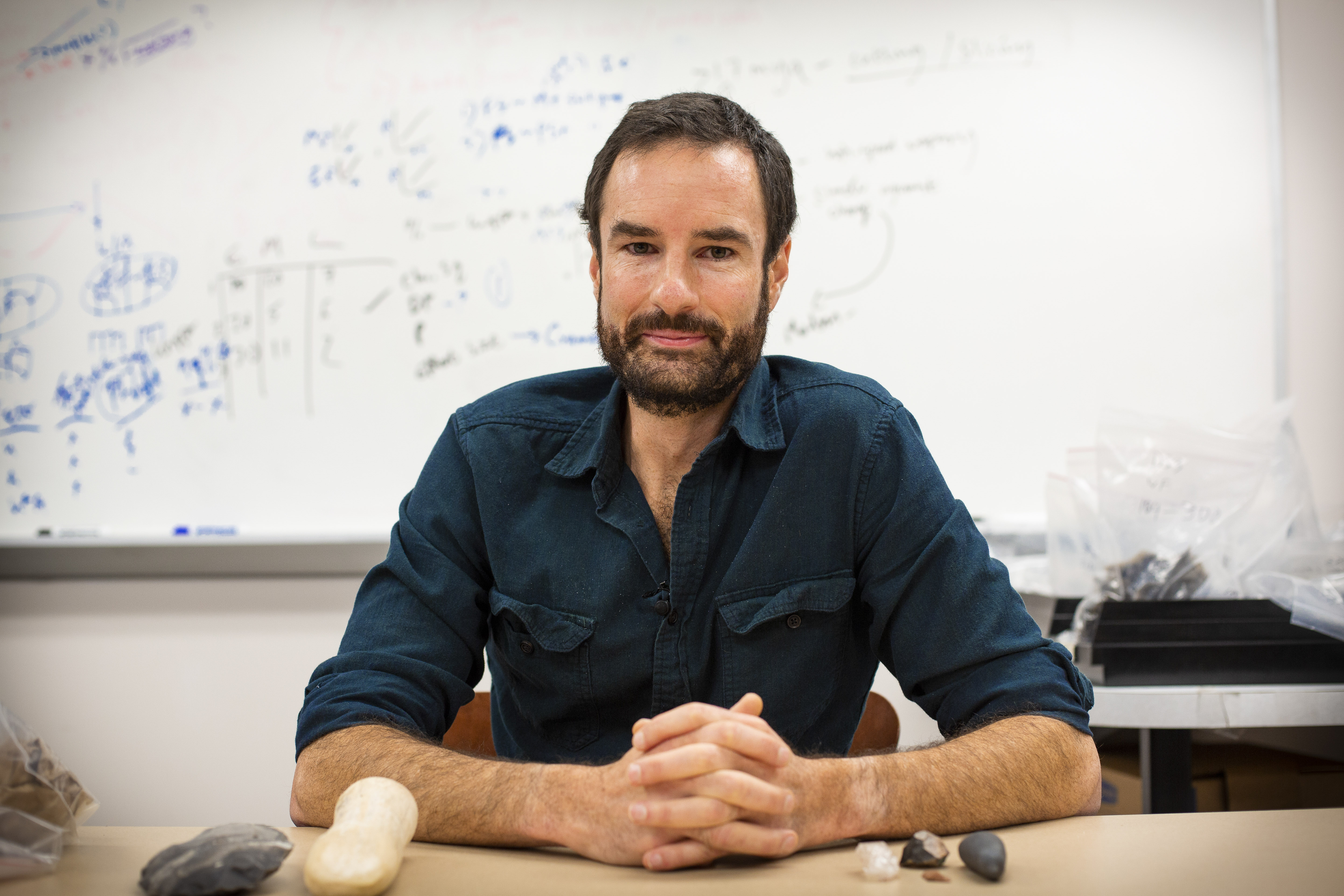
To celebrate our 2026 Research Grant recipients, we connected with this year’s awardees to learn more about their projects and the unique paths that led them into the field of archaeology.
We’re thrilled to introduce Dominique Langis-Barsetti, one of three recipients of the prestigious 2026 Kathleen and David Boochever Endowment for Fieldwork and Scientific Analyses Grant!
Justin Pargeter (New York University)
Tell us about your project:
Around 2,000 years ago, herding arrived in southern Africa — one of the last places on Earth where people made the shift from hunting and gathering to food production.
But why then, and why there?
This project investigates whether a drying climate was the trigger, testing the idea that increasingly arid conditions between 4,000 and 2,000 years ago made forager life less predictable and opened new pathways for livestock to spread southward.
To find out, we’re pairing two innovative environmental archives: nitrogen isotopes from rock hyrax middens (layered deposits of ancient animal urine that act like natural climate recorders) and ostrich eggshells excavated from Boomplaas Cave in South Africa’s Cango Valley, which preserve a local snapshot of the same conditions right where the first sheep appeared in the archaeological record.
Together, these proxies let us ask a simple but powerful question: Did the climate change before the herders arrived, or after, or not at all?
The answer matters beyond archaeology because it speaks to how human societies respond to environmental stress, whether innovation spreads because of pressure or despite it, and what early pastoralism did to the landscapes that inherited it, lessons that feel urgently relevant as communities today navigate an increasingly unstable climate.
How did you get your start in archaeology?
I began my career as an undergraduate student at the University of the Witwatersrand in Johannesburg, South Africa (where I am from). One of my most influential mentors, Prof. Lyn Wadley, offered me the opportunity to join her excavations at Sibhudu Cave (a famous Stone Age cave site in South Africa’s KwaZulu-Natal Province), where I learned to excavate complex Stone Age cave sediments, how to operate as a member of a scientific research team, and how to formulate research questions and execute them. Prof. Wadley later helped me design an experimental archaeology research project for my undergraduate Honors Thesis, in which I tested whether stone segments (semi-circular stone implements blunted on one edge) could have been used as hunting-weapon inserts. That project led me to love experimental archaeology and eventually to incorporate experimental and field research into my archaeological career.
Where in the world has archaeology brought you (fieldwork, research, conference travel, etc.)?
After finishing my undergraduate studies in Johannesburg, I traveled to a small southern African country, Malawi, where I helped colleagues develop the first archaeology degree program in the country’s history. Along the way, I had the opportunity to visit archaeological sites throughout southern Africa, to work with an incredibly diverse range of students and researchers, and to meet the lady who would eventually become my wife! Since then, I have worked primarily at archaeological sites across South Africa, but I have had the opportunity to excavate in France and to visit archaeological sites in Spain, Germany, England, Scotland, Senegal, and Egypt.
What is one of the most memorable things that has happened to you in the field?
I am now the director of excavations at Boomplaas Cave in South Africa, a limestone cave with an>80,000-year record of human occupation. One of the greatest achievements (and most memorable) is being able to use the site and the generous resources of various funding agencies to help advance the careers of students from very diverse backgrounds. Every excavation season I get to spend with these students makes me so grateful for the work I do and the support I receive.
How has the AIA contributed to your success/professional goals?
The AIA has helped our team generate pilot data to test an important research question regarding the role of environmental variability in the spread of early herding into southern Africa. These funds are critical to building larger, more complex research programs on this topic.
Learn more about what Fellowship opportunities are available through the AIA.