July 29, 2026
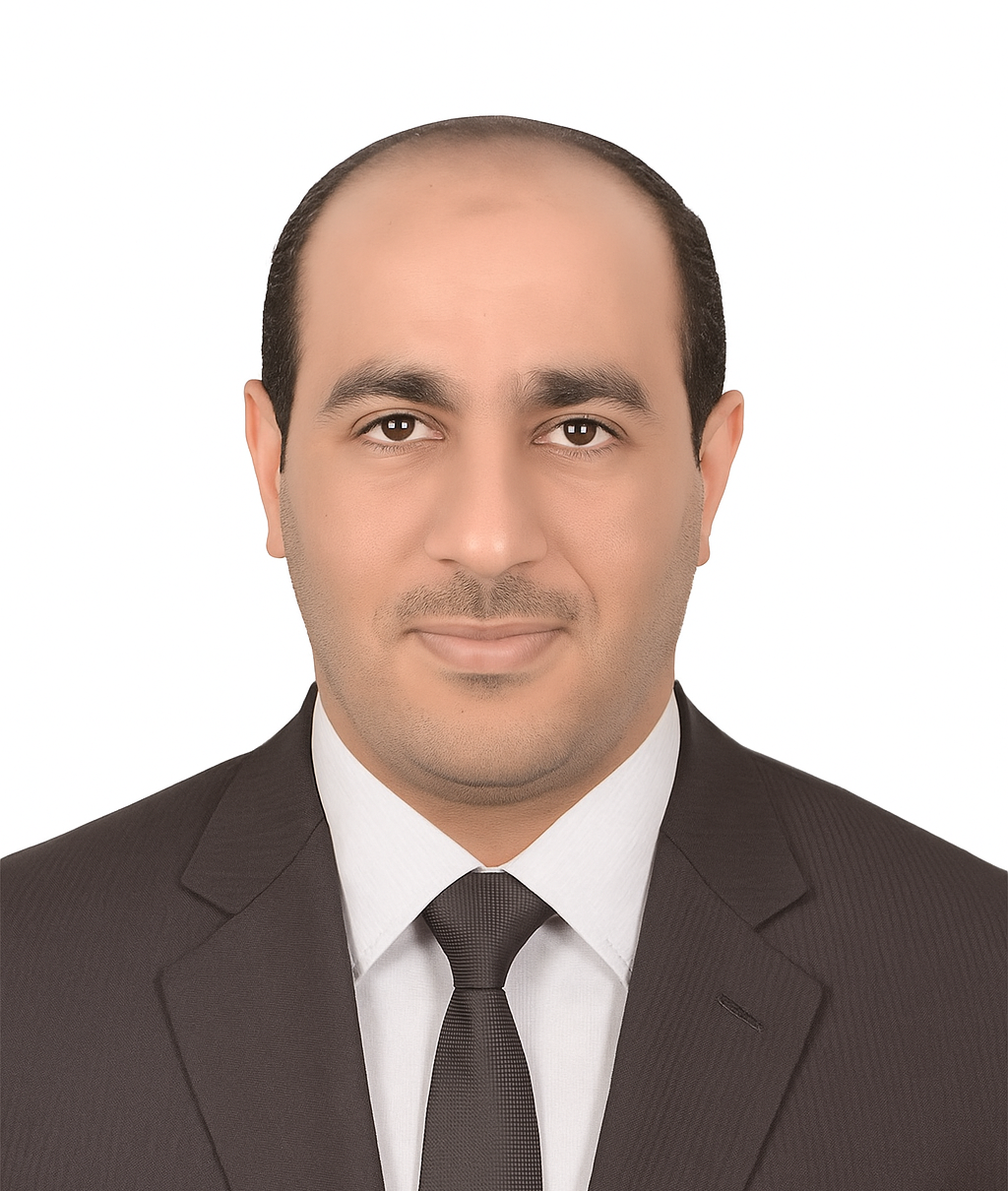
To celebrate our 2026 Fellowship recipients, we connected with this year’s awardees to learn more about their projects and the unique paths that led them into the field of archaeology.
We’re thrilled to introduce Mohamed Enab, recipient of the prestigious 2026 Khaled al-Asaad Memorial Fellowship!
Mohamed Enab (Faculty of Archaeology- Fayoum University)
Tell us about your project:
My project, “Building the Shore: Ottoman Coastal Architecture and the Making of Harbor Space at al-Mukhā (Mocha), Yemen,” explores how architecture, infrastructure, and maritime trade shaped one of the early modern world’s most important port cities. Rather than viewing Mocha simply as a center of the coffee trade, the project examines how Ottoman authorities, local communities, merchants, and sailors collectively transformed the shoreline into a functioning harbor space.
By studying coastal buildings, defensive structures, warehouses, landing areas, and patterns of urban development, I aim to show that the harbor was not merely a natural setting but a carefully constructed social, political, and commercial environment. The project also seeks to document and raise awareness of Yemen’s architectural and maritime heritage, much of which remains understudied, vulnerable, and at risk of further deterioration. By producing a clearer historical record of Mocha’s coastal landscape, the research can support future efforts in heritage conservation, maintenance, and responsible restoration.
Ultimately, the project offers a new way of understanding how port cities connected local histories to wider networks across the Red Sea and Indian Ocean, while also contributing to the long-term preservation of Yemen’s cultural heritage.
How did you get your start in archaeology?
I began my journey in archaeology as an undergraduate student of Islamic archaeology at Fayoum University. During my studies, I became particularly interested in the way historic buildings can be read as material records of society, politics, belief, and cultural exchange. This early fascination with the built environment gradually developed into a deeper academic commitment to Islamic architecture and the histories preserved within it.
That interest became more focused during my doctoral research on the surviving Ottoman mosques of Sana’a, Yemen. Through archaeological investigation, architectural analysis, and comparative historical study, I began to understand these monuments not simply as buildings but as complex historical sources that reveal patterns of authority, religious life, local identity, and cross-cultural interaction.
Conducting fieldwork in Yemen and spending an academic period at Sana’a University was a formative experience in my development as an archaeologist. It allowed me to engage directly with Yemen’s exceptionally rich architectural heritage and, at the same time, made me increasingly aware of its fragility. Since then, Yemen has remained central to my scholarly work, particularly the documentation, interpretation, and preservation of its Islamic and Ottoman architectural heritage. This commitment has become even more urgent in light of the continuing political tensions and armed conflicts, which have exposed monuments, historic cities, and cultural landscapes to damage, neglect, deterioration, and irreversible loss.
For me, archaeology began with a fascination for what historic architecture can tell us about the past, but it has grown into a broader intellectual and ethical responsibility: to recover the histories embedded in Yemen’s built environment and to contribute, through careful research and documentation, to the protection and long-term preservation of its cultural heritage.
Where in the world has archaeology brought you (fieldwork, research, conference travel, etc.)?
Archaeology has taken me from my academic base in Egypt to a wide range of research and scholarly settings across the Middle East, Europe, and the United States. The most formative destination has been Yemen, where I spent an academic period at Sana’a University while conducting fieldwork for my doctoral research on Ottoman mosques in Sana’a. That experience gave me direct access to Yemen’s architectural landscape and established the long-term research commitment that continues to shape my work today.
Since then, my research on Islamic architecture, Yemeni heritage, inscriptions, and coastal cultural exchange has brought me to conferences and academic gatherings in Abu Dhabi, Beirut, Leeds, London, and Lyon. These occasions have allowed me to present work on Yemeni coastal architecture, Ottoman buildings, inscriptions, and the impact of conflict on cultural heritage.
Archaeology has also taken me to the United States, including Houston, Santa Fe, and Connecticut, where I have participated in international conferences on Islamic art, earthen architecture, conflict archaeology, and heritage preservation.
Each of these journeys has broadened my perspective, but Yemen remains at the heart of my scholarly path. Traveling for archaeology has enabled me not only to study monuments and landscapes but also to build international conversations around the urgent need to document, understand, and preserve vulnerable cultural heritage.
What is one of the most memorable things that has happened to you in the field?
One of the most memorable moments in my fieldwork was seeing the surviving Ottoman mosques of Sana’a in person for the first time during my doctoral research. Before arriving in Yemen, I had approached these buildings through historical sources, plans, and comparative architectural studies. Standing inside them, however, transformed my understanding. Their spatial organization, inscriptions, materials, and relationship to the surrounding city revealed layers of history that could never be fully understood from documents alone. My fieldwork period at Sana’a University became a defining stage in that research.
What made the experience especially powerful was the realization that I was documenting not only important examples of Ottoman and Yemeni architecture, but also a living and increasingly vulnerable cultural heritage. In the context of Yemen’s continuing tensions and conflict, that moment gave my work a deeper sense of responsibility. It reinforced my belief that archaeological research should not end with analysis and publication; it should also contribute to documenting, safeguarding, and sustaining cultural heritage for future generations.
How has the AIA contributed to your success/professional goals?
The AIA has contributed significantly to my professional development by recognizing and supporting a research agenda that brings together Islamic archaeology, architectural history, maritime landscapes, and heritage preservation. At this stage of my career, this support is especially meaningful because it enables me to advance my project on the Ottoman coastal architecture of al-Mukhā while building on my broader scholarly commitment to the archaeology and architectural heritage of Yemen.
The fellowship provides not only essential financial support but also intellectual visibility and access to a wider international community of archaeologists. It will help me deepen my archival and field-based research, strengthen the documentation of a historically important yet understudied harbor landscape, and communicate the significance of Yemeni heritage to both academic and public audiences. This is particularly important at a time when conflict, instability, and deterioration continue to threaten monuments and historic environments across Yemen.
More broadly, the AIA’s support advances my long-term goal of producing research that is academically rigorous, internationally engaged, and practically relevant to the preservation of vulnerable cultural heritage. It also strengthens my ability to build future collaborations and bring greater scholarly attention to Yemen’s place within the interconnected histories of the Red Sea and Indian Ocean. I am deeply grateful to the AIA for this generous support and sincerely appreciate its confidence in my project and its commitment to advancing archaeological research and heritage preservation.
Learn more about what Fellowship and Grant opportunities are available through the AIA.