May 13, 2026
To celebrate our 2026 Fellowship recipients, we connected with this year’s awardees to learn more about their projects and the unique paths that led them into the field of archaeology.
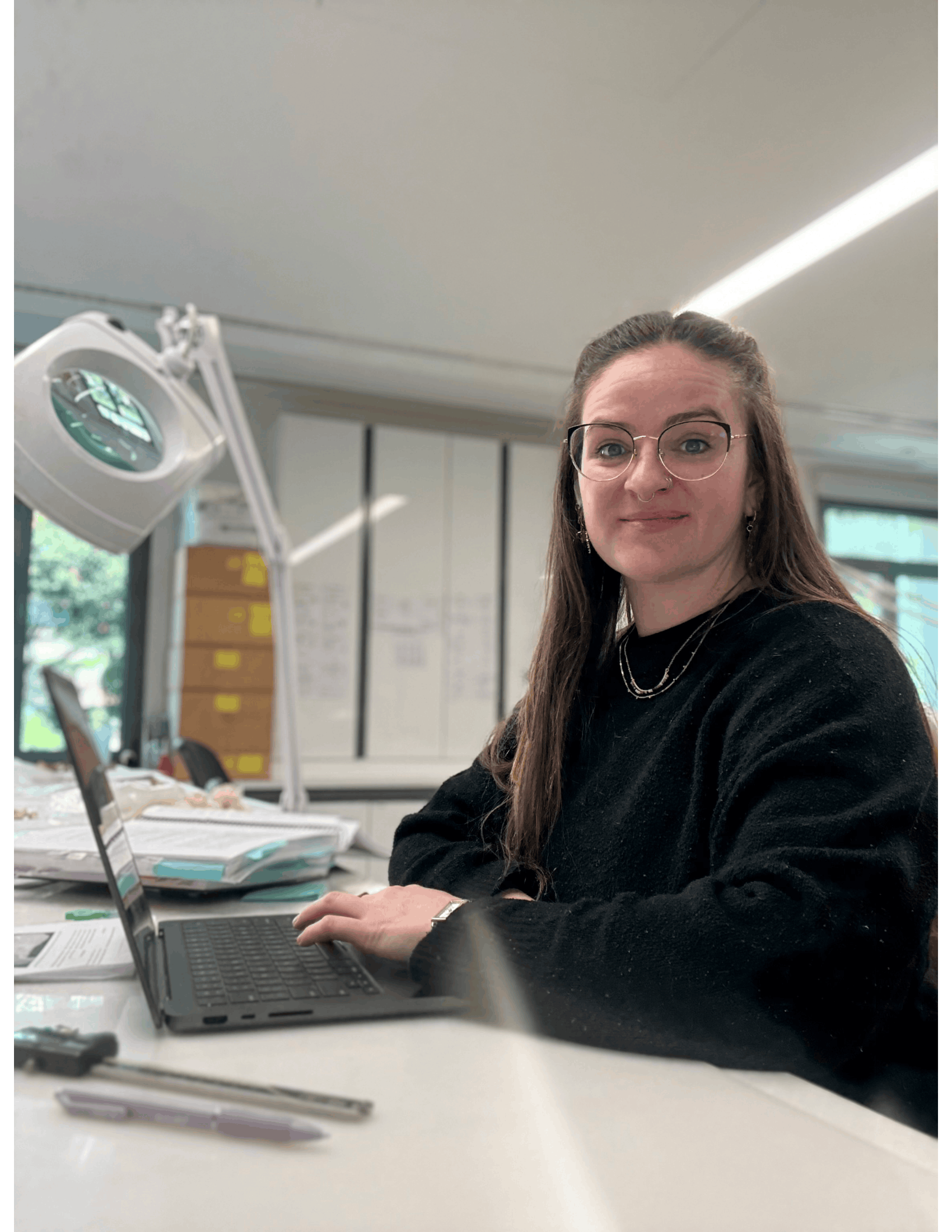
We’re thrilled to introduce Madolyn Hyytiainen-Jacobson, recipient of the prestigious 2026 Olivia James Traveling Fellowship!
Madolyn Hyytiainen-Jacobson (UC Berkeley)
Tell us about your project:
My research explores how people in the Mycenaean world understood death and the body through an analysis of secondary treatment. Although Mycenaean burial practices have been extensively studied, the meaning and purpose of secondary treatment remain poorly understood. During the Late Bronze Age on the mainland, people repeatedly returned to tombs to move, rearrange, and sometimes remove bones entirely; this frequency and visibility of post-burial engagement with the dead indicate that secondary treatment was fundamental to Mycenaean mortuary practice and ontological conceptions of the body.
In my dissertation, In Death We Don’t Part: A Bioarchaeological Analysis from the Late Bronze Age Cemetery at Aidonia, I employ taphonomic analysis and skeletal zonation alongside standard bioarchaeological methods to reconstruct what actually happened to these bodies after death and attempt to trace their movement through the tomb. By analyzing how bones were preserved, moved, and deposited within the tombs, I hope to trace the postmortem histories of individuals and identify patterns in how the living interacted with the dead.
Ultimately, my work shows that these practices were not random disturbances but meaningful rituals that maintained relationships between the living and the dead. By combining scientific analysis with archaeological theory, my research reveals how Mycenaean communities understood the body, death, and memory. As the AIA Olivia James Travelling Fellow, I will continue my work in Athens at the Wiener Labortatory and be able to travel to Nemea to review excavation field notebooks and drawings.
How did you get your start in archaeology?
As an undergraduate, I studied Classics and Human Evolutionary Biology and was fortunate to receive departmental funding for summer archaeological research. In the summer of my senior year, I attended two field schools that offered immersive, hands-on training in archaeological methods, including an introduction to bioarchaeology and mortuary archaeology. These experiences confirmed archaeology as a natural path through which I could bring together my interests in Classics and Anthropology without having to prioritize one over the other. I had not previously considered archaeology as a career, and I am forever grateful that I had these opportunities.
Where in the world has archaeology brought you (fieldwork, research, conference travel, etc.)?
Archaeology has truly offered me a view of the world I had never thought I would get to see! My first project was at the Palace of Philip II where we were able to visit most of the major Macedonian sites. My dissertation project is in Nemea, so I have been able to explore all over the Peloponnese with the rest of the team. Through my work at the American School of Classical Studies at Athens, I have been fortunate enough to be able to visit Crete and Boeotia and had the incredible opportunity to see sites from all major periods. My work has also brought me to Italy as well as Spain. Through conference presentations, I have been able to visit New Orleans, Chicago, Richmond, and many other cities.
What is one of the most memorable things that has happened to you in the field?
During the first project I was part of, we were able to visit Macedonian painted tombs, some of which are not typically open to the public. It was so incredible getting to see the paintings up close and to be able to enter the tombs and experience such a space. At that moment, I knew I wanted to become an archaeologist, so I could continue to have experiences like that. It was my first time experiencing anything related to mortuary archaeology, so it was as very informative experience that shaped the rest of my career.
How has the AIA contributed to your success/professional goals?
The AIA society and annual meetings have been central to my development as a scholar. Through these meetings, I have built relationships with colleagues who have helped shape my ideas and refine my dissertation, both through formal feedback on my work and through informal conversations over coffee. Moreover, at the annual meetings, I have attended numerous presentations that challenged my perspectives and strengthened my approach to research.
While I was at Berkeley, I also served as an officer in the San Francisco chapter of the AIA. In this role, I had the opportunity to help bring scholars from around the US to campus. Engaging with their work and facilitating these visits significantly broadened my intellectual horizons and played an important role in helping me refine and identify my dissertation topic. I am deeply grateful for the AIA and the collaborative and supportive community it fosters, and I look forward to contributing to and supporting that environment as I continue my work in the field.
Learn more about what Fellowship and Grant opportunities are available through the AIA.