This listing expired on January 22, 2026. Please contact ascsa.adnacourse@gmail.com. for any updated information.
Location: Souidias 54, Athens, Greece
Season: May 25, 2026 to May 29, 2026
Session Dates: May 25-29, 2026
Deadline Type: Exact Date
Website: https://www.ascsa.edu.gr/programs/summer-archaeological-science-courses/ancient-dna-summer-course
Program Type:
Field School
RPA Certified:
No
Affiliation:
American School of Classical Studies at Athens, Malcolm H. Wiener Laboratory for Archaeological Science
Project Director:
Researchers from the Max Planck Institute for Evolutionary Anthropology (MPI-EVA), the Francis Crick Institute, London, and the Institute for Archaeological Science, Archaeo– and Paleogenetics of the University of Tübingen in Germany will lead the course: Dr. Maria A. Spyrou (Jun. Prof. Dr., University of Tübingen / research associate at MPI-EVA), Dr. Eirini Skourtanioti (Post-doctoral researcher at the Francis Crick Institute, London / research associate at MPI-EVA), and Anthi Tiliakou, PhD candidate (MPI-EVA). Additionally, the course will feature lectures from invited speakers. For the 2026 program, invited speakers are: Assistant Professor Dr. Lara Cassidy (Trinity College Dublin, Department of Genetics), Jun. Prof. Dr. Cosimo Posth (Institute for Archaeological Sciences, Department of Geosciences, University of Tübingen), Dr. Thiseas Lamnidis (Max Planck Institute for Evolutionary Anthropology, Dept. of Archaeogenetics), and Dr. Christina Margariti and Panagiotis Christodoulou, MSc (Hellenic Ministry of Culture, Greece).
Project Description:
The Malcolm H. Wiener Laboratory for Archaeological Science of the American School of Classical Studies at Athens is offering an intensive week-long course to introduce participants to methods and applications in ancient DNA (aDNA) research. Researchers from the Max Planck Institute for Evolutionary Anthropology (MPI-EVA), the Francis Crick Institute, London, and the Institute for Archaeological Science, Archaeo– and Paleogenetics of the University of Tübingen in Germany will lead the course: Dr. Maria A. Spyrou (Jun. Prof. Dr., University of Tübingen / research associate at MPI-EVA), Dr. Eirini Skourtanioti (Post-doctoral researcher at the Francis Crick Institute, London / research associate at MPI-EVA), and Anthi Tiliakou, PhD candidate (MPI-EVA). Additionally, the course will feature lectures from invited speakers. For the 2026 program, invited speakers are: Assistant Professor Dr. Lara Cassidy (Trinity College Dublin, Department of Genetics), Jun. Prof. Dr. Cosimo Posth (Institute for Archaeological Sciences, Department of Geosciences, University of Tübingen), Dr. Thiseas Lamnidis (Max Planck Institute for Evolutionary Anthropology, Dept. of Archaeogenetics), and Dr. Christina Margariti and Panagiotis Christodoulou, MSc (Hellenic Ministry of Culture, Greece).
Ancient DNA has gained traction as an innovative tool in the disciplines of evolutionary biology and archaeology, as it can provide complementary, often previously unknown, insights into the human past. With a spectrum of research directions ranging from interactions between archaic human groups and the role of human mobility in cultural evolution, to the reconstruction of past disease epidemics and human biological adaptations through time, this field has been undergoing rapid methodological and conceptual advancements over the last decade.
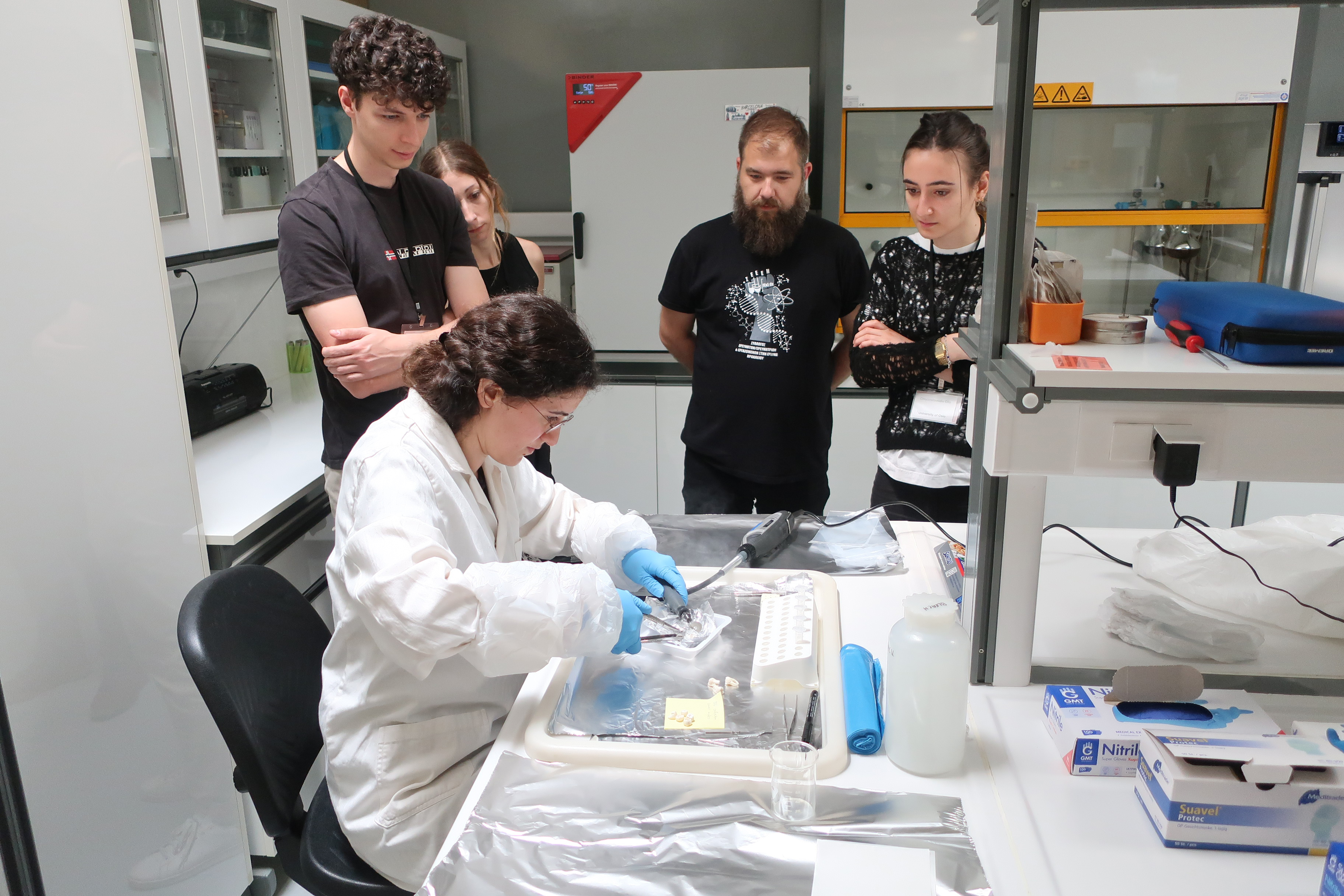
The main objectives of this course are to offer a theoretical and basic technical training in the analysis and interpretation of aDNA data through lectures, seminars and interactive hands-on practical sessions. By the end of the course, participants will be familiar with most aspects of aDNA research and the different insights aDNA can offer into the past.
The course will explore key themes in aDNA research, such as:
A maximum of 16 participants will be accepted into the course. Priority will be given to graduate students, post-docs and researchers in biology, genetics, microbiology, archaeology, bioarchaeology, or related disciplines, who are not currently working with aDNA, but who wish to get exposed to state-of-the-art methods and tools in the field for future research.
The course fee is 500 euros. Accommodation is not included, but we will offer recommendations and assistance to course participants with arranging accommodations. The course will take place from May 25-29, 2026.
Project Size: 1-24 participants
Minimum Length of Stay for Volunteers: Full term
Minimum Age: 18
Room and Board Arrangements:
The course fee is 500 euros. Accommodation is not included, but we will offer recommendations and assistance to course participants with arranging accommodations.
Academic Credit:
Inquire about credit.
Program Directors
ascsa.adnacourse@gmail.com
Athens
Greece