April 30, 2026
To celebrate our 2026 Research Grant recipients, we connected with this year’s awardees to learn more about their projects and the unique paths that led them into the field of archaeology.
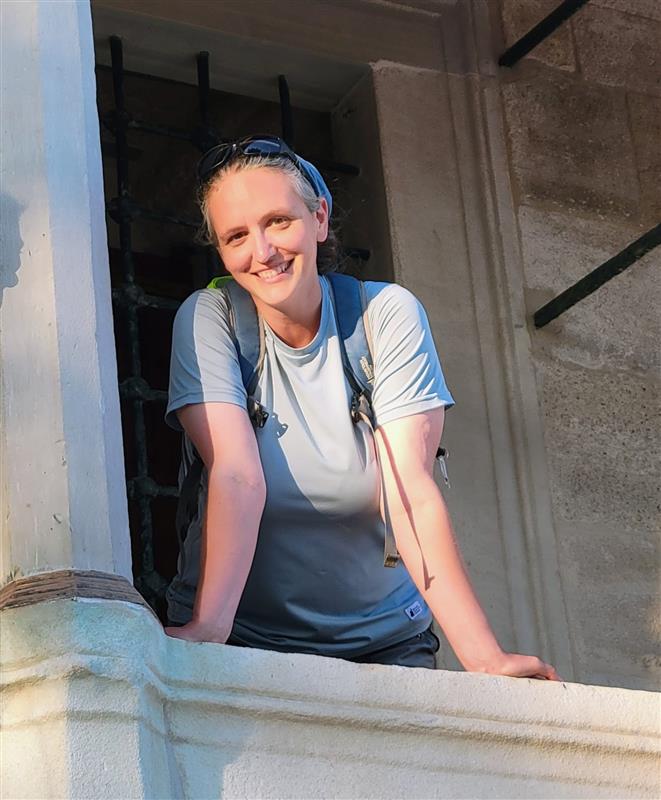
We’re thrilled to introduce Dominique Langis-Barsetti, one of three recipients of the prestigious 2026 Kathleen and David Boochever Endowment for Fieldwork and Scientific Analyses Grant!
Dominique Langis-Barsetti (Université Laval)
Tell us about your project:
The project “Exploring gilding and polychromy in central Anatolian Iron Age ivory, bone, and antler inlays” seeks to bring back some shine and color to the still-expanding corpus of decorative pieces recovered from the city of Kerkenes. After the recent – and unexpected – discovery of gilding and blue pigment fragments still adhering to the 2500 year-old objects, the grant will make possible the use of state-of-the-art technology to identify the materials originally used to enhance the look of the inlays, shedding some light on decorative tastes, craft production, and trade connections.
How did you get your start in archaeology?
I spent my first years in higher education very far from archaeology, instead studying physics. After realising that I liked to understand the world through words more than numbers, I came back mid-undergraduate degree to my childhood passion, archaeology, but never really abandoned my physics background, gravitating towards the technology-focused side of archaeology. After a very formative and fortuitous field season at Kerkenes – a site where I went from undergraduate student to Associate Director – there was no looking back. From there, I have sought to combine my love for all things STEM to the pursuit of better understanding the human past.
Where in the world has archaeology brought you (fieldwork, research, conference travel, etc.)?
My fieldwork and research have mostly brought me to different regions of Türkiye, but conferences and collaborations have landed me in various parts of Canada, the United States, and Europe, and in smaller corners such as Mauritius. With the world now as connected as it is and online collaborations making the need to travel so far and wide to see colleagues less essential, I have also “virtually” visited other countries, such as the United Arab Emirates and Australia, for work that just a few years ago would have required a plane ticket.
What is one of the most memorable things that has happened to you in the field?
Finding and excavating the monumental, inscribed statue of a Neo-Hittite king before even beginning graduate studies is sure to rank pretty high, or weathering an attempted military coup while closing down the field season, but archaeology is not only about the grand finds and events. Sometimes it’s about the little things that tell a story on a much more individual level, like following a whim and a thought that led to reuniting a fragmented ivory bowl with one of its gold inlays, found twenty years earlier in a different structure and still bearing the marks left by a looter’s knife as they pried the metal from the damaged object before discarding it in a ditch filled with other material witnesses of the conquest and destruction of the city.
How has the AIA contributed to your success/professional goals?
As a newly graduated scholar, this AIA grant is the first I obtain to conduct my own research. It represents a success in and of itself and will surely help me move forward in academia. Resources and support like that provided by the AIA is invaluable to young scholars like myself.
Learn more about what Fellowship opportunities are available through the AIA.