This listing expired on April 30, 2026. Please contact progettocamaiano@gmail.com for any updated information.
Location: Località Cappellese, 68, 57016 Castelnuovo della Misericordia LI, Italy
Season: July 12, 2026 to August 1, 2026
Session Dates: July 12th, 2026 to August 1st, 2026: three weeks, $3,900.00 (with reservation by January 31st, 2026), $4,100.00 (with reservation by February 28th, 2026), $4,600.00 (with reservation by April 30th, 2026). In case of cancellation of the participation, 100% of the fee will be refunded if made within the end of February 2026, 50% if made within the end of April 2026, or 20% if made from May 2026 onwards. In the event that the field school is not activated, communication will be made by February 15th and the participants' feed will be fully refunded.
Application Deadline: April 30, 2026
Deadline Type: Contact for Details
Program Type:
Field School
RPA Certified:
No
Affiliation:
University of Bologna, Italy
Project Director:
Prof. Enrico Cirelli
Project Description:
Camaiano Field School in Archaeology and on Medieval and Roman Material Culture 2026 is a part of the larger Camaiano Project. It is a program offered by the University of Bologna in Italy in collaboration with the Italian Ministery of Cultural Heritage, the Agriturismo Cappellese (in whose land the Camaiano excavation site is located), the Parco Culturale di Camaiano, the Gruppo Archeologico Paleontologico Livornese (GAPL) and the Municipality of Rosignano Marittimo.
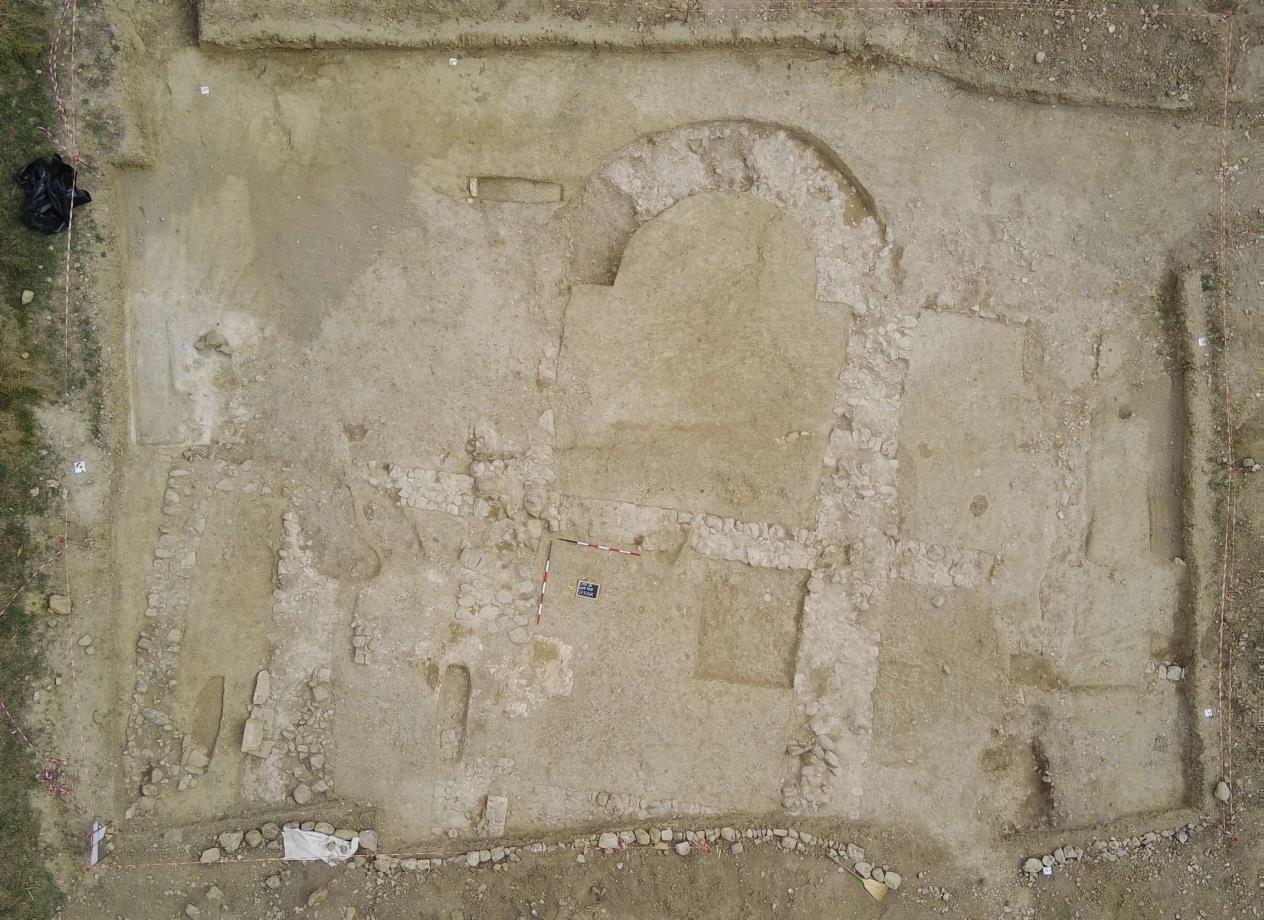
The Camaiano Project aims primarily to identify and study the archaeological evidence relating to the religious complex of the parish church of San Gerusalemme and San Giovanni Battista in Camaiano, mentioned for the first time in a document from the mid-10th century (958 AD). The building had a three-nave layout with a central semicircular apse and impressive dimensions (approximately 36 x 16m). It is the only parish church found so far in the Livorno area and one of the largest in Tuscany to have been brought to light. In addition to the medieval phase just mentioned, a survey in autumn 2023 allowed the recognition, near the excavation area, of at least two rural settlements from the Roman era.
The Field School aims to educate students in archaeological, anthropological, historical, and topographic methods and topics. It is a significant opportunity for students to learn methodologies and gain knowledge of the profession in a context that spans a broad historical timeline, from the Roman Age to the Middle Ages and Modern Age. The immersive activity of the Field School, moreover, will be in a typical Tuscan context and includes first-class accommodation at the Agriturismo Cappellese, a 10-minute walk from the excavation area.
Period(s) of Occupation: The first known mention of the parish church of S. Gerusalemme and S. Giovanni Battista in Camaiano is recorded in a document from 958. However, the toponym Camaiano appears in an emphyteutic document as early as 857, though without reference to the religious building. In the 9th century the parish church was part of the territory of the curtis of Camaiano, the current Castelnuovo della Misericordia, owned by the archbishop of Pisa. From the end of the 14th century the religious building was characterized by a state of decline, as evidenced by a document from 1484 which describes the parish church in ruins, invaded by brambles and partially destroyed. Some 16th-century documents confirm the neglect and decay of the building. The first, written in 1557, reports that the roof had by then collapsed while, the second, twelve years later, states that it still had the perimeter walls and the baptismal font. In 1575, the doors were walled up to prevent animals from entering. Finally, in 1597, it was declared that restoring the ruin—by then surrounded by woods and with some collapsed walls—would be uneconomical. From the 17th century onwards, mentions of the religious building ceased and around mid-1600s the Pious House of Mercy of Pisa began salvaging materials from the ruins of the parish church for the construction of the new church of Castelnuovo and its neighboring farms. Surveys conducted near the parish church, along with the first excavation campaign of 2024, have uncovered also numerous ceramic fragments from the Roman era. The Field School welcomes undergraduate and graduate students in anthropology, archaeology, classic history, historical topography, and related disciplines. The Field School has no formal prerequisites. Students interested in applying to the Field School must fill out and submit the application.
Notes:
The school is designed to provide all attendees with an advanced knowledge of applied stratigraphy method, topographic surveys and analysis, GIS and photogrammetry, and material culture. Lectures and Labs will be taken during the week by several experts, as well as weekly visits to local museums and sites will be provided by the staff.
The Field School requires a payment of 10 euros per participant, included in the total price, for full insurance coverage during the planned activities. The insurance is provided by the Camaiano Cultural Park, which also oversees the Agriturismo Cappellese where the students will be staying.
Project Size: 1-24 participants
Minimum Length of Stay for Volunteers: Three weeks
Minimum Age: 18
Experience Required: The course is open to up to 14-16 undergraduate, graduate and post-graduate students in Archaeology, Anthropology or similar disciplines from any country and institution. The official language of the Field School is English and no advanced knowledge of Italian is required
Room and Board Arrangements:
Housing is provided by the Field School at Podere La Madonnina (https://www.expedia.it/Rosignano-Marittimo-Hotel-Vacation-Home-Podere-La-Madonnina-In-Castiglioncello-17-Persons.h42348282.Informazioni-Hotel) in double or triple rooms (separated for men and women) 20-min walking from the excavation site.
The accommodation has a private swimming pool (accessible 24/7) and is close to Castelnuovo della Misericordia, a small town with a bar, supermarket, pharmacy, and bakery, and reachable by public transport.
Participants will have access to an American tutor available 24/7 for any eventuality or need, and the excavation staff will be present Monday through Friday, near the accommodation.
Participants in the Field School will be provided with breakfast, lunch, and dinner from Sunday at dinner to Friday at dinner.
In detail:
- Self-managed breakfast at home (around 6:45/7:00)
- Packed lunch on site prepared by the Agriturismo Cappellese; (around 13:30)
- Dinner at the Agriturismo Cappellese (https://agricap.it/agriturismo-con-ristorante-toscana/), at Agriturismo Pane e Vino (https://agriturismopaneevino.it/index.php/ristorante/) or with the staff at in the Podere La Madonnina (around 20:00)
Academic Credit:
Certificate of attendance from the University of Bologna will provide participants with official credits (ECTS) for their academic careers or independent study (10 ECTS per three weeks).
Andrea Biondi; Francesco Pagliani
Via Giovanni Sercambi, n. 9
Firenze
Firenze
50133
Italia