This listing expired on August 22, 2026. Please contact dschloen@uchicago.edu for any updated information.
Location: Málaga, Spain
Season: August 23, 2026 to September 19, 2026
Application Deadline: March 6, 2026
Deadline Type: Contact for Details
Website: https://voices.uchicago.edu/archaeology-in-spain/
Program Type:
Field School, Volunteer
RPA Certified:
No
Project Director:
Dr. David Schloen, Dr. José Suárez Padilla, and Dr. Carolina Lopez-Ruiz
Project Description:
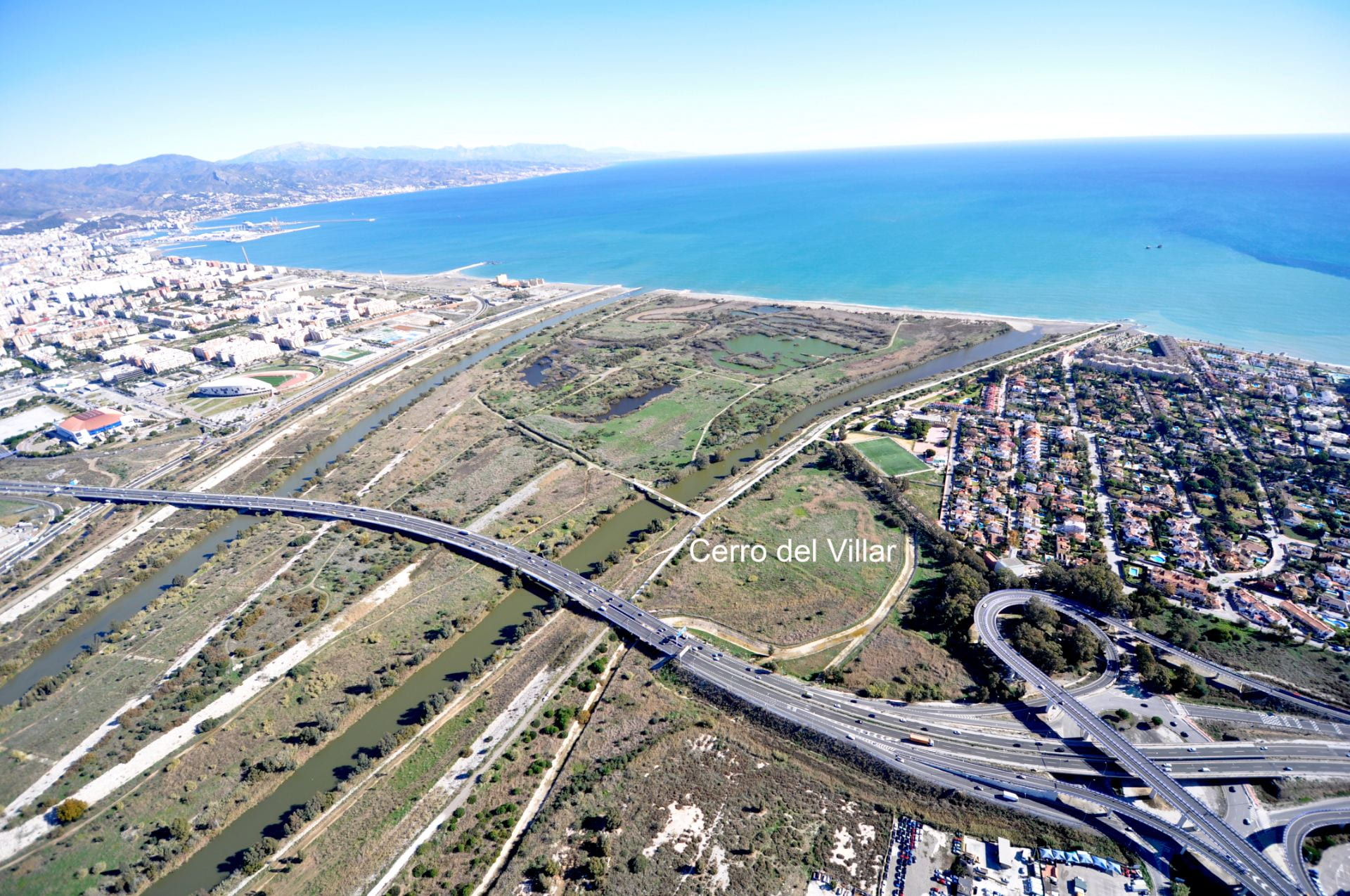
The University of Chicago is cooperating with Spanish archaeologists to excavate the Iron Age Phoenician colony of Cerro del Villar on the outskirts of the city of Málaga on the south coast of Spain. This eight-hectare (20-acre) archaeological site lies beside the Guadalhorce River, one kilometer from the Mediterranean shore. In ancient times it was an island in the wide mouth of the river, which has since silted up and has been canalized into two parallel water courses, as shown in the photograph below.
Cerro del Villar was previously excavated by María Eugenia Aubet of the Pompeu Fabra University of Barcelona, a leading figure in the archaeology of the Phoenicians in Spain and author of the seminal book The Phoenicians and the West: Politics, Colonies, and Trade (2d ed.; Cambridge, 2001). Prof. Aubet found evidence that the site was settled by Phoenicians from the Levant no later than the eighth century BCE and was abandoned by them in the sixth century BCE, with no later town built on top of the Phoenician buildings.
Most Iron Age Phoenician towns are buried under modern cities and are largely inaccessible, thus Cerro del Villar provides a rare opportunity to obtain an extensive exposure of the urban layout and to investigate the causes and consequences of the exploration and colonization of the Iberian peninsula three millennia ago by people from the other end of the Mediterranean, 2,000 kilometers away. Long before the Greeks and Romans, these people — descendants of the Bronze Age Canaanites who lived on the coast of what is today Lebanon and northern Israel and were called “Phoenicians” by the Greeks — established a pan-Mediterranean network of trade and communication that affected the entire course of ancient history. They brought with them the urban culture of the Near East and the alphabetic writing system and religious beliefs, practices, and stories of the ancient Levant.
The overall head of the current research at Cerro del Villar is José Suárez Padilla, an archaeologist at the University of Málaga, who had previously excavated this site with María Eugenia Aubet. In addition to the excavations on the Phoenician remains conducted by the University of Málaga team and the University of Chicago team, geophysical and geomorphological studies of the site have been conducted by Aachen University under the direction of Prof. Klaus Reicherter and Roman-period remains on the site are being excavated by the University of Marburg under the direction of Prof. Felix Teichner.
The University of Chicago excavation team is co-directed by David Schloen, John A. Wilson Professor of Archaeology in the Institute for the Study of Ancient Cultures and Department of Middle Eastern Studies, and Carolina López-Ruiz, Professor of Ancient Mediterranean Religions and Mythologies in the Divinity School, the Department of Classics, and the Institute for the Study of Ancient Cultures. Prof. López-Ruiz is an expert on Phoenician religion and history and the author of Phoenicians and the Making of the Mediterranean (Harvard University Press, 2022). The University of Málaga excavation team is co-directed by José Suárez Padilla and Manuel Álvarez Martí-Aguilar, a professor of ancient history with expertise on the Phoenician period in Spain.
The two teams are working closely together to explore different sectors of the archaeological site. After three successful excavation seasons in 2022, 2023, and 2024, the University of Chicago team will return to Cerro del Villar in 2026 to continue the work.
Notes:
We are now taking applications from students and volunteer diggers to join our team — no prior archaeological experience is required.
If you are interested in participating, please send your curriculum vitae (résumé) via email to Prof. David Schloen at dschloen@uchicago.edu as soon as possible and no later than Friday, March 6, 2026. We may accept applications after that date, if we still have space available, but you should apply by March 6 to maximize your chance of being accepted.
The participation fee is $5,000 USD (reduced to $4,000 for University of Chicago students). This includes:
-Hotel accommodation for four weeks (27 nights; two or three persons per room; single rooms available for a higher fee).
-All meals (breakfast and dinner in the hotel and lunch at a nearby restaurant).
-Three weekend day trips to visit sites of interest in the beautiful region of Andalucía.
-Airfare is not included in the participation fee (the roundtrip airfare from Chicago to Málaga is around $1,500)
If your application is accepted, you will book and pay for your own travel to Málaga and submit your participation fee via check or money order to Prof. Schloen in person or by mail to the following address:
David Schloen, Institute for the Study of Ancient Cultures, University of Chicago, 1155 East 58th Street, Chicago, IL 60637 U.S.A.
Project Size: 50+ participants
Experience Required: None
Room and Board Arrangements:
The participation fee is $5,000 USD (reduced to $4,000 for University of Chicago students). This includes:
-Hotel accommodation for four weeks (27 nights; two or three persons per room; single rooms available for a higher fee).
-All meals (breakfast and dinner in the hotel and lunch at a nearby restaurant).
-Three weekend day trips to visit sites of interest in the beautiful region of Andalucía.
-Airfare is not included in the participation fee (the roundtrip airfare from Chicago to Málaga is around $1,500)
David Schloen, Institute for the Study of Ancient Cultures, University of Chicago
1155 East 58th Street
Chicago
IL
60637
USA