October 23, 2025
by Susanna Faas-Bush
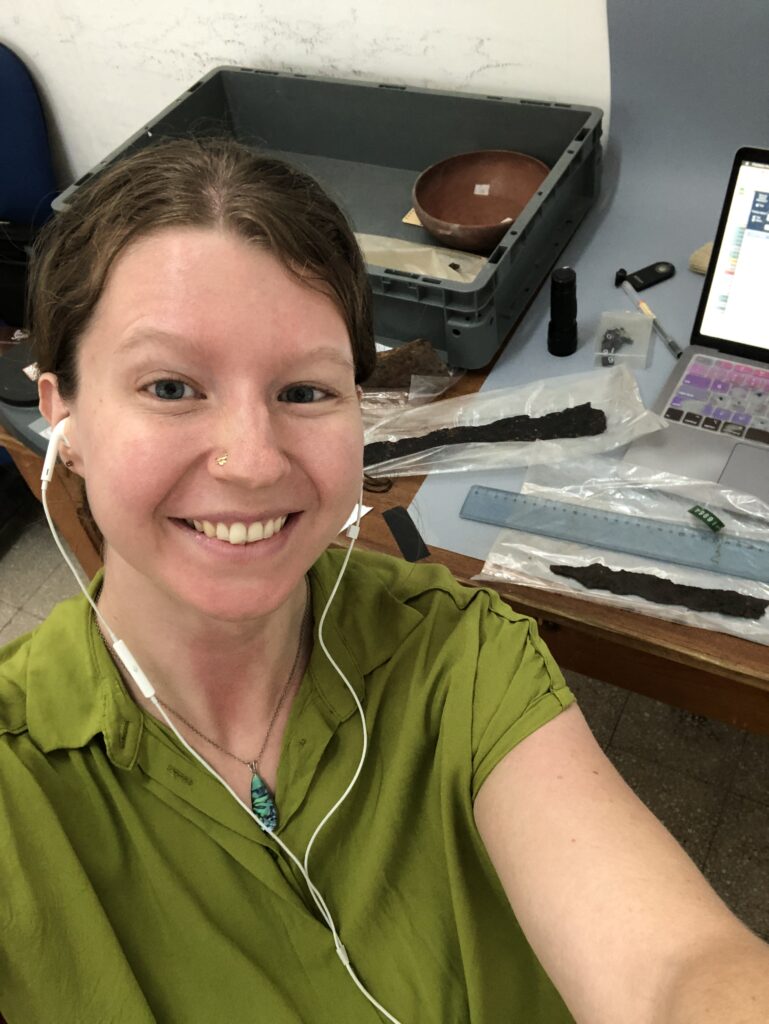
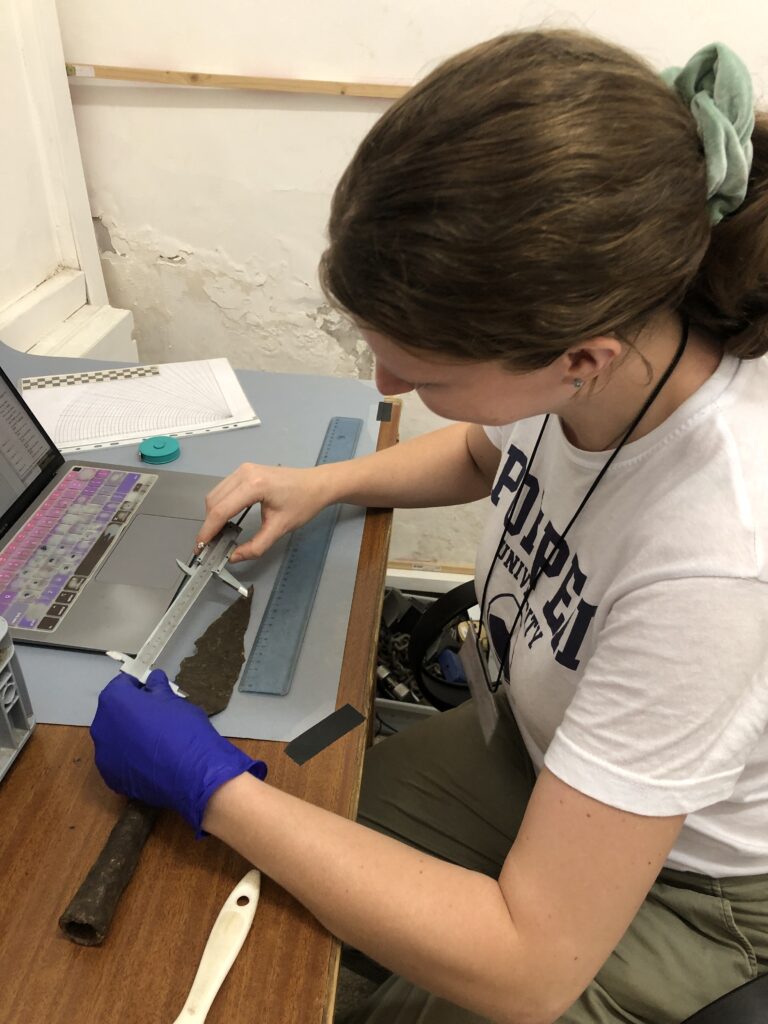
One of our 2024-2025 Olivia James Traveling Fellowship winners, Susanna Faas-Bush, provides us with an update:
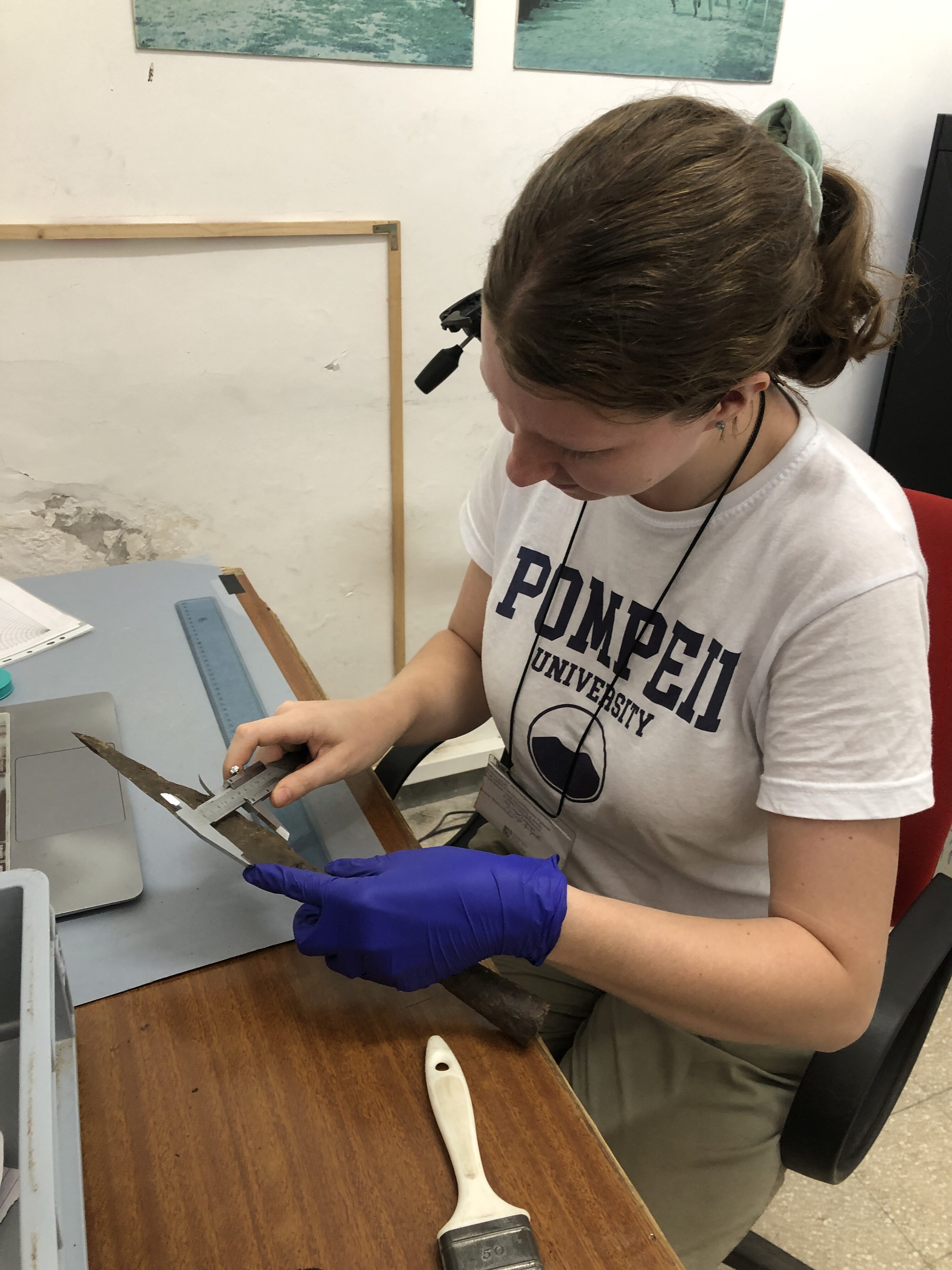
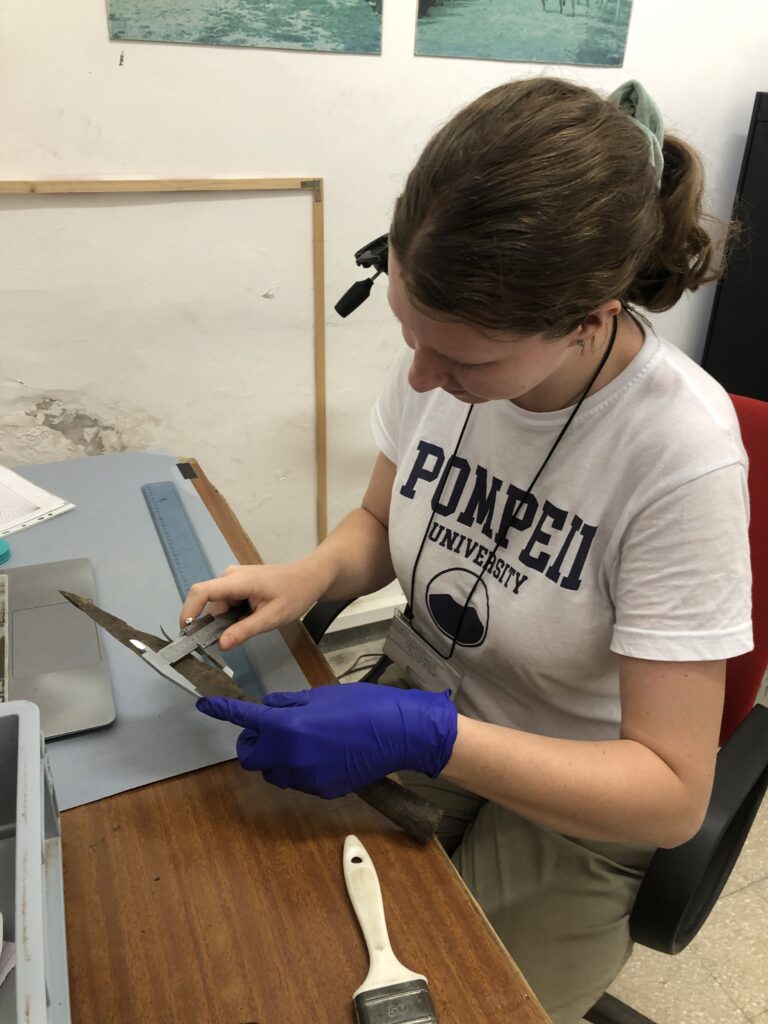
During her year as the 2024-2025 Olivia James Traveling Fellow, Susanna Faas-Bush tracked down artifacts from the ancient Roman Villa della Pisanella in Italy, Germany, France, Belgium, the U.K., and the U.S. Her extended stay in Pompeii thanks to the fellowship allowed her to examine the material earmarked for study at the beginning of the year and also made it possible for her to find and confirm the provenience of over 300 artifacts from the villa long considered lost or destroyed. Her examination of the artifacts spread out across many different locations resulted in new connections and interpretations of the evidence, including elements of a kind of ancient proto-agro-tourism as the owners of the villa-cum-vineyard incorporated spectacle and luxury into their wine production and marketing. Rather than being an isolated hoard, the silver tableware of the Boscoreale Treasure removed to Paris over a hundred years ago was an integral part of the goings-on of the villa and cannot be fully understood without considering it in the context of the mosaics still in Boscoreale, the bronze bathtubs and wall painting sections sent out to Chicago, and the rest of the villa’s archaeological assemblage. In visiting the various locations now housing the artifacts from the Villa della Pisanella, Faas-Bush has made connections with scholars working separately on the archival material from the very early excavations in the Vesuvian area, and been able to exchange resources and share primary sources from her work in the archives of Pompeii that will lead to new projects and collaborations in the future. Even the smallest and humblest of artifacts examined in the course of putting together a database of the artifacts from this villa has lead to new discoveries. Some of her work on new evidence of mass production of copper-alloy hinges found at the villa has already been presented at a panel at the 2025 Archaeological Institute of America’s Annual Meeting and a paper at the 2025 European Association of Archaeologists’ Annual Meeting, and will be published in an upcoming special edition of Mouseion. Now back in California, she’s turning her fieldwork results into dissertation chapters and looks forward to presenting more about her findings at future conferences.