This listing expired on May 10, 2026. Please contact dchee@anthroctr.org for any updated information.
Location: Fort Macleod, AB T0L 0Z0, Canada
Season: May 14, 2026 to July 5, 2026
Application Deadline: April 10, 2026
Deadline Type: Rolling
Website: https://anthroctr.org/program/2026-canada-hsi/
Discount for AIA members: None
Program Type:
Field School
RPA Certified:
No
Affiliation:
University of Lethbridge (Canada), Royal Alberta Museum (Canada), and Anthropocene Research Center (US)
Project Director:
Prof. Shawn Bubel, Prof. Kevin McGeough, and Mr. Bob Dawe
Project Description:
The field school is 7 weeks long and has three distinct components:
* Two-week online course that will prepare the students for the project. Students will participate in the online course from home, before travelling to southern Alberta, Canada.
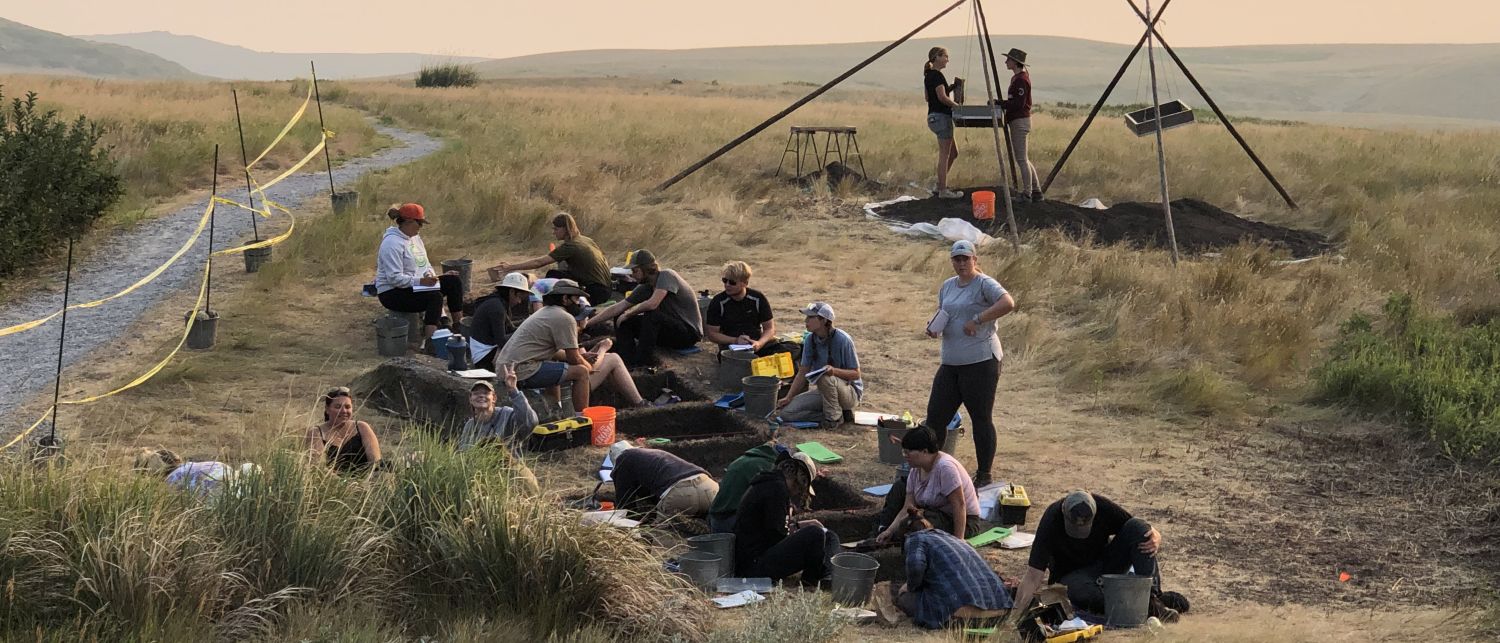
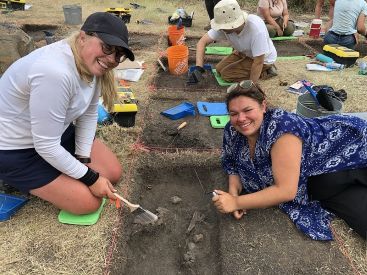
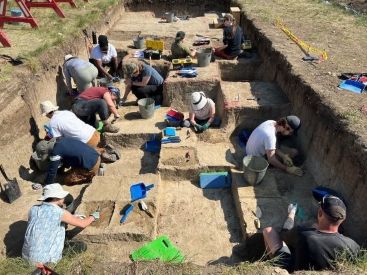
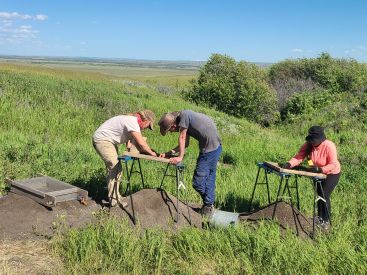
* Four weeks excavations at the Head-Smashed-In site
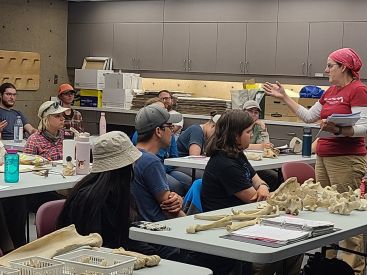
* One week of lab work, processing finds, at the Westcastle field station, a remote research laboratory nestled deep in the forests of the Rocky Mountains.
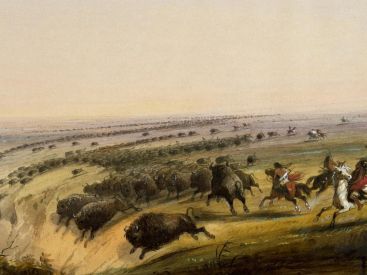
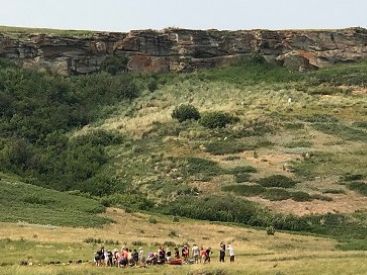
Head-Smashed-In Buffalo Jump is located in the Porcupine Hills of southwestern Alberta, Canada. It is a UNESCO World Heritage Site and has an Interpretive Centre run by mostly Blackfoot staff that has hosted over two million visitors since 1987. The site is actually an elaborate complex spread across the landscape where, for at least the past 5,500 years, hunters used the natural topography to drive herds of bison off cliff edges and then process the animals in the vicinity. Indigenous peoples used this hunting tradition for countless generations, only stopping in the nineteenth century because of European contact. While there are around ten cliffs in the Porcupine Hills that may have been used for these purposes, there are two within this area (Head-Smashed-In and Calderwood) as well as the associated drive lanes, campsites, and processing areas. The site is remarkable not just for its striking topography but for its long-term use as an important and ingenious component of subsistence and cultural practice in the northwestern Great Plains. It is one of the most important locations of Indigenous heritage.
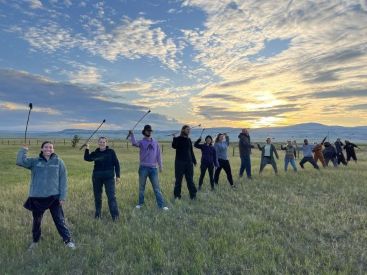
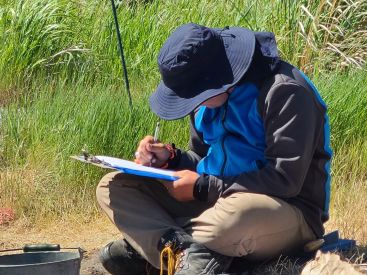
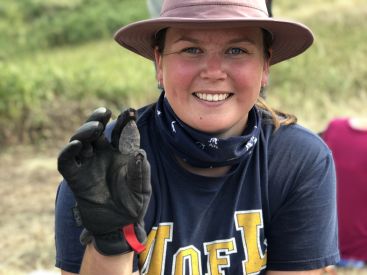
Our work at Head-Smashed-In Buffalo Jump aims to clarify chronological and contextual issues related to the earliest occupation phases at the site, evaluate the relationships between different parts of the site, and identify earlier uses than those currently well-documented. In our first years of the project (2021, 2022, and 2024), our team discovered stone artifacts and bone fragments dating between 9,000 and 7,500 years ago, the oldest artifacts ever excavated at the site. This season (2026), a team of field school students will return to the site to find more traces of these early hunters. Through this project, students will learn about the site and develop key skills necessary in North American archaeology. We will excavate in targeted areas and conduct supplemental testing, surveying, and mapping in three other areas. During the field school students will have an opportunity to excavate in both areas and process the archaeological materials they unearth in the laboratory.
Period(s) of Occupation: Pre Contact Period
Notes:
Tuition is $3,750; Earn 8 Semester Credit Units (equivalent to 12 Quarter Credit Units) through our School of Record – Culver Stockton College
Project Size: 1-24 participants
Minimum Length of Stay for Volunteers: Full session
Experience Required: 18 years old
Room and Board Arrangements:
During the four-week excavation component of the field school, students and directors live at the campground (basecamp) just south of Head-Smashed-In Buffalo Jump. Students must bring their own tent, sleeping bag, air mattress/cot, towels, and other personal items (shampoo, soap, etc.). There are washrooms, showers, and laundry facilities at basecamp.
A camp kitchen will be constructed upon arrival to the basecamp. The field school team prepares well-balanced, nutritious meals together. Since these are group meals, individual dietary needs will be accommodated as best as possible, although it is not possible to be fully gluten free, kosher, etc. There will be meat or dairy, vegetables, and starch (rice, potatoes, bread, etc.) choices. Breakfasts and dinners are prepared and eaten at basecamp. Individual lunches are packed in the morning and are taken to the site along with water containers.
Academic Credit:
8 Semester Credit Units (equivalent to 12 Quarter Credit Units) through our School of Record – Culver Stockton College
Dorian Chee
5335 W Adamas Blvd Suite 106
Los Angeles
California
90016
U.S.
Phone: (323) 740-1805