December 4, 2025
Congratulations to all the individuals, projects, and publications honored with AIA Awards! These outstanding contributors to our field will be formally celebrated at the 2026 AIA Awards Ceremony during the 127th Annual Meeting. We’ve reached out to this year’s winners to learn more about the discoveries that drove their projects, the experiences that shaped their journeys, and the inspirations that sparked their passion for archaeology. Stay tuned as we share their stories!
Morag Kersel (DePaul University)
Award: Outstanding Public Service Award
What drew you to archaeology?
I grew up a small town in Southwestern Ontario. In grade 5 on a school trip we went to the Royal Ontario Museum in Toronto, I was enchanted by the Egyptian, Greek, and Roman galleries. I decided there and then I wanted to visit Egypt and to study archaeology and I never really looked back. As a classics undergraduate at Queen’s University in Kingston, I was inspired by Professor Lucia Nixon and her Greek archaeology classes. For my first overseas archaeological project I was lucky to spend 9 weeks on the Sphakia Survey led by Lucia and Jenny Moody. I went on to work on Neolithic and Chalcolithic projects in Jordan and Israel. There is never a dull moment in archaeology, every day you meet new people, find new things, both in the field and in the classes I teach.
Tell us about your history with the AIA:
I’m not sure when I joined the AIA but I’ve been a member for ages. I served as a term as an Academic Trustee and on the Lecture and Cultural Heritage Committees. Currently I am the chair of the Lecture Committee. One of the best things I’ve done with the AIA is as a national lecturer. I’ve met so many wonderful and interesting people in local societies across the US. They all love archaeology and their commitment to the AIA is inspiring.
What’s next for you professionally?
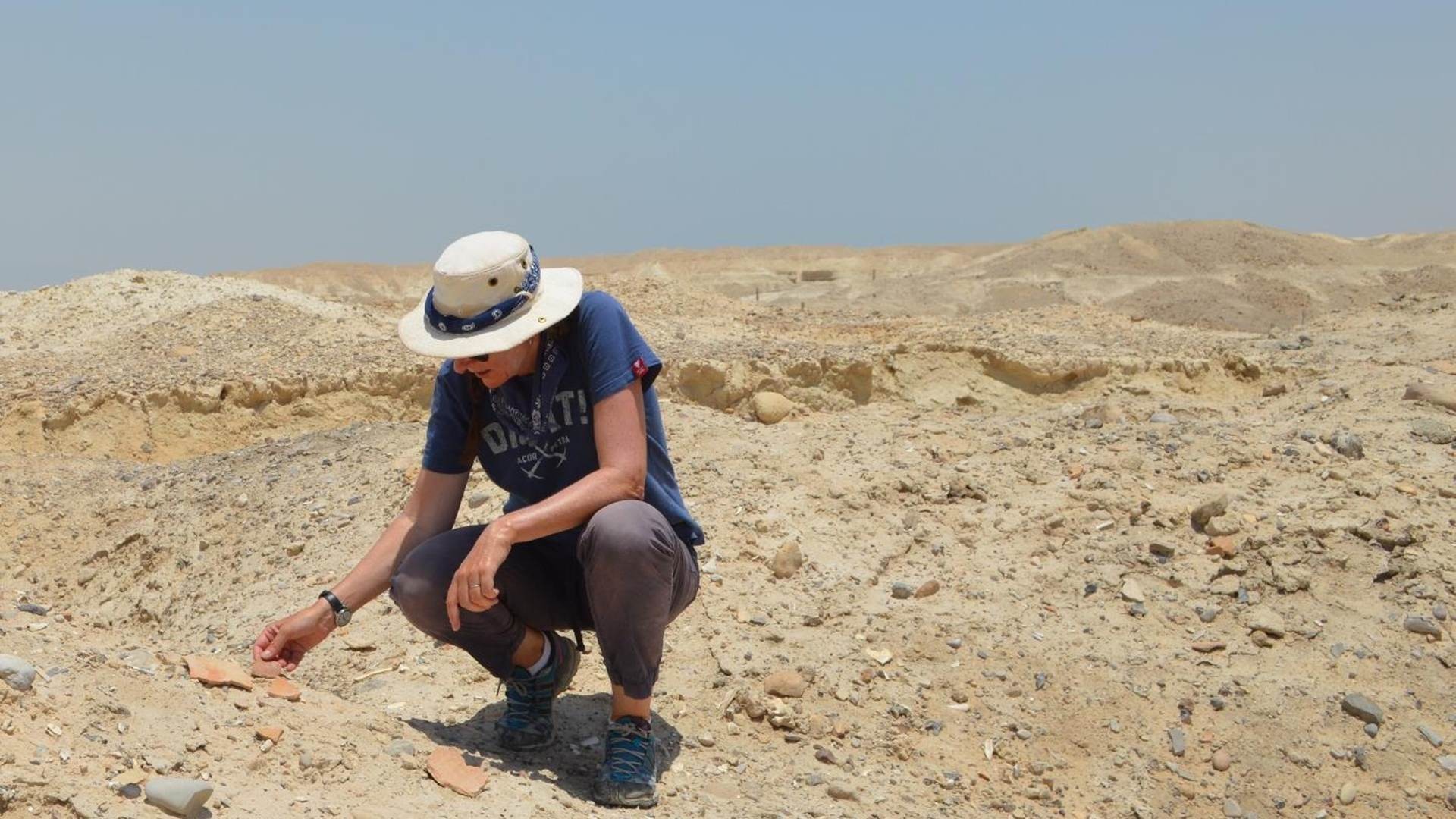
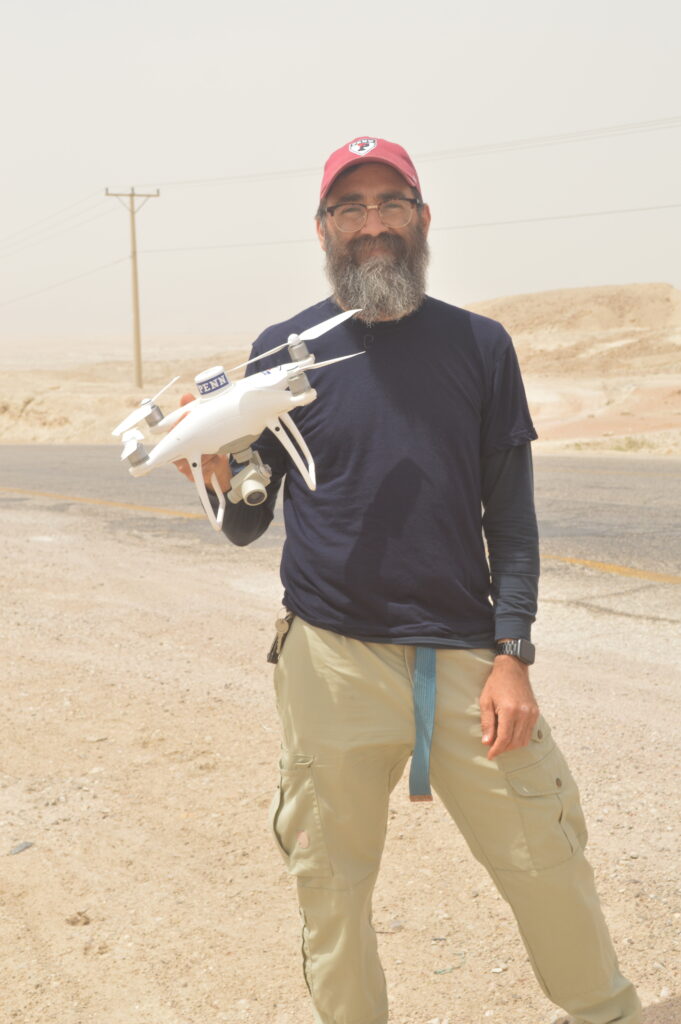
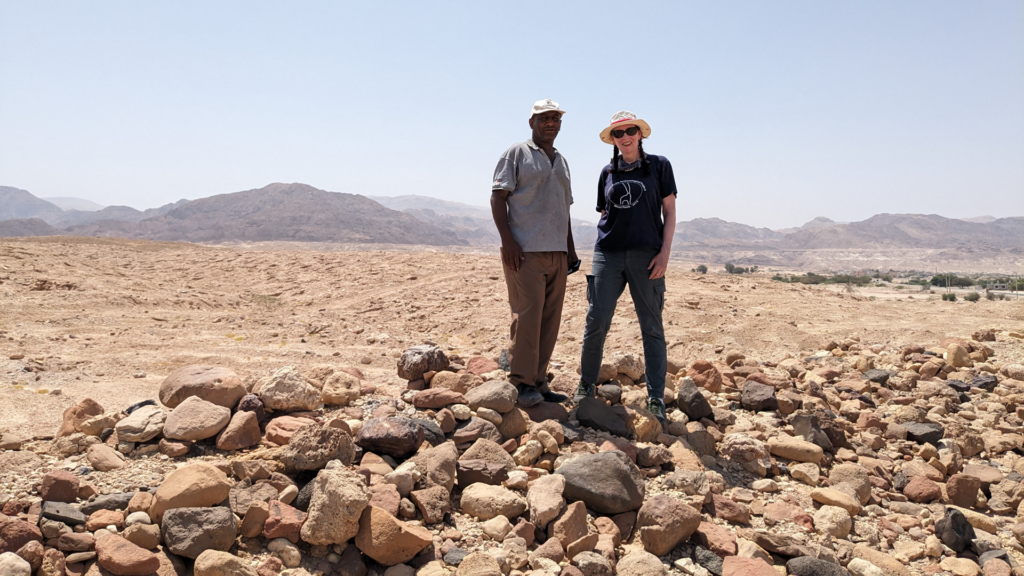
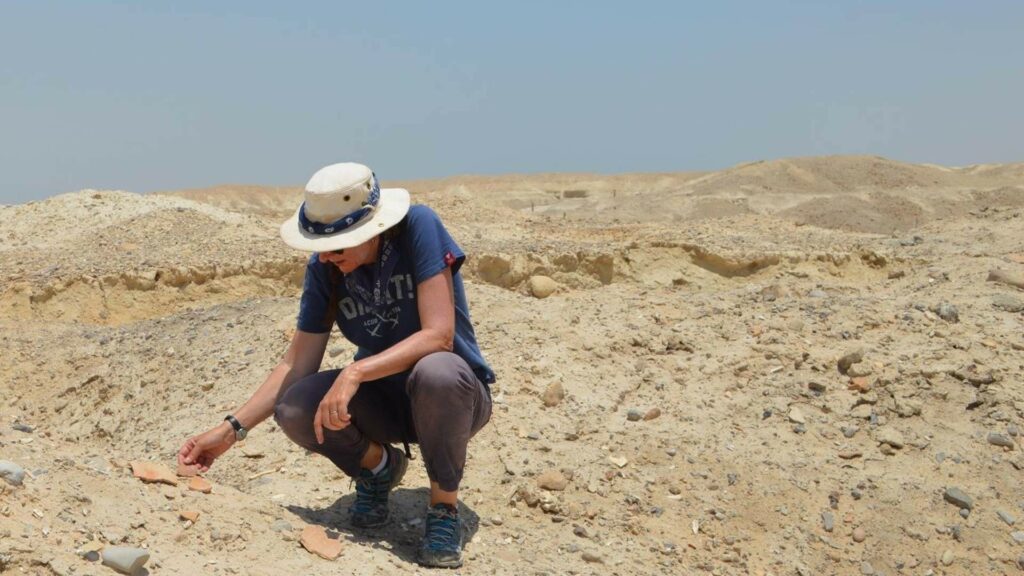
Meredith Chesson (University of Notre Dame), Chad Hill (University of Pennsylvania), and I (DePaul University) in collaboration with the Department of Antiquities in Jordan will continue to “Follow Pots” and document change over time at a series of Early Bronze Age sites along the Dead Sea Plain in Jordan. We want to continue studying archaeological site looting to understand better both the ancient and modern uses of an Early Bronze Age mortuary site. We will also continue to work with the Jordanian Department of Antiquities to produce images and data that aid in site assessments and monitoring and on cultural heritage protection strategies to safeguard the past.
How did you get started with your project/publication?
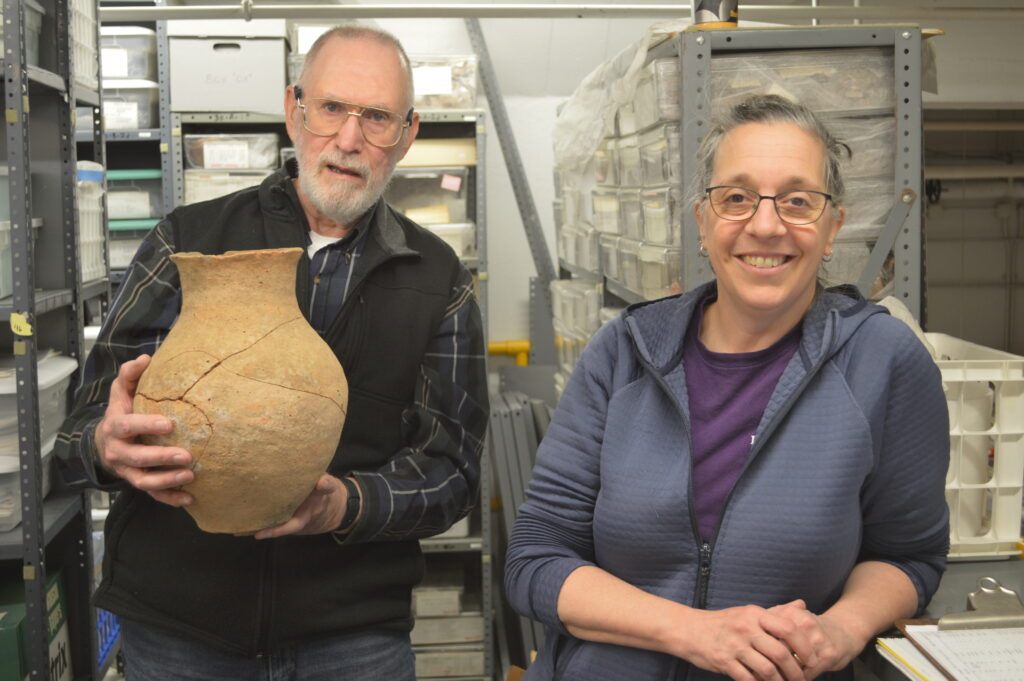
On my way home from a summer of fieldwork in Greece in 2008, I reached for a book at W.H. Smith in Heathrow Airport. At the same time someone else reached for the same book. We laughed, looked up, and realized that we knew each other. On her way home from Italy, Meredith Chesson (University of Notre Dame) and I decided to have lunch together. Over the course of our 5-hour layovers we realized we had a lot of overlapping interest in the Early Bronze Age of Jordan, but with differing backgrounds, field experiences, and perspectives. Together we envisioned following the pots from the threatened EBA Dead Sea Plain landscapes. A few years later, I was working with Chad Hill (University of Pennsylvania) on a Chalcolithic site in the Galilee of Israel. A model plane enthusiast, Chad was an early adopter of drone technology to document landscapes and archaeological sites. Chad and I discussed using drones, in cooperation and collaboration with the Jordan Department of Antiquities to monitor looting at sites in order to assess change over time. Follow the Pots and Landscapes of the Dead were born and live on as we continue to follow pots and monitor Dead Sea Plain landscapes.
What achievement are you most proud of?
We are privileged to collaborate with the Jordan Department of Antiquities on protecting their past. In December 2019, Jordan and the United States signed a Memorandum of Understanding (MOU) to prevent the illegal import and export of Jordanian cultural materials. This agreement, the first of its kind between the two countries, imposes restrictions on the import of Jordanian artifacts into the US and includes US support for Jordan’s efforts to combat antiquities trafficking through technical assistance. We work closely with the DOA to support the agreement. A key element of our project is listening to and working with our local partners. Drinking tea and coffee with people, listening to the stories of their childhoods, their families, their neighborhoods, and the changing Jordanian landscapes is critical to our research. We are also proud of the robust community on the unlikely platform of Facebook. Described as a “nerdy group with a lot of cool content” we post links that might be of interest (typically without comment) allowing for some interesting exchanges between group members from all over the world.
Questions? Learn more about AIA Awards here or reach out to awards@archaeological.org