Location: Nova Zagora, Bulgaria
Season: July 19, 2026 to August 15, 2026
Session Dates: July 19 - August 15, July 19 - August 02
Application Deadline: June 19, 2026
Deadline Type: Rolling
Website: https://www.bhfieldschool.org/program/Tell%20Nenova%20-%20Digging%20in%20the%20Time%20of%20Troy
Discount for AIA members: 5% off of regular admission
RPA Certified:
No
Affiliation:
Balkan Heritage Foundation, Ludwig-Maximilians University in Munich, Germany, New Bulgarian University, Sofia, Bulgaria
Project Director:
Field school and archaeological excavations co-directors: Prof. Dr. Philipp W Stockhammer, Professor for Prehistoric Archaeology at the Institute for Prehistory and Early Medieval Archaeology at Ludwig-Maximilians University in Munich, Germany & Co-Director of Max Planck Harvard Research Center for the Archaeoscience of the Ancient Mediterranean (MHAAM). Assist. Prof. Dr. Bogdan Athanassov, Department of Archaeology, New Bulgarian University, Sofia. Field school coordinator: Assist. Prof. Dr. Bogdan Athanassov, Department of Archaeology, New Bulgarian University, Sofia.
Project Description:
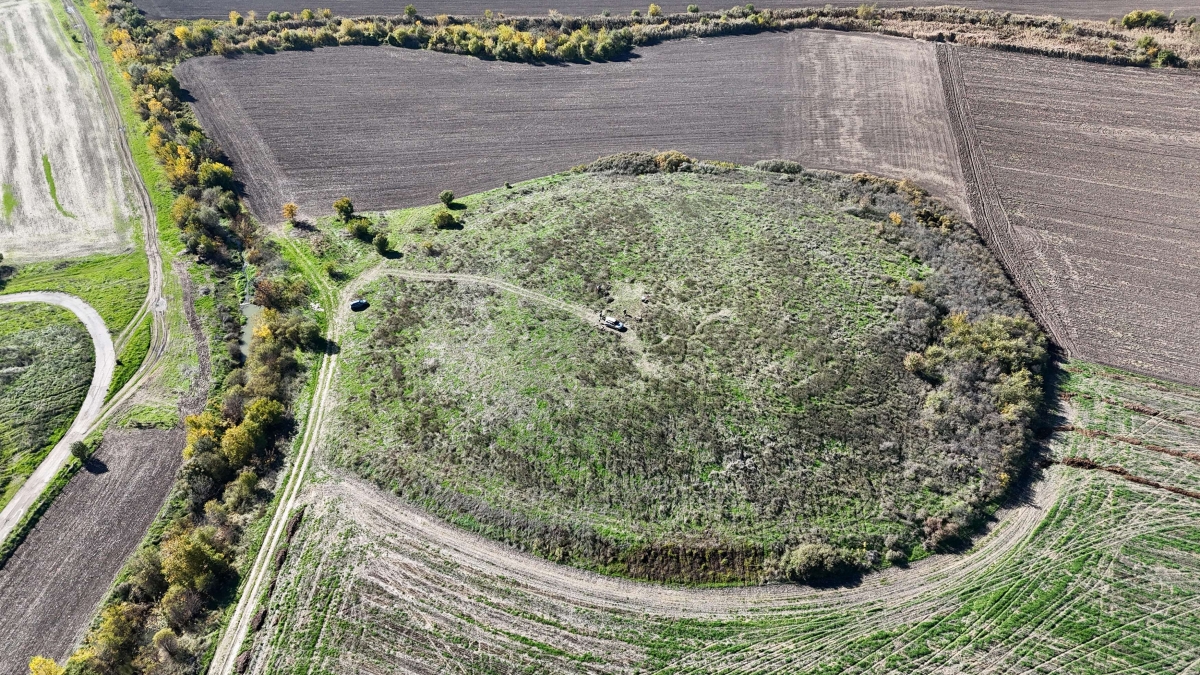
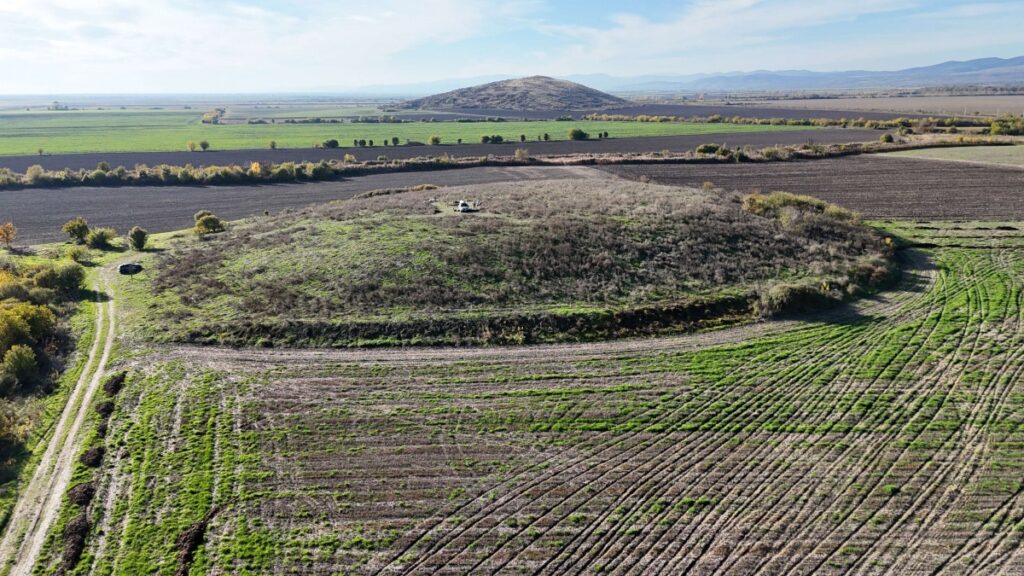
The archaeological field school at Tell Nenova, located in southern Bulgaria, offers students a unique opportunity to work at one of Europe’s largest unexplored tell sites. This large settlement mound, which rises 10 to 12 meters above the modern landscape, preserves an exceptional sequence of human occupation. The current project focuses on the Early Bronze Age (3rd millennium BCE). Although no specific information about the Early Bronze Age settlement can be provided before the archaeological excavations begin in 2026, the site appears very promising for archaeological fieldwork due to its intact cultural layer.
Excavations of the inner part of the tell are expected to answer questions such as: Were households differentiated? How were private and public spaces used? What was the nature of the ties between households? Did inequality exist? What were the patterns of craft specialization, production, and consumption?
Due to the lack of burial data and scarce published evidence from settlements, crucial information about the nature of EBA societal organization remains elusive. Although prestige goods have been found in tumuli burials, evidence from the plans of a few excavated settlements suggests a largely egalitarian socio-political organization. This is of great importance given the current interest in studying levelling mechanisms and various strategies for social integration. One of the crucial questions at the settlement scale is the possible influence of wheeled transportation on house arrangement and village planning.
The flat surroundings of the tell are also part of the research agenda. Geophysical investigations will reveal whether they are defensive installations, such as ditches, for example. It is unclear if Early Bronze Age (EBA) tell sites in Upper Thrace represented entire villages or central citadels surrounded by lighter auxiliary buildings. While it is highly probable that EBA tells were surrounded by animal pens, workshops and other installations, this remains largely unproven.
The regional archaeological landscape is extremely important as it will provide the context in which the excavation results from Nenova Tell and the surrounding area will be incorporated and interpreted. Geomagnetic investigations at three additional tell sites in the region were recently conducted. The presence of an Early Bronze Age flat site located approximately two kilometers east of Nenova Tell creates opportunities to study the relationship between tells and flat sites. The factors that led to the choice of one type of settlement over another remain largely unclear. This variability in the Early Bronze Age is another understudied aspect of this period. Taking a broader view, DNA evidence from individuals buried in tumuli east of the Nenova tell indicates steppe ancestry. Further evidence will shed light on the patterns of cohabitation, mixture, and mobility of people with different DNA.
During the 2026 excavation season, students and researchers will explore theoretical questions about the use of space, mobility, and contact studies by combining settlement archaeology, 3D documentation, and various scientific methods.
Studying tell sites is an excellent way to learn about past societies and social thinking in general.
Period(s) of Occupation: Early Bronze Age (3rd Millenium BCE)
Notes:
During the field school, participants will learn how to excavate, document and interpret a prehistoric (tell) site. Moreover, they will get an overview of the later prehistory of the Balkans and the Eastern Mediterranean as well as cutting-edge archaeological sciences (archaeogenetics, isotopic analyses, etc.) and basic archaeological theories & methods.
This field school provides a unique glimpse into the first global network spanning from Bulgaria to Egypt and Mesopotamia during this time and connecting this region with even more distant regions like Northern and Western Europe, as well as South Asia. In 2026, field school students will participate in the excavation of the buildings from the last Early Bronze Age layers, dating to the advanced 3rd millennium BCE. Faculty and students will work together and explore why and how the Bulgarian tell sites were part of this early transregional network. Moreover, they will learn how the latest scientific approaches enable us to trace human migration, kin groups, nutrition, infectious diseases and even pandemics during this time.
There are two field school sessions available (one four-week session and one two-week session). Each of them covers the following three modules:
Lectures and instructions on prehistoric and field archaeology, finds processing and documentation with an emphasis on the Bronze Age
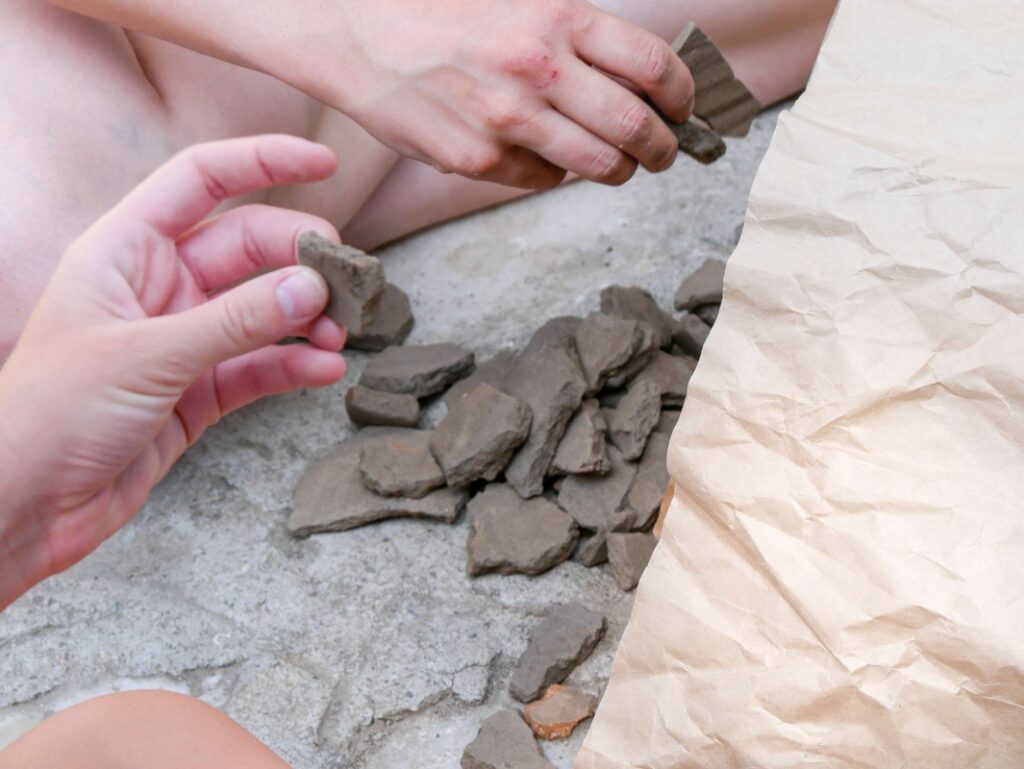
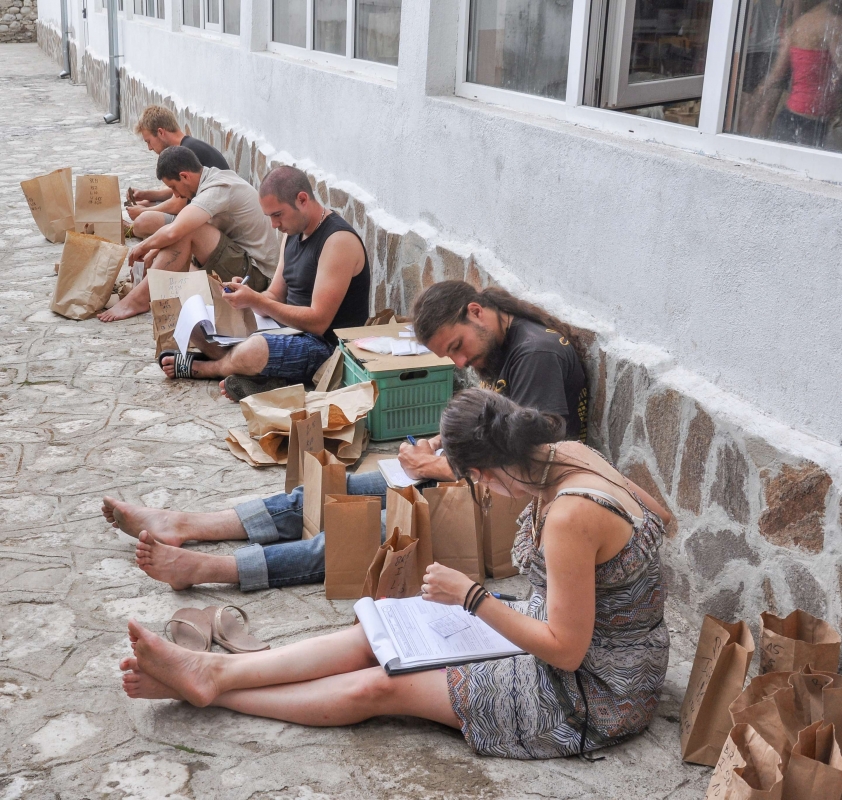
Fieldwork and workshops, including excavation of the Bronze Age layers and structures, which features practicing basic excavation techniques as well as screening, sifting and flotation; the development of archaeological field documentation by maintaining a field journal daily, filling context sheets and labels, drawing a ground plan/cross-section, 3D positioning of finds, taking coordinates, as well as taking photographs at the site;
Excursions to the ancient town of Philippopolis - present day - Plovdiv, including the Archaeological Museum, Old Town Quarter and major Roman monuments; and Stara Zagora, including the Regional Museum of History, Roman monuments and the Museum of Europe's best-preserved Neolithic dwellings (5600 BCE)
Project Size: 1-24 participants
Minimum Length of Stay for Volunteers: 2 weeks
Minimum Age: 18 (16, if the participant is accompanied by an adult family member)
Experience Required: No previous experience is required.
Room and Board Arrangements:
Accommodation*: In comfortable rooms with two to three beds (bathrooms with shower and WC, TV, A/C and free Wi-Fi) at Hotel Rio. The hotel is located in the central pedestrian and shopping area of Nova Zagora, very close to everything that the town can offer (shops, pharmacies, banks, restaurants, bars, hospitals, cafes, parks, etc.). Single rooms are available upon request for an additional 175 EUR per week. Staying an extra day at the hotel costs 50 EUR (per night per person).
*Subject to change. May be substituted with similar level accommodation.
Meals: Three meals per day are covered by the reimbursement payment. This field school can accommodate vegetarians, but vegan and lactose-free diets are harder to maintain. Kosher and gluten-free diets are impossible to accommodate in this location.
Participants must pay additionally for extra days and single room accommodation, as well as for extra meals, beverages, services and products.
Academic Credit:
*IMPORTANT NOTE*
Enrollment in the Balkan Heritage Field School (BHFS) through the Balkan Heritage Foundation (BHF) does not include academic credits.
Аs part of the BHF–CFS collaboration, US credit units are available to all students. To obtain US credits and certification, apply and enroll directly through the CFS portal; the tuition fee is included in the CFS admission fee: https://www.fieldsciences.org/programs/
ECTS (European Credit Transfer and Accumulation System) credit units are available to students attending European universities or a field school session shorter than 3 weeks. They shall enroll directly through the Balkan Heritage Field School. New Bulgarian University awards 6 ECTS credits for participating in the first two-week session and 12 ECTS credits for attending the four-week session. Transcripts of Records (ToR) are available upon request for an additional tuition fee. For details: Regulations for Obtaining Transcripts of Records.
Balkan Heritage Foundation
7 Tulovo St., Floor 4, Apt. 6
Sofia
1504
Bulgaria