Location: Marsaskala, Malta
Season: June 14, 2026 to July 4, 2026
Session Dates: June 14 - July 04, 2026
Application Deadline: May 14, 2026
Deadline Type: Rolling
Website: https://www.bhfieldschool.org/program/underwater-archaeology-in-malta
Discount for AIA members: 5% off regular admission
RPA Certified:
No
Affiliation:
Balkan Heritage Foundation, Superintendence of Cultural Heritage, New Bulgarian University, Bulgaria, Institute for Field Research
Project Director:
Field school director: Anton Motivans, Maritime Archaeologist, Executive Officer within the Policy, EU International Affairs and Underwater Heritage unit of the Superintendence of Cultural Heritage.
Team members: Debra Camilleri, Archaeologist, Assistant Head of Policy, EU International Affairs and Underwater Heritage unit of the Superintendence of Cultural Heritage; Michael Spiteri, Lead Diver, Senior Executive Officer of Repository and Site Projects, Administration and Support Services unit of the Superintendence of Cultural Heritage
Project Description:
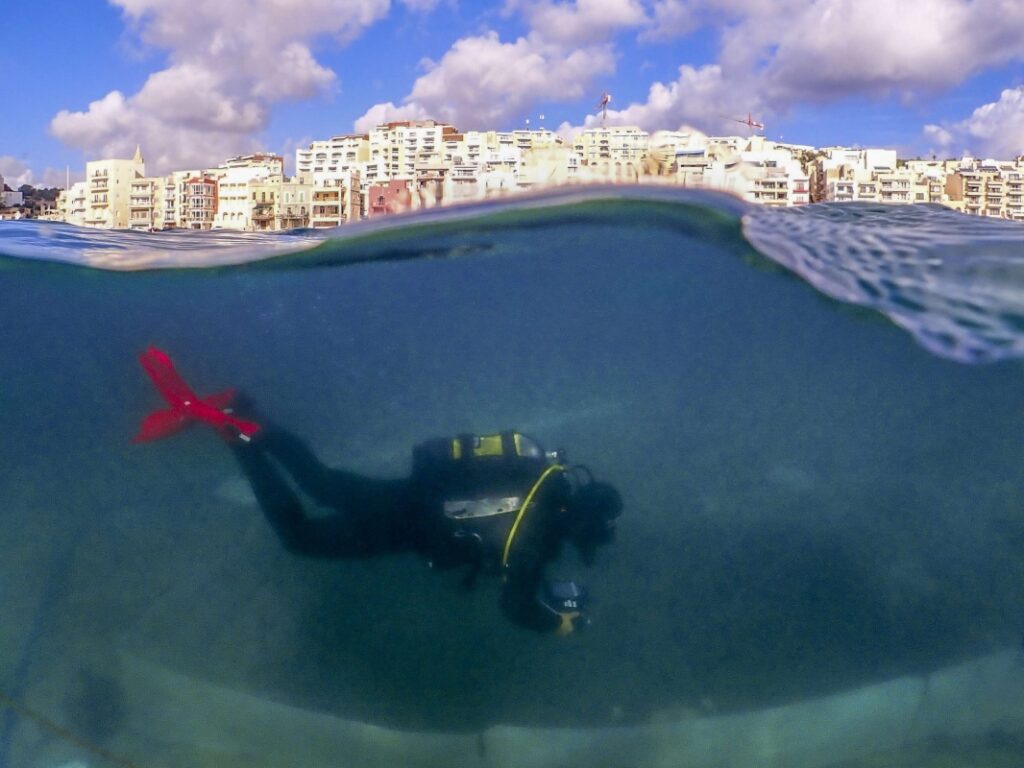
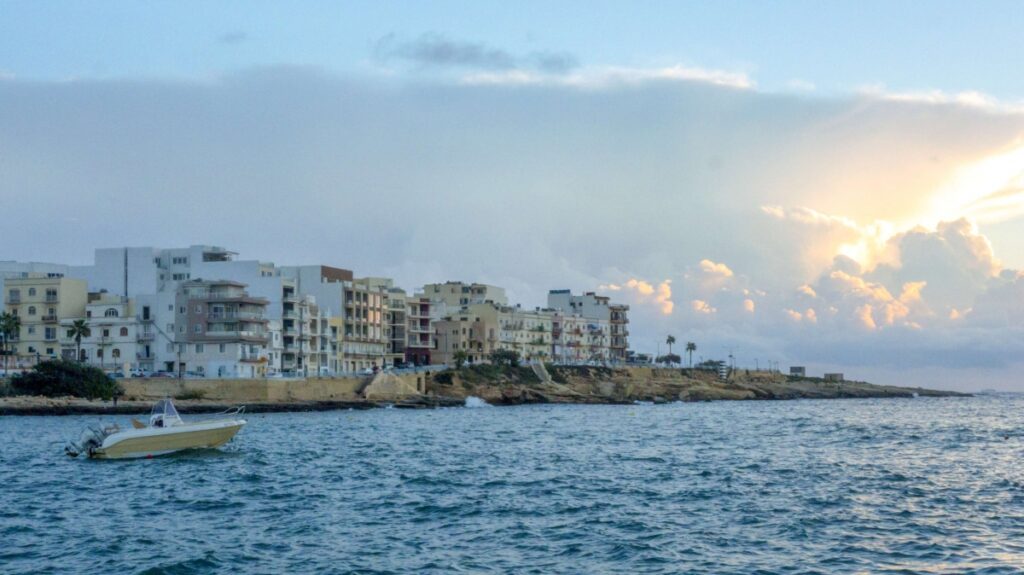
This field school provides experience and training in underwater archaeology through participation in an ongoing research project – investigating the Late Roman Harbour at Marsaskala – along the South-Eastern coast of Malta.
The geography of the site and consideration of site formation processes inform our understanding of the archaeological deposit and how it relates to the surrounding region historically. Importantly, it positions the bay as a maritime access point to the immediately surrounding Roman settlement, the more significant settlement at Żejtun, and the sanctuary of Tas-Silġ. Marsaskala is one of three sea access points for these inland sites, together with St Thomas Bay and Marsaxlokk Bay. The increase in shipping during the Punic and Roman periods, along with advancements in shipbuilding and navigation, meant that larger ships carrying goods were travelling greater distances and more frequently than ever before. At the outset of a long journey, it would be difficult to predict the destination’s weather at the time of arrival. Having an easily recognizable landmark (Tas-Silġ) and three bays that guaranteed at least one option for safe anchorage in any wind condition played an important role in the region’s maritime importance in antiquity and to this day (Grima, R. & Mallia, J. 2011, p.244).
The site in Marsaskala is the subject of ongoing study and many research questions about the site persist. With growing pressure from coastal development, it is more important than ever that there are continued efforts to investigate and document the site. Most of the material recovered dates to the 6th century and, to a far lesser extent, from the 3rd to 5th centuries. It has been suggested that the relative abundance of LR1 and LR2 amphorae could point towards the presence of a shipwreck. Although no ship construction has yet been found, this remains a major question that future work at the site aims to address.
The most recent excavations carried out at the site (Oct. – Nov. 2025) located a piled rock feature that could potentially be a harbour structure or ballast pile, several glass artefacts, an oil lamp, a variety of ancient fishing weights, and largely intact LR1 and LR2 amphorae.
The site represents an interesting case where research gaps, development proposals, and natural climate-driven impacts are all important factors. This will work to better prepare students for work on a complex site that has been both formed and threatened by a range of anthropogenic and environmental factors. This field school is suitable for beginners in the field and aims to broaden knowledge, refine skills and propel students to further their career in Maritime and Underwater Archaeology.
Period(s) of Occupation: Multi-period
Notes:
The field school is designed to introduce students to theory and methods within the field of maritime archaeology to prepare them for future excavations or next steps towards further academic and/or professional pursuits. Participants will have the chance to learn about a broad range of topics and specializations within the field. This overview will provide them with a more complete understanding of the multi-disciplinary aspect of maritime archaeology and the many paths for specialization – whether that be excavation/fieldwork, remote sensing, heritage management, GIS, etc.
By the end of the program, students will be able to:
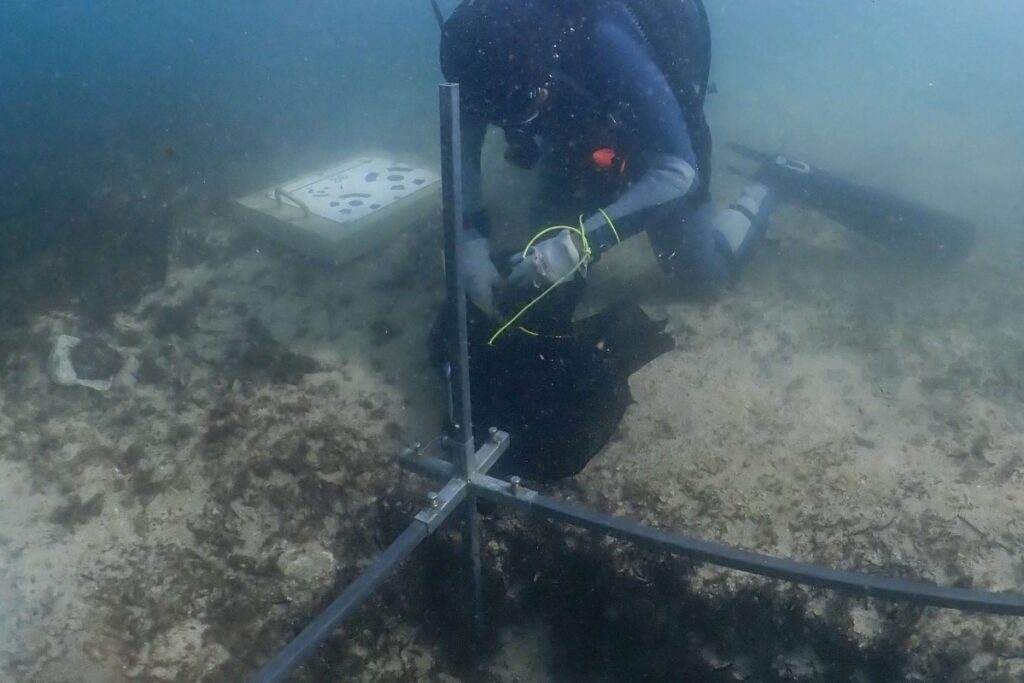
Set up and dismantle an underwater excavation site (water pump, hoses, dredges, grids, photogrammetry targets, etc.)
Perform basic underwater excavation techniques
Document a site by using a baseline and offset measurements to produce a scaled plan and profile drawings
Document artefacts in situ using a camera, scale bar, and north arrow
Collect data for 3D modelling and perform basic photogrammetric processing in Agisoft
Assist with the deployment and recovery of AUVs and ROVs
Recognize potential targets from side scan data
Desalinate artefacts from a marine context
Perform basic plotting and analysis in ArcGIS
In addition to these hands-on trainings, students will receive lectures on topics such as Maltese archaeology, ancient harbours and port structures, logistics and safety for deep-water projects, legislation, and site formation processes.
This will all be happening within the context of an active research project. This means that students will be contributing towards answering research questions while developing these new skills.
Project Size: 1-24 participants
Minimum Age: 18
Experience Required: Due to diving regulations in Malta, only divers who hold Advanced Open Water certificates (or equivalent) are allowed to dive without an instructor. While there will be an instructor as part of the field school staff, it is recommended that applicants hold at least AOW or higher to ensure that their dive time will not be limited. Applicants must have up-to-date DAN insurance, medical insurance, and repatriation. The participant should inform the project staff about any health issues, allergies, and food preferences. Participants should provide evidence (log book) of at least four dives within the year prior to the field school. If the participants do not meet this requirement, they must do two to four extra dives in Malta before the start of the field school with our diving centre partner at their own expense.
Room and Board Arrangements:
Accommodation*: Participants will stay in comfortable rooms with two or three beds (bathrooms with shower and WC, TV, air-conditioning) at the Campus Hub in Msida, close to the University of Malta. Single rooms are available upon request for an additional fee.
*Subject to change. May be substituted with similar level accommodation.
Meals: The welcome and farewell dinners are covered by the reimbursement payment. Students are responsible for their daily lunches and dinners and all meals on days off. There are several restaurants, grocery stores, and convenience shops close to the accommodation and the project team will recommend restaurants for different preferences (cuisine, cost, dietary needs).
Participants must pay additionally for extra days and for single room accommodation as well as for extra meals, beverages, services and products!
Academic Credit:
*IMPORTANT NOTE*
Enrollment in the Balkan Heritage Field School (BHFS) through the Balkan Heritage Foundation (BHF) does not include academic credits.
Аs part of the BHF–CFS collaboration, US credit units are available to all students. To obtain US credits and certification, apply and enroll directly through the CFS portal; the tuition fee is included in the CFS admission fee: https://www.fieldsciences.org/programs/
For students attending European universities, ECTS credits are also available for an additional fee. To receive ECTS credits, enroll directly through the BHFS and declare your request for credits during the enrollment process.
Balkan Heritage Foundation
7 Tulovo St., Floor 4, Apt. 6
Sofia
1504
Bulgaria