This listing expired on May 31, 2026. Please contact dchee@anthroctr.org for any updated information.
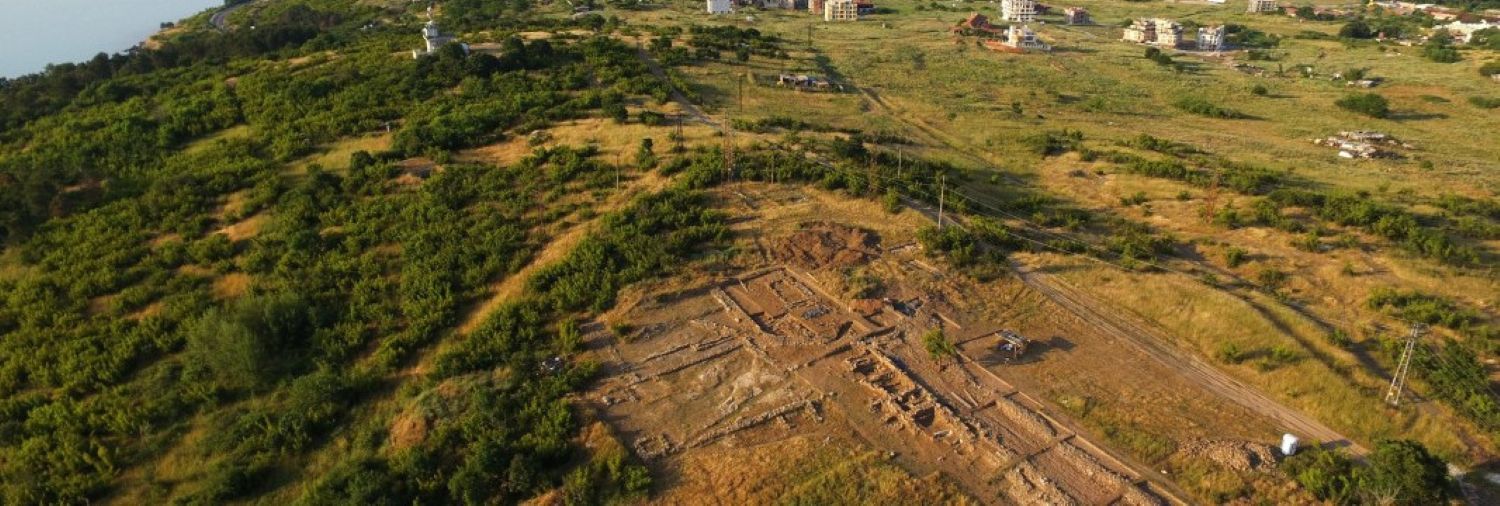
Location: 8130 Sozopol, Bulgaria
Season: May 31, 2026 to June 27, 2026
Application Deadline: April 10, 2026
Deadline Type: Rolling
Website: https://anthroctr.org/program/2026-bulgaria-apollonia/
Discount for AIA members: None
Program Type:
Field School
RPA Certified:
No
Affiliation:
Anthropocene Research Center and Balkan Heritage Foundation
Project Director:
Dr. Krastina Panayotova (National Archaeological Institute with Museum), Dr. Teodora Bogdanova (National Archaeological Institute with Museum) & Dr. Angela Pencheva (Balkan Heritage Foundation)
Project Description:
Ancient Apollonia Pontica (present-day Sozopol, Bulgaria) is one of the oldest towns on the western Black Sea Coast. The city, founded by Miletian colonists around 610 BCE, was named Apollonia Pontica in honor of the patron deity of Miletus – Apollo. Apollonia became an autonomous and strong independent polis, as well as an important trade center between Ancient Greece and Thrace. Thanks to its strong navy and naturally protected harbors, Apollonia kept control of the major maritime and terrestrial merchant routes along the western Black Sea Coast for several centuries. The city preserved its independence until 72 BCE, when it was conquered, pillaged and burned by the Roman legions of Marcus Lucullus. The city succeeded in restoring its former glory and was known in the Roman world as Apollonia Magna (Great Apollonia). Following the Christian tradition, its name was changed to Sozopol, meaning “town of salvation”, in the 4th century CE. Despite numerous invasions and attacks, the city survived the period of the Great Migration (4th – 7th century CE) and entered the Middle Ages as a focal point of long-lasting Byzantine-Bulgarian conflicts.
The project is focused on the sector of Messarite, located southwest of Sozopol, approx. 2 km from the center of the Old Town. During the initial survey of the area, 29 different features were identified, including walls, buildings and burials. A Franco Bulgarian team excavated the area in 2002-04 and explored six buildings dated between the second half of the 5th century BCE and the beginning of the 3rd century BCE. The team also found parts of an ancient road oriented north-south were also discovered.
Towards the end of the 4th century BCE, the buildings at the Messarite sector were abandoned and destroyed. Shortly thereafter, burials with both inhumations and cremations began appearing in the abandoned ruins. In one area, family plots enclosed with stone walls (periboloi) were identified. The burial structures vary from pits, pithoi, ceramic and limestone sarcophagi, to tile-lined and cist graves while the cremations are in locally made urns. The family plots had indications of traditional funerary rites, including 10 ritual firepits.
These are unique excavations of the broader territory of an ancient Greco-Roman colony in present-day Bulgaria. The results from the excavations along with the traces of mining and metallurgy in the adjacent area will shed light on the economic development of Apollonia Pontica in the Hellenistic and Roman periods.
Period(s) of Occupation: Greco-Roman Period
Notes:
Tuition is $5,939; Earn 8 Semester Credit Units (equivalent to 12 Quarter Credit Units) through our School of Record – Culver Stockton College
Project Size: 1-24 participants
Minimum Length of Stay for Volunteers: Full session
Minimum Age: 18 years old
Experience Required: None. This is hands-on, experiential learning and students will study on-site how to conduct archaeological research. Field work involves physical work and exposure to the elements and thus requires a measure of understanding that this will not be the typical university learning environment. You will have to work outdoors and will get sweaty and tired. Students are required to come equipped with sufficient excitement and an adequate understanding that fieldwork requires real, hard work, in the sun and wind. The work requires patience, discipline, and attention to detail.
Room and Board Arrangements:
Accommodation for the duration of the project is at Hotel Polina Beach which offers comfortable rooms with two to three beds, air conditioning, a minibar, TV and Wi-Fi. The hotel is in the new part of Sozopol, a 15 min walk to the Old Town Quarter, the Archaeological Museum. It is also a 15 min walk to the archaeological site.
This program provides daily breakfast and lunch (lunch pack for the field trips), as well as the official welcome and farewell dinners. Students are responsible for their own dinner. Sozopol offers a variety of restaurants that can meet everyone’s preferences and dietary requirements – from fast food options to cozy gourmet restaurants. The average meal price (soup/salad, main dish and dessert) can cost between $10 to $20. The project team will recommend restaurants for different preferences (cuisine, cost, dietary needs).
Academic Credit:
Earn 8 Semester Credit Units (equivalent to 12 Quarter Credit Units) through our School of Record – Culver Stockton College
Dorian Chee
5335 W Adamas Blvd Suite 106
Los Angeles
California
90016
U.S.
Phone: (323) 740-1805