This listing expired on July 4, 2026. Please contact dchee@anthroctr.org for any updated information.

Location: Pazardzhik, Bulgaria
Season: July 4, 2026 to August 1, 2026
Application Deadline: April 10, 2026
Deadline Type: Rolling
Website: https://anthroctr.org/program/2026-bulgaria-yunatsite/
Discount for AIA members: None
Program Type:
Field School
RPA Certified:
No
Affiliation:
Anthropocene Research Center & Balkan Heritage Foundation
Project Director:
Prof. Kamen Boyadzhiev (National Archaeological Institute with Museum, Bulgaria)
Project Description:
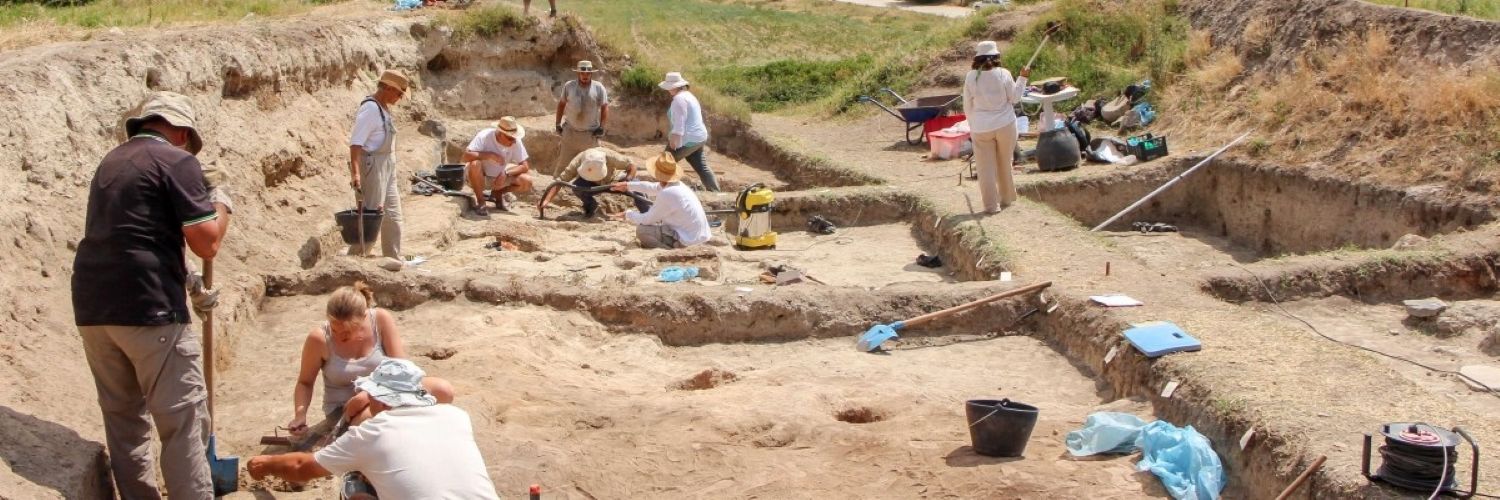
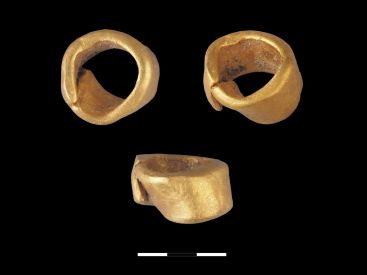
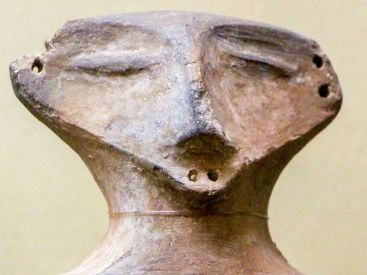
During the 7th-6th millennia BCE, farming and animal husbandry spread from Anatolia and the Near East through the Balkan Peninsula and to Europe. These were not new technologies adopted by local populations but newcomers who brought a completely new way of life and subsistence, initially co-existing and then taking over local populations. By the 6th millennium BCE, the local economy, social organization, trade, and cultural contacts evolved, to reach its peak in the 5th millennium BCE. Even newer technologies came to bear, when locals begin processing – and using – metals such as copper and gold.
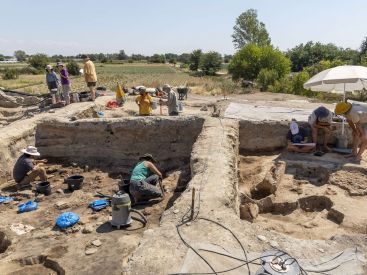
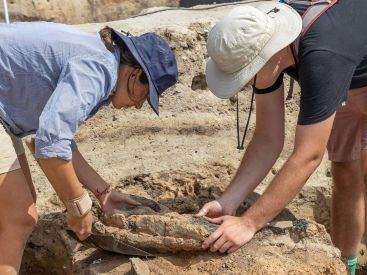
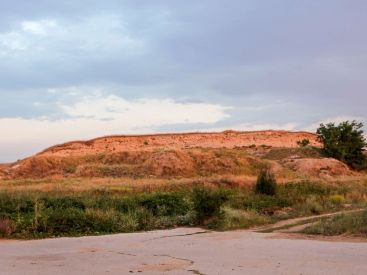
Recent excavations at Tell Yunatsite indicate that the Chalcolithic/Final Neolithic period settlement at the site covered an area far larger than the tell itself. The site had an uptown (acropolis?) sector and a downtown district. The uptown sector was surrounded by a five meter wide clay wall and a broad and deep ditch. Buildings in this part were placed close to each other, creating an almost unbroken urban fabric that is easy to close and defend.
Despite their defensive resource investment, the Chalcolithic/Final Neolithic settlement at Yunatsite experienced a violent event at ca. 4,200-4,100 BCE. Evidence suggests deliberate destruction by outsiders. Skeletons of children, elderly men, and women were found scattered on floors, suggesting a massive massacre. Those who survived returned and resettled at the tell, but soon even they left. At that point, Tell Yunatsite and the area around it were abandoned for more than 1,000 years. During this time, a sterile layer accumulated over the last Chalcolithic/Final Neolithic layer.
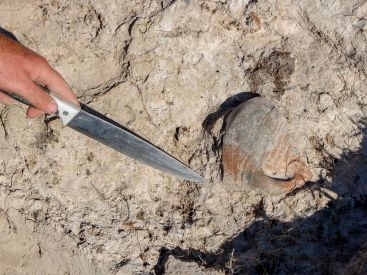
To date, approximately one third of the tell has been excavated. This work yielded rich collections of archaeological materials, and the sterile soil has not yet been reached. There is a medieval cemetery at the top of the tell, followed by a Roman period level, two Iron Age levels, another dated to the Early Bronze Age, and finally a Chalcolithic/Final Neolithic level. It is unknown if the cultural history of the tell begins in the Chalcolithic/Final Neolithic period or whether older Neolithic occupation layers exist.
Period(s) of Occupation: Chalcolithic/Final Neolithic period
Notes:
Tuition is $5,192; Earn 8 Semester Credit Units (equivalent to 12 Quarter Credit Units) through our School of Record – Culver Stockton College
Project Size: 1-24 participants
Minimum Length of Stay for Volunteers: Full session
Minimum Age: 18 years old
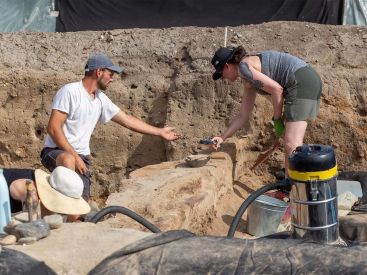
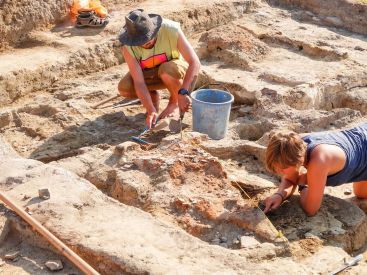
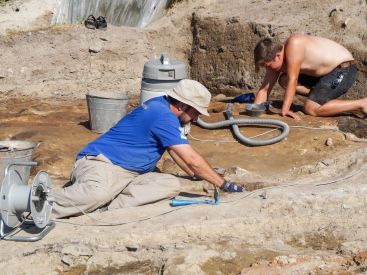
Experience Required: There are no prerequisites to participate in this field school. This is hands-on, experiential learning and students will learn on-site how to conduct field research. Field work involves physical work and exposure to the elements and thus requires a measure of understanding that this will not be the typical university learning environment. You will have to work outdoors and will get sweaty and tired. The work requires patience, discipline, and attention to detail.
Room and Board Arrangements:
Cost of Room and Board is included in tuition.
Academic Credit:
Earn 8 Semester Credit Units (equivalent to 12 Quarter Credit Units) through our School of Record – Culver Stockton College
Dorian Chee
5335 W Adamas Blvd Suite 106
Los Angeles
California
90016
U.S.
Phone: (323) 740-1805