This listing expired on June 30, 2026. Please contact viafs@bvinpt.org for any updated information.
Location: Spanish Town, British Virgin Islands
Season: June 29, 2026 to July 12, 2026
Session Dates: 30th June-11th July 2026
Application Deadline: May 1, 2026
Deadline Type: Rolling
Website: https://www.bvinationalparkstrust.org/viafs2026
Program Type:
Field School
RPA Certified:
No
Affiliation:
British Virgin Islands National Parks Trust and the Royal Agricultural University
Project Director:
Professor Mark Horton/ Dr Michael Kent
Project Description:
When the National Parks Trust of the Virgin Islands (NPTVI) was established under the National Parks Ordinance of 1961, its mission was identified as being “to preserve and manage designated natural and cultural areas in order to improve the quality of life in the British Virgin Islands.” In accordance with the Trust’s mission, the NPTVI has accumulated four (4) historical sites and other national parks with historical components that are legislatively protected and important to the overall Virgin Islands story.
During the summer of 2026, the NPTVI in partnership with the Royal Agricultural University in Cirencester, England, will begin to archaeologically investigate some of the existing historical sites under the Trust’s remit to gain a better insight into their historical use. The accumulated information will be disseminated and shared with the Virgin Islands community in various ways whilst serving to augment the overall tourism product of the Territory. Pursuant to this objective, three (3) sites have been identified for investigation in the 2026 Virgin Islands Archaeology Field School. These sites include:
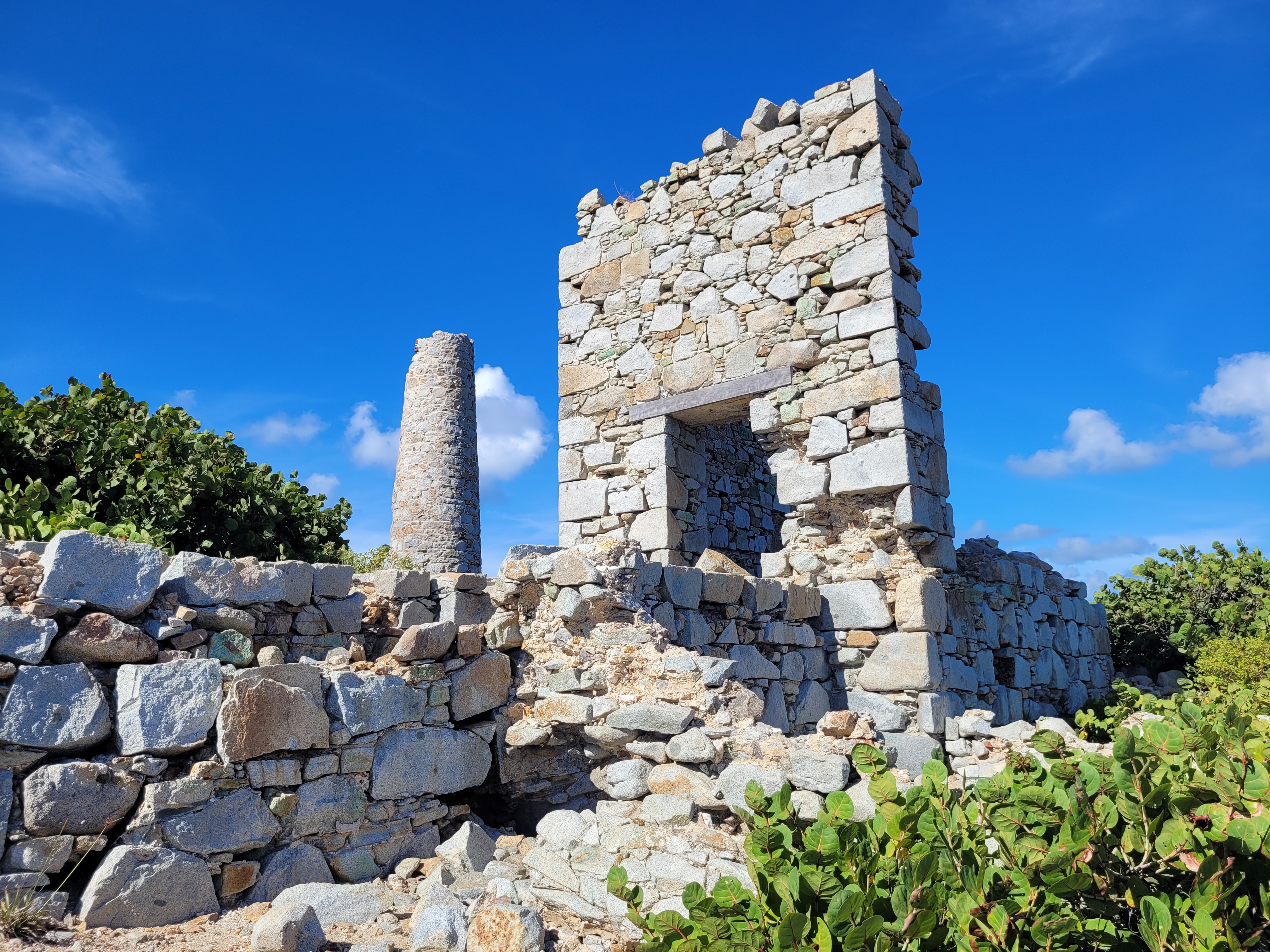
Copper Mine Point (established as a national park 1998)
Copper Mine Point National Park info | bvinationalparkstrust.org
Whilst evidence suggests that Spanish miners from Puerto Rico were digging for copper ore in the early sixteenth century, it was not until the mid-nineteenth century that the full potential for ore extraction was realized on Virgin Gorda and a mining operation constructed on the south-east point of the island. Operating during the 1840’s and 1860’s, the mine consisted primarily of an engine house to enclose the large beam engine (used to pump water and bring raw ore out of the mineshafts), a boiler (which provided steam to power the engine), a large deep cistern and catchment platform (used to store water for the boiler), a chimney, mine shafts, and scattered ancillary buildings. Covering an area of 31.93 acres, this unique site is the only Cornish copper mine operation in the English-speaking world outside of England.
2026 Objectives include:
• A GIS survey of the industrial works and their ancillary buildings in conjunction with a high-resolution drone mapping survey.
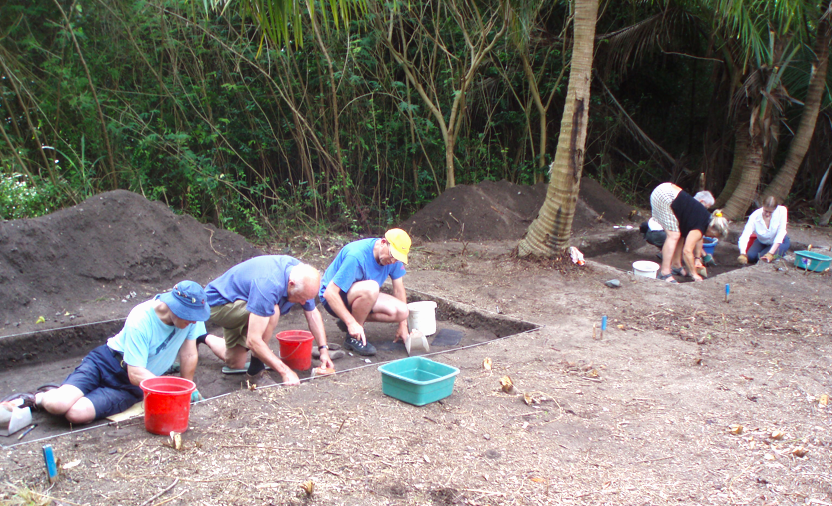
• Identification of the Cornish settlement employing shovel testing, test pitting, and excavation.
• Record the abandoned Perran Foundry beam from the original engine along the shoreline of the adjacent bay.
Little Fort National Park (established as a national park 1978)
Little Fort National Park info | bvinationalparkstrust.org
This fascinating site once formed part of the Virgin Islands fortification network during the eighteenth century with records of the site being attacked by a Spanish fleet from Puerto Rico in 1736. Consisting of a series of drystone gun embrasures and a unique powder magazine embedded within the granite boulders surrounding the site, this emplacement during contemporary use was christened Fort George in honor of King George III (1738-1820) and guarded the approaches to St Thomas Bay, the main anchorage for the Spanish Town settlement.
A Spanish fortification or defensive emplacement may once have existed on the island in the early sixteenth century, with Little Fort Point being the most likely location. Should this be the case, it would be the earliest identifiable European fortification constructed in the Lesser Antilles.
2026 Objectives include:
• A GIS survey of the fortification platform and surrounding area in conjunction with a high-resolution drone mapping survey.
• Metal detector survey of the fortification platform to identify ferrous anomalies
• Shovel testing, Test pitting, and excavation of the fortification platform for subsurface structural features
• Shovel testing, Test pitting, and excavation of the foreshore area north of Fort George for occupational evidence
Prickly Pear National Park (established as a national park 1988)
Prickly Peak National Park info | bvinationalparkstrust.org
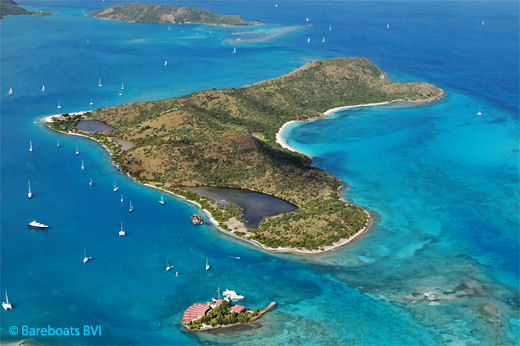
Lying in an area christened North Sound adjacent to Virgin Gorda lies Prickly Pear Island, named after the Opuntia cactus which grows abundantly on its slopes. Apart from a beach bar on the southeastern tip, the island is abandoned and for the last thirty-eight years has been protected by the NPTVI. In the past, however, the island was host to a cotton plantation that in 1823 was recorded to have a population of three whites and eleven enslaved Africans, producing over 1000Ilbs of cotton per annum and a variety of provision crops.
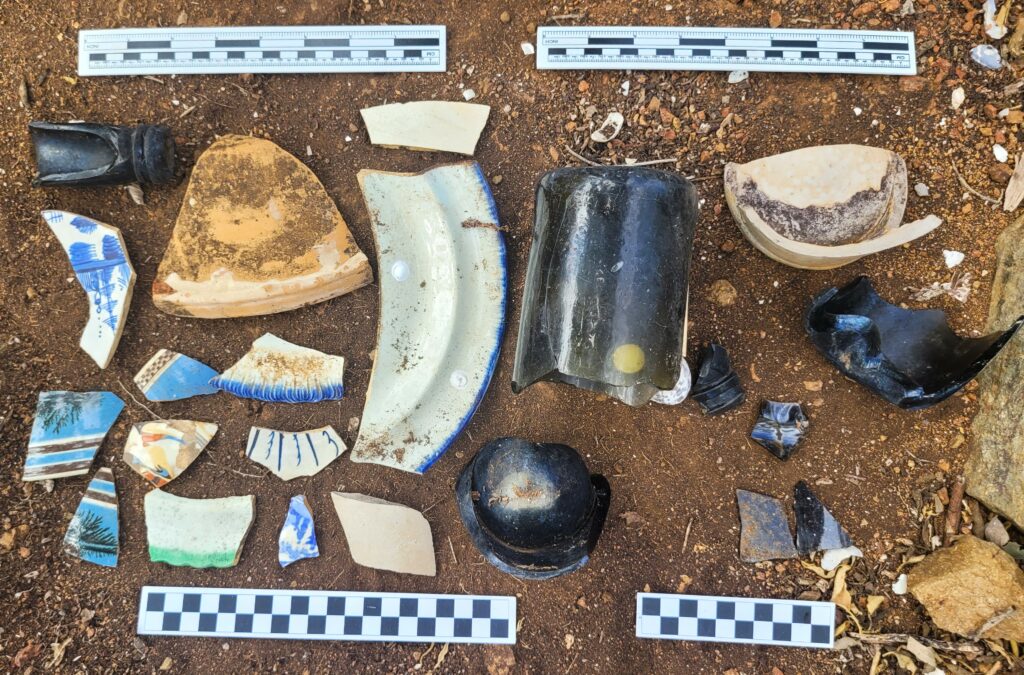
The remains of this plantation have been undisturbed and contain visible foundations, slope terracing, hundreds of surface artefacts primarily represented by ceramics, glass, and ferrous fragments scattered, over an area that was most likely the domestic accommodation of the overseer or owner. Other areas contain more basic domestic evidence, possibly suggesting the locations of the enslaved domestic accommodation.
2026 Objectives include:
• A GIS survey focusing on the areas of domesticity and terracing previously identified in conjunction with a high-resolution drone mapping survey of the entire island.
• Surface artefact recovery, mapping, recording and cataloging for identification
• Selective pollen sampling to identify the location of the cotton orchards and what provision crops were being grown on the island.
Period(s) of Occupation: Historical Archaeology c. 1520-1830
Project Size: 1-24 participants
Minimum Length of Stay for Volunteers: 14 nights
Minimum Age: 18
Experience Required: None
Room and Board Arrangements:
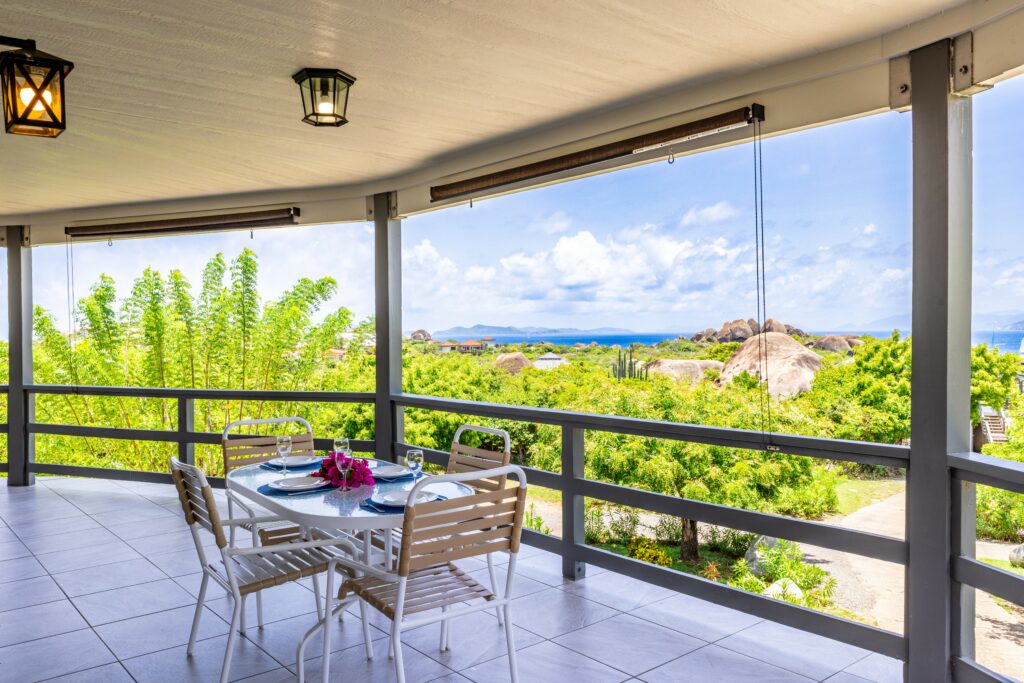
Accommodation will be located at the spectacular Guavaberry Spring Bay Resort on Virgin Gorda, nestled among huge granite boulders just minutes away from Spring Bay beach. Participants will be in houses with shared rooms that have their own individual bathrooms and will be gender separated. Each house has Wi-Fi, housekeeping, a full kitchen, linen, beach towels, and an in room safe.
Basic breakfast and lunch food and drinks will be provided. Evening meals will alternately include beach BBQ’s and local restaurants. Any additional food or drink requirements may be purchased from local stores.
Academic Credit:
A Certificate of Participation will be issued outlining the various techniques practiced and lectures attended, verified by the project leaders.
Michael Kent
viafs@bvinpt.org
Road Town
Tortola
British Virgin Islands
Phone: (352) 492-5262