February 2, 2026
by Megan Savoy
One of our 2025 John R. Coleman Traveling Fellowship winners, Megan Savoy, provides us with an update:
My project examines whether the Early Iron Age (EIA, 950 – 700 BCE) in Southern Italy was a period of recovery and transition after the collapse of the Late Bronze Age (1120-950 BCE) through the lens of a bioarchaeological case study in Salento (the ‘heel’ of Italy). I was awarded the John R. Coleman Traveling Fellowship which I used to fund four months of pilot research to examine skeletal remains from an EIA communal burial, Hypogeic Tomb 1, that was previously excavated at the archaeological site of Roca Vecchia. The aims I proposed were to: 1) clean and identify the skeletal remains excavated from 2022 and 2008; 2) age and sex estimations; and 3) identify disease and trauma patterns.
I arrived in September at the Roca Vecchia Field School 2025 as the bioarchaeologist specialist. There, I taught American and Italian students how to clean, photograph, and catalogue the skeletal remains from Hypogeic Tomb 1 (Figure 1). These remains were previously excavated in 2008, 2022, and 2023, and our goal was to analyze 2022’s remains at Roca. Together, we completed 274 skeletal inventory forms (cleaned approximately 600 bones), which included information such as preservation quality, element side, taphonomy, pathology observations and age and sex estimations if possible. We successfully completed 2022’s assemblage at the end of the field school.
In October, I cleaned and catalogued 2008’s skeletal assemblage at the University of Salento (Lecce). For the first two weeks, I continued to work with three American students from the field school (Figure 2). Together, we completed 177 inventory forms (approximately 300 bones). Afterwards, I worked independently until December in which I completed 387 inventory forms (approximately 500 bones). Unfortunately, my work was halted in December because of a serious computer malfunction in which I lost my data analysis but my raw data was fortunately backed up to the cloud. Due to this disruption and the sheer number of skeletal remains in this tomb, I was not able to complete the skeletal inventory for 2008’s assemblage by the end of this grant period; however, I did make significant progress in data collection and noted some key observations.
For preliminary demographic results, I counted a significantly higher number of adult skeletal elements compared to juvenile elements present. In fact, only a small portion of the grave appeared to be dedicated towards juveniles, which may reflect the burial practices at the time. For pathologies, I observed several cases of severe arthritis, which can be attributed to physical activities or natural aging processes. Additionally, there are a few cases of congenital and possibly nutrient deficiencies. I will continue to complete the skeletal inventory and reconduct the data analyses these next few months.
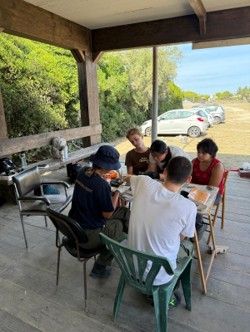
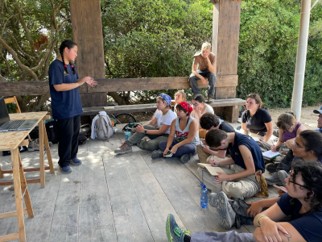
Figure 1. Located at the Roca Vecchia Archaeological site at the 2025 field school.
(A) Megan presenting a bioarchaeology seminar to North American and Italian students in September. (B) Megan is demonstrating how to clean and identify skeletal remains.
(Photo credits both: Chiara Corvaglia)
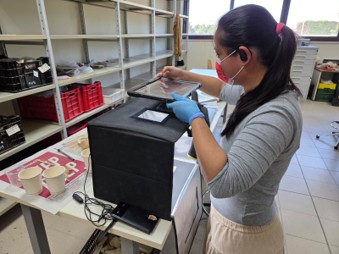
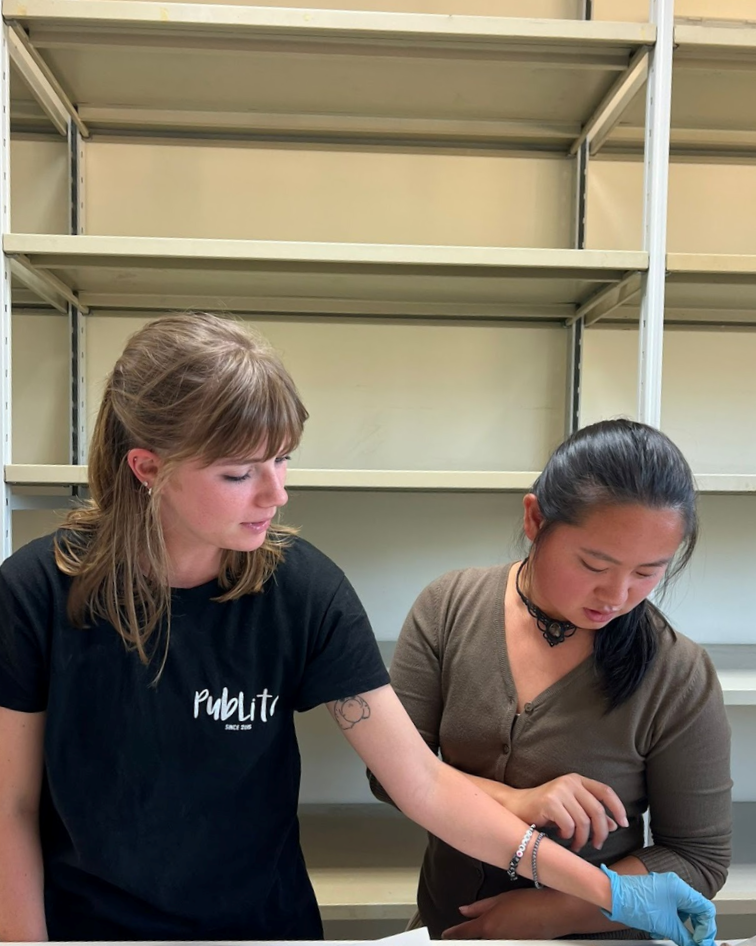
Figure 2. Located at the University of Salento, Lecce.
(A) Megan mentoring students on sorting skeletal remains at the University of Salento.
(B) Megan photographing skeletal remains from 2008 assemblage after cleaning and completing an inventory form.
(Photo credits images: Alansa Allen (2A) and Francesca Congedo (2B)