February 3, 2026
by Carolyn Kennedy
One of our 2025 Ellen and Charles Steinmetz Endowment Grant recipients, Carolyn Kennedy, provides us with an update:
Project Overview
The Philadelphia Gunboat Research Initiative (PGRI) is a multi-institutional archaeological project investigating the remains and wider context of the American gunboat Philadelphia, sunk during the Battle of Valcour Island on Lake Champlain on October 11, 1776. This pivotal Revolutionary War engagement delayed British advances from Canada and was the earliest large-scale naval battles fought by the Continental forces.
The gunboat Philadelphia was raised in 1935 by Col. Lorenzo Hagglund and ultimately transferred to the Smithsonian Institution, where it is now a centerpiece of the National Museum of American History. Ongoing conservation of the vessel and its assemblage by the Texas A&M University Conservation Research Laboratory has renewed scholarly interest in the original wreck site, particularly the potential survival of associated artifacts left behind during the 1935 recovery. The 2025 field season aimed to assess the submerged battlefield site and to recover diagnostic materials relating to Philadelphia for conservation, research, and future public interpretation
Research Goals and Methods
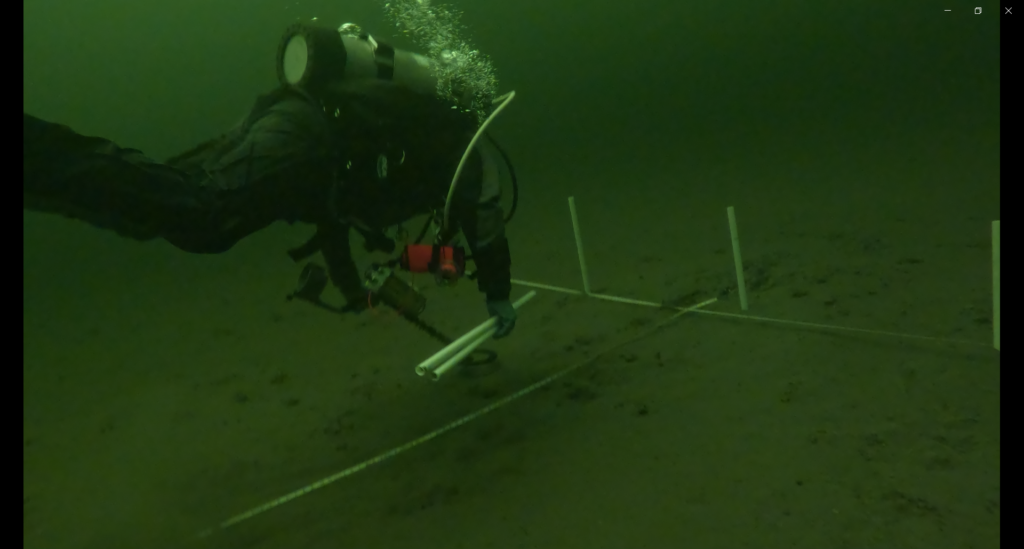
The primary objectives of the 2025 season were to (1) determine whether missing rigging components or other ship-related materials remain on the lakebed, (2) recover artifacts directly associated with Philadelphia, (3) conduct a magnetometer survey to complement earlier side-scan sonar work, and (4) continue a high-resolution, diver-held metal detecting survey within a legacy grid system established during earlier Valcour Bay research by the Lake Champlain Maritime Museum (1999–2004).
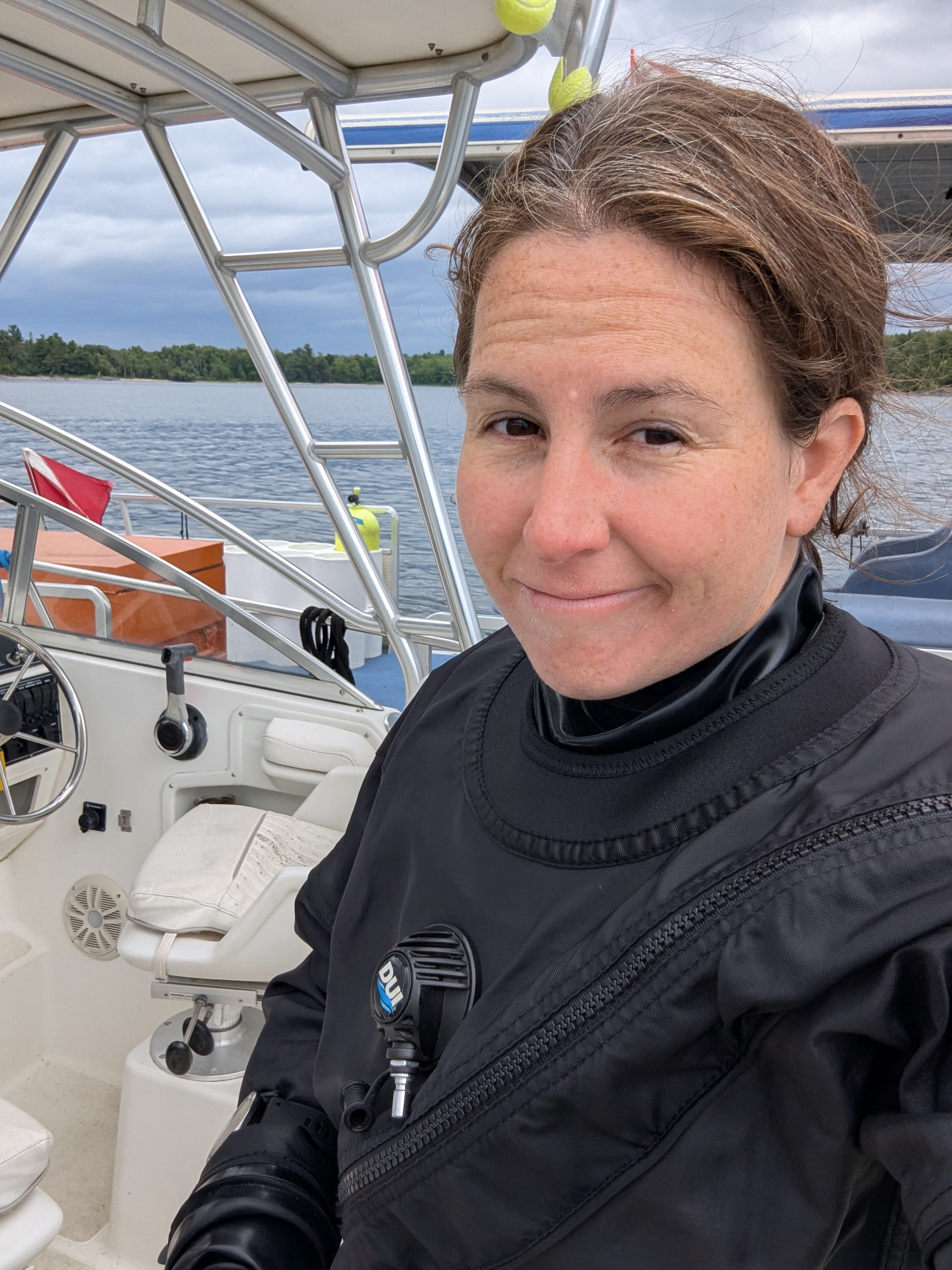
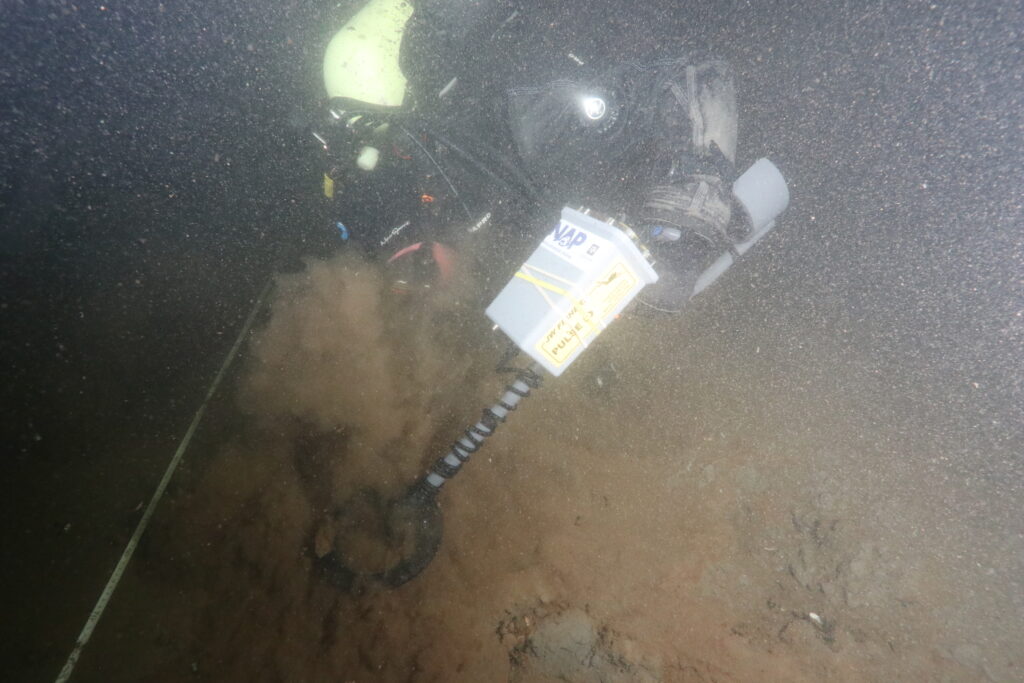
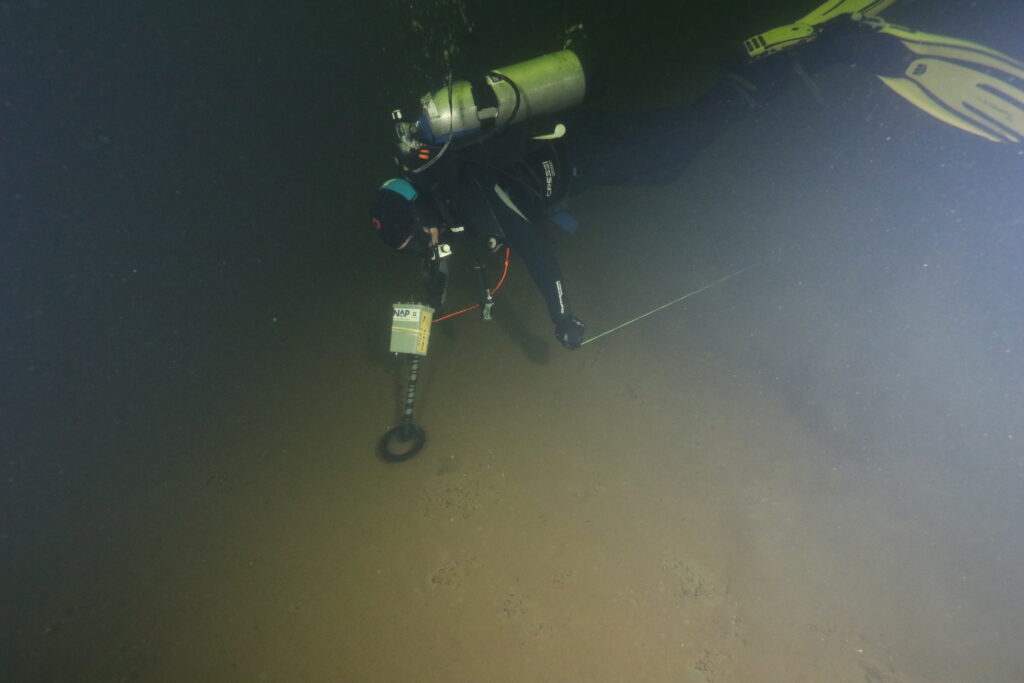
Remote sensing was conducted using a Geometrics G882 magnetometer integrated with GPS and Hypack software, covering approximately 0.2 square miles of the battle area. Diving operations focused on ground-truthing magnetometer anomalies and surveying four newly established 50 × 50 ft grid squares adjacent to the presumed sinking location using new Pulse 8x metal detectors purchased with funds from AIA’s Ellen and Charles Steinmetz Endowment for Archaeology. Over four weeks, the team completed 128 dives.
Preliminary Results
The magnetometer survey identified 25 targets of interest. Notable discoveries included an unexploded Revolutionary War-era mortar shell recovered approximately 150 ft from the center of the Philadelphia site. The shell is of particular importance due to the rare survival of its gunpowder charge, which offers a unique opportunity for comparative analysis with other preserved 18th-century munitions.
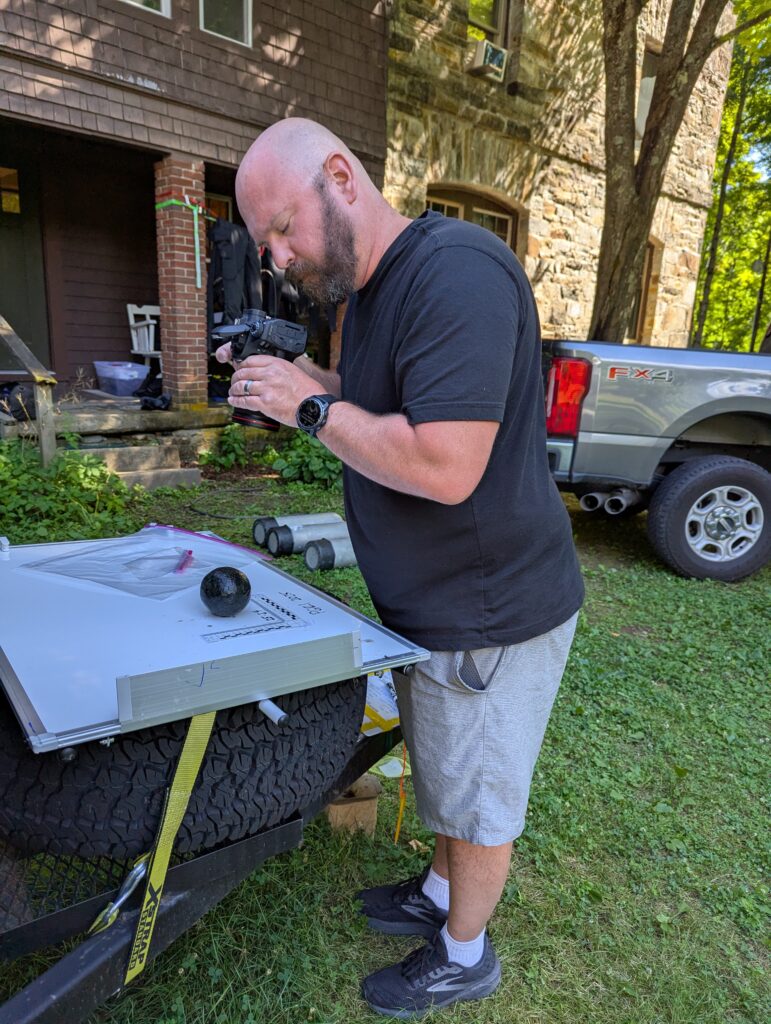
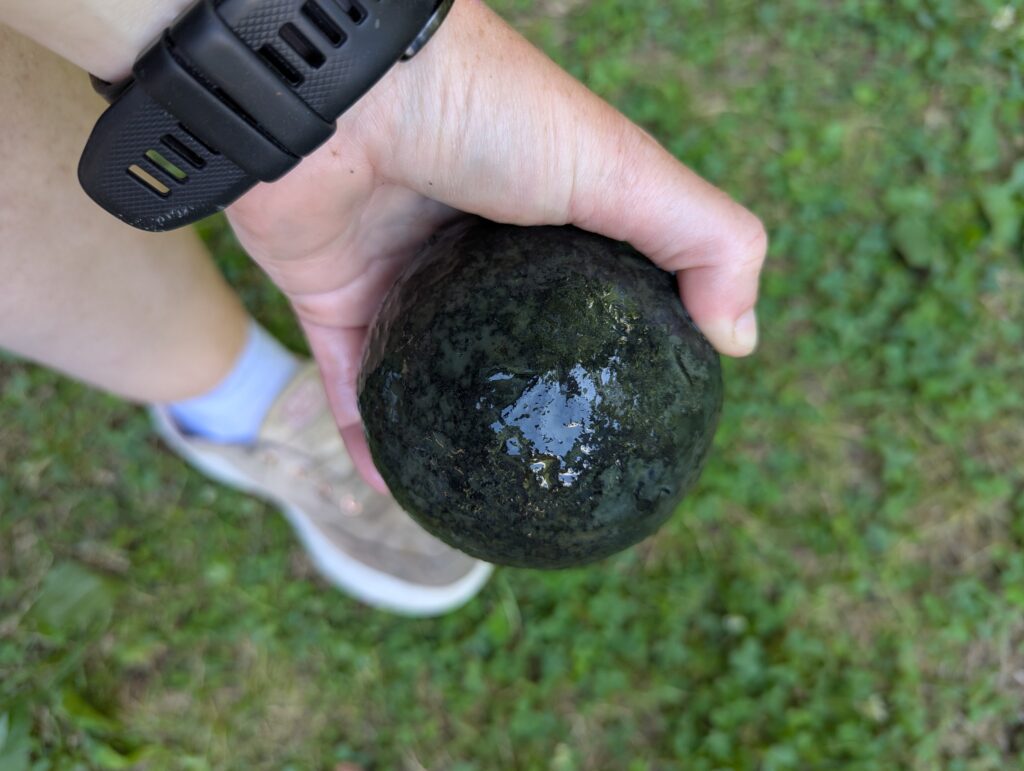
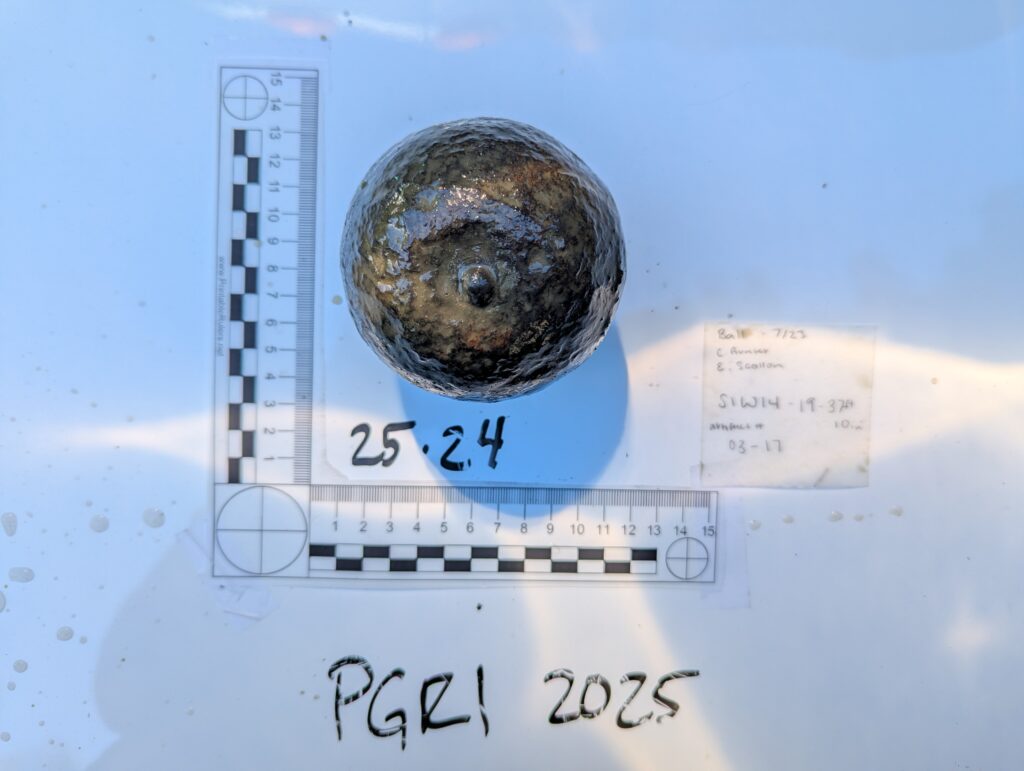
The metal detecting survey recovered approximately 50 objects, including a 6-pound iron cannonball found within 50 ft of the presumed sinking location. Historical accounts note that two 6-pound shots holed Philadelphia during the battle, and the proximity of this 6-pound ball makes it a strong candidate for one of those two shots. Additional finds include hand-cut wooden fragments, square nails, and other materials contributing to a clearer understanding of both the battle and later site formation processes.
All recovered artifacts are currently undergoing documentation and conservation at Texas A&M University