May 13, 2026
To celebrate our 2026 Fellowship recipients, we connected with this year’s awardees to learn more about their projects and the unique paths that led them into the field of archaeology.
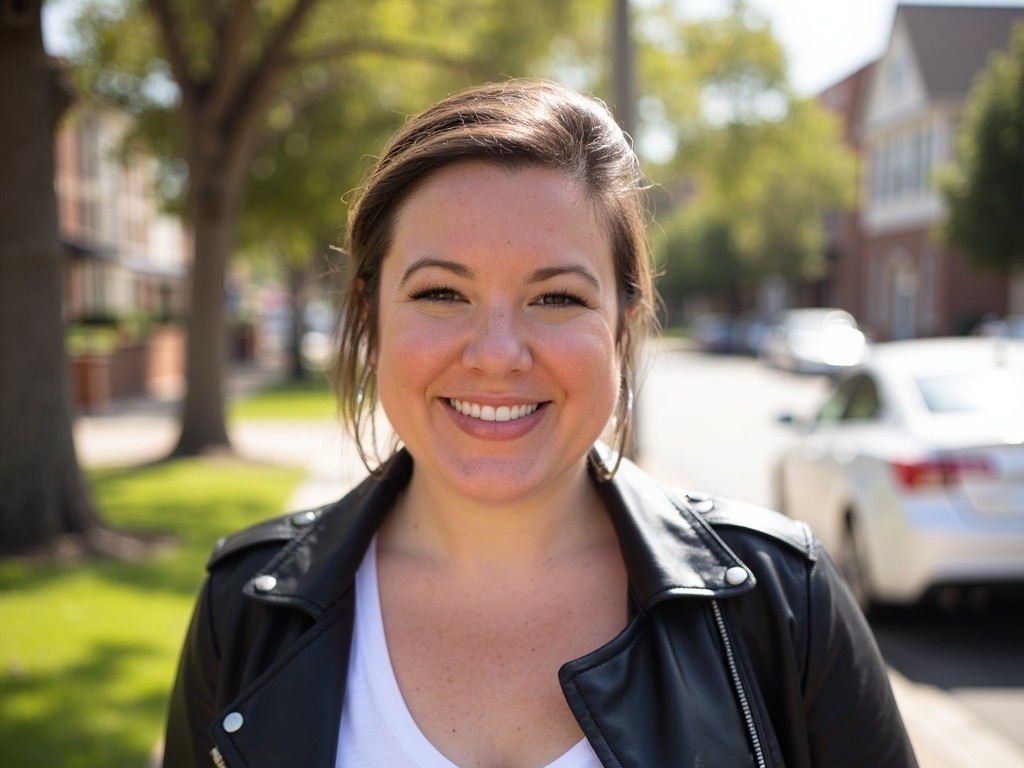
We’re thrilled to introduce Maribelisa Gillespie, recipient of the prestigious 2026 Anna C. and Oliver C. Colburn Fellowship!
Maribelisa Gillespie (Agnes Scott College)
Tell us about your project:
When Heinrich Schliemann unearthed hundreds of small clay figurines at Mycenae in 1876, he assumed they were religious icons, humble representations of the goddess Hera. Nearly 150 years later, that interpretation still dictates how we approach them, despite the nuances and challenges several scholars have brought to bear. Rather than asking what figurines meant symbolically, my research asks what they did: who made them, how production was scaled to meet demand, where they traveled, and what new rituals, burial customs, or social arrangements arrived with them.
With support from the Anna C. and Oliver C. Colburn Fellowship, I will travel to Greece during the 2026–2027 academic year to study collections of Mycenaean terracotta figurines held in Attica and the Argo-Saronic region. This museum-based work reexamines legacy collections of figurines and draws out previously overlooked details about figurines’ manufacture and distribution in order to better understand them as economic and social agents: mass-produced commodities that moved through the same exchange networks as pottery, textiles, and luxury goods — and that actively shaped the cultural practices of the communities that used them.
How did you get your start in archaeology?
My path to archaeology began during my first year at the University of Texas, Austin, when I stumbled into a course on Mycenaean archaeology — I had no idea what it was, I just liked the fact that it didn’t take place too early in the morning. I was hooked immediately — so much so that I joined that professor’s field school in Greece the same year, and returned every summer of my undergraduate career. The rest, as they say, is history.
Where in the world has archaeology brought you (fieldwork, research, conference travel, etc.)?
Fieldwork in Israel, Crete, the Cyclades, and the Peloponnese; conferences in the U.S., Greece, Germany, and Italy; other programs in Ireland, Egypt, and the U.S.
What is one of the most memorable things that has happened to you in the field?
There’s no shortage of memorable moments! One that stands out from my very first field school season: during the final hour of the final day, my team uncovered an infant burial complete with delicate jewelry and specialized pottery — the kind of discovery that reminds you why you do this work. Later, while excavating a chamber tomb cemetery, we found ourselves racing the clock and working through the night to finish the burials on time. It was exhausting and exhilarating in equal measure, and the finds made every sleepless hour worth it — as did the steady stream of food that locals brought us at all hours, which remains one of my warmest memories of that season. Uncovering part of the architecture of a massive tholos tomb in Messenia would have to make it on the list too… there’s too many amazing moments to capture here!
How has the AIA contributed to your success/professional goals?
The AIA has been central to my development as a scholar and my ability to pursue the research I care most about. I have been a member for several years across three chapters — Boston, San Francisco, and Atlanta — and in each city the local society has been a point of connection to the broader archaeological community. The annual meeting has become one of the most valuable fixtures of my professional year: it is where I go to keep up with current work across the field, reconnect with colleagues and collaborators, learn about emerging opportunities in both research and public outreach, and situate my own work within larger conversations in Aegean prehistory. Fellowship support from the AIA was also instrumental in allowing me to complete my doctoral dissertation on Mycenaean terracotta figurines, and the annual meeting gave me a platform to share that research with the wider community. The Colburn Fellowship continues that tradition of support at a critical stage of the project, as I move from dissertation to monograph. I am grateful for the organization’s sustained investment in pre-doctoral and early-career scholars and look forward to giving back to that community as my career develops.
Learn more about what Fellowship and Grant opportunities are available through the AIA.