October 6, 2026
by Nicole Constantine
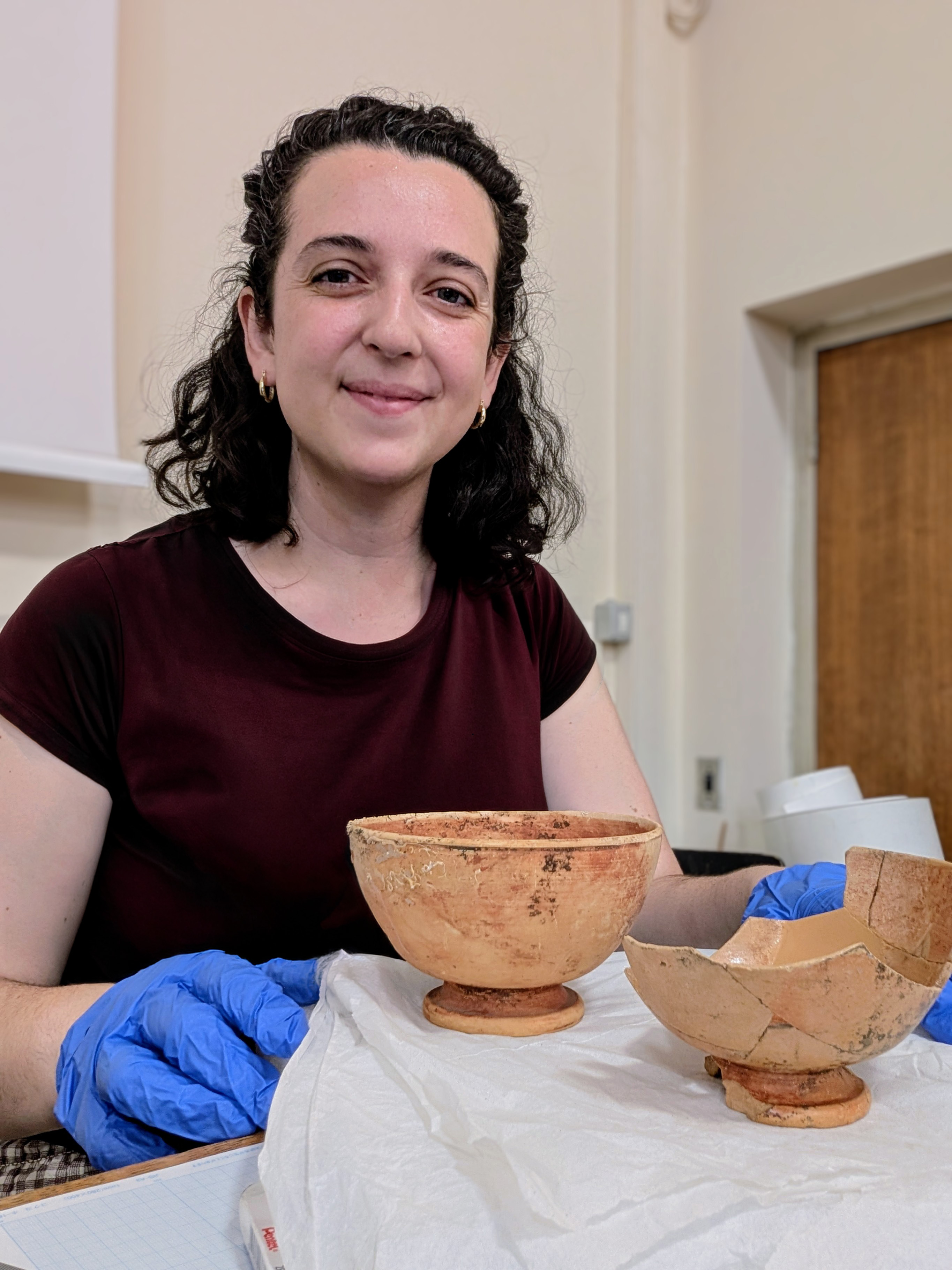
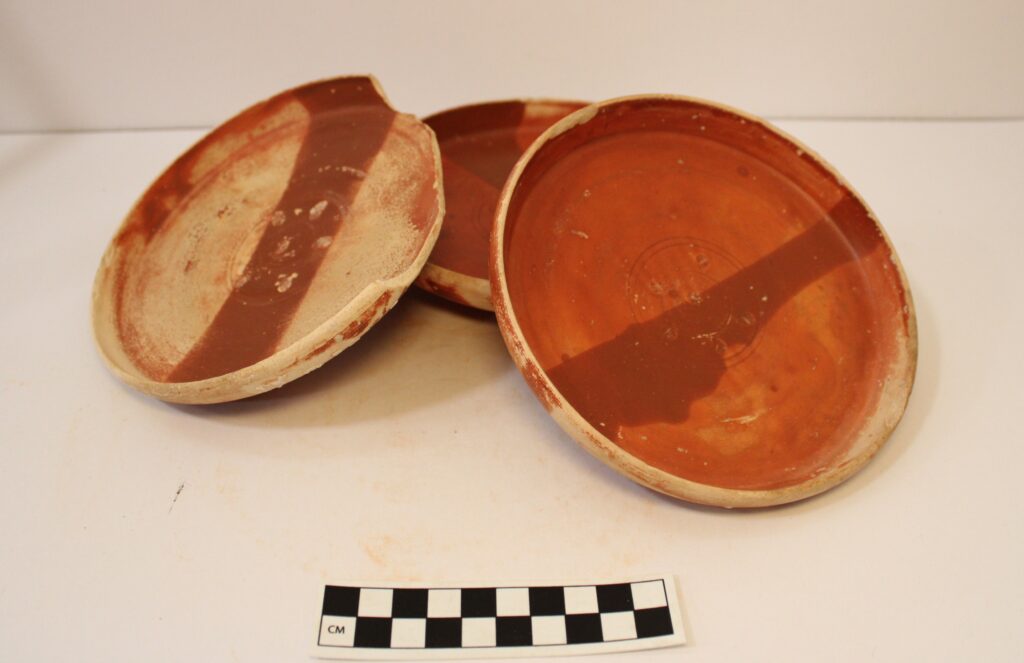
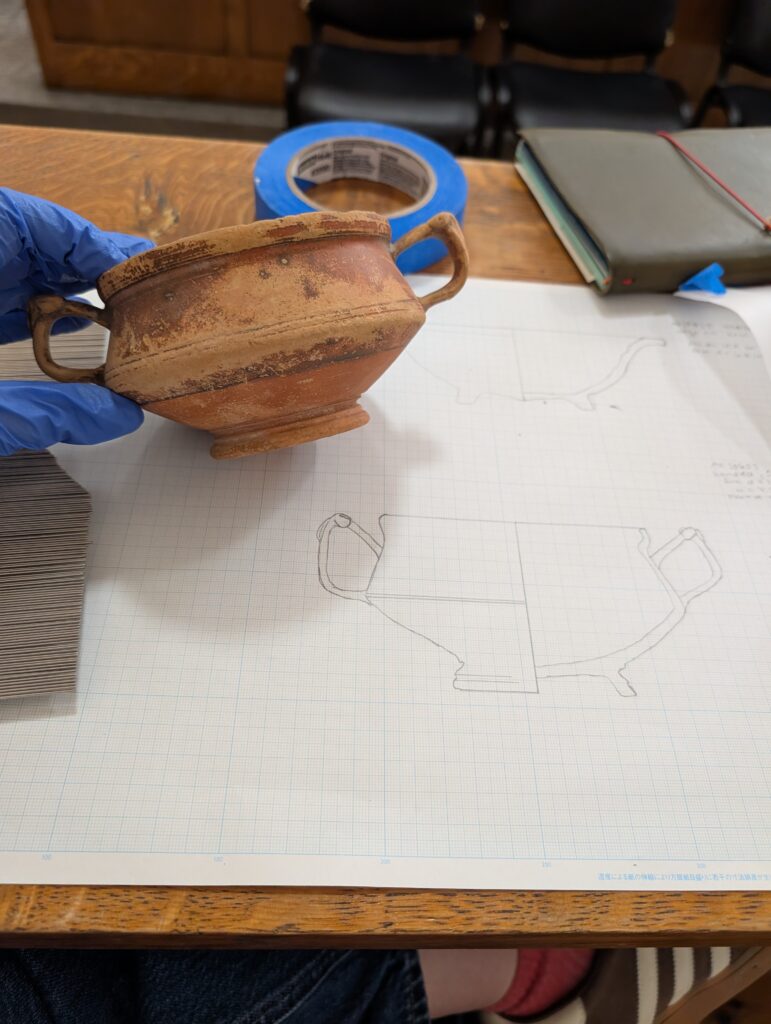
With the support of the Anna C. & Oliver C. Colburn Fellowship, Nicole Constantine spent three weeks in Greece conducting museum research for her dissertation on the daily lives of Mediterranean sailors during the Hellenistic period. Below, Nicole shares what these seemingly ordinary objects reveal about the people who ate, drank, worked, and lived aboard the ship.
My project uses shipwreck assemblages to explore the world of Mediterranean sailors during the Hellenistic period. I consider the rhythms of daily life aboard ships, and how sailors – through their labor, experience and embodied knowledge – contributed to the making of a hyper-connected Mediterranean. My work in Greece was focused on the study of pottery and metal vessels from the famed Antikythera shipwreck, which sank in the waters of the southwestern Aegean Sea in the 1st century BCE.
The cargo from this wreck is well-known and includes remarkable sculpture, small luxury goods and the legendary Antikythera mechanism. My study focused on the galley wares. These are the objects that the Antikythera’s crew interacted with on a daily basis – and my goal in their study was to learn a bit more about the ship’s sailors by considering what these objects can tell us about how they prepared their food and their style of dining and drinking.
In 1901, after sponge divers located the shipwreck site, the first batch of material was raised to the surface. A return trip to the site was led by Jacques Cousteau in the 1970s – and this is when the bulk of the galley wares were raised and brought to the Hellenic National Museum in Athens. It was fascinating to see the results of these two very different efforts which occurred at different stages in the development of maritime archaeology. While we might not hold either project up to modern standards of archaeological practice – both yielded significant results. Fragments of ceramic and glass vessels recovered from the different projects were mended back together by conservators at the museum, attesting to the careful recovery of even small fragments from the wreck. A new excavation project is currently underway at the site, and it is exciting to consider how new finds might change our view of the sailors who lived and labored aboard the Antikythera ship.
The galley wares I studied at the National Museum revealed several interesting details: the group of plates and bowls appear to all have been acquired together, and are the product of a single workshop. While perhaps not surprising, this does reveal something about the mechanics of stocking a galley: it appears sailors did not supply their own mess kits, but each was outfitted with a group of matched dining wares. Perhaps these were replaced piecemeal as they broke and the high level of preservation of the dishes (many were still whole), suggests that the galley had recently been restocked at the time of the wreck. I studied a group of very fragmentary and worn ceramic sherds that I believe to be remnants of older galley wares that had perhaps broken and worked their way through the floor planks to rest in the bottom of the ship.
Discerning these different chronological groups demonstrated to me the multi-temporal nature of shipwrecks. While wrecking represents a single event – ships can contain the traces of older voyages, and the fragmented material belonging to former crews.
I also studied the galley wares for traces of use-wear and was surprised to see several large metal patches on a bronze jug that was no doubt used by the crew for pouring wine. This jug seems to have been a particularly loved or useful item to the crew, and the many patches attest to the care with which it was treated. I am still in the early stages of interpreting the data I collected while in Greece, but am looking forward to many more insights about the dynamics of crew life provided by this study.
The Anna C. & Oliver C. Colburn Fellowship supports research undertaken at the American School of Classical Studies at Athens in Greece for a period of up to one year. Applicants must be current AIA members at the Graduate or Professional level. Applicants must be either at the pre-doctoral stage or have received their PhD within five years of applying. The application deadline is December 15, 2026. Learn more and apply.