October 30, 2026
by Dominique Langis-Barsetti

Supported by a grant from the Kathleen and David Boochever Endowment for Fieldwork and Scientific Analyses, Dominique Langis-Barsetti and the Kerkenes team are applying advanced scientific techniques to investigate new, puzzling discoveries from the Iron Age city. Below, Dominique shares how microscopic analysis, portable X-ray fluorescence, and innovative imaging techniques are offering new insights into craftsmanship at Kerkenes.
“All that glitters is not gold.” Shakespeare knew it over 400 years ago, and this summer the Kerkenes team took a very scientific approach to the same conclusion. We also took the opportunity to explore the slightly lesser-known aphorism “All that is blue is not Egyptian.”
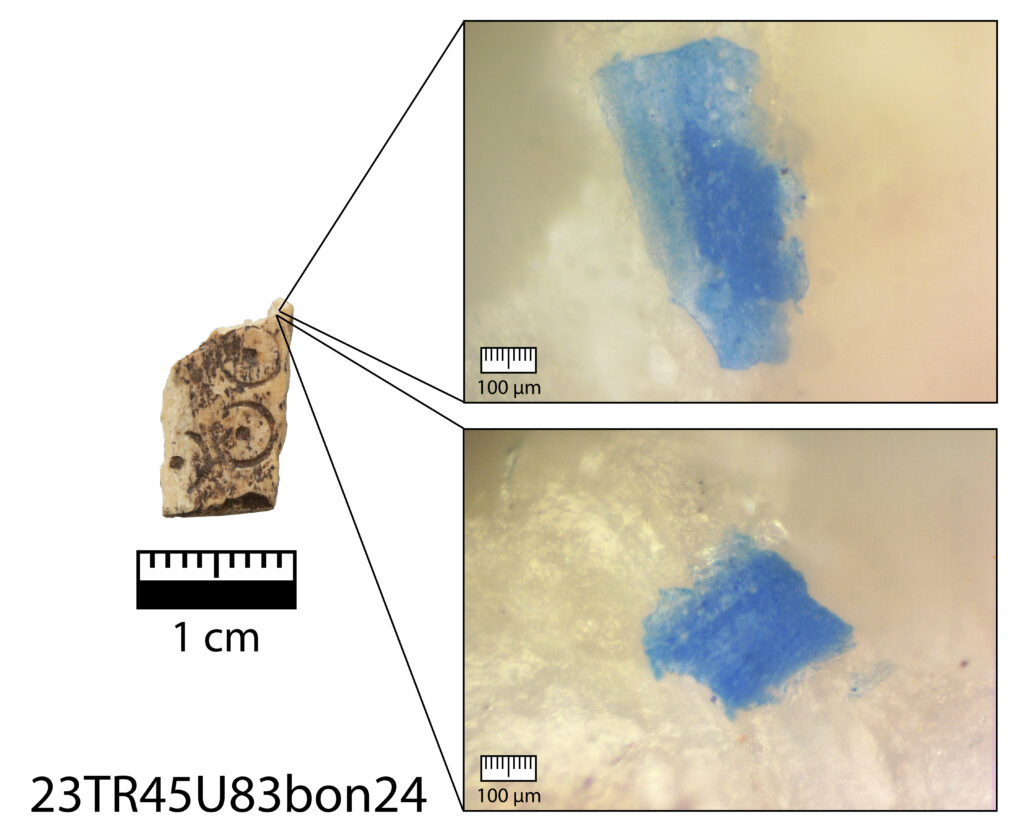
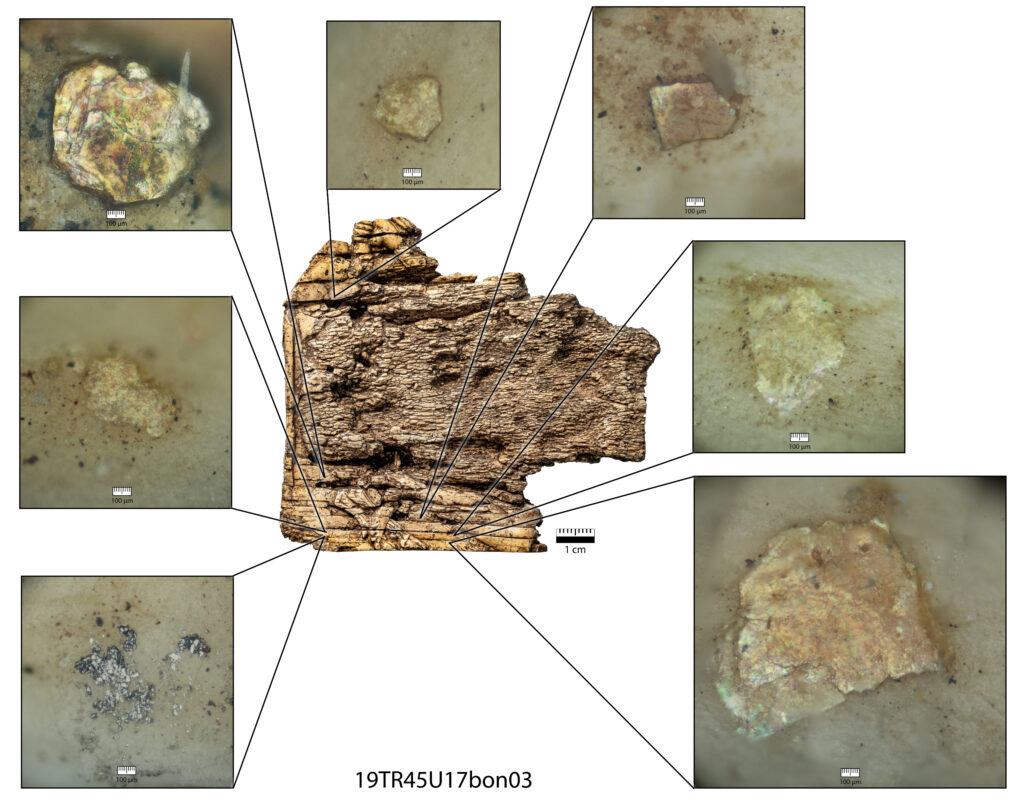
Our deep dive into things blue, and yellow and shiny started with a puzzling discovery during the 2025 field season. Since 2023, the Kerkenes team has been analyzing hundreds of worked ivory, antler, and bone fragments recovered from a two-roomed structure in the northern section of the Iron Age city. The fragments bear parts of geometric and animal motifs and were likely used as inlays. Since many of them are less than a centimeter in size, they are cleaned and studied under a microscope. During conservation, several flecks of a very shiny, very yellow material were observed solidly adhering to the surface of some of the inlays (figure 1). Microscopic blue flecks were also identified on at least one inlay (figure 2).
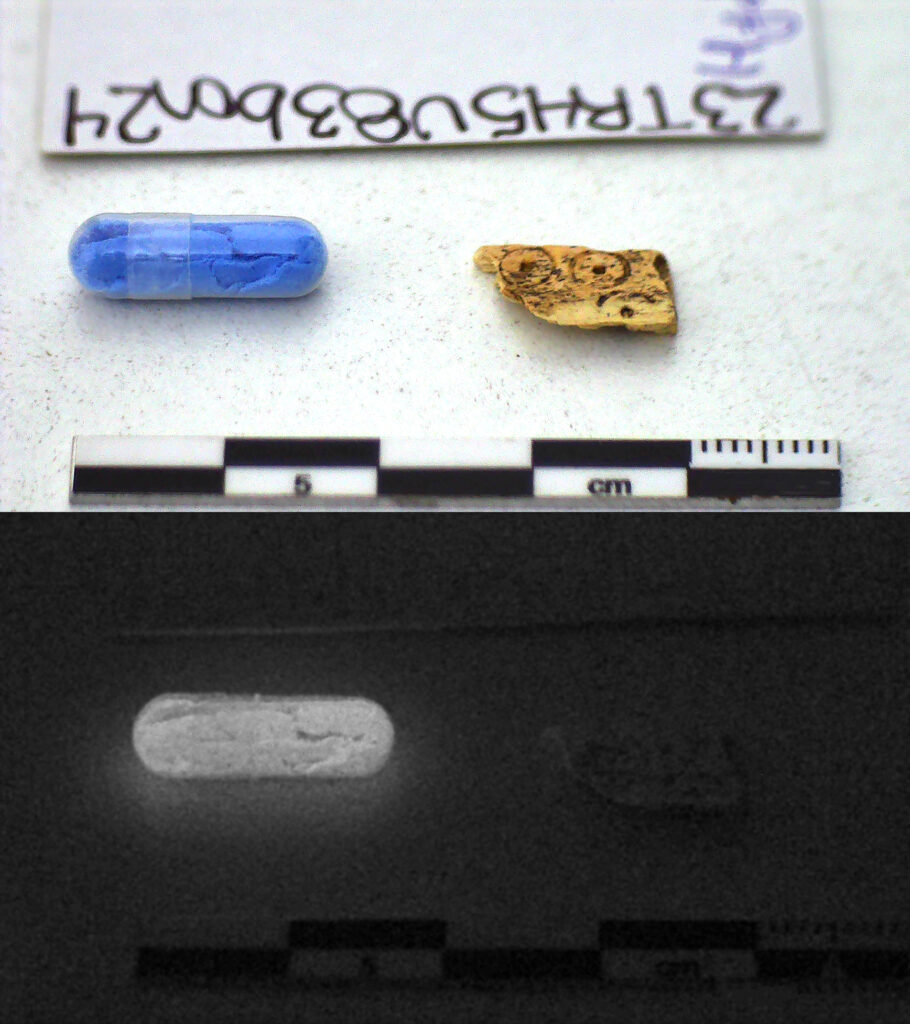
Since potentially gilded and pigmented inlays were a new discovery at Kerkenes, we used microscope photography and portable X-ray fluorescence (pXRF) to formally identify the metallic and blue flecks. Since some of the blue pigment fragments were likely too small for pXRF, we employed a different technique to specifically detect Egyptian blue. Copper calcium silicate, also know as Egyptian blue, is the world’s oldest synthetic pigment and first appeared in Egypt some 2700 years before Kerkenes was occupied. During the Iron Age, “Egyptian blue” has been found throughout the Near East, and its color matched some of the Kerkenes samples. Perhaps more importantly, Egyptian blue fluoresces in infrared wavelengths and is therefore detectable in minute quantities using modified night-vision goggles (figure 3).
Like is often the case in science, our hopes for a grand discovery were very scientifically quashed. The blue pigment on the ivory did prove to be too small for the pXRF, and the modified night-vision goggles did not detect any fluorescence. The setup did, however, prove capable of efficiently detecting Egyptian blue, as shown through control experiments conducted using modern equivalent pigments (figure 3). As for the putative gilding on the inlays, it turned out to be mica. Very yellow, very shiny mica.
After the initial disappointment, we took those results to heart and squeezed them for everything they were worth. We will be looking more closely into the presence of mica on the inlays and potentially other objects from the same context. Mica washes and inclusions were used during some periods to make objects, notably ceramic vessels, “sparkle”, and we are yet to determine whether the mica adhering to the inlays is post-depositional or purposeful. The new microscope photography workflow is already helping us better understand the crafting techniques used to produce the carved inlays.
Overall, we may not have gotten the results we were hoping for, but results are results and we will use them to deepen our understanding of life in the Iron Age city at Kerkenes.
The Kathleen and David Boochever Endowment for Fieldwork and Scientific Analyses supports archaeological fieldwork and laboratory research that uses innovative technologies to investigate significant questions about the human past. Projects at any stage of research are welcome, particularly those exploring emerging technologies or applying existing methods in new ways.
The application deadline is November 1, 2026. Learn more and apply.