November 4, 2026
For immediate release · Contact: Wyatt Roy, wyatty@gmail.com
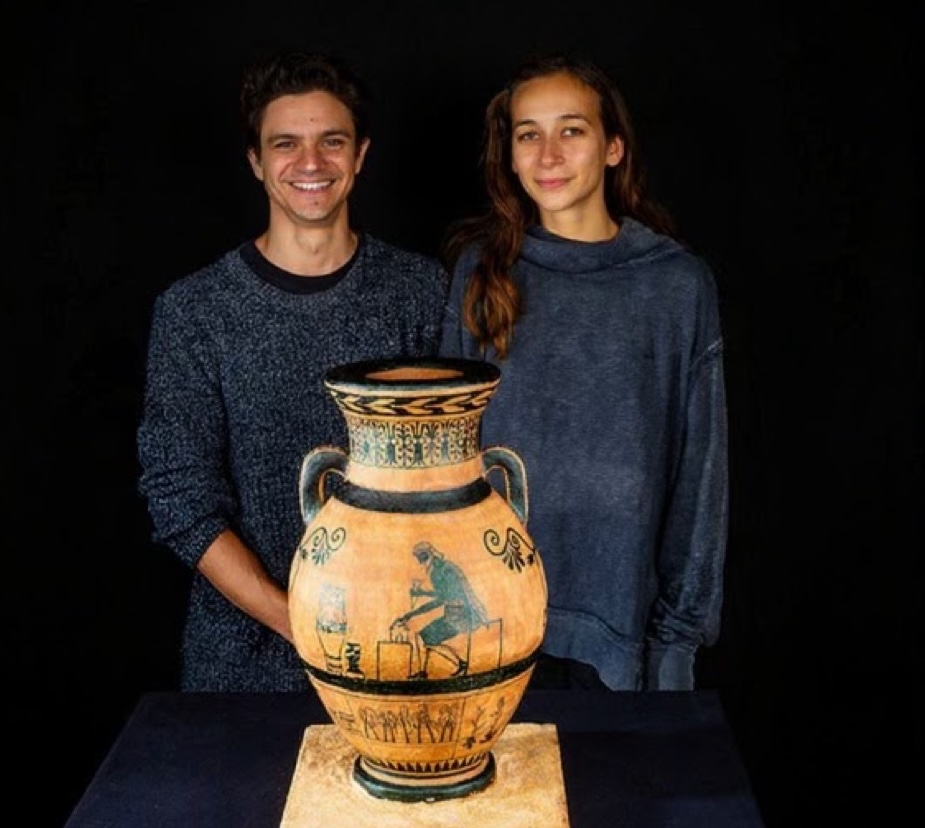
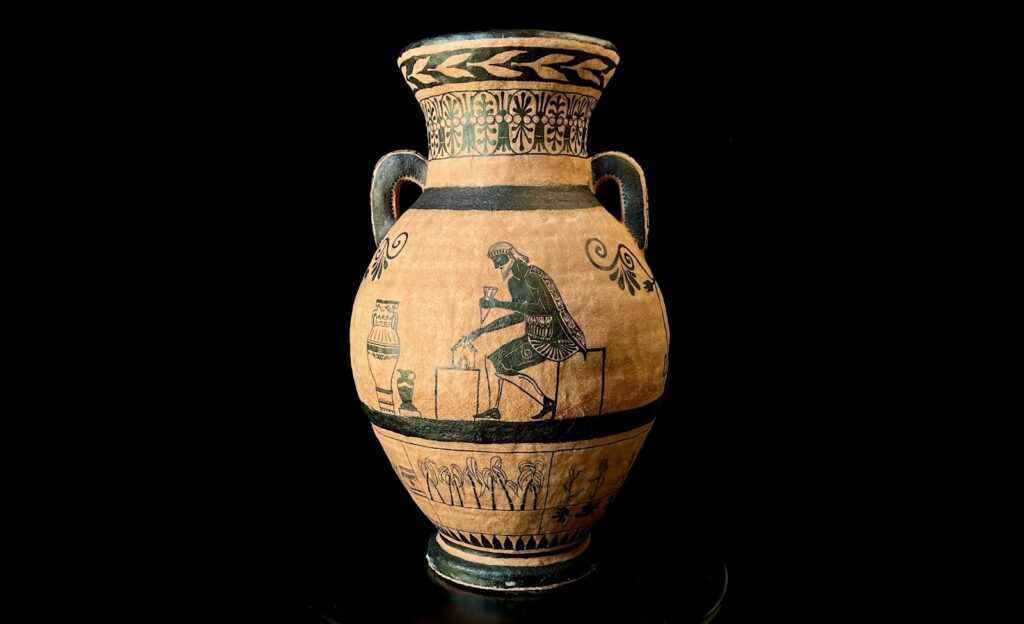
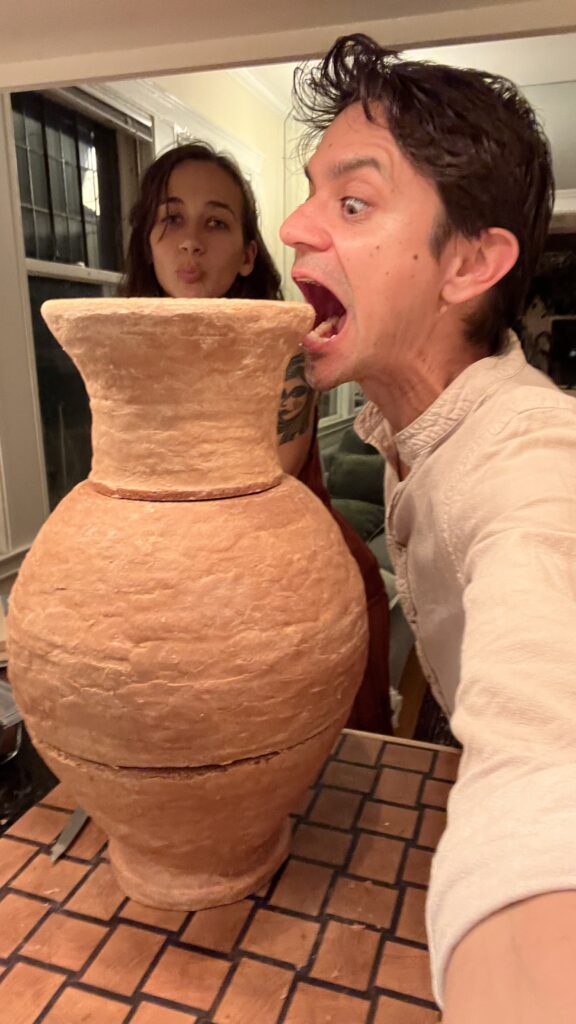
CAMBRIDGE, Mass. – On Thursday, December 3, a two-foot Greek amphora made entirely of gingerbread will stand in the Greek gallery at Harvard Art Museums, a few feet from the ancient vase it was modeled on. It is the work of Julia Mattis and Wyatt Roy, two Cambridge designers, who spent a year making it in their Cambridge apartment.
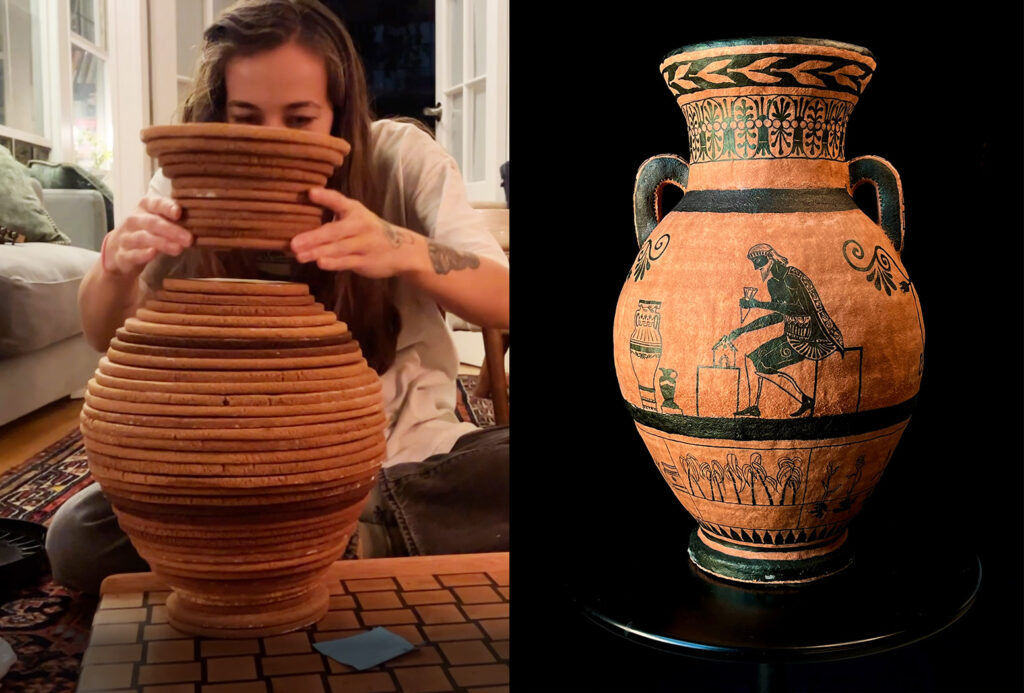
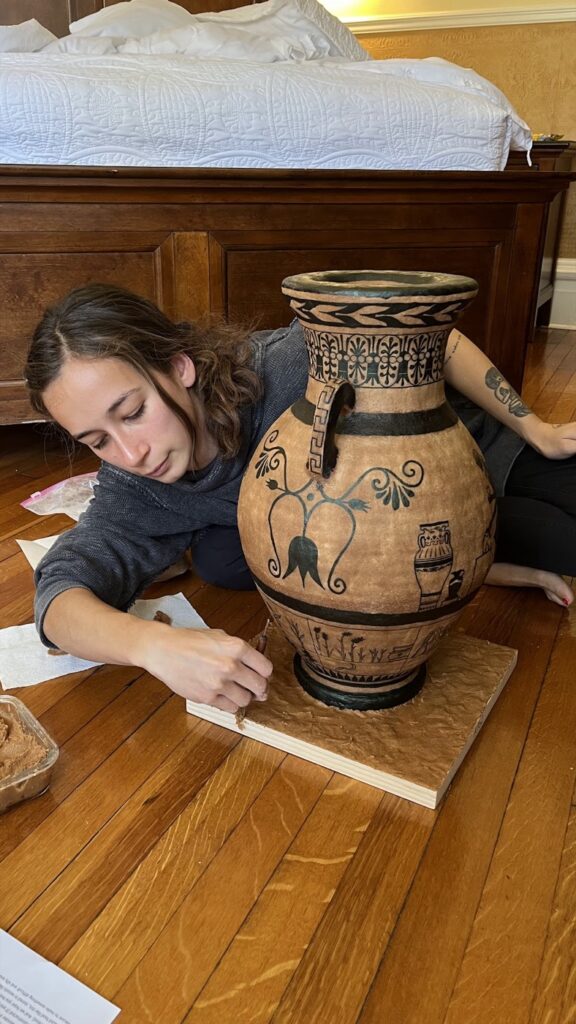
The amphora is painted in the style of black-figure pottery, the technique Greek painters used between the 7th and 5th centuries BCE. Those vases usually showed scenes from daily life, including harvest and food. This one shows the crops behind gingerbread: wheat, sugar and ginger.
Mattis is a designer at the Harvard GSD who focuses on food systems and healthcare, and a pastry chef and ceramicist who has competed in gingerbread competitions for about a decade. Roy is a computational designer and filmmaker.
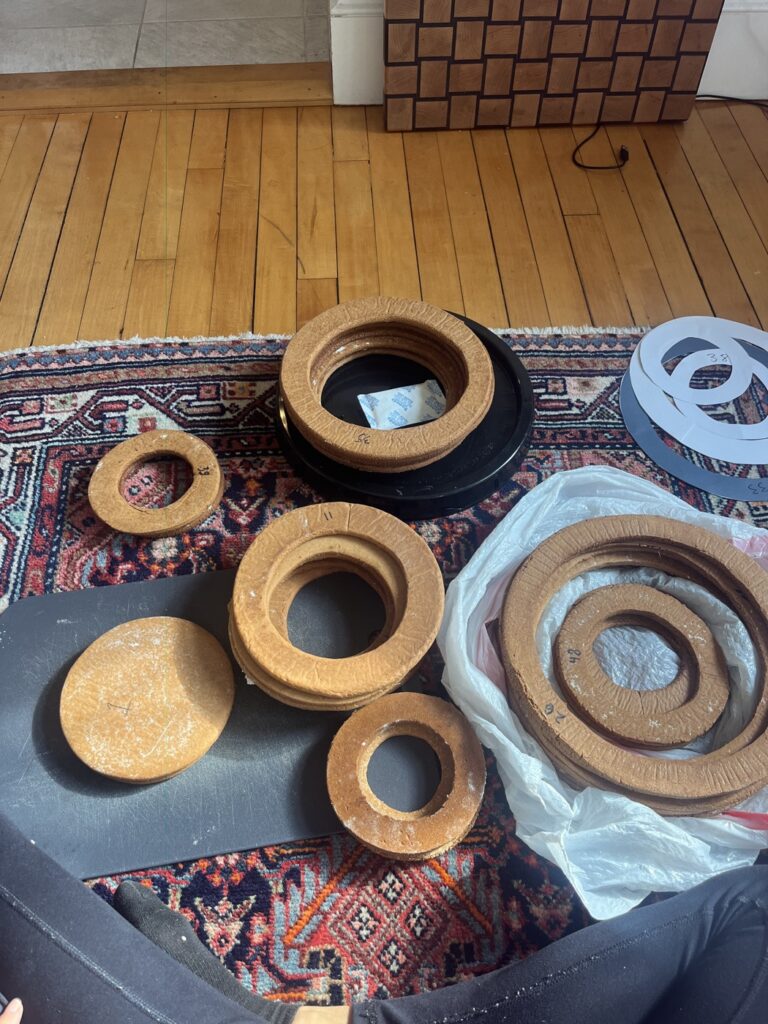
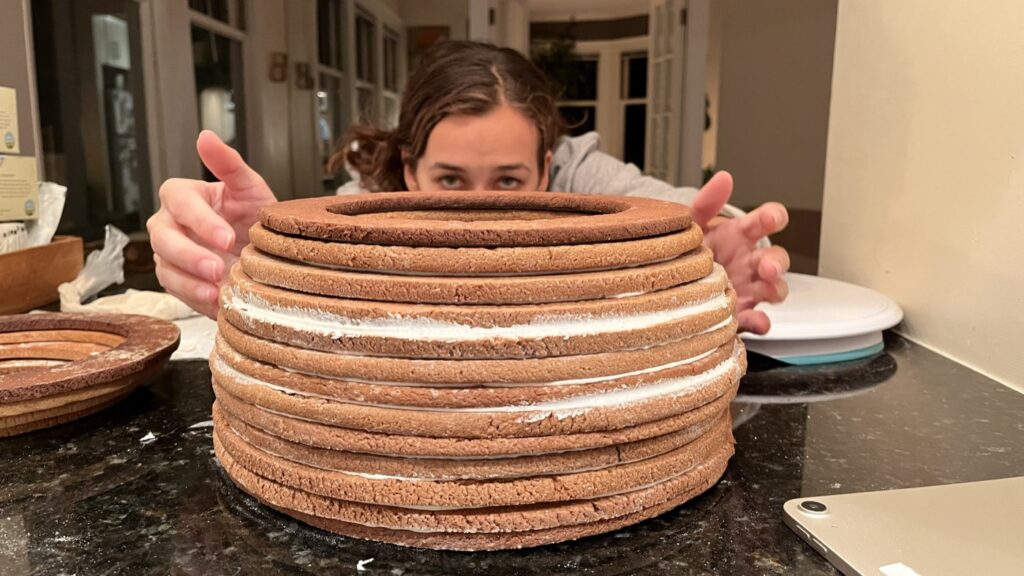
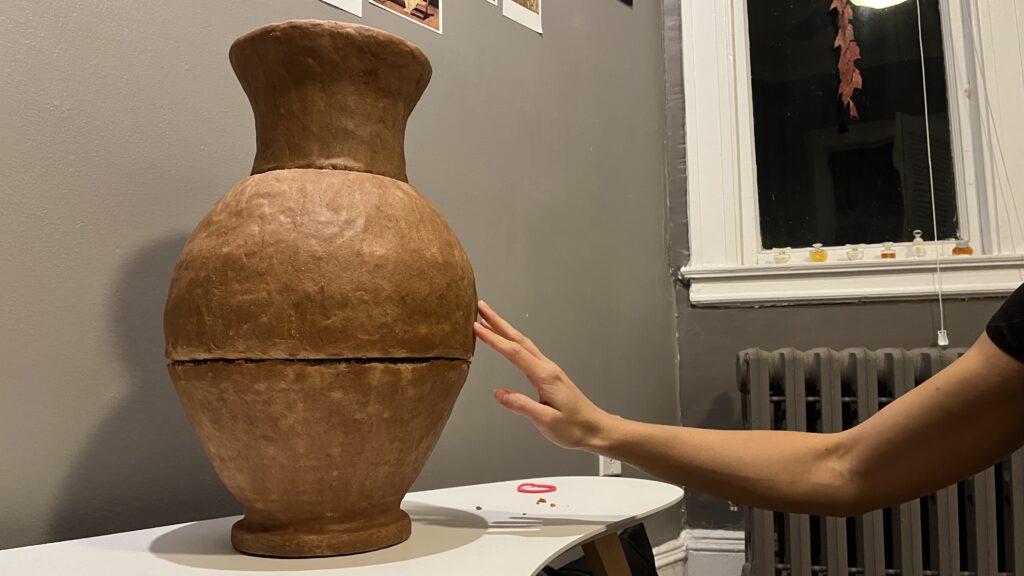
The shape came from photogrammetric scans of Greek amphoras at the Metropolitan Museum of Art and Harvard Art Museums. Mattis and Roy redrew the profile in Blender, widening the base because gingerbread cannot balance on one as narrow as clay can, then sliced the model into fifty one-centimeter rings and printed them as paper stencils. The rings took seven pounds of flour and five pounds of sugar. They were baked flat, stacked with cinnamon royal icing, leveled on a potter’s wheel, shaved with a clay shredder and a microplane, and coated in “gingerbread clay,” a paste of baked gingerbread ground to dust and mixed with edible gums and water. The painting took about 18 hours with size 2/0 brushes, using black gel food dye thinned with vodka, because water makes the dye smear and soak in.
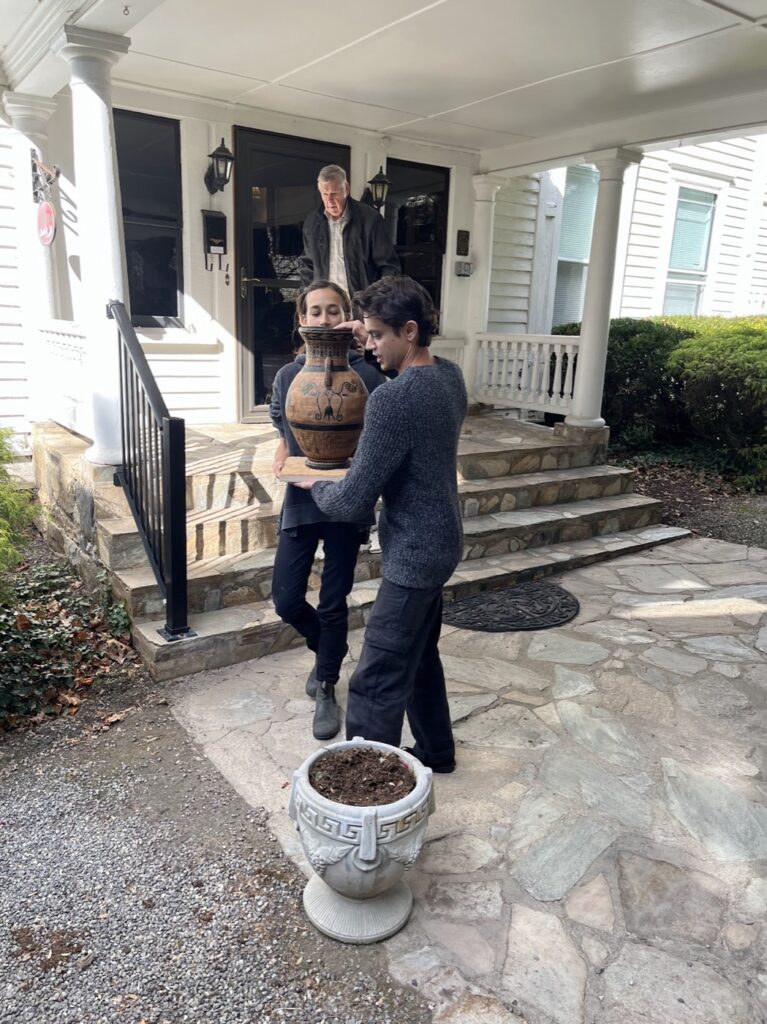
It was created for the National Gingerbread House Competition. In November 2025 the amphora flew to Asheville in three sections, where they assembled and painted it before submitting it to a jury of chefs. It did not place in the top 10. The feedback suggested the problem was that it wasn’t a house.
“We kept hearing that a couple of mice and some grapes would have helped,” Roy said. “We didn’t want to make a scene. We wanted to make an amphora.”
The piece is a year old and still smells like ginger and cinnamon, which is not something you usually get from an artwork. A ceramic vessel can last thousands of years. Gingerbread left outside turns back into dirt in about a week. Mattis and Roy treat that decay as part of the work. It is the subject of the paper they will give at the College Art Association’s 115th Annual Conference in New York on February 5, 2027, in the session “From the Pantry to the Studio: Uses of Food in Art and Conservation.”
Before the Harvard showing, the two will give a public talk about the design and fabrication process at the Museum of Science in Boston on Saturday, November 7.
A 12-minute film about the build is the first video on their new YouTube channel, Tiny Spoon, which is about food experiments, food history and food systems: https://www.youtube.com/watch?v=eEb6DW66zNM
Harvard Art Museums at Night · Thursday, December 3, 5 to 9 p.m. · 32 Quincy Street, Cambridge, MA. The amphora will be on view in the Greek gallery, with a talk and Q&A from the makers and food-and-art activities downstairs. Photography is permitted. For press access and filming inside the galleries, contact Jennifer Aubin, Public Relations Manager, jennifer_aubin@harvard.edu, 617-496-5331.
Museum of Science, Boston · Saturday, November 7. Public talk on the design and fabrication process.