October 23, 2025
by Regina Uhl
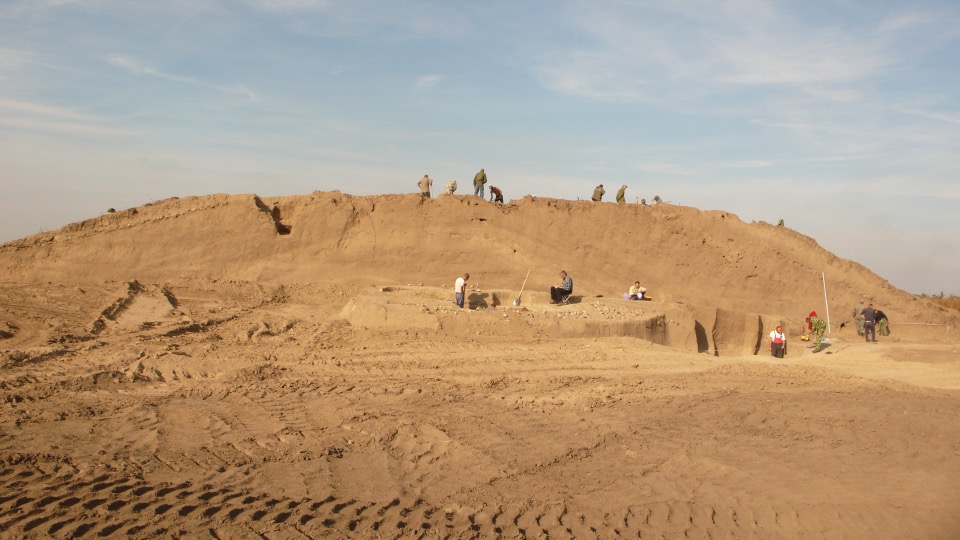
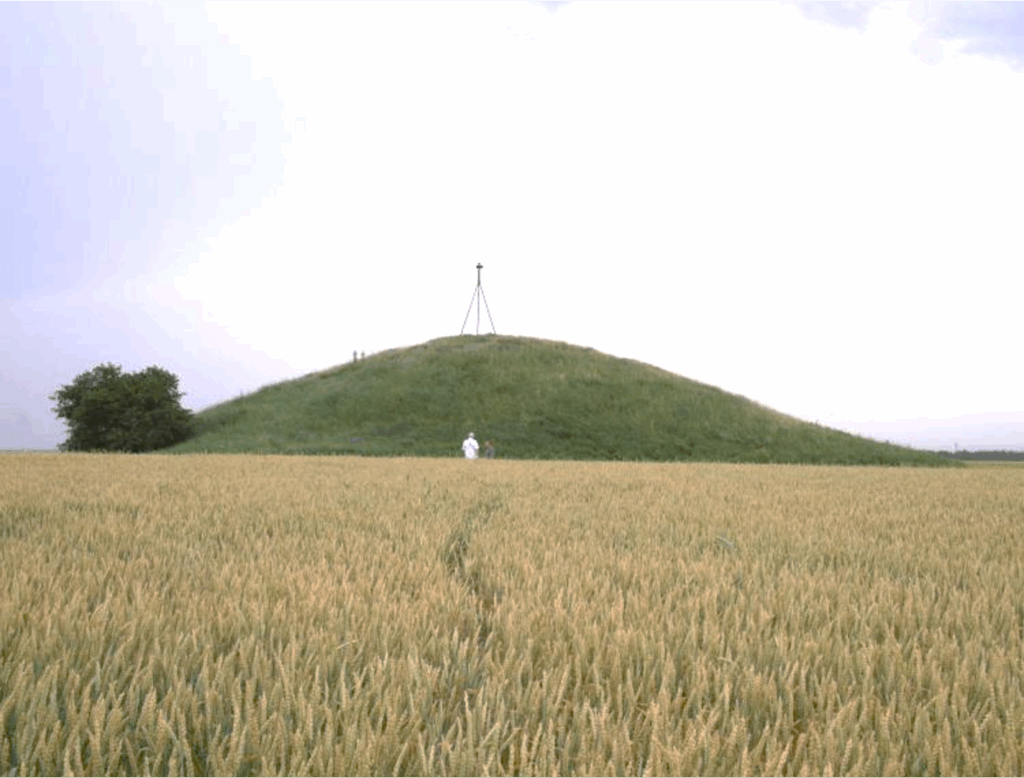
One of our 2024-2025 DAI Exchange Fellowship winners, Regina Uhl, provides us with an update:
Supported by a fellowship from the Archaeological Institute of America (AIA), I was able to conduct a substantial portion of my habilitation project, “Between Fear and Creativity: Social Complexity through a Prehistoric Lens,” during my residency at the Joukowsky Institute for Archaeology and the Ancient World (JIAAW) at Brown University, Providence. The project centers on Eurasian burial mounds, with particular emphasis during the fellowship period on the renewed tradition of mound construction and specific assemblages associated with Iron Age burial mounds (primarily 8th to 5th centuries BC) in Central and Eastern Europe, the Mediterranean, and, to some extent, Western Asia.
A current focus lies on the history and significance of burial mound constructions across Eurasia. While the earliest known burial mounds date back to the 5th millennium BC, a significant proliferation of burial mound construction is observable in the Northern Pontic Steppe and the Caucasus region during the 4th millennium BC. Throughout the Bronze Age, beginning in the 3rd millennium BC, burial mounds remain present, though they no longer constitute a dominant monument type. However, the Iron Age witnesses a marked resurgence of burial mound construction, with these monuments once again becoming a major archaeological category across Eurasia.
At first glance, it may seem inappropriate to inquire about the commonalities among burial mounds from Marfa (Caucasus, 4th millennium BC), ( Baykara (Kazakhstan, Iron Age), Hochdorf (Southern Germany, Iron Age), Arzhan (Siberia, Iron Age), or Gordion (Central Turkey, Iron Age). These sites are not only separated by vast geographical distances and/or significant chronological gaps, but also display considerable heterogeneity in their construction methods.
It is clear that the tradition of interring individuals beneath burial mounds over a span of four millennia does not represent a linear developmental trajectory. Nevertheless, these monuments consistently serve as prominent burial sites for distinguished individuals or, in some cases, multiple individuals—often accompanied by secondary burials or attendants—over periods that frequently extend beyond a single generation.
Surprisingly, regional studies—for example, in the Caucasus—indicate that the individuals buried within these mounds were not related by kinship, suggesting that many burial mounds did not serve as „dynastic cemeteries“. The study addresses also aspects related to the succession of burials. A further aspect is the role of the burial mound as an element of the landscape.