March 9, 2026
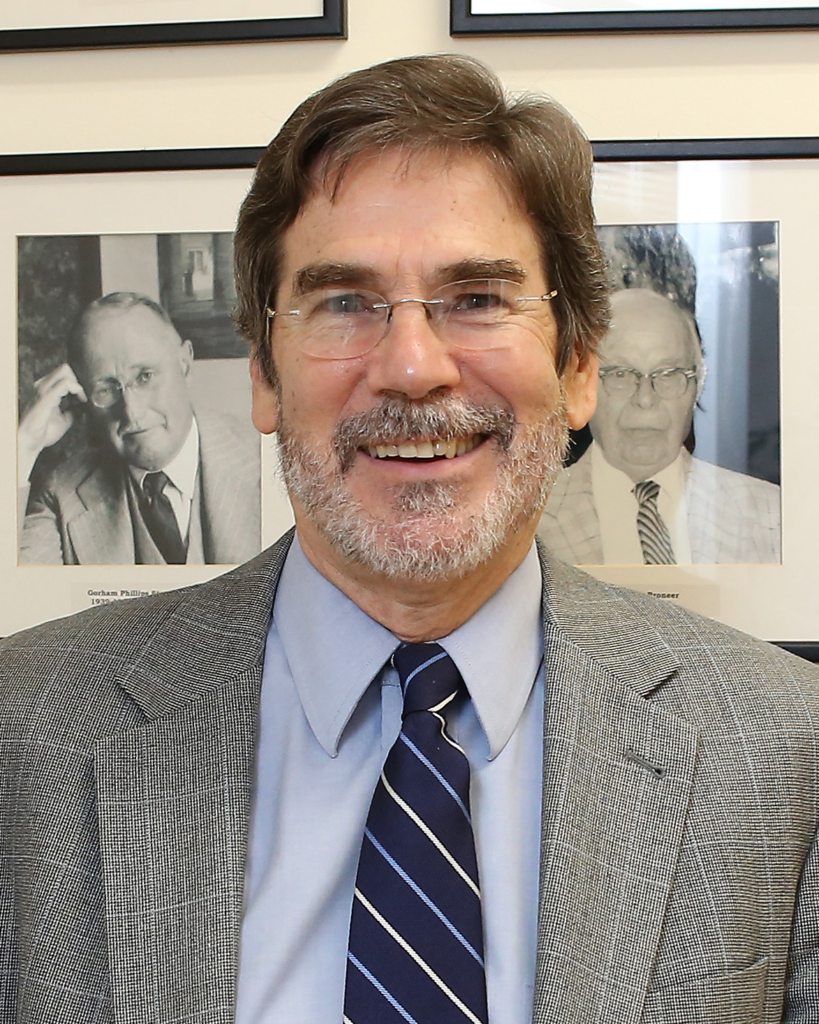
The AIA is proud to present Dr. James C. Wright, Professor Emeritus at Bryn Mawr College, as the winner of the 2027 Gold Medal Award for Distinguished Archaeological Achievement. His fieldwork projects and publications have made significant contributions to the fields of Aegean Prehistory and Greek archaeology more generally, setting a high bar for professional standards as well as transforming our understanding of Mycenaean society and architecture. His record as a teacher, advisor, and mentor has been equally outstanding and through his energetic support, generations of young scholars have launched academic careers.
In terms of fieldwork, Dr. Wright has led collaborative archaeological investigations at three important sites: the Nemea Valley Archaeological Project (NVAP, 1981–2020), as co-director of the Excavations of the Chamber Tomb Cemetery at Ayia Sotira, Nemea (2006–2009), and heritage management of the University of Toronto and the Royal Ontario Museum Excavations at Kommos, Crete (2020–present). NVAP was the first truly interdisciplinary field project in Greece, combining regional survey, site surface survey, and excavation; it was also the first project that focused on a non-palatial settlement with the explicit goal of studying the impact of momentous socio-political developments in Bronze Age Greece on small, outlying settlements. The results of the excavations and surface survey were published in an exemplary fashion in two volumes covering the entire Bronze Age habitation of Tsoungiza, the last of which in 2020 by Wright and co-director Dr. Mary Dabney, and their collaborators, in two milestone parts totaling nearly 1,200 pages.
As a leader in cultural heritage protection and professional ethics, Dr. Wright was a protagonist in the identification of the Aidonia Treasure, a rich assemblage of Mycenaean goldwork and sealstones pillaged in the mid-1970s and ultimately repatriated to Greece in 1996. This was followed in 2006–2009 by the Ayia Sotira project– an international collaboration through the Canadian Institute with the Greek Archaeological Service. The excavation of a cemetery with previously looted tombs was conceived as a thoroughly interdisciplinary endeavor by applying, for the first time, advanced methods such as soil micromorphology and systematic recovery of organic remains. The innovative nature of the 2017 final publication of this excavation was recognized with the AIA’s 2021 McCann Prize for the best publication of an archaeological field project. In all, his impressive scholarly record encompasses six books and 69 articles and book chapters, with the research funded by prestigious Humboldt, Fulbright, and NEH fellowships.
Similarly, Dr. Wright has left an outsized footprint on our field as an able administrator. At Bryn Mawr College, he was Chair of the Department of Classical and Near Eastern Archaeology for twelve years and Dean of the Graduate School for five years. Among his most significant positions was that of Director of the American School of Classical Studies at Athens (2012–2017). In this capacity he was indefatigable, launching and shepherding to completion a host of new initiatives. These include building a new Wiener Lab for Archaeological Science and securing for it the analysis of the Faliron Cemetery excavated by the Ephoreia of Piraeus, the renovation and enlargement of the west wing of the Gennadius Library with the Ioannis Makriyannis exhibition gallery. He also conceived and led the Master Plan for Ancient Corinth, among other initiatives of the ASCSA. In sum, it is no exaggeration to count Dr. James Wright among the most influential scholars in the theory and practice of archaeology during the last 45 years, and someone who has exerted a major and enduring impact on Greek archaeology through his research, teaching, administrative positions, and ethical actions.
Dr. Wright will be honored at the Awards Ceremony at the 2027 Annual Meeting in Boston. There will also be a Gold Medal colloquium in his honor.