October 23, 2025
by Rebecca Salem
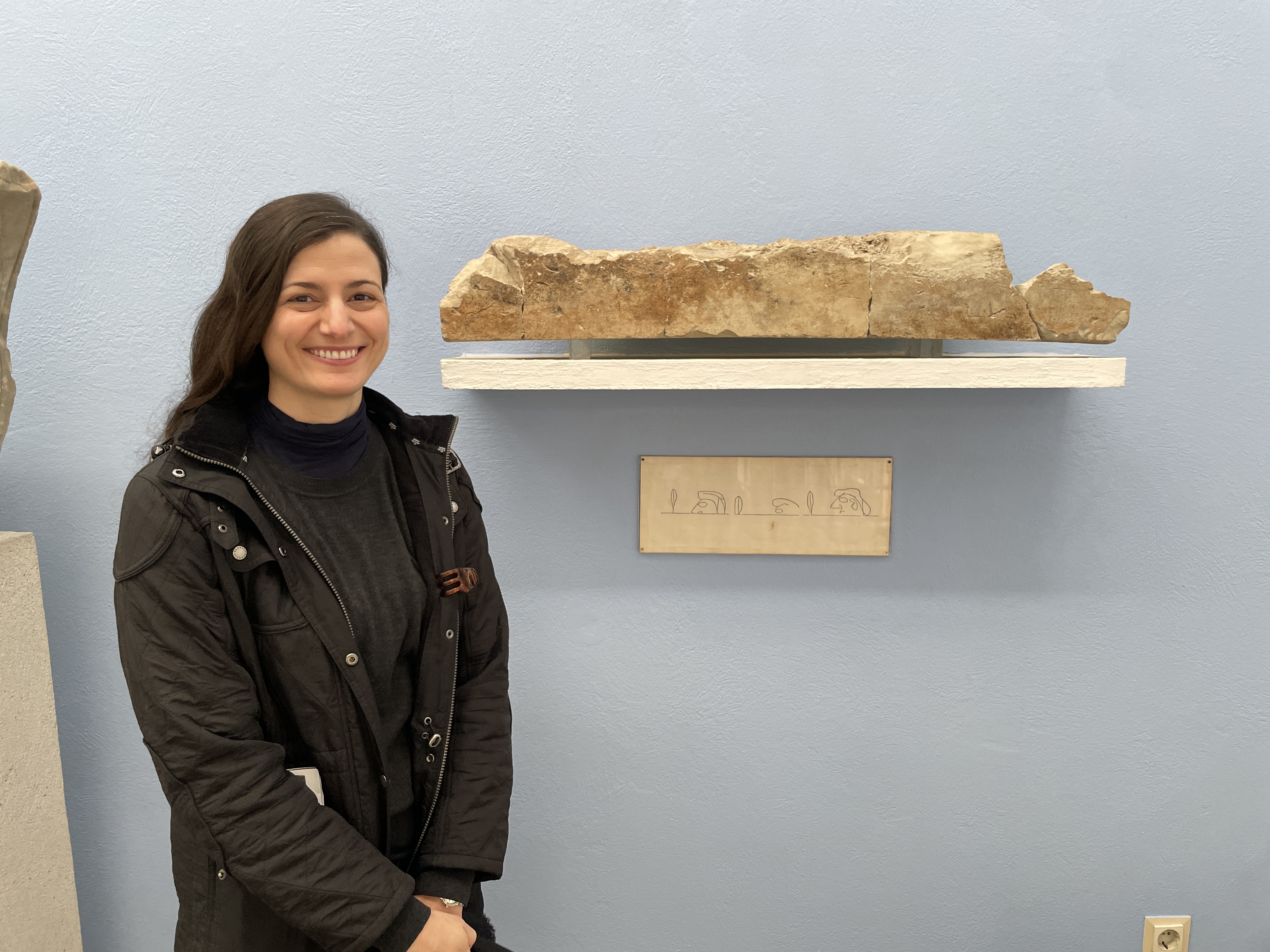
One of our 2024-2025 Anna C. & Oliver C. Colburn Fellowship winners, Rebecca Salem, provides us with an update:
The Anna C. & Oliver C. Colburn Fellowship provided invaluable support for my research by enabling me to travel to Greece to work on a chapter of my dissertation project on the Temple of Hera at Samos (“the Heraion”). My time in Greece can be divided into two main periods: an extended stay in Athens, based primarily at the Blegen Library of the American School of Classical Studies at Athens, and a subsequent period of research on the island of Samos.
In Athens, I rented an apartment for the spring semester of 2025, allowing me to be within close proximity to the Blegen Library and the scholarly community at the School. Access to the Blegen was absolutely crucial for the development of my project. The library’s holdings include a vast range of early archaeological reports, excavation records, specialized journals, and scholarly volumes—many of which are difficult to obtain elsewhere. Having these resources immediately at hand not only saved considerable time but also allowed me to pursue new lines of inquiry as they emerged. The environment of the School was equally important: regular conversations with colleagues, both formal and informal, helped me refine my interpretations, identify relevant comparative material, and consider alternative perspectives on my topic.
While in Athens, I also took advantage of my location to visit several nearby archaeological sites, facilitated by the ability to rent a car. These visits allowed me to examine architectural remains and sanctuary layouts firsthand, providing comparative evidence that will strengthen my analysis of the Heraion’s construction and spatial organization.
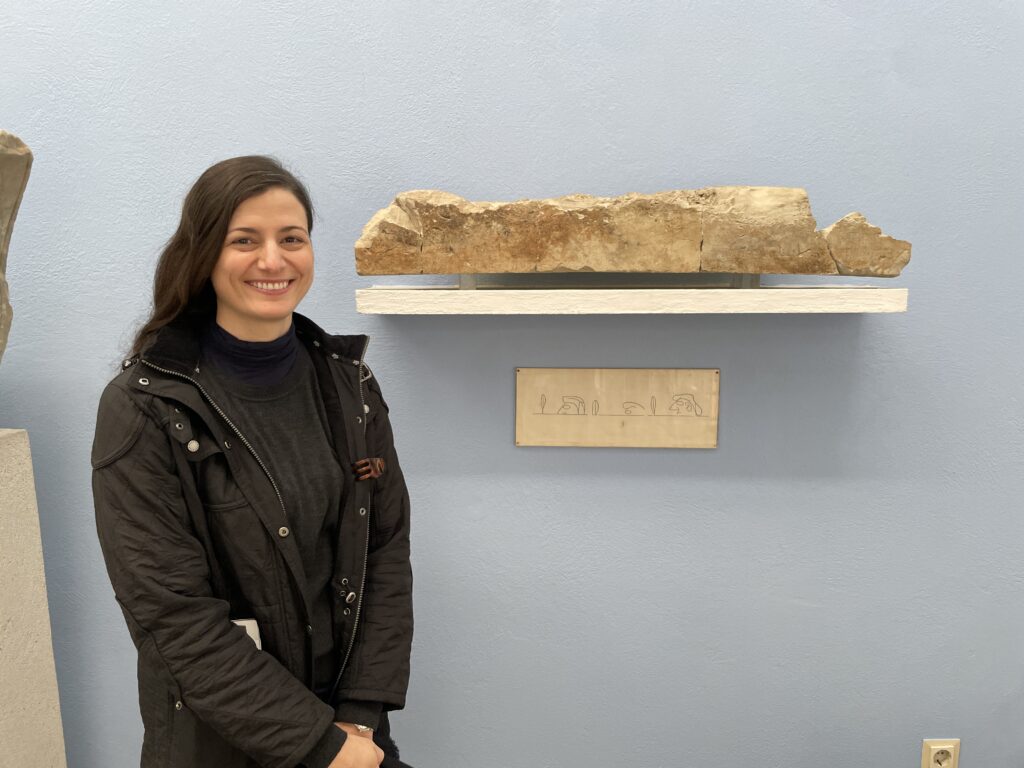
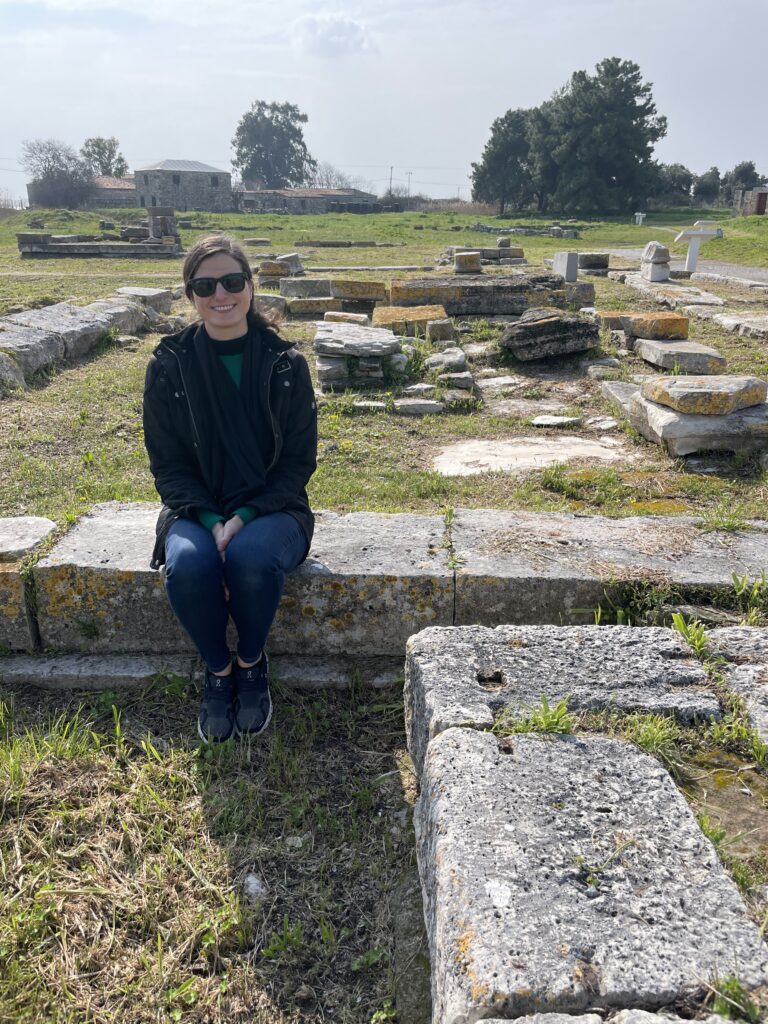
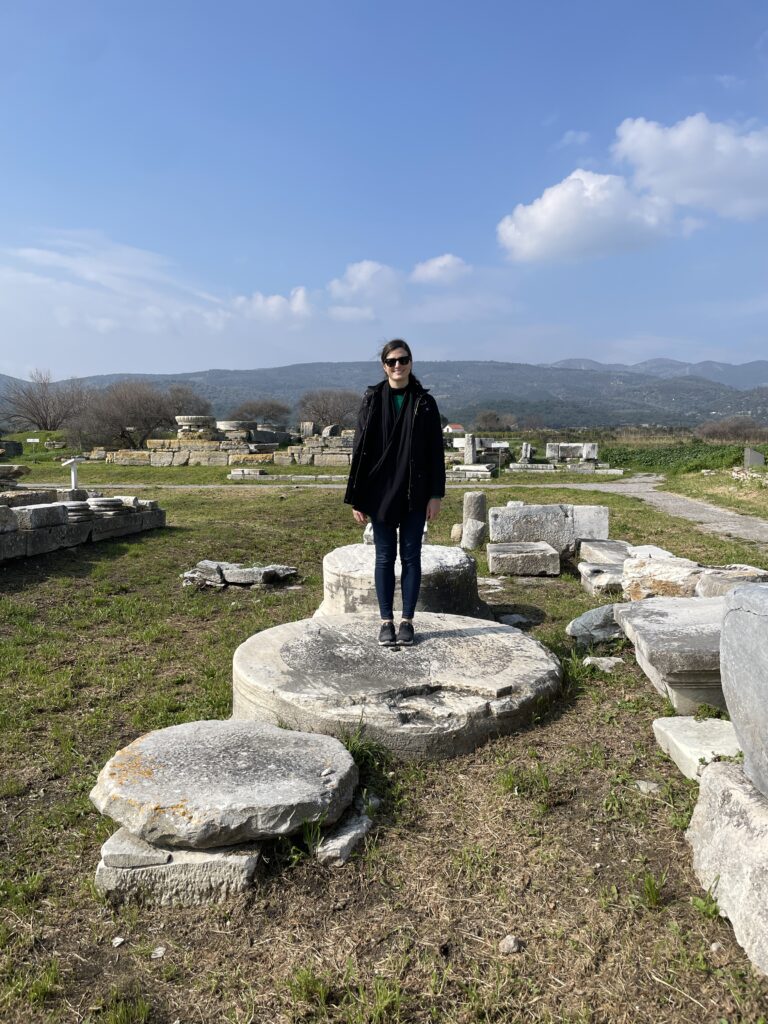
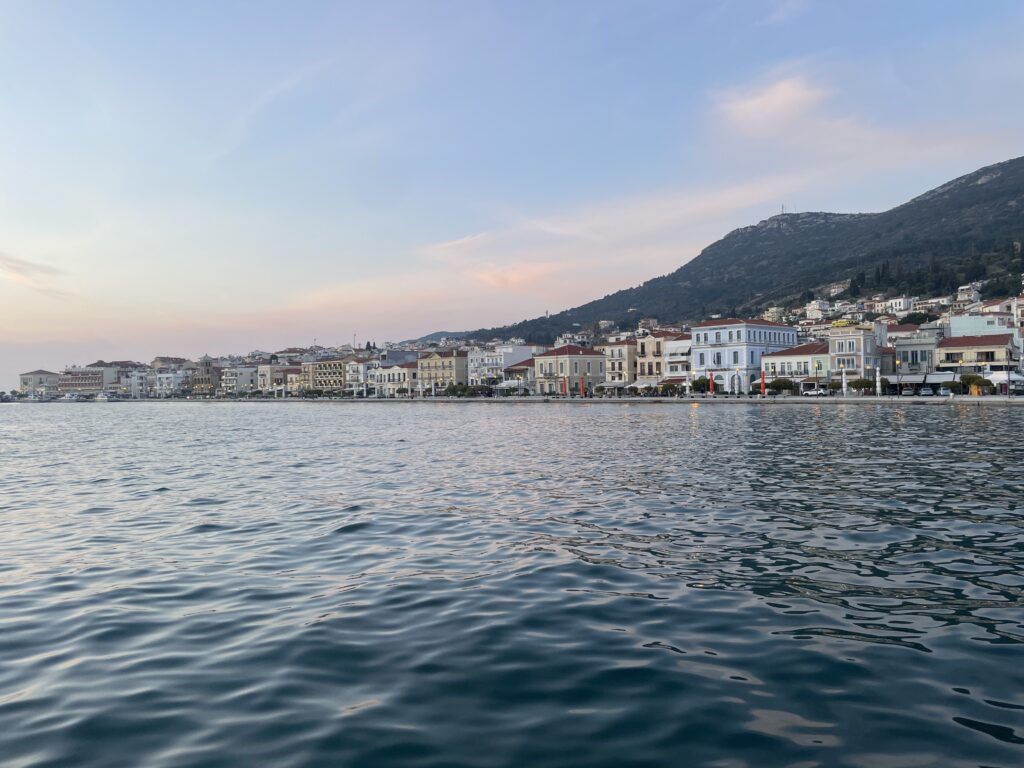
While I based myself in Athens, I traveled to the island of Samos to conduct site-based research. My primary focus was the archaeological site of the Heraion itself, where I was able to examine the remains of multiple iterations of the temple in situ. Although I had studied these phases extensively through published plans and photographs, being physically present at the site gave me a much clearer sense of the scale of the buildings, the sequencing of their construction, and their relationship to the surrounding landscape. I also visited the Vathy Museum, which houses many of the sanctuary’s most significant finds, and the Archaeological Museum of Pythagoreion, which preserves material from the ancient city. I studied the placement, scale, and craftsmanship of monumental sculpture, leading me to new considerations about the interaction between these works and the temple’s architectural program. A true highlight of my time on Samos was visiting the island’s limestone quarries, where stone for the temple’s construction was extracted; the vast hollowed-out spaces formed substantial chambers to wander through, their ceilings upheld by massive pillars left in place.
This period of research, made possible only through the Colburn Fellowship, has been transformative for my dissertation. It has deepened my understanding of the Heraion’s architectural history, refined my comparative framework, and provided new perspectives that will inform the final stages of my writing.