




- This event has passed.
Piramesse – from the City of Wonders to Terra Incognita
February 21 @ 3:30 pm - 5:00 pm
Virtual Event
Sponsored by: The American Research Center in Egypt (ARCE), Pennsylvania Chapter (ARCE-PA)
Saturday, February 21
3:30 pm EST
Virtual on ZOOM
FREE lecture; RSVP required for Zoom link
Speaker: Dr. Henning Franzmeier, Senior Research Associate, The Cyprus Institute, Nicosia
Title: Piramesse – from the City of Wonders to Terra Incognita
Abstract:
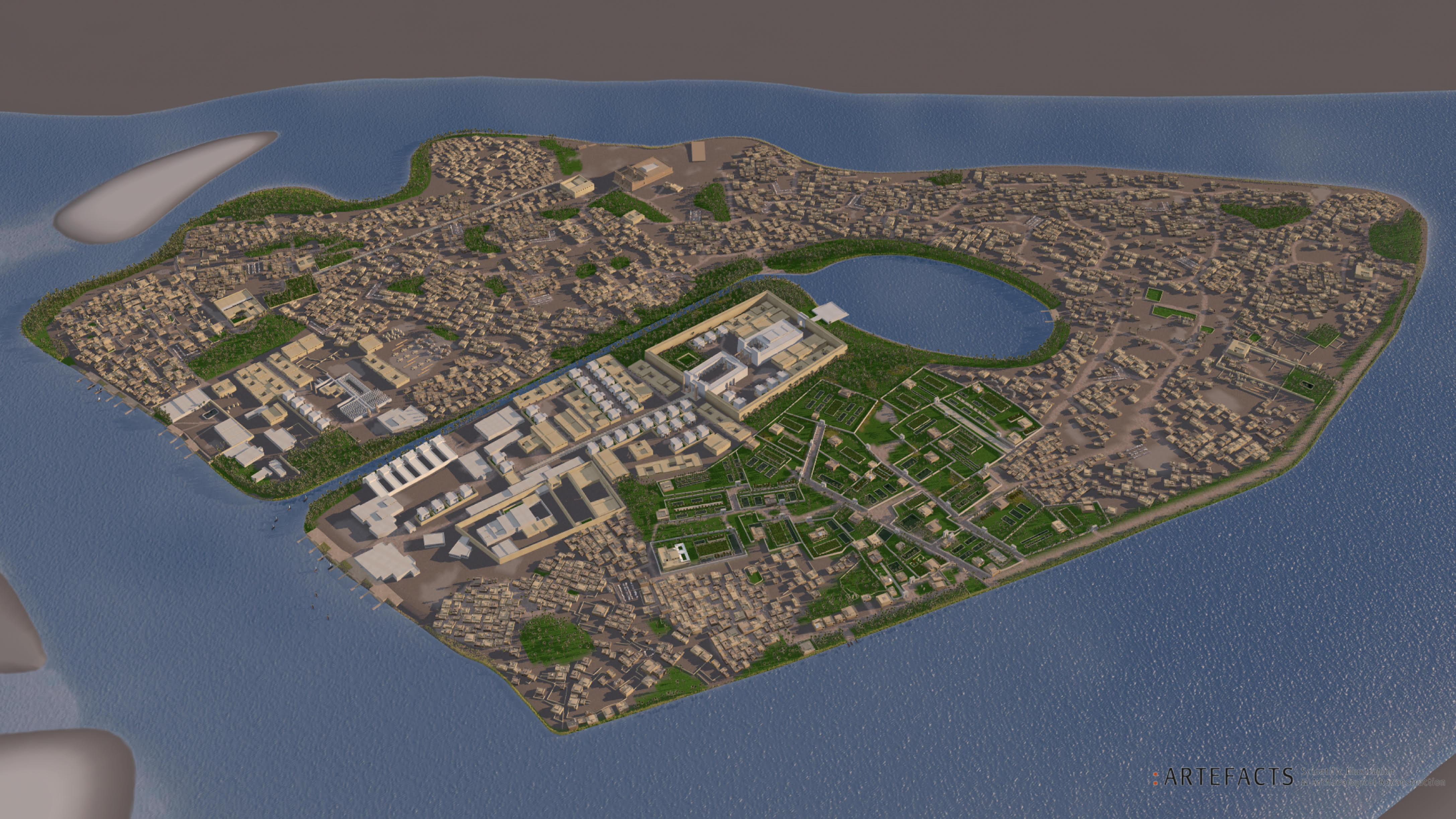
Where today just a typical Egyptian village is located, surrounded by fertile, green fields, 3300 years ago, Ramesses II founded his capital Piramesse. In contrast to Akhenaton’s Akhetaton, Piramesse was not founded at a virgin site but instead Ramesses II chose a site with a lot of tradition to which he could connect. During his long reign, the city became the one of the largest settlements not only of Egypt but the whole koiné spanning the Eastern Mediterranean and Western Asia. Texts portray Piramesse as a place where food is abundant, where temples and colossal statues were erected, and where the king would receive the envoys bringing the silver tablet with the famous peace treaty with the Hittite Empire. A few years later, the king received his Hittite wife after the god Seth had made winter become summer so that the long journey could be finished safely. Moreover, it was a military headquarters and center of trade between Egypt and the outside world. When entering Egypt, Piramesse was the first city the traveler would have seen, serving as a showcase and a stage of pharaoh’s power.
But what does remain of the city and what can we say after nearly a century of excavations? And what happened so that the memory of Piramesse only survived via its mention in the bible as Ramses, while the location remained disputed and was only identified by Mahmoud Hamza in 1930?
This lecture will tell the biography of Piramesse from its beginnings before Ramesses II through its heydays in the 19th Dynasty until its decline when it finally vanished almost completely from the surface after the end of the New Kingdom. Using the results of the excavations since 1928, the major features of the city will be shown and finds will be used to illustrate the long and rich history of the city.
Speaker Bio:
Dr. Henning Franzmeier has been working at Qantir-Piramesse for the past 20 years and directed the excavations since 2015. Over the past ten years, he has taught at UCL Qatar in Doha, the University of Innsbruck, and the University of Bologna, and also worked for the Humboldt-University in Berlin and The Cyprus Institute in Nicosia. In 2014, he received his PhD from the Free University of Berlin with a thesis on the New Kingdom cemeteries at the Middle Egyptian site of Sedment – a reassessment of the 1920/21 excavations of William Matthew Flinders Petrie. His MA thesis at the University of Göttingen dealt with a well of Ramesses II at Samana near Qantir-Piramesse. His interests range from settlement archaeology to the history of Egyptology and the analysis of funerary assemblages.
******************
The American Research Center in Egypt (ARCE) is a private, nonprofit organization founded in 1948 by a consortium of educational and cultural institutions to support research on all aspects of Egyptian history and culture, foster broader knowledge among the general public, and strengthen American-Egyptian cultural ties. The ARCE Pennsylvania Chapter (ARCE-PA) is the local branch of the national institution. We host monthly events including scholarly lectures, Egyptian-themed workshops, social events, and guided tours of the Penn Museum’s Egyptian galleries. For more information or to learn about the perks of membership, please send an e-mail to info@arce-pa.org, or visit our website at www.arce-pa.org.
Related Events

support Us
The AIA is North America's largest and oldest nonprofit organization dedicated to archaeology. The Institute advances awareness, education, fieldwork, preservation, publication, and research of archaeological sites and cultural heritage throughout the world. Your contribution makes a difference.