




- This event has passed.
Studying & Publishing Theban Tomb n°7: (A) Tomb of the Scribe Ramose at Deir el-Medina
September 26 @ 3:30 pm - 5:00 pm
Sponsored by: The American Research Center in Egypt (ARCE), Pennsylvania Chapter (ARCE-PA)
RE-SCHEDULED
Saturday, Sept. 26
3:30 pm EST
In-person only at the Penn Museum, Classroom L2
No registration required
Speaker: Prof. Marie-Lys Arnette, Assistant Professor and Alexander Badawy Chair in Egyptian Art & Archaeology, Dept. of Near Eastern Studies, Johns Hopkins University
Title: Studying & Publishing Theban Tomb n°7: (A) Tomb of the Scribe Ramose at Deir el-Medina
Abstract:
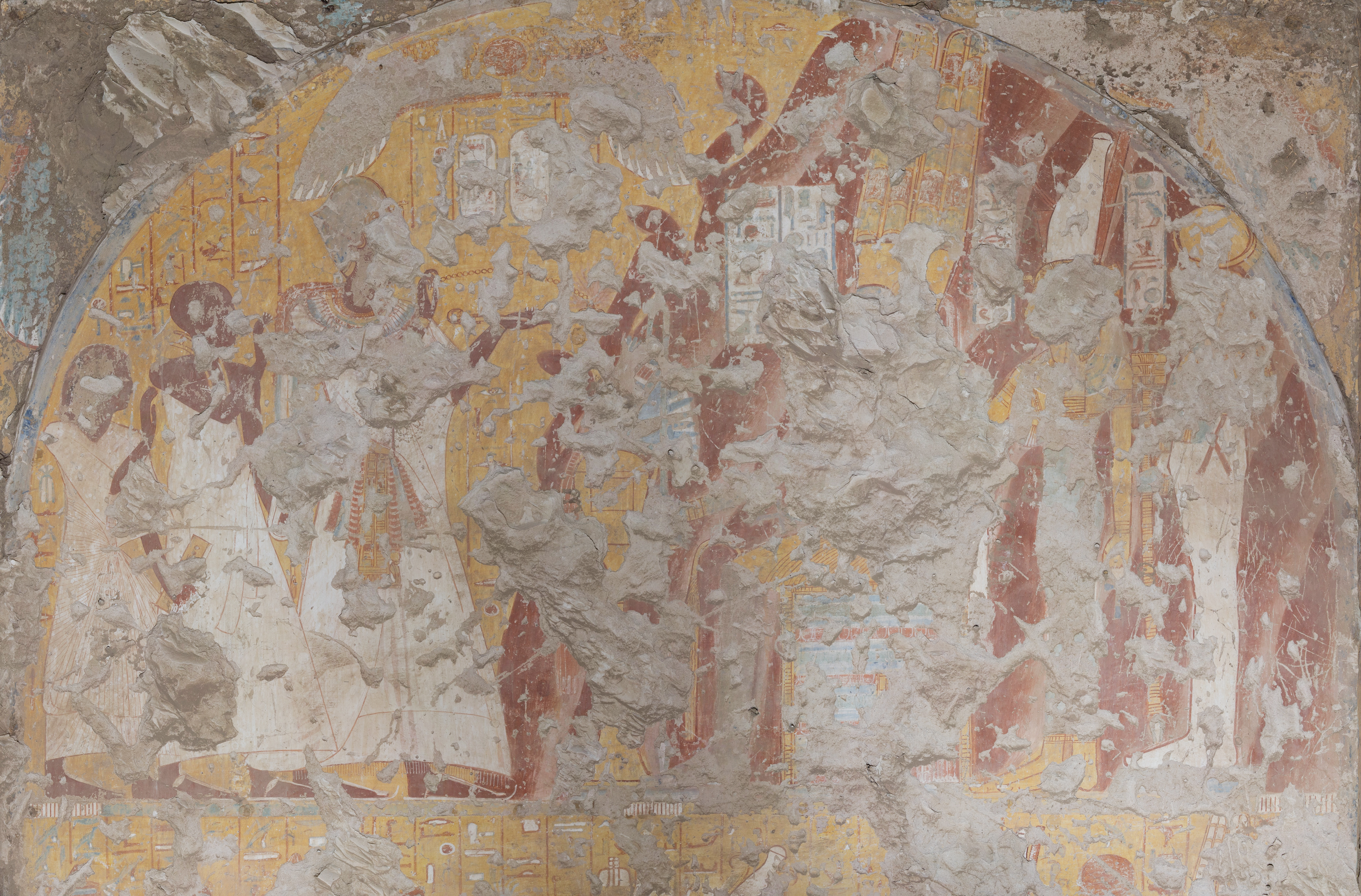
Ramose served first as “Scribe of the Place of Truth” and later as “Royal Scribe” at Deir el-Medina during the reign of Ramesses II. A prominent member of the community, closely connected to the royal administration, he was probably the wealthiest inhabitant the village ever knew. More than one hundred monuments associated with him have survived, including statues, stelae, ostraca, and other inscribed objects. Despite the importance of this individual, his tombs (TT 7 and TT 212) have never been fully published, probably because of their poor state of preservation. My current research project aims to produce the first comprehensive study and publication of both monuments. The project is accompanied by a conservation and restoration program for TT 7, undertaken in preparation for its future opening to the public.
This paper focuses on TT 7. It will present the project’s main research questions and methodology, before examining the tomb’s architecture and its remarkable decorative program. TT 7 stands out in several respects. Its paintings are of exceptional quality, executed by one or more highly accomplished artists working within the refined artistic tradition that still characterized the early years of Ramesses II’s reign. The decoration also preserves otherwise unattested iconographic details and artistic techniques that are only rarely encountered elsewhere. The tomb’s decorative programme further testifies to the importance of the Sokar festival in the Theban region during the Ramesside period. Finally, it contains religious texts of major significance, including the earliest known version of the ritual text for the protection of the Neshemet bark.
The paper will also present the conservation and restoration strategy adopted for the monument, discussing the methodological choices that have guided the intervention in view of its future accessibility to visitors. By combining archaeological research, art historical analysis, and the history of religions, the project seeks to provide a new foundation for the study and long-term preservation of one of the most remarkable monuments of Ramesside Deir el-Medina.
Speaker Bio:
Dr. Marie-Lys Arnette studied at the École du Louvre (History of Art and Museology) and at the University of Paris-Sorbonne (Egyptology). After completing her PhD, she served as Director of Publications and then as Scientific Member at the Institut français d’archéologie orientale (Ifao, Cairo). Before joining Johns Hopkins University, she taught Egyptian art history, archaeology, and Middle Egyptian language at the École du Louvre (France), the University Lumière Lyon 2 (France), and the University of Fribourg (Switzerland). She is a member of the Archaeological Mission at the Precinct of the Goddess Mut in South Karnak (JHU/Liverpool University) and of the Mission for the Study and Restoration of Deir el-Medina (Ifao).
Her research falls within the field of historical anthropology, approached through cultural history, with particular interests in perceptions of the body and emotions, food practices, funerary imagery, and, more recently, ludic practices. Across diverse topics, her work consistently combines Egyptian textual sources, iconography, and material culture within a long-term perspective. Her research is characterized by a sustained engagement with interdisciplinary approaches drawn from the humanities and social sciences, a perspective that is also central to her teaching.
******************
Lectures are FREE to ARCE Members, $7 for University of Pennsylvania Museum Members and UPenn Staff and Faculty, $5 for Students with ID, and $10 for the general public.
Light refreshments served starting at 3pm.
******************
The American Research Center in Egypt (ARCE) is a private, nonprofit organization founded in 1948 by a consortium of educational and cultural institutions to support research on all aspects of Egyptian history and culture, foster broader knowledge among the general public, and strengthen American-Egyptian cultural ties. The ARCE Pennsylvania Chapter (ARCE-PA) is the local branch of the national institution. We host monthly events including scholarly lectures, Egyptian-themed workshops, social events, and guided tours of the Penn Museum’s Egyptian galleries. For more information or to learn about the perks of membership, please send an e-mail to info@arce-pa.org, or visit our website at www.arce-pa.org.
Related Events

support Us
The AIA is North America's largest and oldest nonprofit organization dedicated to archaeology. The Institute advances awareness, education, fieldwork, preservation, publication, and research of archaeological sites and cultural heritage throughout the world. Your contribution makes a difference.