

“What Do We Owe to Already-Looted Objects?”
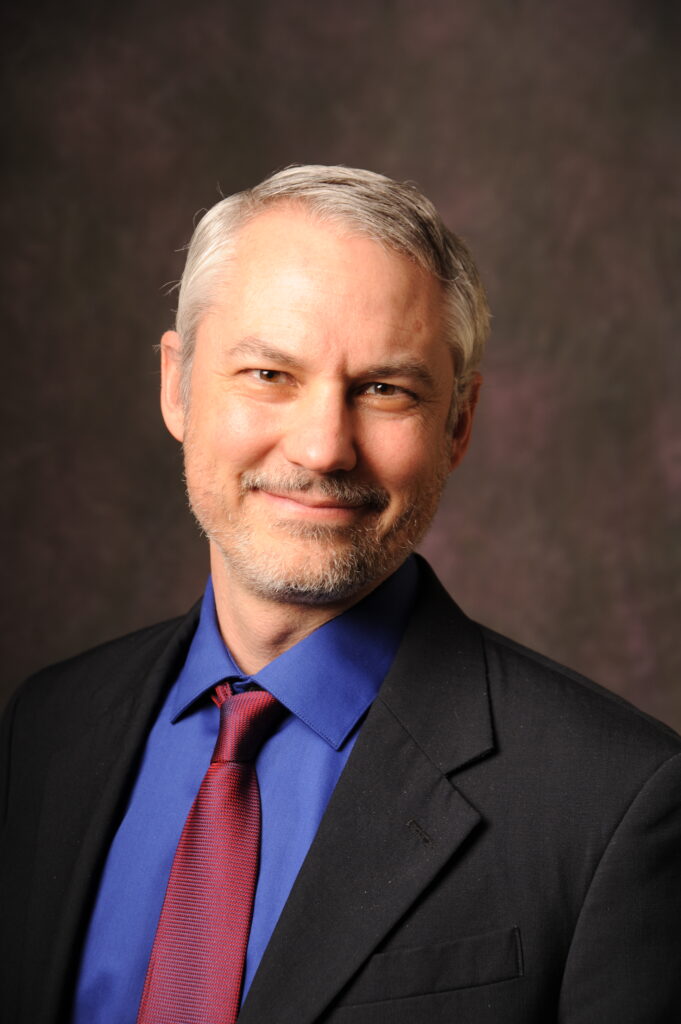
Lecture by Elizabeth Marlowe, Professor of Art History and Chair of the Art department at Colgate University (https://www.archaeological.org/lecturer/elizabeth-marlowe/)
The Clarence and Anne Dillon Dunwalke Lecture Provenance refers to an artwork’s history of ownership, from the time of its creation or archaeological discovery to the present. Provenance researchers track down a wide range of sources—scholarship, auction catalogs, financial records, inventories, correspondence, photographs, markings on artworks themselves, and more—to reconstruct an object’s past and retrace […]
Lecturer: Dr. Susan Gillespie Professor of Anthropology, University of Florida In 1942 and 1943, excavations revealed fabulous buried deposits of jade and other precious items in a very unexpected place: La Venta on Mexico’s southern Gulf coast, an area of swamps and tropical forest. These finds produced an “ecstatic” reaction in the world of archaeology […]
Wednesday Feb. 11, 5:30 - 6:30, Gilman Hall Room 50 Johns Hopkins University, Homewood campus Dorothy Kent Hill Lecture Josef Wegner, University of Pennsylvania Digging into Egypt's Late Middle Kingdom, Recent Discoveries at the Anubis-Mountain Royal Necropolis, Abydos
Join SGS Beta for an accessible introduction to radiocarbon (¹⁴C) dating and stable isotope applications in archaeology and related sciences. This webinar will cover the fundamentals of how radiocarbon dating works, including why calibration is essential for accuracy, and the special considerations needed when working with bone samples. Through case studies, you’ll learn how ¹⁴C […]
Kershaw Lectures in Near East Archaeology Time TBA
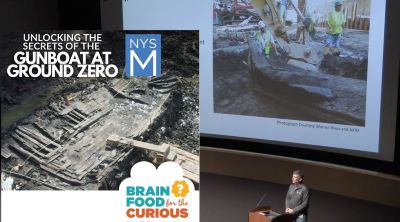
In 2010, archaeologists monitoring excavation at the World Trade Center redevelopment site made an extraordinary discovery: the remains of an 18th-century wooden gunboat buried deep beneath Manhattan’s historic landfill. Likely built near Philadelphia in the early 1770s, this Revolutionary War-era vessel once patrolled shallow waterways before being abandoned along the Hudson River. Preserved for over 200 years in oxygen-poor […]
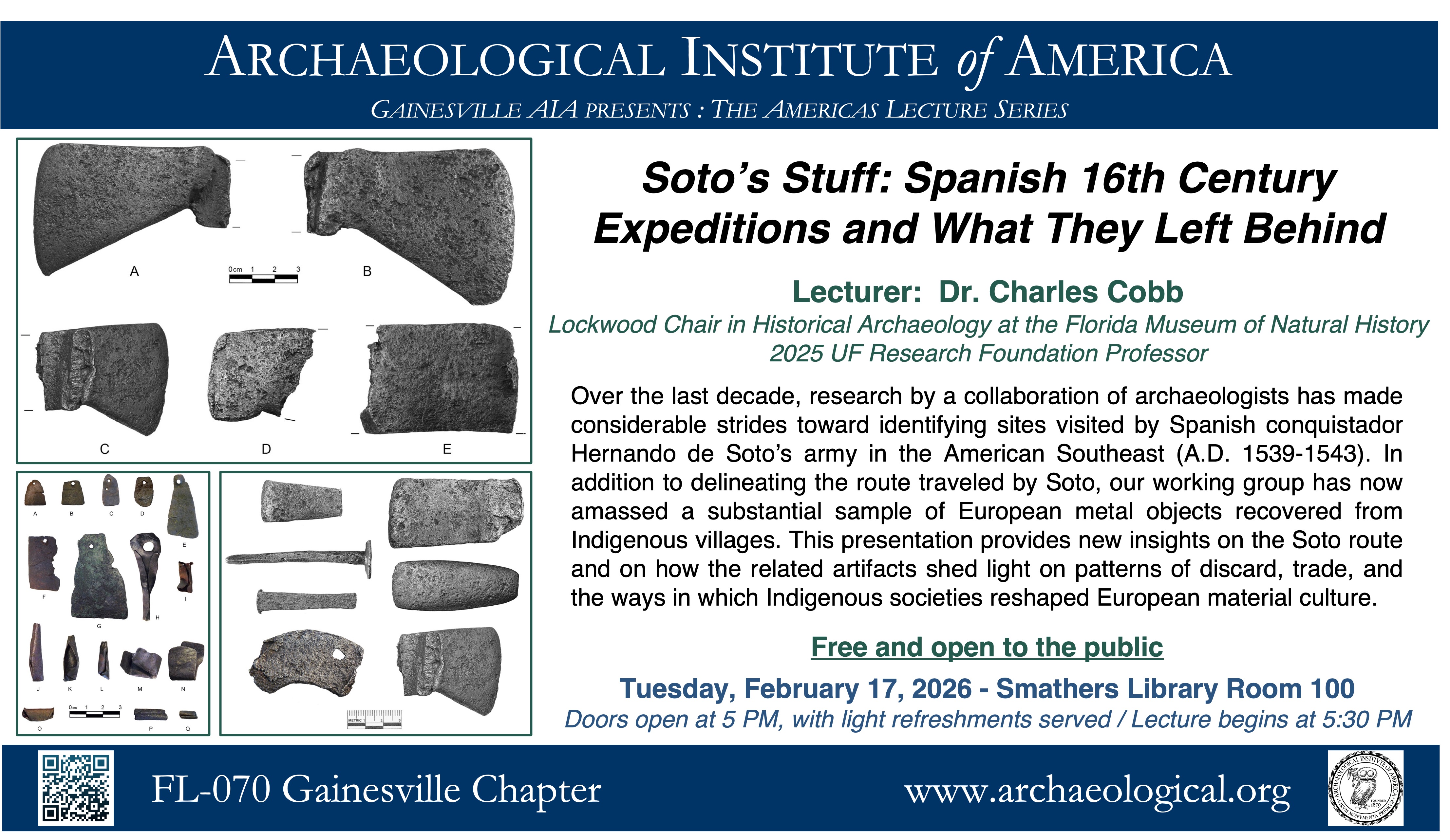
Lecturer: Dr. Charles Cobb Lockwood Chair in Historical Archaeology at the Florida Museum of Natural History 2025 UF Research Foundation Professor Over the last decade, research by a collaboration of archaeologists has made considerable strides toward identifying sites visited by Spanish conquistador Hernando de Soto’s army in the American Southeast (A.D. 1539-1543). In addition to […]
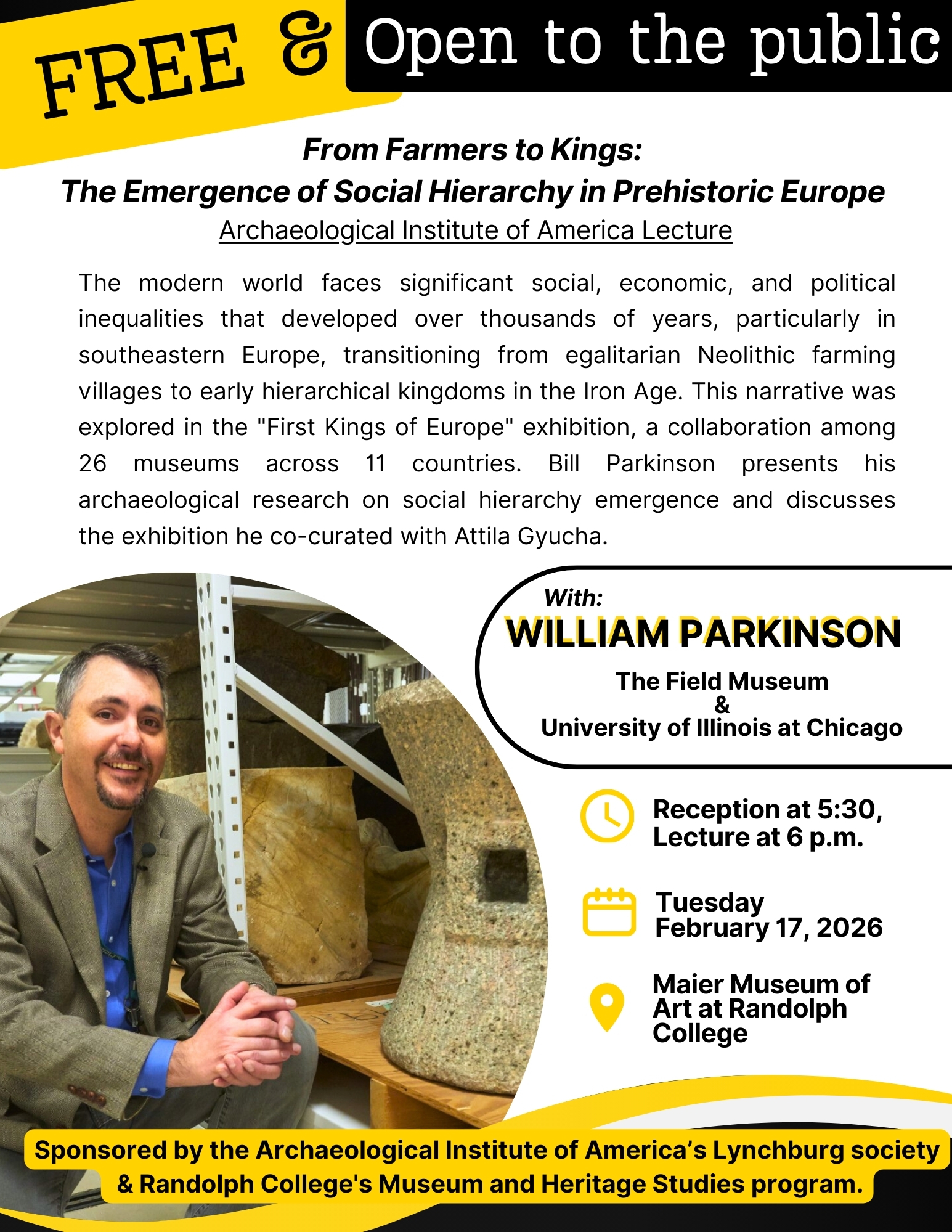
Lecture by William Parkinson; William (Bill) Parkinson is an archaeologist who specializes in European and Eastern Mediterranean Prehistory. His anthropological and archaeological research explores the social dynamics of early village societies and the emergence of early states. He has over 30 years of experience conducting archaeological fieldwork and developing museum exhibitions for the Field Museum. […]
(Lecturers: Dr. Maxine McBrinn and Dr. Judith Habicht Mauche) Linda Cordell was extraordinarily active in southwestern archaeology during her resources in the work of others. Because of this, her influence extended well beyond her own students to those of many of her colleagues. One of her last personal endeavors was working with the Tijeras Pueblo […]
About the lecture: In 2023, excavators in Pompeii found a bakery in the Casa di Rustio Vero that was separated from the house—and the rest of the world—by metal bars. The excavators interpreted the bars as an indication of incarceration and the use of convicts as labor. This lecture explores the evidence for convict labor […]
Join us for a lecture by Professor John McCloy, Washington State University, who will present results of an investigation into the materials science and processing parameters to fabricate Egyptian blue faience. Recently, our group at Washington State University, with the Carnegie Museum of Natural History and the Smithsonian Museum Conservation Institute, recreated Egyptian blue to […]