Location: 8314 Debelt, Bulgaria
Season: June 20, 2026 to July 4, 2026
Application Deadline: April 10, 2026
Deadline Type: Rolling
Website: https://anthroctr.org/program/2026-bulgaria-debelt-ceramics/
Discount for AIA members: None
Program Type:
Field School
RPA Certified:
No
Affiliation:
Anthropocene Research Center & Balkan Heritage Foundation
Project Director:
Dr. Daniela Cherneva (Balkan Heritage Foundation, Bulgaria), Ms. Biljana J. Peeva (National Institution Stoby, North Macedonia), Dr. Teodora Bogdanova (Bulgarian Academy of Sciences) & Dr. Margarit Damyanov (National Archaeological Institute with Museum at the Bulgarian Academy of Sciences)
Project Description:
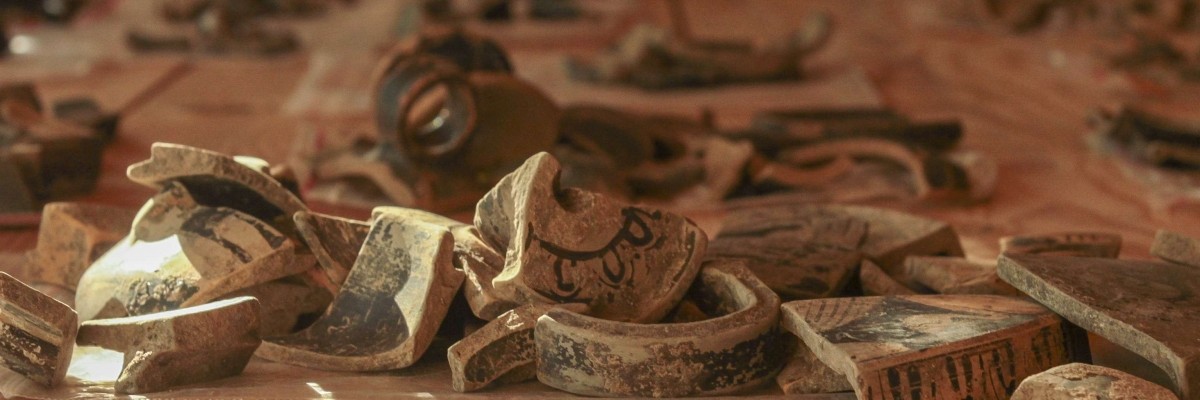
This field school is an introductory workshop for the conservation of ceramics, using ancient Greek pottery recovered from sites in the Western Black Sea coast of Bulgaria. This program guide students through the history of Ancient Greek pottery and the process of pottery conservation, restoration, documentation, and study. Both the theoretical and laboratory elements of this program will be taught at the research center associated with the Roman site of Deultum (see more about the site below).
The course includes three modules: 1) practical work in conservation of ancient pottery, working on ceramic artifacts recovered during excavations at cemetery of Apollonia Pontica (present-day Sozopol, Bulgaria); 2) lectures on topics related to the archaeological context of conserved vessels and to conservation process of ancient Greek pottery; 3) excursions to the ancient coastal towns of Nessebar (UNESCO World Heritage Site) and a tour of Sozopol (including study visits to their archaeological museums).
Develton (Thracian: Debelton, “two-swamp area”) was founded as an emporium of Apollonia Pontica in the 7th century BCE. From the 6th century to the 4th century BC, the settlement served as an important place of trade between Thracians and Greeks. Develton was annexed to the Roman Empire in 46 CE and became part of the province of Thrace and its name changed to Deultum. At the Battle of Deultum in the summer of 377 CE (during the Gothic War of 376–382), an Eastern Roman army was defeated by a Gothic raiding party outside Deultum, and the city was sacked. Deultum was later rebuilt on a smaller scale, and, in the second half of the 5th century CE, new walls were constructed, and all unprotected buildings were demolished to ensure hostile forces did not use them as cover. These walls were destroyed by Slavs and Avars at the end of the 6th century CE.
Period(s) of Occupation: Hellenistic Period
Notes:
Tuition is $4,187; Earn 4 Semester Credit Units (equivalent to 6 Quarter Credit Units) through our School of Record – Culver Stockton College
Project Size: 1-24 participants
Minimum Length of Stay for Volunteers: Full session
Minimum Age: 18 years old
Experience Required: There are no prerequisites for participation in this field school but note that conservation work requires good manual dexterity skills and ability to carry out delicate bench work. Students will receive hands-on training in conservation work and will spend most of the time learning how to conserve ceramics in a lab setting. Students will be taught how to use a variety of laboratory procedures and equipment – from microscopes to analytical instruments. Conservation work is slow and may be tedious. It requires patience and focus. This is an introductory course so we will cover all the very basic elements of conservation ethnographic work.
Room and Board Arrangements:
Cost of Room and Board is included in tuition
Academic Credit:
Earn 4 Semester Credit Units (equivalent to 6 Quarter Credit Units) through our School of Record – Culver Stockton College
Dorian Chee
5335 W Adamas Blvd Suite 106
Los Angeles
California
90016
U.S.
Phone: (323) 740-1805