
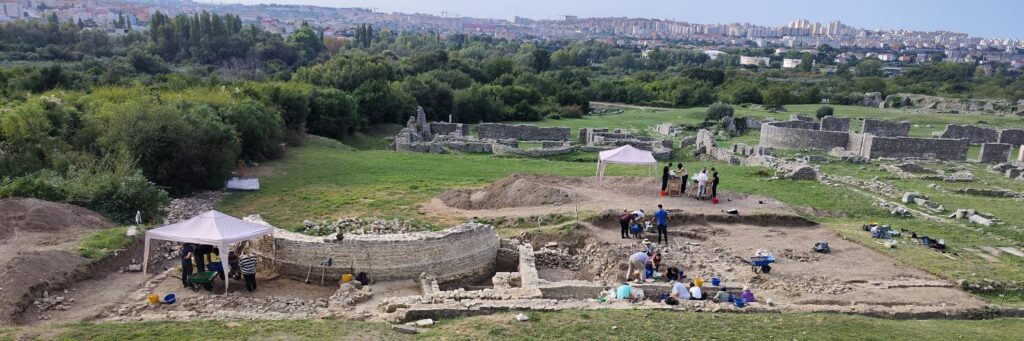

Location: Solin, Croatia
Season: May 3, 2026 to May 31, 2026
Application Deadline: April 3, 2026
Deadline Type: Rolling
Website: https://anthroctr.org/program/2026-croatia-salona-spring/
Discount for AIA members: None
Program Type:
Field School
RPA Certified:
No
Affiliation:
University of Zagreb (Croatia) & Anthropocene Research Center (US)
Project Director:
Dr. Dino Demicheli, University of Zagreb (Croatia)
Project Description:
Salona was the capital of the province of Dalmatia and the most important Roman site on the Eastern Adriatic. As a Roman colony, it was established in the 1st century BCE, and it lasted until 7th century CE when Avar and Slavic raiders conquered Salona and forced its inhabitants to flee. It is probably the only provincial capital that didn’t develop into a medieval and, consequently, a modern city. Instead, the royal medieval city of Solin was outside the site perimeter, and the remains of Roman Salona served as a quarry for the Medieval Solin, Split and even as far as Venice.
Roman Salona has been excavated for more than 200 years. Yet most of the site’s area – about 80% — is still unexcavated and unknown. There is much we need to know about Salona, including its building sequence, its integration of local population with Italian Romans, and its economic and political organization and institutions.
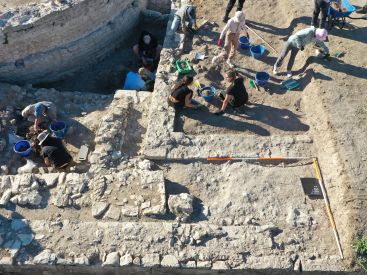
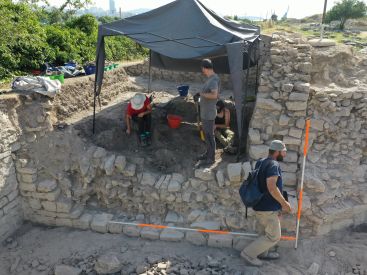
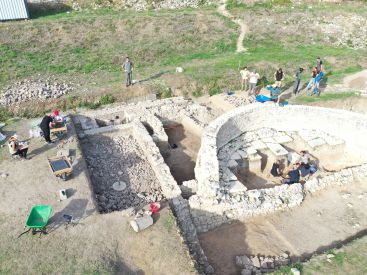
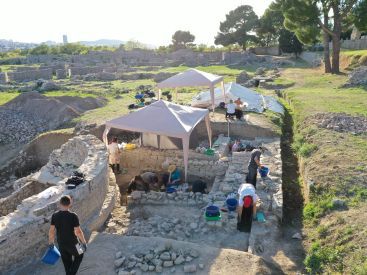
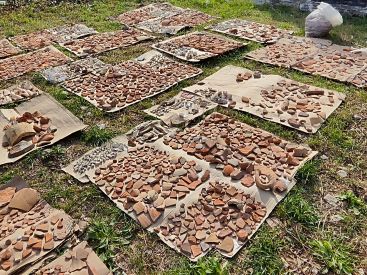
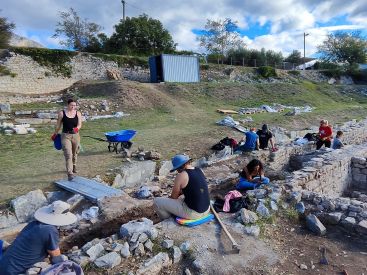
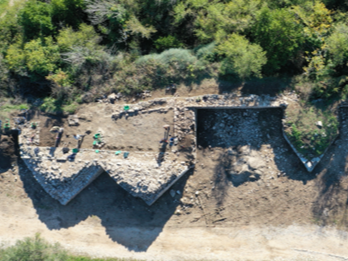
During the spring field school, we will excavate the towers dotting the city’s walls, dated to the 2-4 centuries CE. To elevate the floor within the towers, the builders brought soil rich with ceramics and other materials from elsewhere at Salona (likely the nearby cemetery), creating a highly packed time capsule.
Period(s) of Occupation: Roman Period
Notes:
Tuition is $4,700; Earn 8 Semester Credit Units (equivalent to 12 Quarter Credit Units) through our School of Record – Culver Stockton College
Project Size: 1-24 participants
Minimum Length of Stay for Volunteers: Full session
Minimum Age: 18 years old
Experience Required: None. This is hands-on, experiential learning and students will study on-site how to conduct archaeological research. Fieldwork involves physical work and exposure to the elements and thus requires a measure of understanding that this will not be the typical university learning environment. You will have to work outdoors and will get sweaty and tired. Students are required to come equipped with sufficient excitement and adequate understanding that field work requires real, hard work, in the sun and wind. The work requires patience, discipline, and attention to detail.
Room and Board Arrangements:
This program provides full accommodation. Lunch & snacks are provided for days working at the site. Students are responsible for their own breakfast and dinner during days of excavation and all meals for days off (weekends). Some diets (vegan, vegetarian, etc.) may be accommodated at this program but must be communicated with and approved by the project director. There are numerous well-supplied supermarkets in Solin for all types of diets, and these are open every day (some don’t work on Sundays).
All students will reside in apartments in Solin (pop. 25.000), 2-3 students per apartment, depending on size and number of rooms (some rooms are with double bed). The apartments are within walking distance of the site (max 15 mins). All apartments are air-conditioned and have Wi-Fi. Linens and towels are provided.
Academic Credit:
8 Semester Credit Units (equivalent to 12 Quarter Credit Units) through our School of Record – Culver Stockton College
Dorian Chee
5335 W Adamas Blvd Suite 106
Los Angeles
California
90016
U.S.
Phone: (323) 740-1805