This listing expired on January 1, 1970. Please contact for any updated information.
Location: Karoo South Africa
Session Dates: Contacts us for dates and to customize your trip
Deadline Type: Rolling
Website: https://www.ancientodysseys.com/southafricafossildig
Program Type:
Field School
RPA Certified:
No
Affiliation:
University of Witwatersrand, Albany Museum, Evolutionary Studies Institute
Project Director:
Bruce Rubidge
Project Description:
Join world-renowned paleontologists on a fossil-hunting expedition in the Karoo, South Africa
The Karoo and Eastern Cape of South Africa have long been regarded as the largest and richest collecting grounds for some of Earth’s most important fossils. Within the Karoo, a long extinct group of vertebrates known as therapsids, an evolutionary transition from reptiles into mammals are in abundance, while in the nearby Eastern Cape, some of the world’s oldest vertebrate fossils from the Devonian have been found.
This is a custom itinerary, that allows you to join for as many days as you want with any or all of the world experts on Karoo and Eastern Cape paleontology on a fossil hunt and tour.
Over 200 million years ago, South Africa formed part of the southern reaches of Pangaea, and the Karoo preserves a remarkably unbroken record of prehistoric life spanning from the Permian through the Jurassic. Its rocks hold the fossilized ancestors of mammals, terrestrial land animals of the Devonian and even dinosaurs.
The Karoo is truly one of the most important fossil locales in the world — and you can build a fully customized itinerary around what excites you most. Every element below is a building block: choose one focus, combine several, or work with any or all of the South African paleontologists listed here who work in this region. There’s no fixed path, only options to mix and match into the trip that’s right for you.
Whether you want to concentrate on one time period, sample across several, or shape the whole trip around a particular paleontologist’s expertise, this itinerary flexes to match — swap in, swap out, and build it your way.
Dr. Bruce Rubidge, the world authority on Karoo fossils
Bruce Rubidge is an Internationally-known paleontologist and founder of the Evolutionary Studies Institute at the University of the Witwatersrand. He is also Chair of the NRF-DST South African Centre of Excellence in Palaeosciences and a Fellow of the Royal Society of South Africa.
Hands-on fossil hunt for therapsids with Dr. Julien Benoit
Dr. Julian Benoit is a Permian-Triassic expert and professor at the Evolutionary Studies Institute, University of the Witwatersrand. Dr. Benoit’s work focuses on paleobiology, neuroscience and evolutionary biology of therapsids from the Karoo.
Search for Devonian vertebrates with Dr. Rob Gess
Dr. Gess is South Africa’s primary researcher on South African Devonian early vertebrates, including fish and early tetrapods. To date, Dr. Gess has described 23 new taxa, from the world’s oldest lampreys to Africa’s earliest tetrapods, terrestrial invertebrates, algae and plants.
—
Period(s) of Occupation: Permian-Triassic and Devonian
Notes:
This is a fully itinerary
The Great Karoo, sometimes referred to "a gigantic playground packed with millions of fossils" is incredibly important to paleontologists as it is the only record of the Permian-Triassic mass extinction's effect on terrestrial animals. The end-Permian mass extinction was responsible for the elimination of 90% of species living in the sea and 70% of species living on land.
Join Prof Bruce Rubidge for an overview of Karoo fossil landscape, including therapsids, an extinct group of animals are the forerunners of mammals.
Prof. Rubidge is an authority on tetrapod evolutionary change, mammal-like reptiles of the Karoo Basin and early therapsids. His studies and research have helped shape our understanding of the Pangean continental realm during the Palaeozoic and Mesozoic eras.
Prof. Rubidge is available to guide exhilarating visits to:
Doornplaats farm, a remarkable site with prolific vertebrate and invertebrate fossils, including fossilised fish scales, the fossilised burrows attributed to the dicynodont Cistecephalus.
The Gats River fossil site at Nieu-Bethesda, where rocks preserve the fossilsed bones of ancient reptiles and therapsids which lived and died on the river floodplains. This area is where James Kitching began to formulate his findings that on palaeontological grounds, South Africa and Antarctica were once linked.
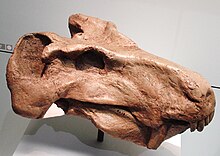
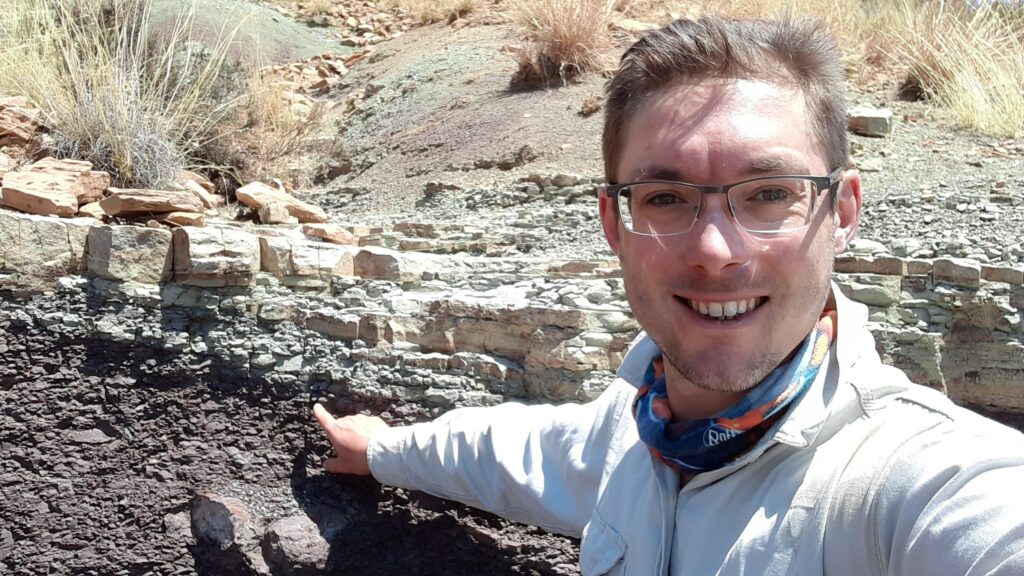
Lootsberg Pass, a fossil-rich site which is one of the best places on Earth to study the effect of the Permian Triassic extinction on land. Here, we will see examples of some of the earliest Triassic fauna of the Karoo Basin, which is characterised by few dicynodont species, and a new fauna dominated by the amphibian Lystrosaurus, and early archosaurs (the most distant ancestors of dinosaurs) as well as cynodont therapsids, the ancestors of mammals.
Kitching Fossil Exploration Center, named for legendary paleontologist James Kitching, who unearthed much of South Africa's fossil heritage,. The Kitching Centre combines life-sized reconstructions of prehistoric creatures and an immersive introduction to the age of the therapsids, the mammal-like reptiles that once ruled this landscape long before the first dinosaurs appeared.
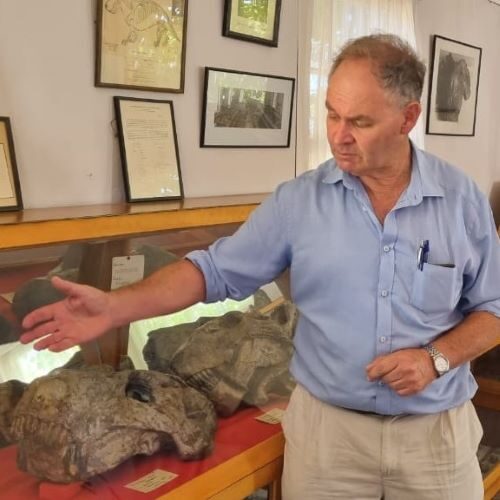
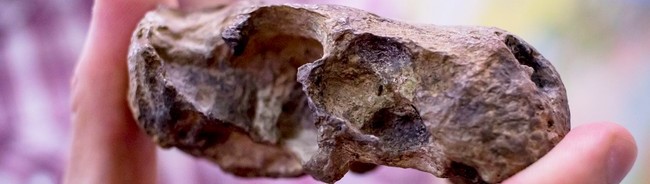
Private tour of the Karoo Origins Museum, home to the world's largest public collection of fossil holotypes, with more than 850 fossil skulls on display, 107 of which are holotypes – the original reference fossils used to define new species. Curated from the renowned Rubidge family collection under the direction of Professor Bruce Rubidge, the collection includes more than 107 holotypes dating back 260–250 million years, when mammal-like reptiles roamed the ancient supercontinent Gondwana. Beyond its striking dioramas and life-size reconstructions, the centre is actively engaged in research on the fossils and rocks of the Karoo, giving visitors a rare look at active palaeontology alongside one of the richest windows into life before the dinosaurs. It is estimated that over 2,000 scientific papers have been written on the fossils of this collection.
Valley of Desolation, a geologic spectacle of tall dolerite columns that have eroded and weathered, causing the columnar structures characteristic of this area. Choose to enjoy a late afternoon sundowner and picnic dinner at a time when the valley is at its most beautiful and the perfect time to see the many species of animals who call the park home.
Work alongside Dr. Rob Gess, South Africa's leading researcher on Devonian ecosystems and ancient fish and early four legged creatures for hands-on fossil-finding.
The rocks of Waterloo Farm lagerstatte are from the Antarctic Circle and have yielded fossilized life from the Late Devonian, including fish, invertebrates, plants and algae. More importatnly, is the presence of early tetrapods, which were previously believed to have lived only in the tropics.
Dr. Gess is available to lead:
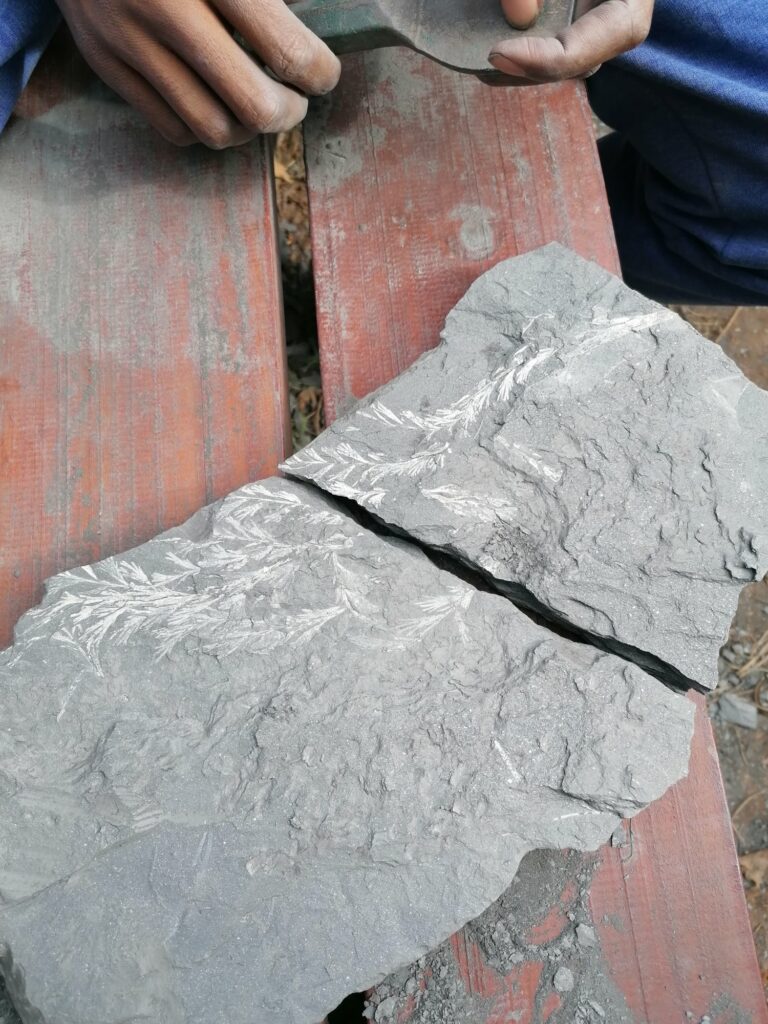
Hands-on Devonian fossil search. All tools and instruction are provided to chisel through shale blocks, to unlock the Devonian mysteries within. You are guaranteed to find fossils. If you find something that’s highly significant, it will be set aside to prepare properly in the lab.
A guided tour of the Waterloo Farm exhibits, as well as a tour of the lab and the most important specimens in the collections, including the oldest known land-living animal from Gondwana, the oldest fossil lamprey in the world and Africa's oldest coelacanth.
Dr. Julien Benoit and his associates excavate for fossils in multiple locations in and around Bethulie, Oviston and Beaufort West. These excavations include the search for gorgonopsids, dicynodonts and other therapsids from the Permian extinction. All training, tools, including geopicks, brushes and GPS will be provided.
In your excavations at these locations, you will be contributing to research that will help scientists decipher the biggest mass extinction event of all, and thus anticipate the effect of the ongoing biological crisis.
Project Size: 1-24 participants
Minimum Age: 18
Experience Required: No experience required