Location: RG7F+3R Dorchester, UK
Season: July 18, 2026 to August 9, 2026
Session Dates: Session 1: 18th-22nd July Session 2: 24th-28th July Session 3: 30th July -3rd August Session 4: 5th-9th August 2026
Application Deadline: May 1, 2026
Deadline Type: Rolling
Website: https://www.hugh-willmott.co.uk/cerne
Program Type:
Volunteer
RPA Certified:
No
Affiliation:
University of Sheffield
Project Director:
Dr Hugh Willmott
Project Description:
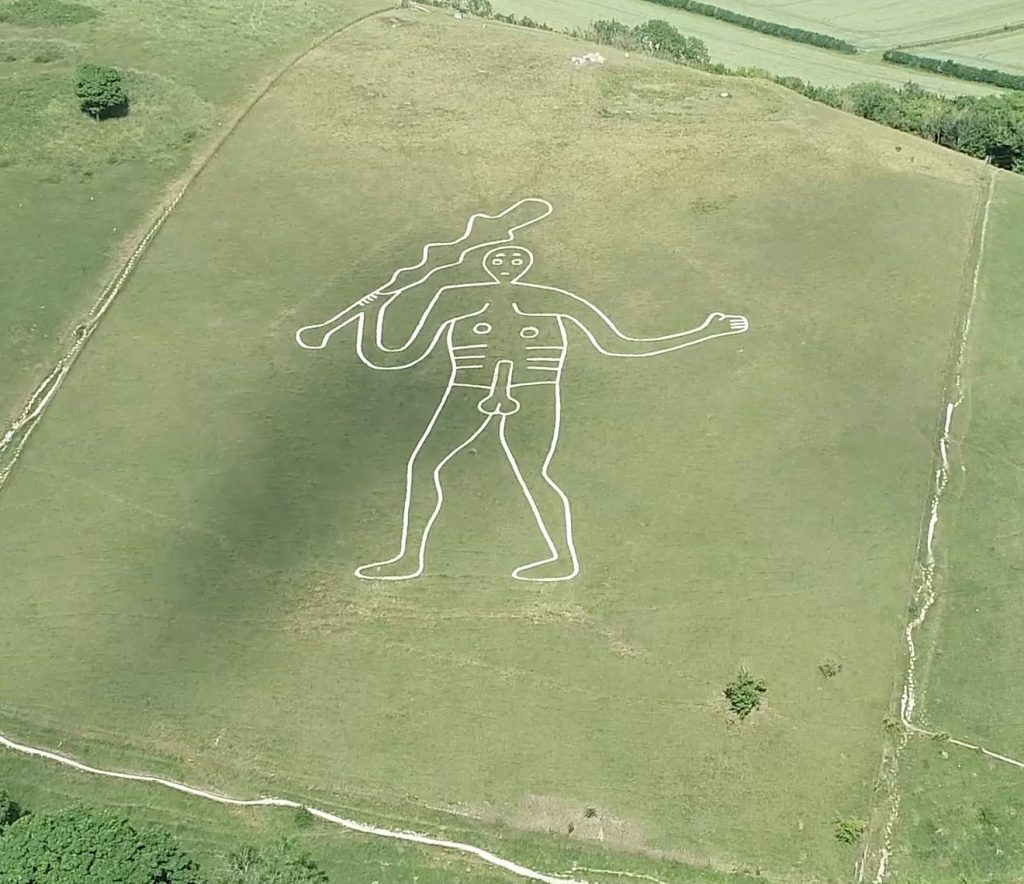
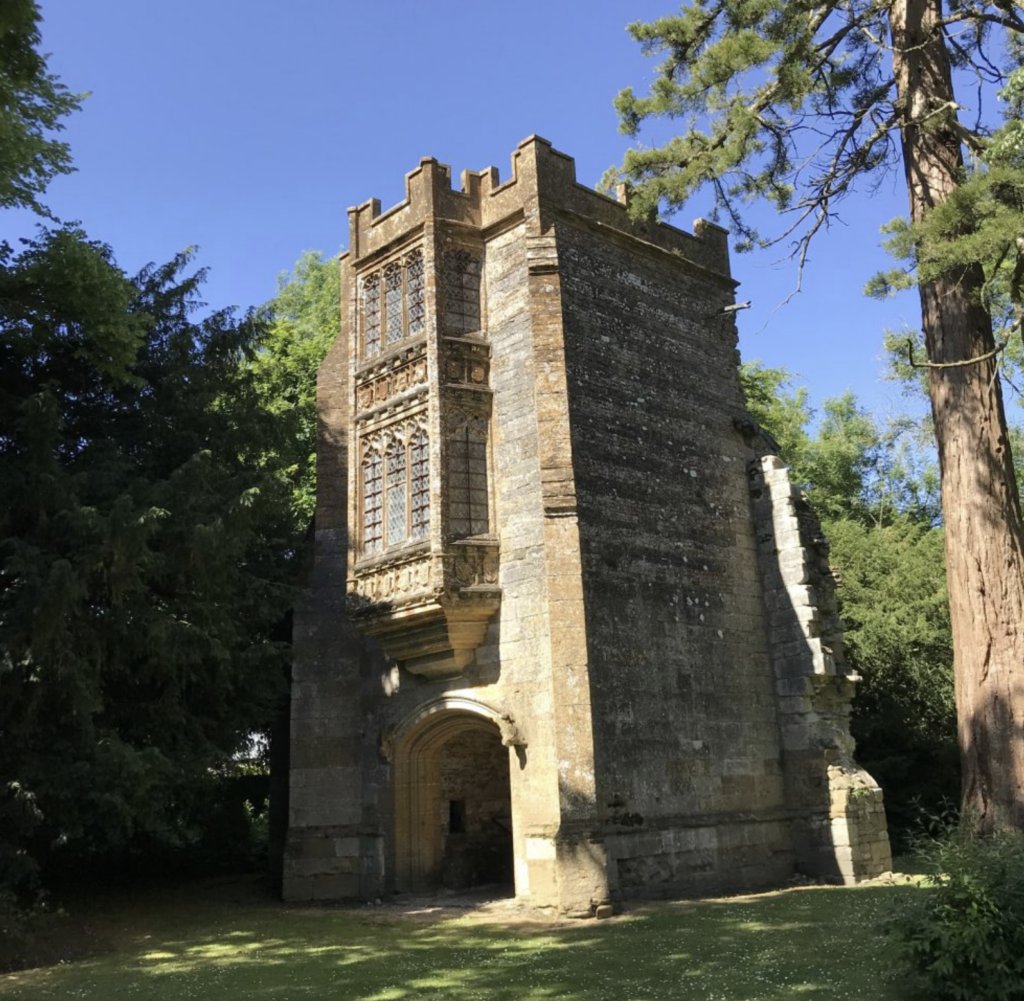
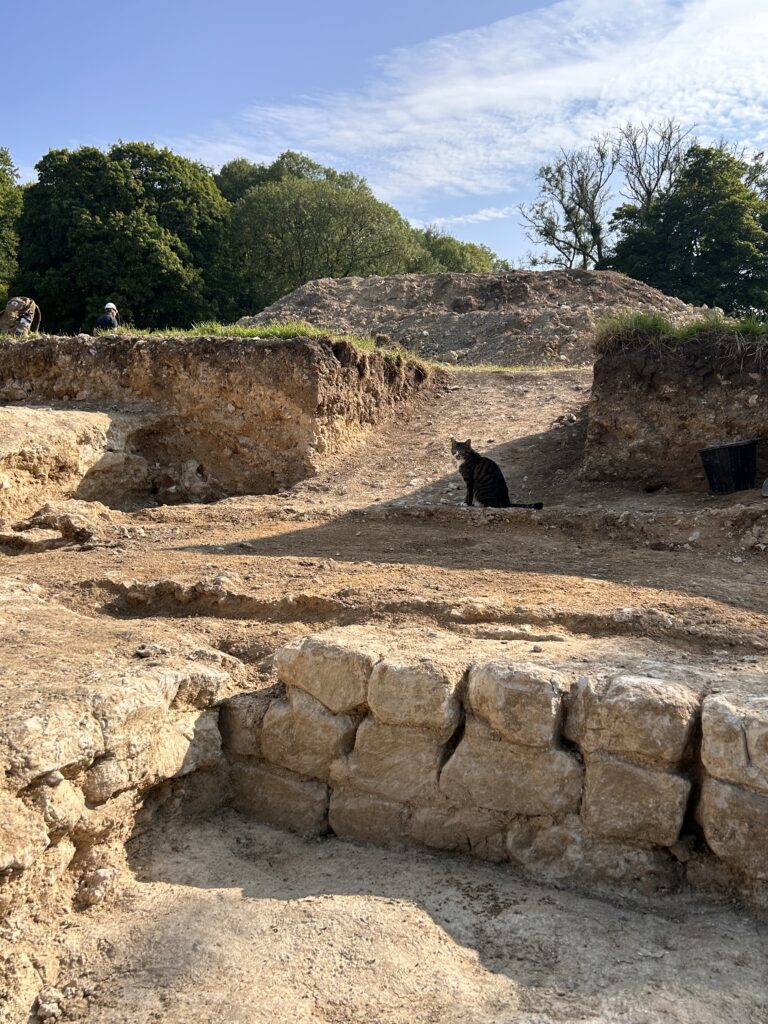
The abbey sits at the feet of the famous chalk-cut figure of a club-wielding giant that dominates the village of Cerne Abbas. Recent dating of the figure by the National Trust has shown that the giant was an Anglo-Saxon creation, and it seems directly connected to the earliest monks residing there. Ground Penetrating Radar (GPR) survey undertaken by the University of Sheffield last year provided the first ever evidence for the medieval abbey, and potentially its Anglo-Saxon predecessor beneath. Not only did it reveal an amazingly clear plan of the cloistral ranges, the survey showed that the buildings remained surprisingly intact with walls up to four feet tall in places.
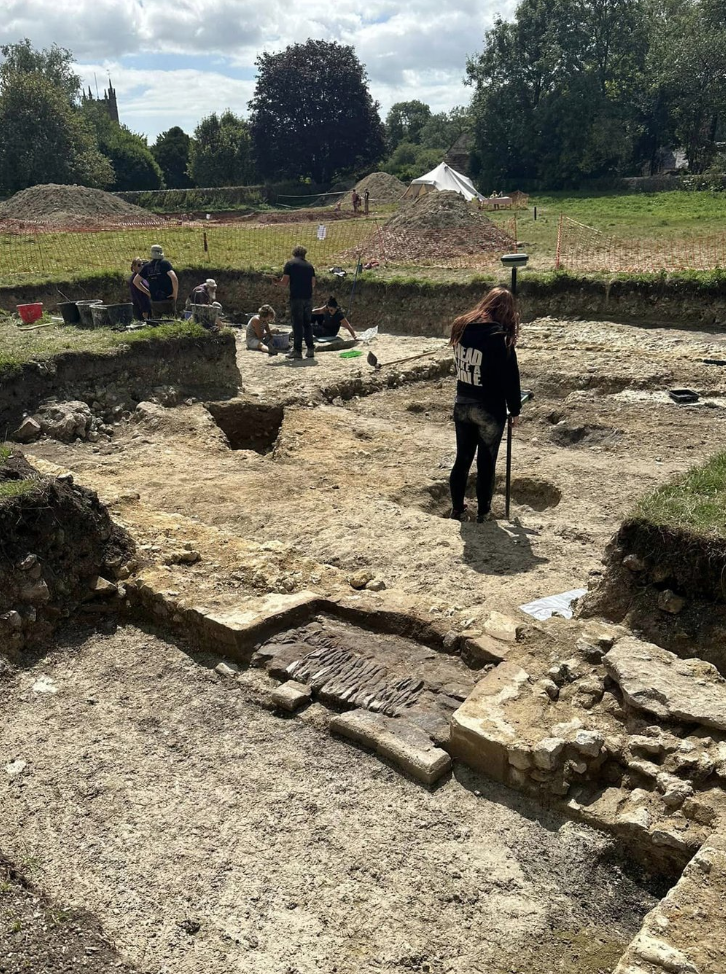
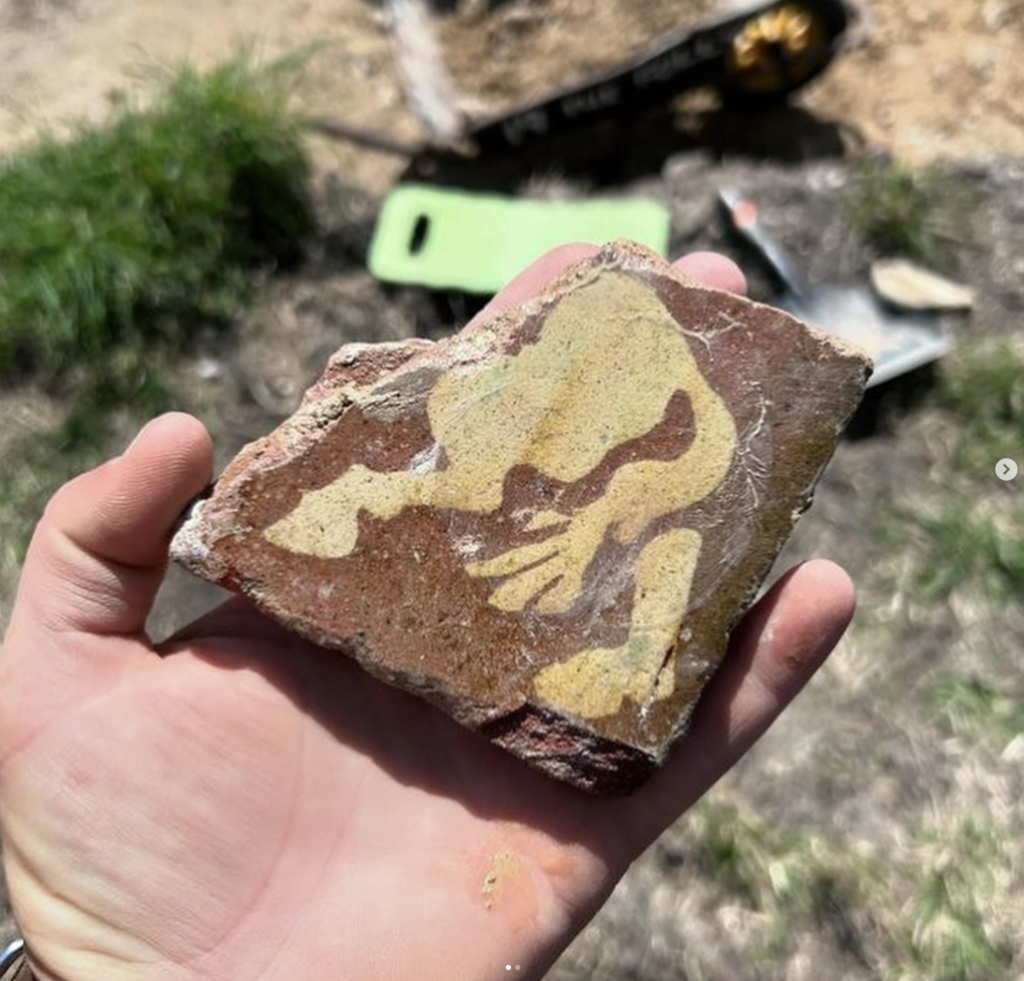
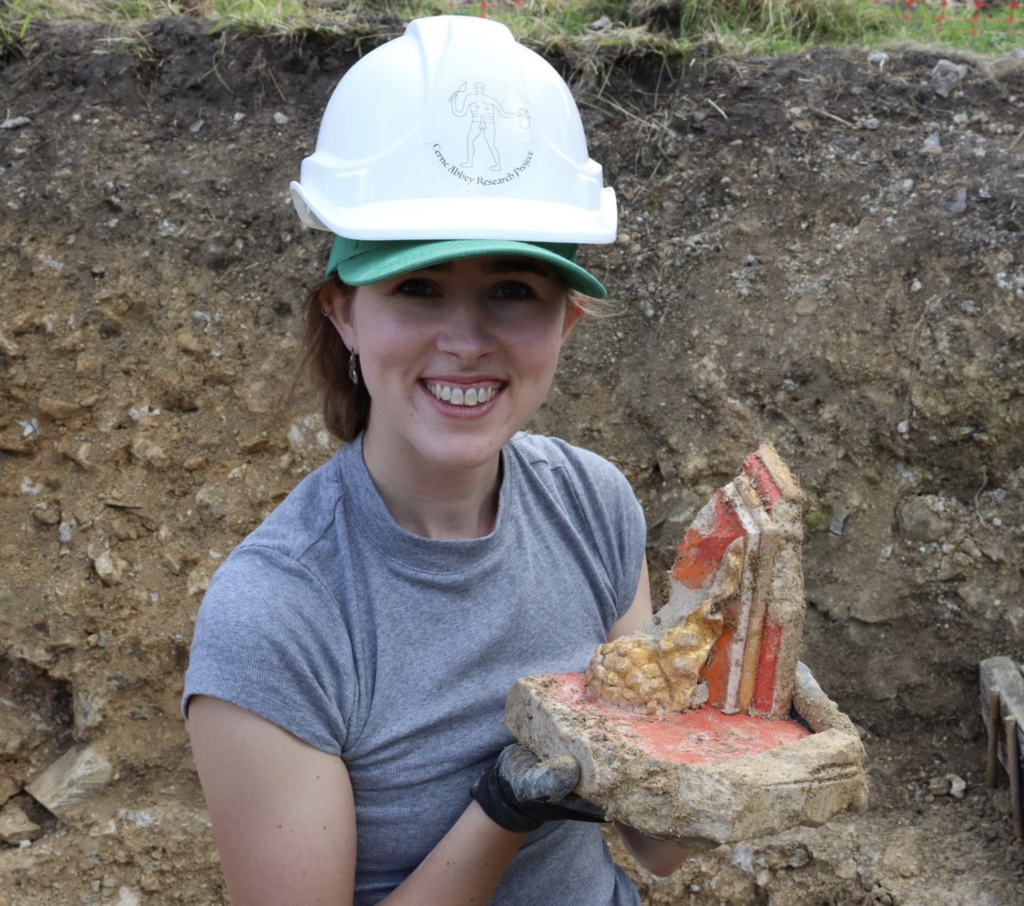
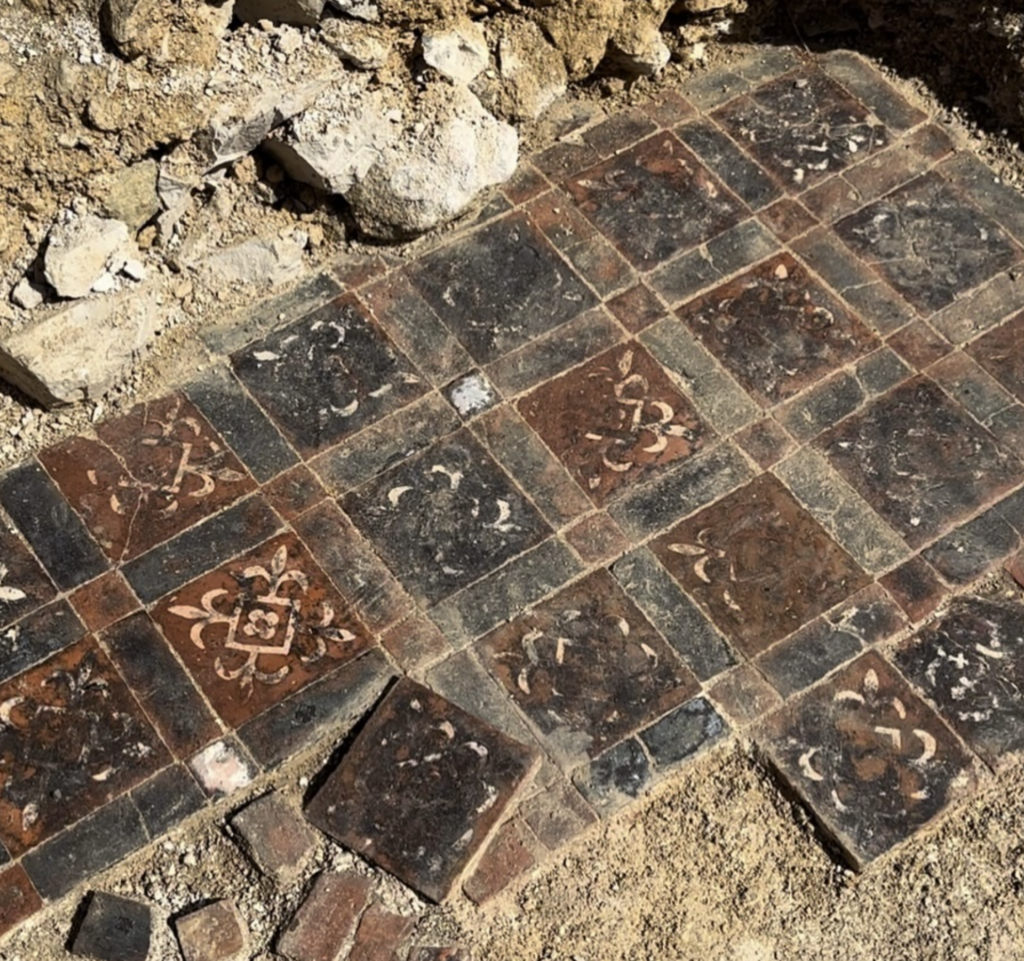
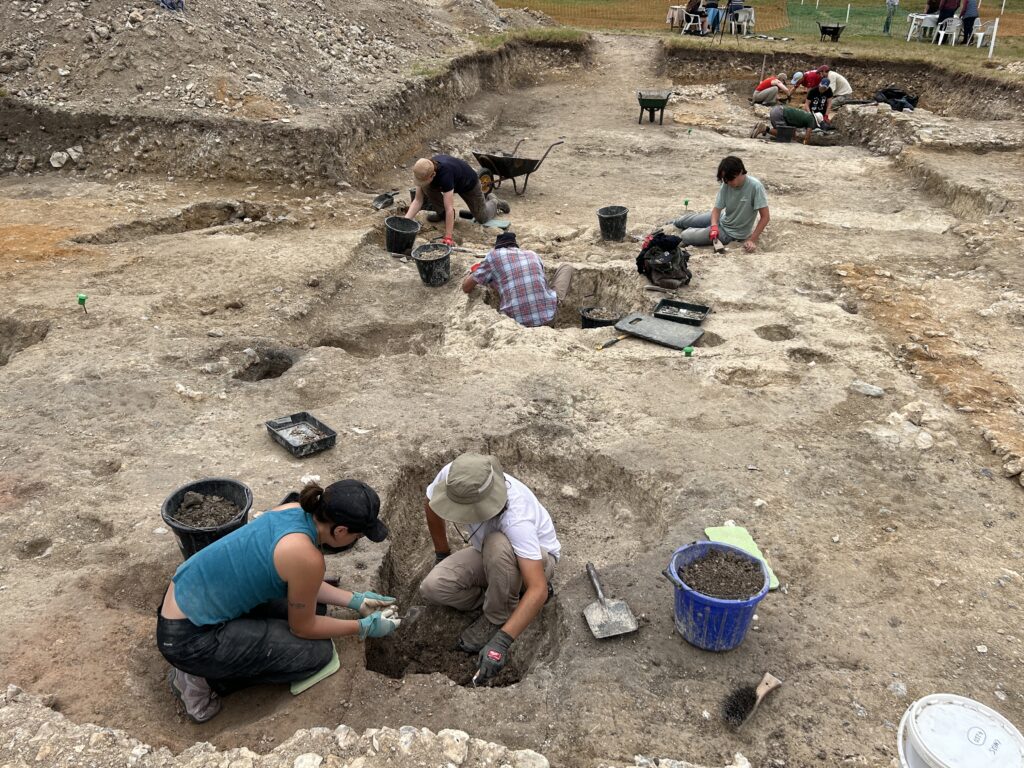
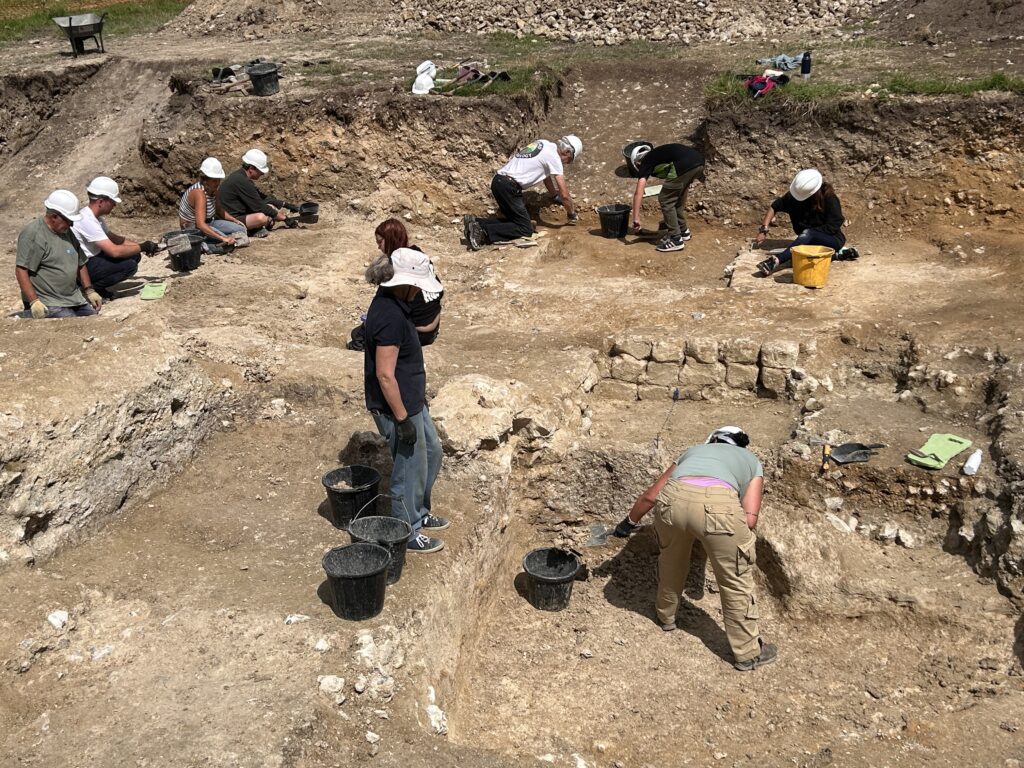
Excavations in 2023 started to investigate these results, with a trenches located over the southwest corner of the cloister, which includes part of the west range and the north aisle of the monastic church. Although heavily robbed, our work revealed evidence for decorative tiled floors and even an intact burial in the cloister walk way. It seems that the cloister was extensively rebuilt in the 13th century and elaborately decorated with Purbeck marble detailing. We found a number of fragments of highly decorative carved stone that still retained evidence of original paintwork in red, white and orange) as well as surface gilding. These almost certainly came from a very important structure within the abbey church, possibly a tomb or even a shrine.
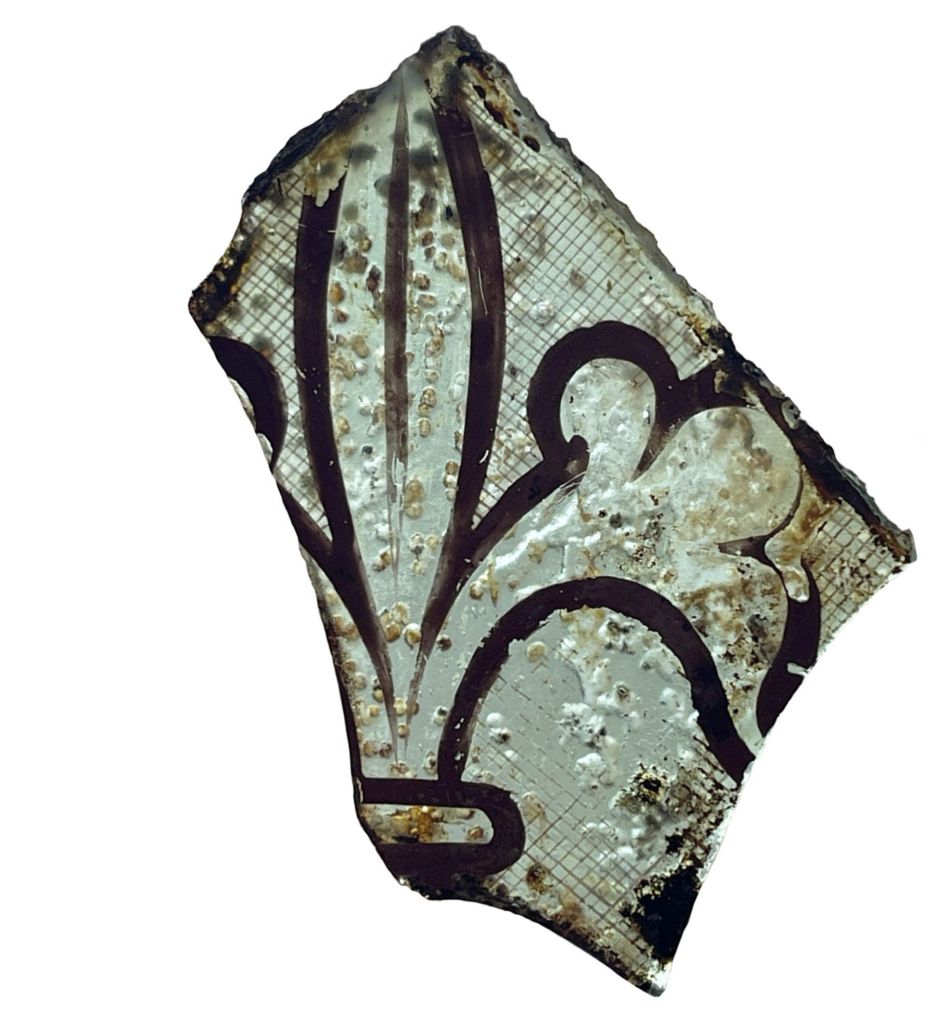
In 2024 we focused on locating the west end of the monastic church. Although this area was heavily disturbed by post-medieval robbing, we found sections of intact flooring and evidence for earlier phases of construction that were destroyed in a major 13th-century remodelling. A second trench was located over a building and open area to the north of the cloister. This appears to have originally been built as a high-status medieval hall, possibly an earlier abbot’s lodging, which by the 15th century was being reused as a glazier’s workshop. In 2025 we continued our investigation of the medieval hall identified last summer, as well as locating the conduit house that fed the cloister with fresh water.
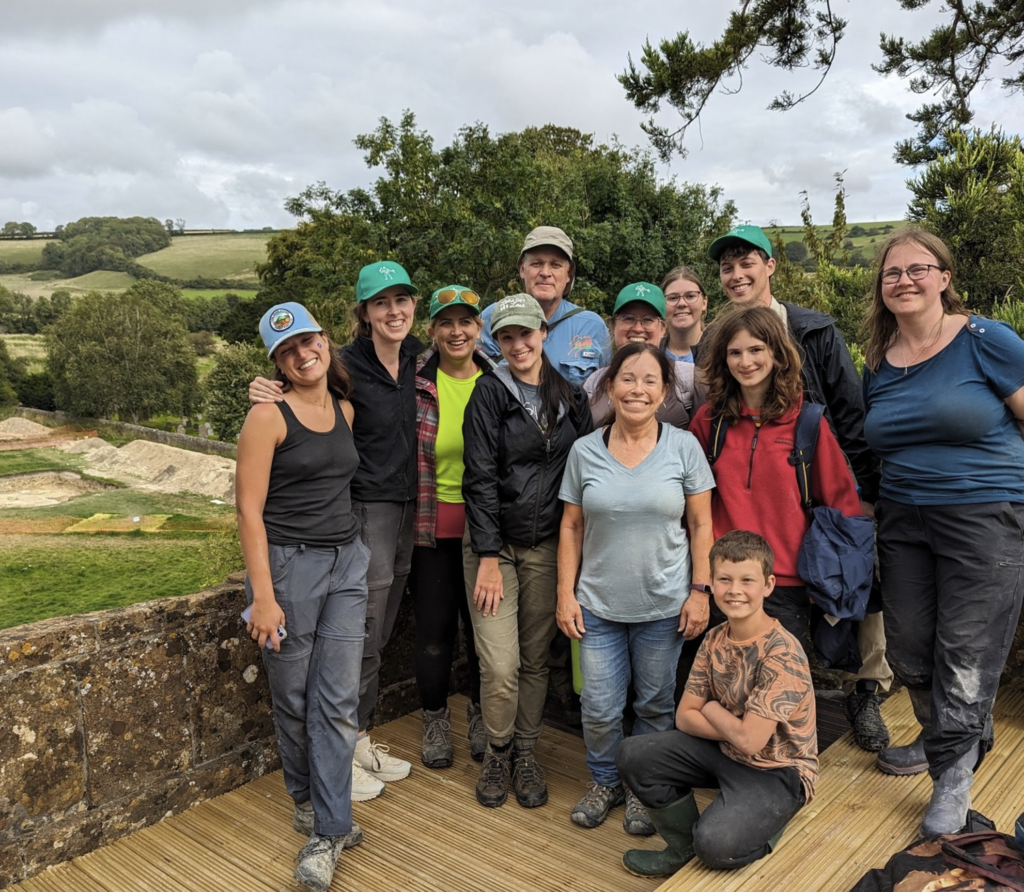
Volunteers are welcome to join the excavation team in summer 2026, although places are very limited.
Four 5-day sessions are being offered and each session costs £350 (approximately $470 USD but do check at the time of booking). This fee includes supervision, instruction, camping and subsistence whilst on site and days off (see below).
Participants will be involved and trained in all aspects of the fieldwork, including;
We will also be undertaking further topographic survey (with a UAV) and GIS mapping, and whilst these activities by their nature do not allow mass participation, students with a particular interest in these areas will be able to observe and learn from the project team.
For further information and details of how to join us, please contact Dr Hugh Willmott h.willmott@sheffield.ac.uk
Period(s) of Occupation: Anglo-Saxon, Early Medieval, Early Christian, Late Medieval, Monastic
Notes:
Out work featured on a recent feature length episode of Time Team;
https://www.youtube.com/watch?v=DY68mzYXWK8&t=975s
Project Size: 1-24 participants
Minimum Length of Stay for Volunteers: 1 session (5 days)
Minimum Age: 18
Experience Required: No prior experience is necessary. On site instruction and supervision will be given by dedicated professional staff at all times.
Room and Board Arrangements:
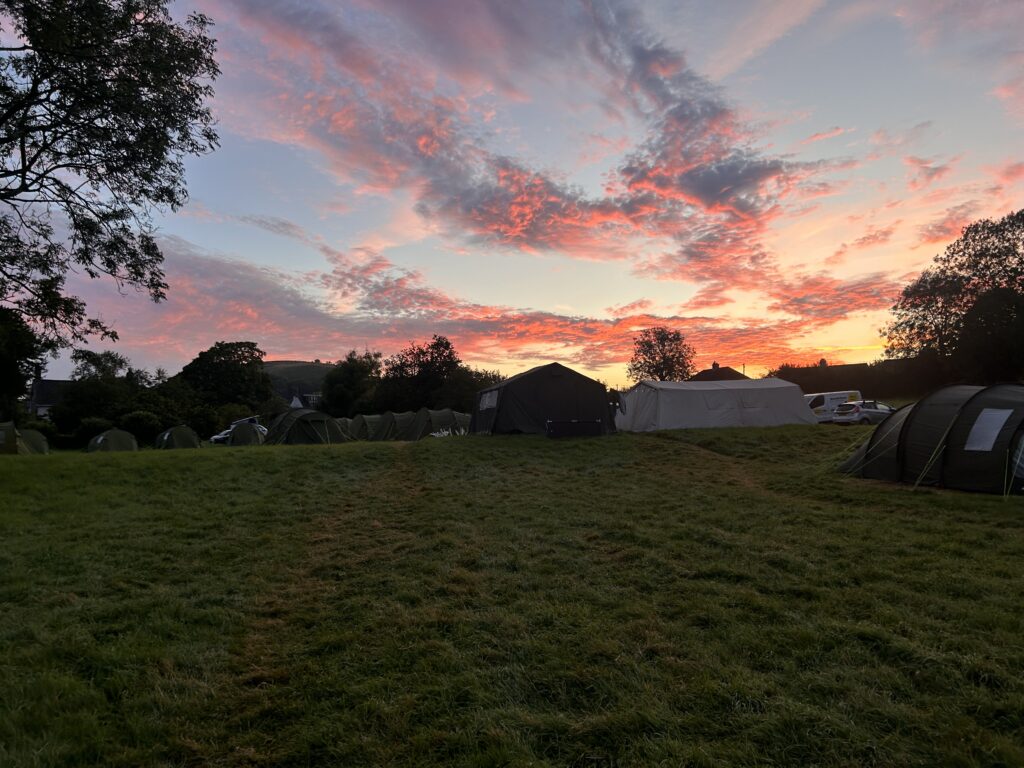
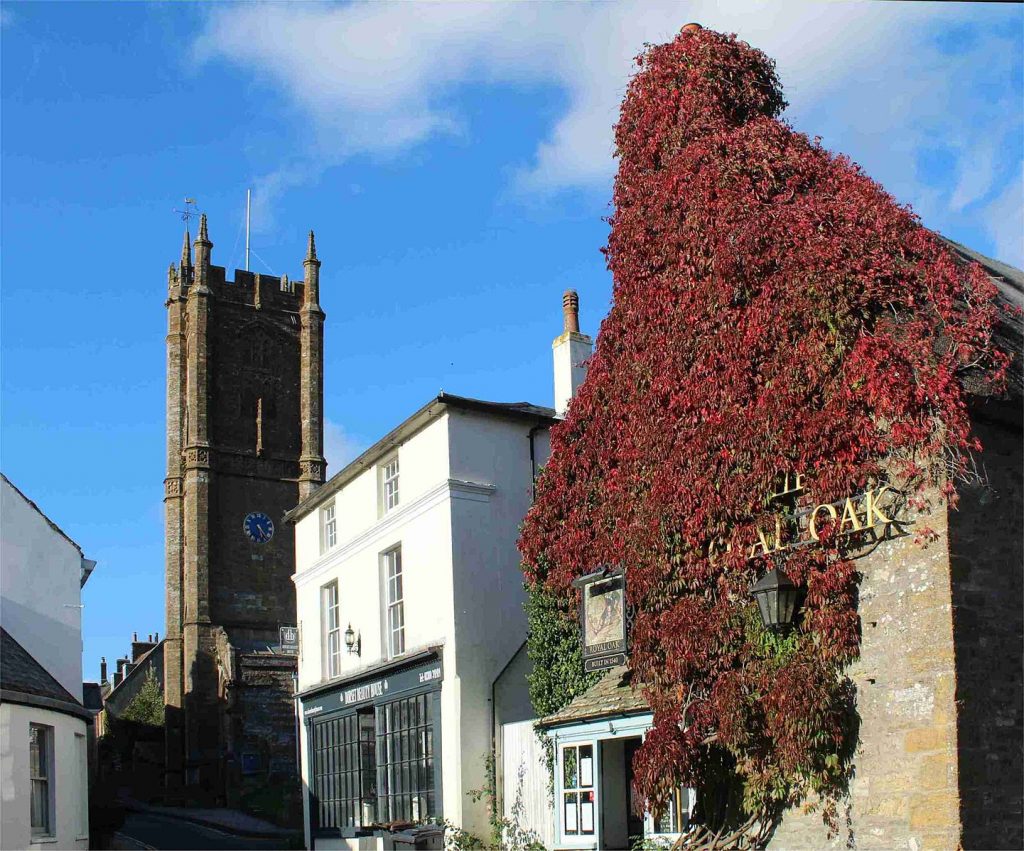
Accommodation (included in the fee) takes the form of camping in the grounds of the 18th-century village vicarage, just 10 minutes walk from the excavation site. Tents and air beds are provided. Volunteers will have access to basic campsite facilities (shower and restrooms, cooking area and communal mess tents). All meals are also included in the fee and the medieval village of Cerne Abbas has a well-stocked local shop, three historic pubs, a tearoom and a micro-brewery. The cost, as well as being inclusive of camping accommodation, also includes transport to and from the nearest train station at Dorchester (South) which is served by regular and direct trains from London Waterloo.
Academic Credit:
Unfortunately no academic credit is available.
Dr Hugh Willmott
h.willmott@sheffield.ac.uk
Sheffield
South Yorkshire
S1 4DT
United Kingdom