Location: Pickaway County, OH, USA
Season: May 4, 2026 to June 30, 2026
Session Dates: SESSION 1 - May 4-29, 2026; SESSION 2 - June 1-26, 2026
Deadline Type: Rolling
Website: https://irlabnp.org/project/field-experience-in-bioarchaeology-in-ohio/
Discount for AIA members: 10%
Program Type:
Field School
RPA Certified:
No
Affiliation:
IRLAB, The Ohio State University
Project Director:
Giuseppe Vercellotti, PhD
Project Description:
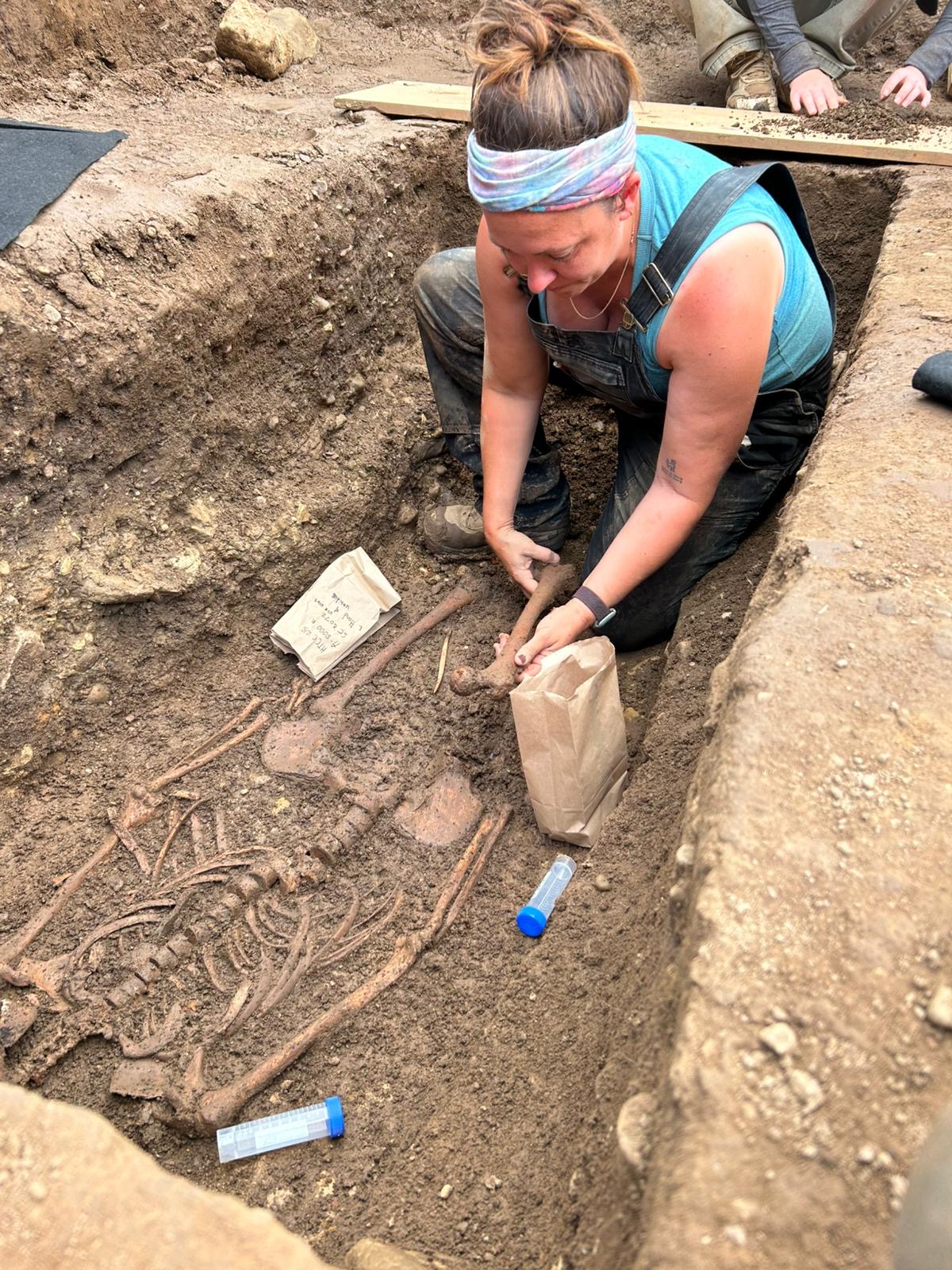
This exclusively field-based program, now in its fifth year, aims at familiarizing participants with the professional excavation of human remains from archaeological contexts. Participants will work side by side with professional archaeologists and bioarchaeologists in the excavations of a historic cemetery in central Ohio (HTCC).
The excavation of the HTCC site is a multifaceted project with potentially important implications for reconstructing relatively unknown events in the history of the county, for shedding new light on the lives of individuals too poor to be visible in official histories, and for gaining insights on a disease that reaped millions of lives during the 19th century and that persists in the developing world today. Specifically, the primary goals of the research projects are:
• Locating individual and mass graves, which, following years of neglect and several episodes of vandalism, are no longer marked. If gravestones can be found, they will be erected to mark actual grave locations, thus restoring the cemetery’s original appearance.
• Reconstructing the life conditions of the individuals buried at the site (for both cholera victims and non‐epidemic burials);
• Providing accounts of the life and social identity of canal and farm workers, who are often stereotyped and almost invisible in historical accounts due to their low socioeconomic status;
• Investigating the presence of Vibrio cholerae at the site by conducting soil analyses aimed at amplifying and identifying ancient DNA, ultimately with the goal of studying human/pathogen interactions;
• Comparing skeletal and genetic characteristics of cholera victims and non‐victims to determine whether certain factors predisposed individuals to perishing from the disease and possibly improving modern approaches to treating the disease.
Period(s) of Occupation: The cemetery, located just 20 minutes away from downtown Columbus, was originally established as early as 1804 to serve as a burial ground for the local community. Due to its proximity to the Ohio-Erie canal, the site was subsequently used as a resting place for victims of the infectious disease cholera – an infection of the small intestine that killed tens of millions of people worldwide through various pandemics since 1815. The cemetery remained in use until 1859.
Notes:
This program welcomes professional archaeologists, students from any US and international institution, and interested community members.
Project Size: 1-24 participants
Minimum Length of Stay for Volunteers: 1 session
Minimum Age: 18 (16 with parental consent)
Experience Required: None
Room and Board Arrangements:
Not included.
Academic Credit:
Possibility to obtain credits through OSU (both undegraduate and graduate sections of the course have been approved for a total of 3 credit hours) or through your own institution via enrollment in independent studies or an equivalent course at your university. We have over 15 years of experience working with students, their advisors, and administrative staff to develop customized independent study plans.
Dr. Giuseppe Vercellotti
850 Michigan Ave
Columbus
OH