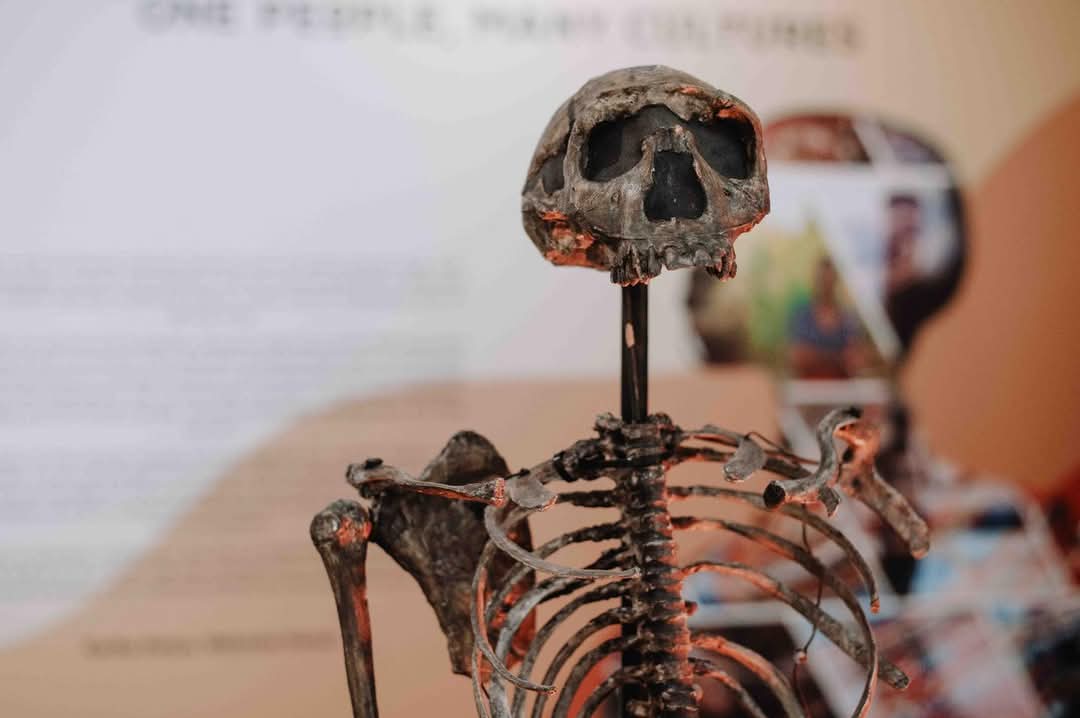
Location: Lake Turkana, Kenya
Season: July 11, 2026 to July 20, 2026
Application Deadline: April 10, 2025
Deadline Type: Rolling
Website: https://www.ancientodysseys.com/koobiforalaketurkana
Program Type:
Field School
RPA Certified:
No
Affiliation:
Ancient Odysseys
Project Director:
Dr. Emmanuel Ndiema
Project Description:
The Turkana Basin in northern Kenya stands as one of the most geologically and scientifically significant landscapes in the world. This area’s sediments span millions of years of Earth’s history. Turkana itself is often called the “Home of Human Origins” and has yielded some of the world’s most important fossil and archaeological discoveries.
Among the hominin species found at Lake Turkana include Australopithecus and Homo habilis. Perhaps the most famous find was that of an almost complete skeleton of the 1.5 million year old Turkana Boy (Homo erectus). In fact, upwards of 200 hominid and animal skulls have been found at Lake Turkana, more than anywhere else in the world. In addition, the world’s oldest Olduwan and Acheulean stone tools have also been found here. Together these finds have helped reshaped our understanding of human origins, technological innovation, mobility, cultural development and environmental adaptation.
The Turkana region of Kenya is globally significant for its exceptional prehistoric and archaeological heritage. Geologically part of the East African Rift System, this area preserves deeply stratified sedimentary sequences that span millions of years of Earth’s history.
At Koobi Fora, fieldwork and extensive paleontological finds have been made since 1969. The many discoveries prove the existence of intelligent two-million-year-old hominids who adapted to the change in climate from moist forest grassland (now petrified forest) to the present hot desert. The human and pre-human fossils include the remains of five species, Austrolophithecus anamensis, Homo habilis/rudolfensis, Paranthropus boisei, Homo erectus and Homo sapiens all found within one locality. These discoveries are important for understanding the evolutionary history of the human species.
You’ll be working at the Koobi Fora camp for a total of seven days. Your work includes a mix of fieldwork, lectures and fieldtrips, where you will partake in meaningful contributions to conservation and community wellbeing.
You’ll receive training on archaeological protocols in the tasks of:
Excavation
Surface Survey
Note-taking
Mapping
Sample collection
Artifact recording
Stratigraphy
Lithic analysis
Fossil handling
Fieldtrips
You’ll accompany the researchers on guided visits to world-renowned fossil and archaeological sites including Ileret to see1.5-million-year-old Homo erectus hominin footprints, Nariokotome (home of Turkana Boy), Lomekwi. and Sibiloi National Park. These excursions are accompanied by expert-led discussions on stratigraphy, site formation processes, and paleoecological reconstruction and are subject to change.
Visits to local villages and cultural centers offer insight into the cultural and social dynamics of pastoralist life in the Turkana region. They are organized in consultation with local leaders.
Lectures
During the course of the week, you will be invited to lectures by researchers in paleoanthropology, archaeology, geology, and paleoenvironments. Topics include human origins, climate change and adaptation, archaeological method and theory, and the significance of the Turkana Basin to global prehistory.
Period(s) of Occupation: The archaeological cultural time period of Koobi Fora spans the Pliocene and Pleistocene epochs, with key cultural periods including the KBS Oldowan industry (around (1.89-1.65) million years ago) and the Karari industry ((1.65-1.39) million years ago)
Notes:
Pricing: from $6,799/pp
Working conditions
Make no mistake, working in the field can be tough! You should be in good physical condition, for troweling, sieving and lifting buckets. Weather, different schedules, and tricky conditions underfoot are all part of the adventure, but these challenges make your time more memorable! All work is conducted under supervision and follows strict archaeological protocols. Working in the field is a team effort, so punctuality, respect for team roles, and attention to detail are expected.
Workdays
Start at 6:30 AM and concludes by 12:00 PM to avoid the midday heat
Afternoons are reserved for rest, artifact processing, lectures, and data entry. Occasional evening seminars or group discussions may be scheduled.
Weekends generally include a half-day of light activity or excursions.
Physical Fitness Requirements
A moderate to high level of physical fitness is required and you should be in good health and capable of working in a rugged and remote environment. Activities involve walking 1 to 5 km daily on uneven terrain, sometimes in high heat. You will be standing or crouching for extended periods during excavations and will occasionally be asked to lift field gear.
Weather
Koobi Fora lies in a semi-arid to arid region of northern Kenya. Daytime temperatures often exceed 35°C (95°F), especially between July and September. Be prepared for intense sun exposure, dust, and occasional strong winds.
Animals
As part of a camp, there will certainly be the chance to experience the wildlife that call Lake Turkana home. There is no danger from the animals but you will be reminded to take common sense precautions to zip your tent and walk around with closed toe shoes and a light at night.
Project Size: 1-24 participants
Minimum Length of Stay for Volunteers: 9 days
Minimum Age: Adults or 12+ when accompanied by adult
Experience Required: No experience required
Room and Board Arrangements:
Accommodations at Koobi Fora are rustic. Everyone who participates on this dig—including scientists—sleep in the same type of accommodations, so you will be a true part of the team.
For the entirety of your time at Koobi Fora, you will be sleeping in a provided tent which includes a mattress. You MUST bring your own bedding or sleeping bag that is suitable for warm weather.
There are showers and toilets onsite for use by everyone.
Accommodations: Camping at Koobi Fora Field Station
Meals: All meals
Academic Credit:
N/A