Location: Marineo, PA, Italy
Season: June 15, 2026 to July 10, 2026
Application Deadline: May 15, 2026
Deadline Type: Rolling
Website: https://www.genesisonline.it/corsi/makella-archaeology-field-school-2026/
Discount for AIA members: 10%
Program Type:
Field School
RPA Certified:
No
Affiliation:
Institutional Partner: Archaeological Park of Himera-Solunto-Iato, Director Arch. Domenico Targia.
Project Director:
Andrea Masi (BA, MA, FSA)
Project Description:
The Makella Archaeology Field School 2026 offers a unique opportunity to participate in hands-on archaeological work at a site with a rich history of ancient habitation.
This Field School is open to anyone with an interest in Sicilian archaeology and ancient history—undergraduates, graduates, and enthusiasts alike, with or without prior experience. Participants will join a small, collaborative team and engage in all aspects of archaeological work: from excavation and pottery washing to drawing site plans, recording finds, and uploading data to a database. On-site and afternoon lab training ensures you learn practical skills as you go.
In addition to fieldwork, afternoon classes will cover topics such as Indigenous, Greek, Phoenician, and Arab-Norman pottery, as well as Sicilian history and archaeology.
On Saturdays, we will organize educational visits to some of the most significant archaeological sites and Museums in western Sicily, including:
Visits will be scheduled in consultation with participants, allowing for flexibility based on academic or personal interests. These excursions provide invaluable insight into Sicilian history and archaeology.
Participants will stay in shared local apartments or houses, just 10 minutes from the excavation site, and will have the chance to experience authentic Sicilian cuisine and local wine.
Join us for a hands-on, immersive experience in the heart of Sicily’s archaeological heritage!
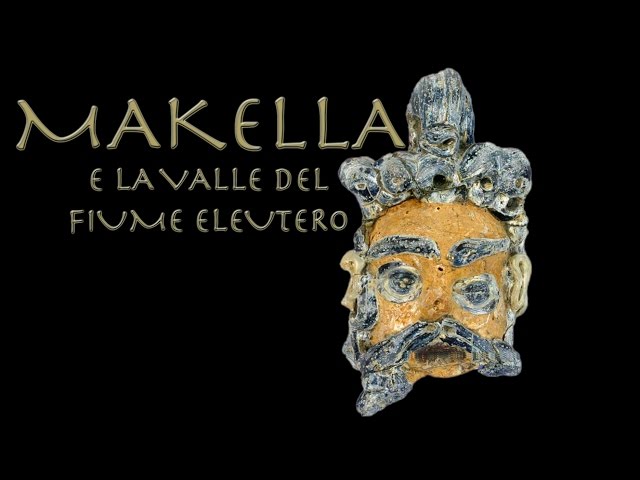
Period(s) of Occupation: The site of Makella, whose location had long been the subject of speculation, has in recent years been identified on the Montagnola of Marineo, commanding the course of the Eleuterio River and the trade routes that in antiquity connected southern and northern, as well as eastern and western, central-western Sicily. Recent excavations have revealed human activity dating back to the 8th century BCE, evidenced by the discovery of indigenous pottery from that period. As with many other centres in the region—whether Sicani or Elymi—the 6th century BCE appears to have marked a significant stage of development. Numerous artifacts from this period include Greek or colonial imports alongside locally produced impressed and incised ceramics with geometric decoration, attesting to active and productive contacts with Greek culture. The ease of travel along the Eleuterio, which linked the site to Soluntum and Panormus, also likely facilitated privileged relations with the Punic world. From the archaic period, fragments of the fortification system and a substantial deposit of votive offerings—including armor and pottery—have been uncovered near an altar in a clearly sacred space. Particularly notable are three helmets and two bronze greaves of Magno-Greek and Corinthian-Chalcidian style. Their significance lies in the probability that they were dedicated in this sacred space as offerings to the gods, perhaps in commemoration of a military victory—a rare practice in Sicily. This may reflect the Greek-Punic military tensions in Sicily between the 6th and 5th centuries BCE, which culminated in the Battle of Himera. In essence, Makella was, like many contemporary sites, open to the ebb and flow of Greek and Punic influences, yet it retained a distinct indigenous character. The coinage discovered at the site indicates that it remained active into the Hellenistic period, by then under the established control of the Carthaginian eparchy. Evidence of the strengthening and eventual destruction of its defensive system in the 2nd century BCE can be linked to the events of the First Punic War. The site was likely abandoned during the Roman imperial period and the Byzantine era, as few traces from these times have been found. It was, however, reoccupied during the Muslim rule of Sicily from the 10th to the 12th centuries AD, continuing into the Norman period, as evidenced by surviving structures, pottery, and coins.
Notes:
The Makella Archaeology Field School 2026 is organized by Genesis, non profit orginization, with the collaboration and permission from the Archaeological Park of Himera-Solunto-Iato, Director Arch. Domenico Targia
A Certificate of Attendance will be provided, which can be exchanged for university credits
Project Size: 1-24 participants
Minimum Length of Stay for Volunteers: 4 weeks
Minimum Age: 18
Experience Required: No experience required.
Room and Board Arrangements:
Participants will stay in shared local apartments or houses, just 10 minutes from the excavation site, and will have the chance to experience authentic Sicilian cuisine and local wine.
Academic Credit:
A Certificate of Attendance will be provided, which can be exchanged for university credits.
Andrea Masi
Contrada Sant'Anania snc
Ciminna
Palermo
90023
Italy