Location: 31650 Roncesvalles, Navarra, España
Season: June 6, 2026 to August 18, 2026
Session Dates: June 6-23 (Session 1) July 10-27 (Session 2) August 1-18 (Session 3)
Application Deadline: February 15, 2026
Deadline Type: Rolling
Website: https://aditufieldschool.weebly.com/
Program Type:
Field School
RPA Certified:
No
Affiliation:
Aditu Arkeologia
Project Director:
Emma J. Bonthorne, MSc and Francisco Valle, MSc
Project Description:
The 2026 Aditu Archaeological Field School is a research project investigating the origins of the medieval ossuary and cemetery located at Roncesvalles (Northern Navarre, Spain) just a few miles from the French border. The purpose of the project is to investigate what is rumoured to be the burial site of the rearguard of Charlemagne’s army, ambushed in the Battle of Roncesvalles and immortalized in the medieval French work “La Chanson de Roland.” In addition to its historical significance, the location has long been an important rest stop for pilgrims hiking the Camino de Santiago from France, as it represents the traditional first stop upon crossing the Pyrenees mountains and entering the Iberian peninsula.
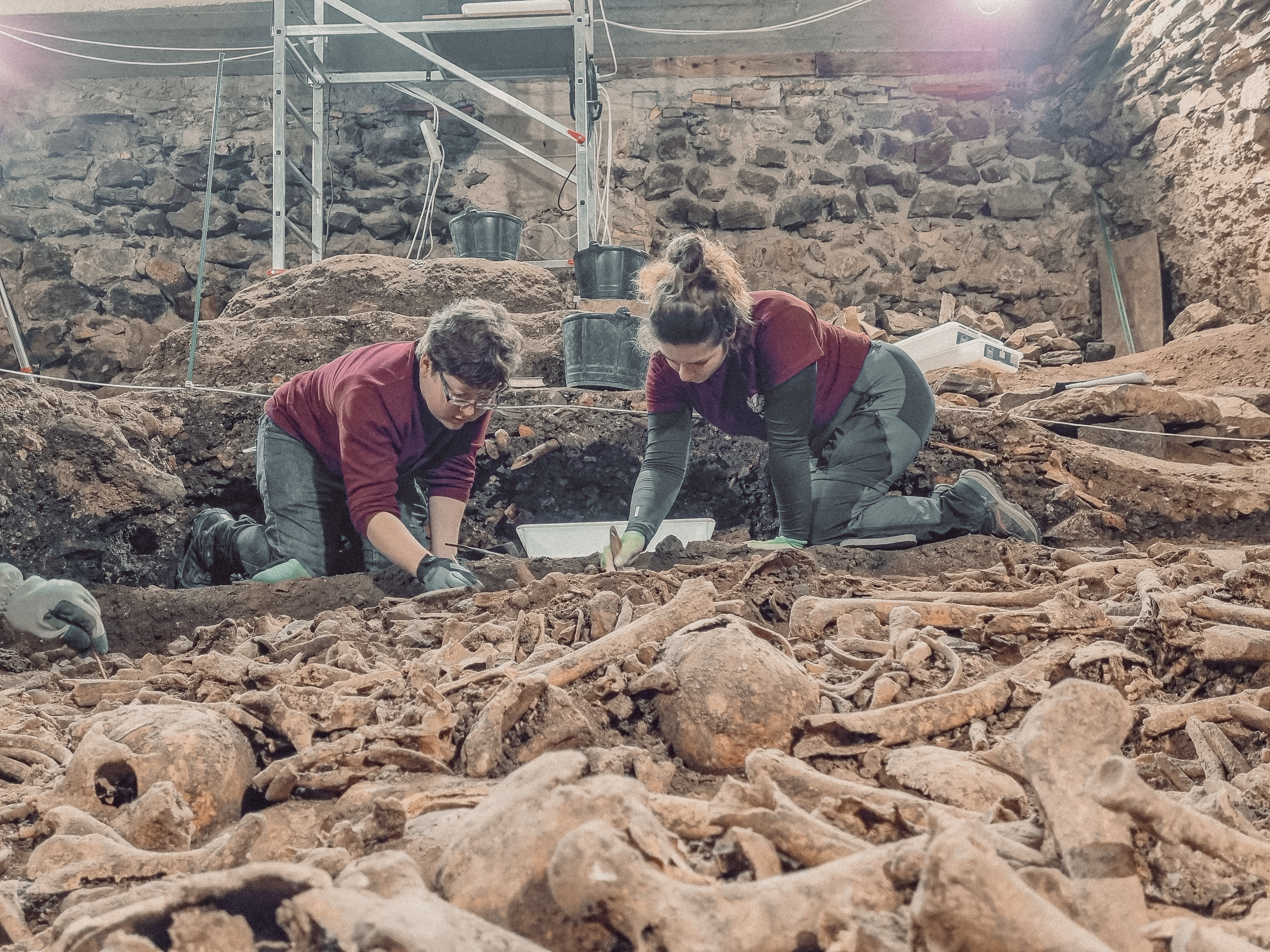
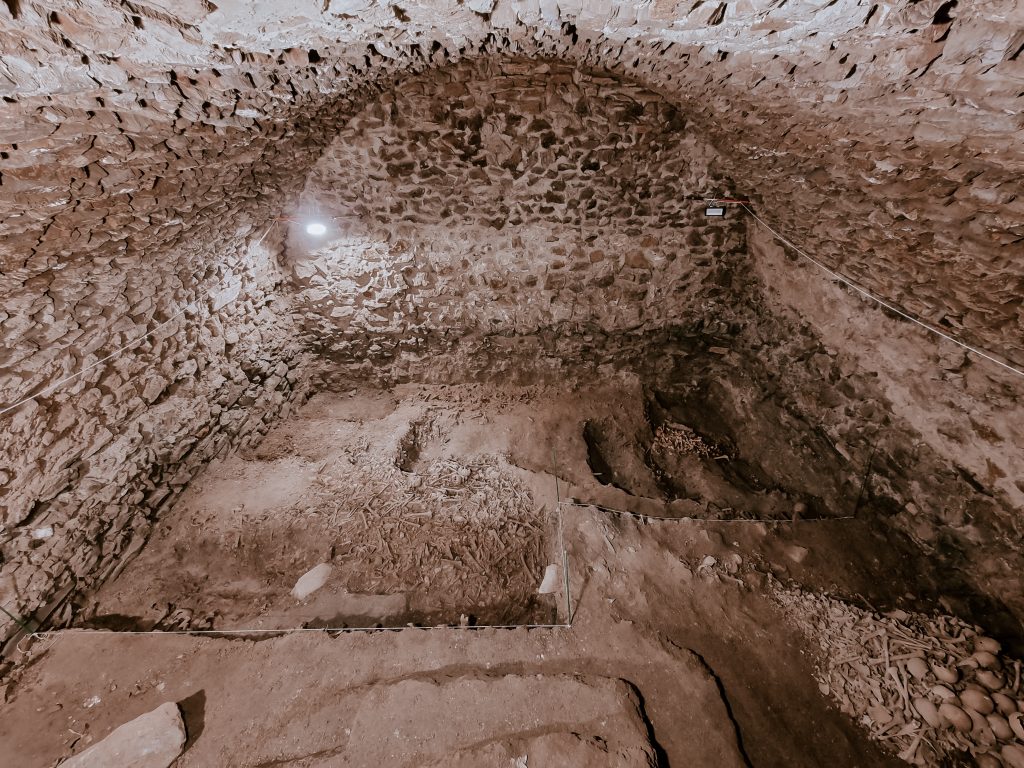
The ossuary consists of one of the oldest structures that forms part of the religious complex of Roncesvalles, with historical sources and previous interventions at the site attesting to the long chronology of burials present within the ossuary. The Aditu research project represents the most extensive excavation undertaken to date, with more than 900,000 human bone fragments and 62 articulated skeletons recovered during the first seven years of investigation.
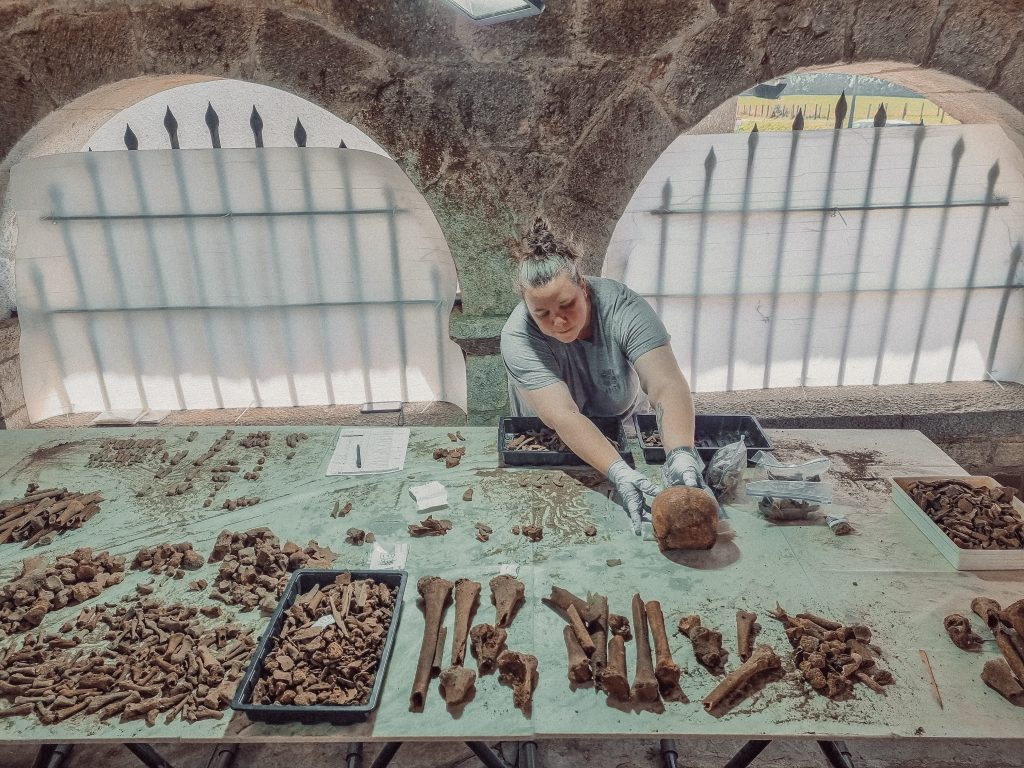
In 2026 our aim is to continue excavating and analyzing remains from the upper layers of the complex (currently in 17th century layers, although these are intermixed with medieval layers). The focus of the 8th season of the field school will be on ossuary excavation methodology and the analysis of commingled remains and articulated burials, and will be accompanied by lectures on human osteology, calculation of MNI, archaeological practice, stable isotope analysis, Basque and medieval archaeology and relevant topics related to field methodology and finds processing. The field school represents a rare opportunity to excavate a unique site of huge historical significance and gain insight into different types of field and laboratory methodologies within commingled contexts.
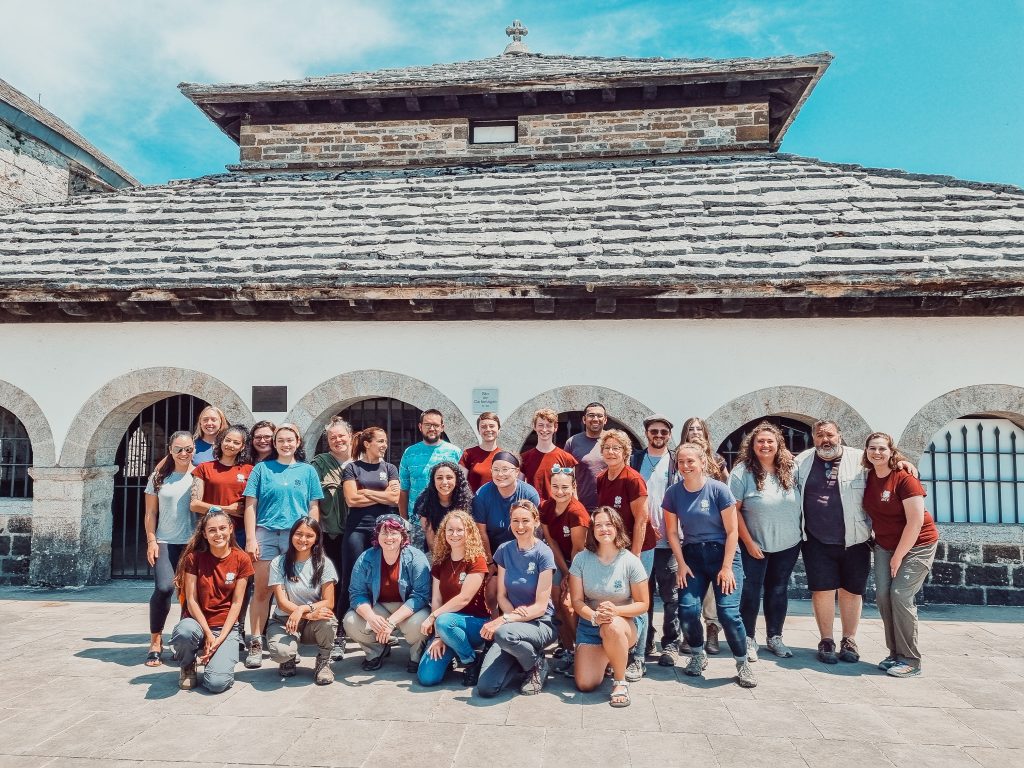
The team responsible for the excavation, Aditu Arkeologia, has carried out excavations in Navarre for the past 17 years, including previous field schools at the sites of Santa Maria de Zamartze and San Miguel de Aralar, and are specialists in osteoarchaeology, landscape archaeology and GIS and Roman and Medieval archaeology. Results from the anthropological analysis of remains uncovered at Roncesvalles will form part of a wider study of the population of Navarre during the Medieval period, and samples from both articulated burials and the disarticulated remains provide extensive data on demography, health and disease in the past.
This is an intensive osteology-focused course, with students spending 7-8 hours per day engaged in field work or in the processing of materials recovered from the field. Throughout the course, students will become proficient in excavation procedures, field drawing, documentation, and find processing and analysis. The focus will be on the excavation and the analysis of human skeletal material, including fragmented and highly commingled remains. Work is roughly evenly split between excavation and post-excavation skeletal analysis.
Please note that a decent level of physical fitness is necessary to get in and out of the ossuary, as well as to work for extended periods kneeling from platforms. The ossuary is a large space, measuring 9m x 9m (30x30ft), but has no windows and only one opening for access. As such, this may be a difficult site for those suffering from claustrophobia or who are unable to kneel.
For more information and applications please contact: fieldschool@aditu.info
*We reply to every email we receive, however due to volume, sometimes requests (or our replies) go directly to spam. If you have emailed us and have not received a reply within a week, please review your junk email folder and feel free to reach out again- we will be in touch!
Period(s) of Occupation: 12th-19th centuries CE
Notes:
Ossuary, Funerary Archaeology, Commingled Remains, Laboratory, Spain, Conflict Archaeology, Bioarchaeology
Project Size: 1-24 participants
Minimum Length of Stay for Volunteers: One full session
Minimum Age: 18 years
Experience Required: The field school is aimed at students or graduates of archaeology, anthropology and associated disciplines (forensic science, etc). This program is very intensive, and preference will be given to those with who have taken prior osteology classes. If spaces are available, consideration will be given to students without prior osteological experience who commit to familiarizing themselves with all of the reading material prior to the project start date. Regardless of level, all students will need to be familiar with identifying and naming bones and anatomical features prior to commencement of the program. If you have any doubts, please just reach out and we are happy to discuss this in more detail.
Room and Board Arrangements:
Roncesvalles is a small town located just over an hour from the city of Pamplona. Board and accommodation will be provided within the town, in a private, secure medieval hall. The ground floor of the building is an open space in which students sleep within "pods" of 3-4 beds, divided by temporary partitions. All necessary facilities (bathrooms and hot showers) are located on site. Students will be given 2 rest days in the middle of each session. Food is simple but hearty, with self-catered breakfast (ingredients provided), sandwiches for lunch and a hot dinner. IMPORTANT! Whilst we do our best to provide a varied diet, we are in an isolated location and it is not usually possible for us to cater for dietary restrictions. If you have questions about food allergies, please get in touch BEFORE submitting an application. The course fee includes tuition, all meals on work days, accommodation for the duration of the course, administration and application costs. Fees do not include airfares or transportation to the site, or lunch/dinner on days off.
Academic Credit:
Contact for information.