Location: Nova Zagora, Bulgaria
Season: July 18, 2027 to August 14, 2027
Session Dates: July 18 - August 14, 2027
Application Deadline: June 18, 2027
Deadline Type: Rolling
Website: https://www.bhfieldschool.org/program/Tell%20Nenova%20-%20Digging%20in%20the%20Time%20of%20Troy
Discount for AIA members: 5% off of regular admission
Program Type:
Field School
RPA Certified:
No
Affiliation:
Balkan Heritage Foundation, Ludwig-Maximilians University in Munich, Germany, New Bulgarian University, Sofia, Bulgaria
Project Director:
Field school and archaeological excavations co-directors: Prof. Dr. Philipp W Stockhammer, Professor for Prehistoric Archaeology at the Institute for Prehistory and Early Medieval Archaeology at Ludwig-Maximilians University in Munich, Germany & Co-Director of Max Planck Harvard Research Center for the Archaeoscience of the Ancient Mediterranean (MHAAM). Assist. Prof. Dr. Bogdan Athanassov, Department of Archaeology, New Bulgarian University, Sofia. Field school coordinator: Assist. Prof. Dr. Bogdan Athanassov, Department of Archaeology, New Bulgarian University, Sofia.
Project Description:
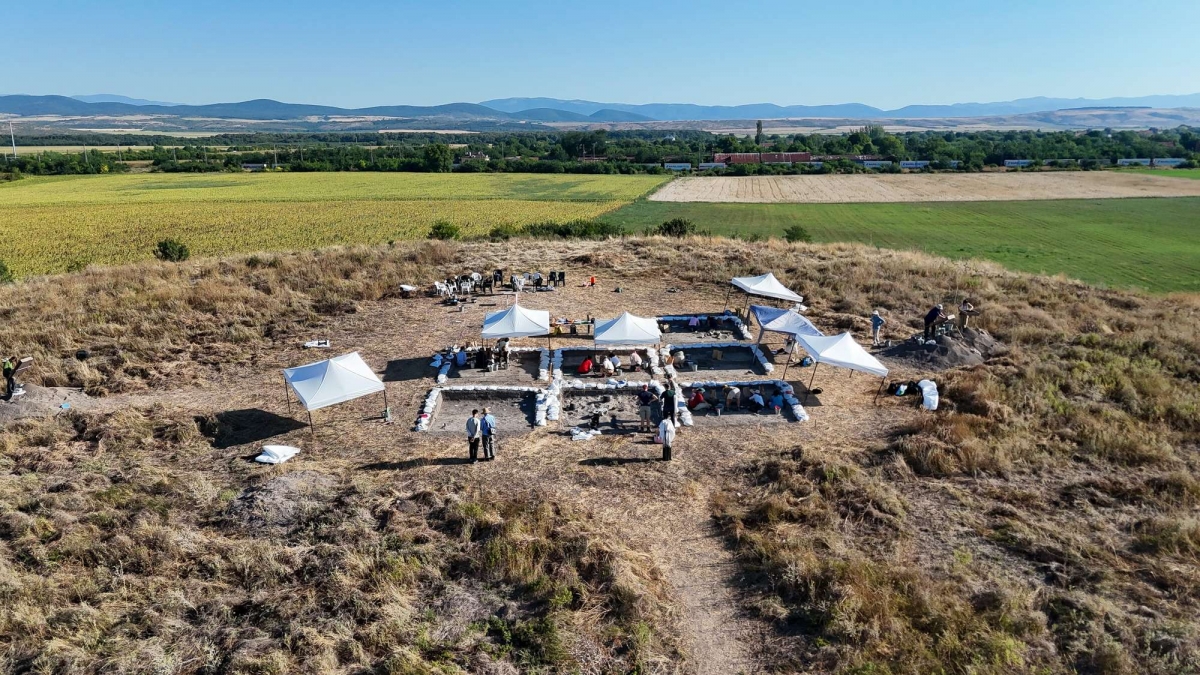
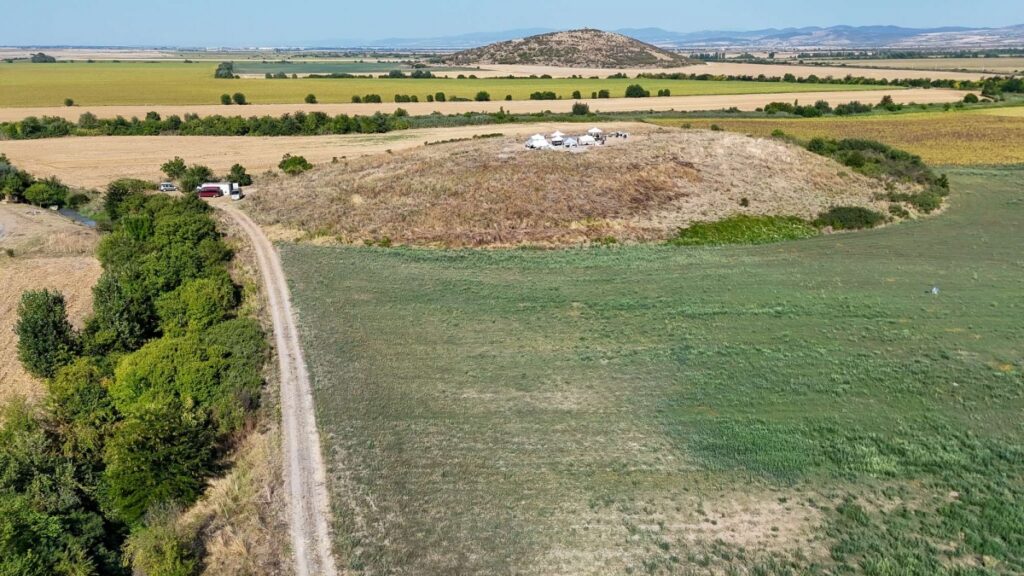
The archaeological field school at Tell Nenova, located in southern Bulgaria, offers students a unique opportunity to work at one of Europe’s largest unexplored tell sites. This settlement mound, which rises 12 meters above the modern landscape, preserves an exceptional sequence of human occupation. The current project focuses on the Early Bronze Age (3rd millennium BCE), a period marked by the Old Kingdom in Egypt, Early Dynastic states in Mesopotamia and emerging proto-urbanization across Anatolia and the Eastern Mediterranean. Simultaneously, this period saw major population movements from the Eurasian steppes into Europe as well as the creation of the overregional Corded Ware ceramic style spreading over most of Europe. Functioning as a dynamic zone of cultural contact, the Eastern Balkans mediated interactions between people and lifeways influenced by Mediterranean-Anatolian, Pontic steppe, and Continental European cultures.
A key focus of the project is applying modern scientific methods to archaeology, including ancient DNA (aDNA) analysis of human skeletal remains. This research aims to illuminate patterns of cohabitation, genetic admixture, and mobility among diverse populations.
In 2027, excavations at the tell’s summit will address key socio-economic and spatial questions. The project will investigate household differentiation, the organization of public versus private space, inter-household networks, and evidence of social inequality, alongside patterns of craft specialization, production, and consumption. Crucially, at the settlement scale, we will evaluate how the introduction of wheeled transportation may have influenced house arrangements and village planning. Finally, the excavations seek to determine when the site was abandoned and whether this event was tied to a series of regional collapses that marked the end of the Akkadian Empire and the Third City of Troy (Troy III).
One of the key advantages of Nenova Tell is the exceptional preservation of its surrounding landscape. This context has brought together an interdisciplinary team from the Nova Zagora History Museum, New Bulgarian University, Ludwig-Maximilians-Universität München, the German Archaeological Institute (RGK-DAI), and the Helmholtz Centre for Environmental Research. The project aims to reconstruct regional palaeoenvironmental conditions, with a focus on late 3rd and early 2nd millennium BCE climate instability, to evaluate its role in the widespread collapse of Eastern Balkan tell settlements and broader regional crises.
During the 2027 excavation season, students and researchers will explore field strategies for excavating and documenting complex tell site stratigraphy by combining settlement archaeology, 3D recording techniques, and various scientific methods. Studying tell sites offers an exceptional framework for understanding past societies and social dynamics. Participants will benefit significantly from collaborating with a broad, international team of specialists sharing their research and expertise.
Period(s) of Occupation: Early Bronze Age (3rd Millenium BCE)
Notes:
Complete beginners will feel well-supported through comprehensive lectures and hands-on field instructions, working side-by-side with introductory students from Ludwig-Maximilians-Universität in Munich and New Bulgarian University.
Experienced participants will sharpen their technical skills and critical thinking by engaging with our rigorous digital documentation system. Excavating a complex settlement mound (tell) offers a unique opportunity to understand intricate stratigraphy and diverse site formation processes. Furthermore, our interdisciplinary framework supported by lectures in archaeological science, social life of objects and artifact “biographies” delivered by Prof. Dr. Philipp W. Stockhammer will expose advanced students to cutting-edge bioarchaeological, scientific methodologies and pivotal theoretical approaches.
Experienced participants who successfully complete demanding roles on our project will gain the technical skills, field endurance, and documentation competencies required for professional positions in Cultural Resource Management (CRM) and rescue archaeology.
The Nenova Project Field School offers an exceptional blend of core and advanced excavation and documentation methods, paired with critical reflection on historical processes such as early global networks in Europe and the Eastern Mediterranean. Working alongside faculty, participants will investigate how Balkan tell settlements operated within these transregional networks while applying advanced scientific methods to trace human mobility, kinship, diet, and ancient disease ecology.
Participating in an archaeological expedition provides benefits that far surpass technical field skills and historical knowledge. Beyond learning how to excavate a site or understand the Bronze Age, field projects cultivate essential life skills: teamwork, active communication, collaborative problem-solving, mutual support, and critical decision-making. Consequently, joining our project offers valuable professional and personal growth, even for students who do not plan to pursue a career in archaeology.
The field school includes the following three modules:
- Lectures and instructions on prehistoric and field archaeology, finds processing and documentation with an emphasis on the Bronze Age
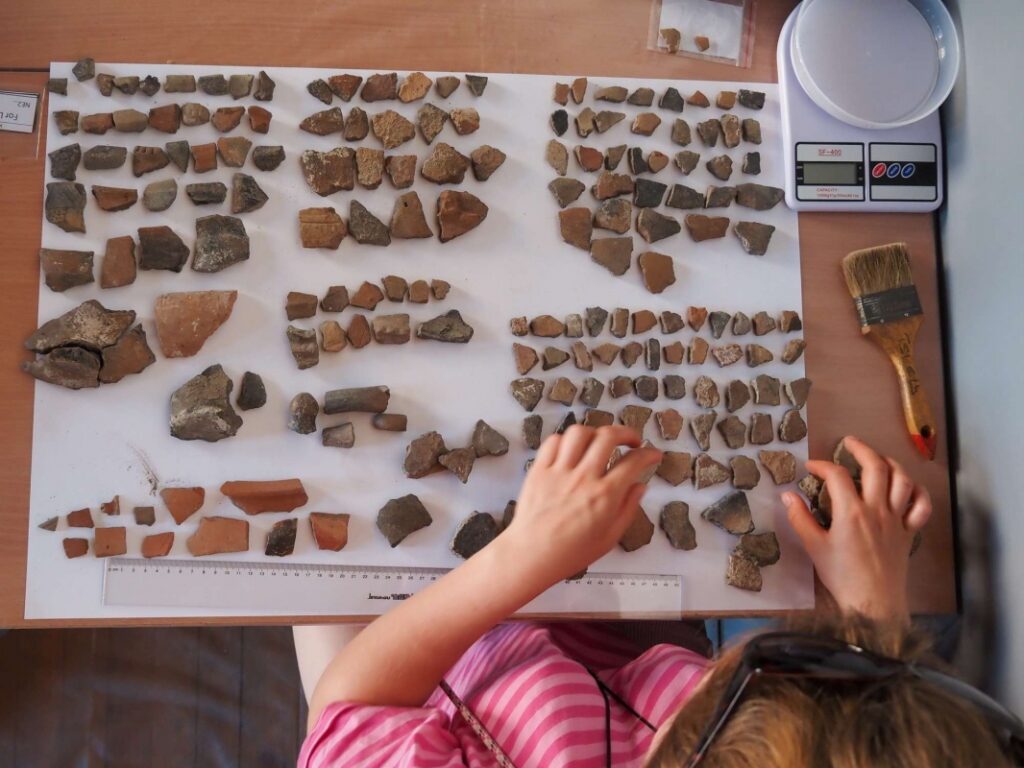
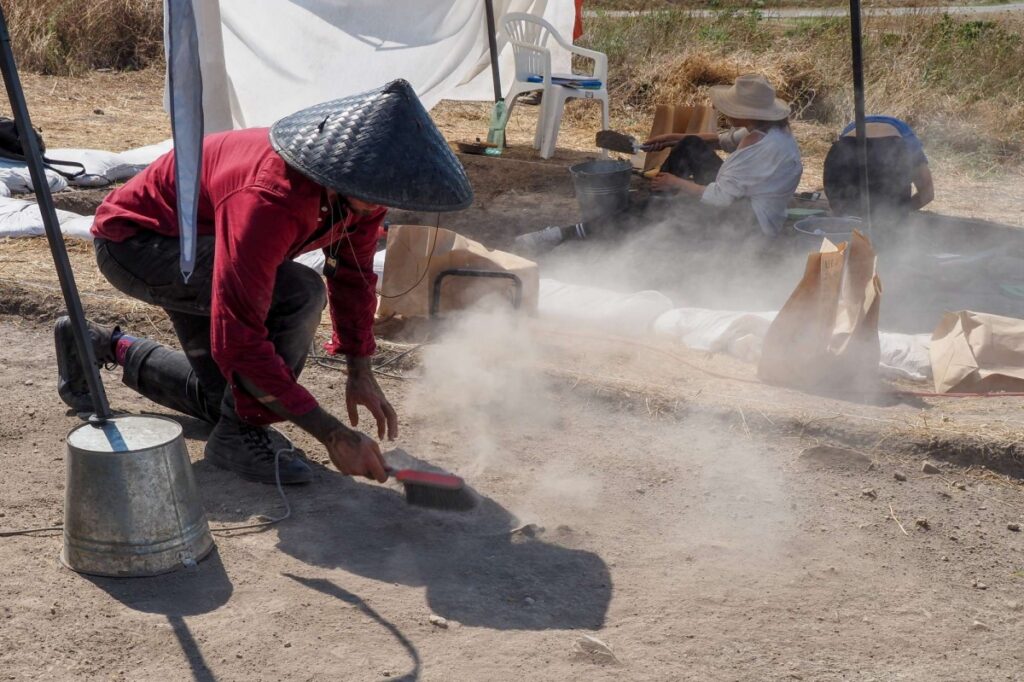
- Fieldwork and workshops, including excavation of the Bronze Age layers and structures. Participants will master essential and advanced field methods, including daily journal keeping, context sheet recording, find labeling, architectural plan and section drawing, 3D find positioning, and site and artifact photography.
- Excursions to Stara Zagora, with guided visits to the Neolithic Dwellings Museum, home to Europe's best-preserved 6th millennium BCE domestic architecture, the Regional Museum of History, key Roman monuments, as well as to the “Valley of Thracian Kings” in the area of Kazanlak with exploration of the History Museum in Kazanlak and several nearby monumental Thracian tholos tombs.
Students who are required to prepare field reports and presentations for their universities will receive additional instruction and assistance.
Project Size: 1-24 participants
Minimum Length of Stay for Volunteers: Four weeks
Minimum Age: 18 (16, if the participant is accompanied by an adult family member)
Experience Required: No previous experience is required.
Room and Board Arrangements:
Accommodation*: In comfortable rooms with two to three beds (bathrooms with shower and WC, TV, A/C and free Wi-Fi) at Hotel Rio. The hotel is located in the central pedestrian and shopping area of Nova Zagora, very close to everything that the town can offer (shops, pharmacies, banks, restaurants, bars, hospitals, cafes, parks, etc.). Extra nights' accommodation is available upon request via email to admissions (bhfs.admissions@gmail.com) with an additional cost.
*Subject to change. May be substituted with similar level accommodation.
Meals: Three meals per day are covered by the reimbursement payment. This field school can accommodate vegetarians, but vegan and lactose-free diets are harder to maintain. Kosher and gluten-free diets are impossible to accommodate in this location.
Participants must pay additionally for extra days accommodation, as well as for extra meals, beverages, services and products.
Academic Credit:
ECTS (European Credit Transfer and Accumulation System) credit units are available for students attending European universities. They shall enroll directly through the Balkan Heritage Field School. New Bulgarian University grants 12 ECTS credits for attending the four-week session. Transcripts of Records (ToR) are not included in the reimbursement payment and are available upon request for an additional tuition fee.
For details: https://www.bhfieldschool.org/information/academic-credits
US credit units are available to all students. To obtain US credits and certification apply and enroll directly through the Institute for Field Research (IFR-http://www.ifrglobal.org/), USA. Participants enrolled through IFR will be awarded 8 semester credit units (equivalent to 12 quarter units) through our academic partner Connecticut College and will receive a letter grade.
The tuition fee is included in the IFR admission fee.
Participants in the field school who do not need academic credit units are not expected to pay for them.
Balkan Heritage Foundation
7 Tulovo St., Floor 4, Apt. 6
Sofia
1504
Bulgaria