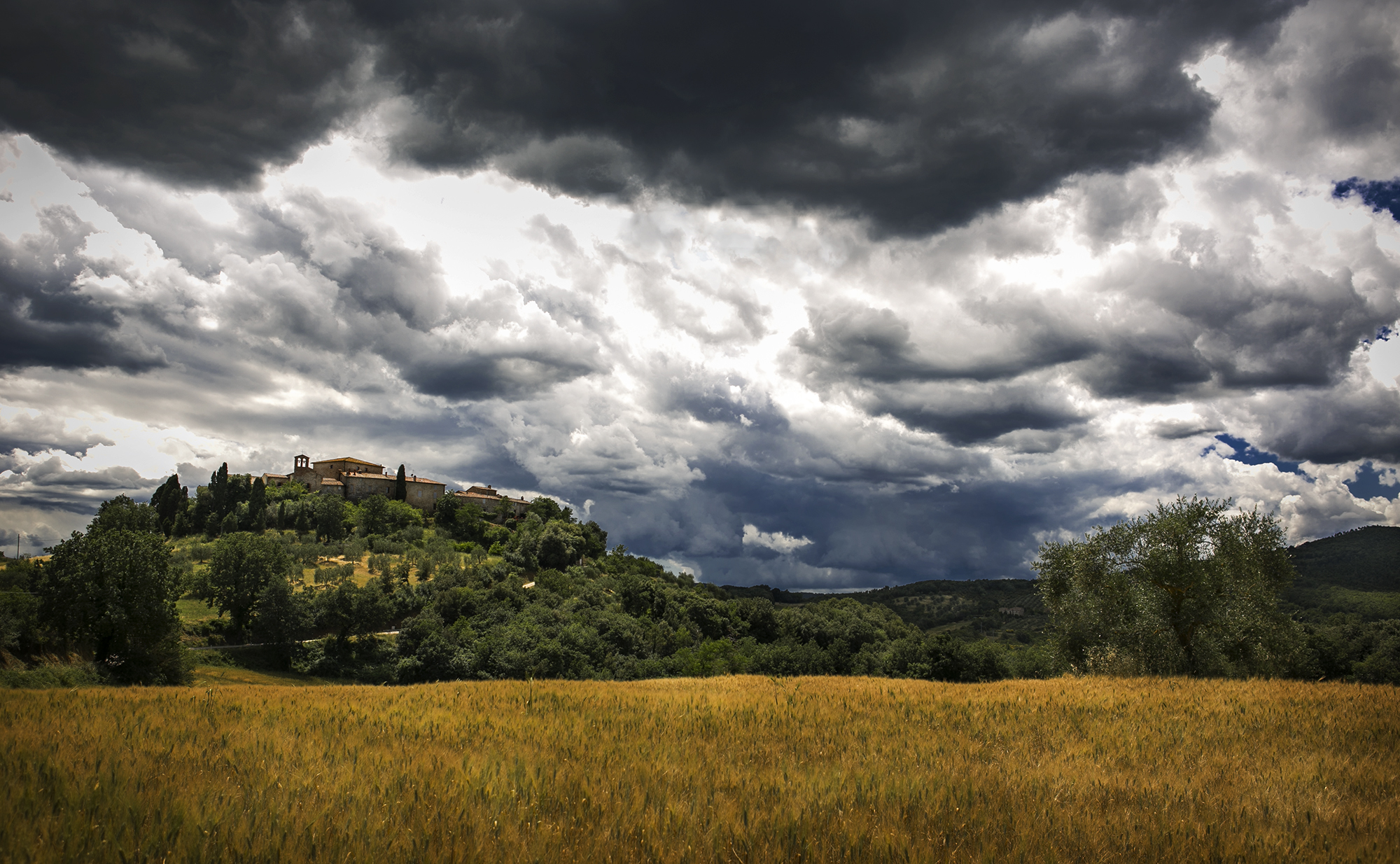
Location: Murlo, Province of Siena, Italy
Season: June 29, 2027 to August 4, 2027
Application Deadline: May 1, 2027
Deadline Type: Rolling
Website: http://www.poggiocivitate.com
Program Type:
Field School
RPA Certified:
No
Affiliation:
UMass Amerst
Project Director:
Dr. Anthony Tuck
Project Description:
The 2027 field season marks the 61st year of archaeological exploration at Poggio Civitate (Italian for “Hill of the Civilization”) located in central inland Tuscany. The Poggio Civitate Archaeological Field School is among the oldest and most respected archaeological programs in the world. Our training provides students and archaeology enthusiasts the opportunity to excavate at the site under the direction of a staff of professional archaeologists, conservators, illustrators, and photographers. Participants receive training in all aspects of fieldwork, including excavation and data collection, archaeological survey and drawing, objects conservation, illustration, photography, and cataloguing.
At Poggio Civitate, we believe that the best field experience is comprehensive. Students are encouraged to work directly with directors of excavation units and to follow artifacts from discovery through conservation and into cataloguing. Most of our participants come with no field work experience – many have never even taken an archaeology or classics course –and by the end of the season, we believe, each comes away with a foundation in Etruscan Archaeology and field methods, as well as a rich appreciation for Italy and rural Italian culture.
Work on site or in the laboratory (called the magazzino) will constitute the majority of your “classroom” experience. Participants will work side by side with professional archaeologists, conservators and other members of the excavation team on projects integral to the functioning of the dig as a whole. While the majority of this time will be spent on the hill, working in the trenches, there is a weekly rotation into our magazzino where students will work in conservation, data entry, photography, cataloguing or illustration. These days students will also assist with chores, food prep, and service of breakfast and dinner. As we are in a communal living environment, everyone will be helping with chores around the house, kitchen, and lab daily.
Fieldwork and excavation experiences are supplemented by lectures and a more traditional educational program. Weekly lectures by Professor Tuck or other members of the excavation staff cover a broad range of topics, from a general history of Etruria to the social and political implications of bucchero pottery from Poggio Civitate. Visits to the museum that houses material from our excavation, as well as other regional museums, occur frequently. There is also ample free time, including weekends, for participants to explore the Commune of Murlo, Siena, Tuscany, and further afield in Italy.
The 2027 field season will continue our exploration of the eastern edge of the plateau locally known as Piano del Tesoro – the Plateau of the Treasure. Excavations in this area in 2024 through 2026 revealed a large structure dating to the sixth century, Archaic occupational phase. Based on preliminary excavations, this structure appears to be a well-constructed house, perhaps occupied by a well-to-do family working in service of the aristocratic family that lived in the contemporary Archaic Building This same area also preserves evidence of Poggio Civitate’s destruction in the second half of the sixth century BCE. Deposits associated with the destruction of the site will be a major focus of excavations in 2027.
Period(s) of Occupation: Etruscan - Roman
Project Size: 50+ participants
Minimum Age: 17+
Experience Required: None Required!
Room and Board Arrangements:
Murlo and Vescovado di Murlo Excavation takes place on a forested hill in the Commune of Murlo, outside the town of Vescovado di Murlo (pop. 1200). We are located approximately 25 km south of Siena, and 90 km south of Florence. We reside in a villa across the street from the Albergo di Murlo, the local hotel owned by the Rubegni Family. Participants are housed in double, triple or quadruple rooms, each with its own bathroom and shower. We have a large common kitchen and dining room located below the building. Meals All meals are provided Monday through Friday, and are prepared by our excavation chef. Participants who are assigned to the magazzino also help with preparation of meals, assisting with breakfast and dinner preparation and cleanup; many have left with a new appreciation for cooking and Italian food. We make every effort to meet the dietary restrictions of participants, and there is always a vegetarian option available. Most also take advantage of the various local restaurants for favorites, such as pici al tartufo (handmade pasta with truffles) and pizza alla diavola (pizza with spicy sausage). Recreation As a 60+-member excavation in a town of 1200, we significantly change the dynamics of the community during our stay in Vescovado. Luckily, we are well liked in town, and are invited to the many festivals and events put on in the comune. Traditionally, we are in town for various festivals and concerts, as well as wine tastings in the medieval town of Murlo. Down time is utilized by participants in many ways - catching up on sleep, practicing Italian with native speakers, or reading a good book from the excavation library. There are also many opportunities available for local travel – walks, bike rides, and hikes – within a short walk from the dig house. There also is a pool at the hotel, across the street from our dig house, that can be used for a nominal fee. Travel The weekends are free for excavation members to do as they desire. Excavation members frequently have used the time off on weekends to explore Tuscany, as well as locations further afield such as Rome, Pompeii, Venice, and Naples. Buses run from Vescovado to Siena, where you can catch trains or buses to anywhere in Italy.
Academic Credit:
UMass Amherst