Location: HM43+WJ Sur, Oman
Season: January 2, 2027 to February 28, 2027
Session Dates: January 2, 2027 – February 28, 2027 (arrival on Thursdays, beginning of work in the field on Saturdays)
Application Deadline: November 15, 2026
Deadline Type: Rolling
Website: https://www.archaeofieldschool.com/
Program Type:
Field School
RPA Certified:
No
Project Director:
Valentina Azzarà and Alexandre De Rorre
Project Description:
OUR PROJECTS
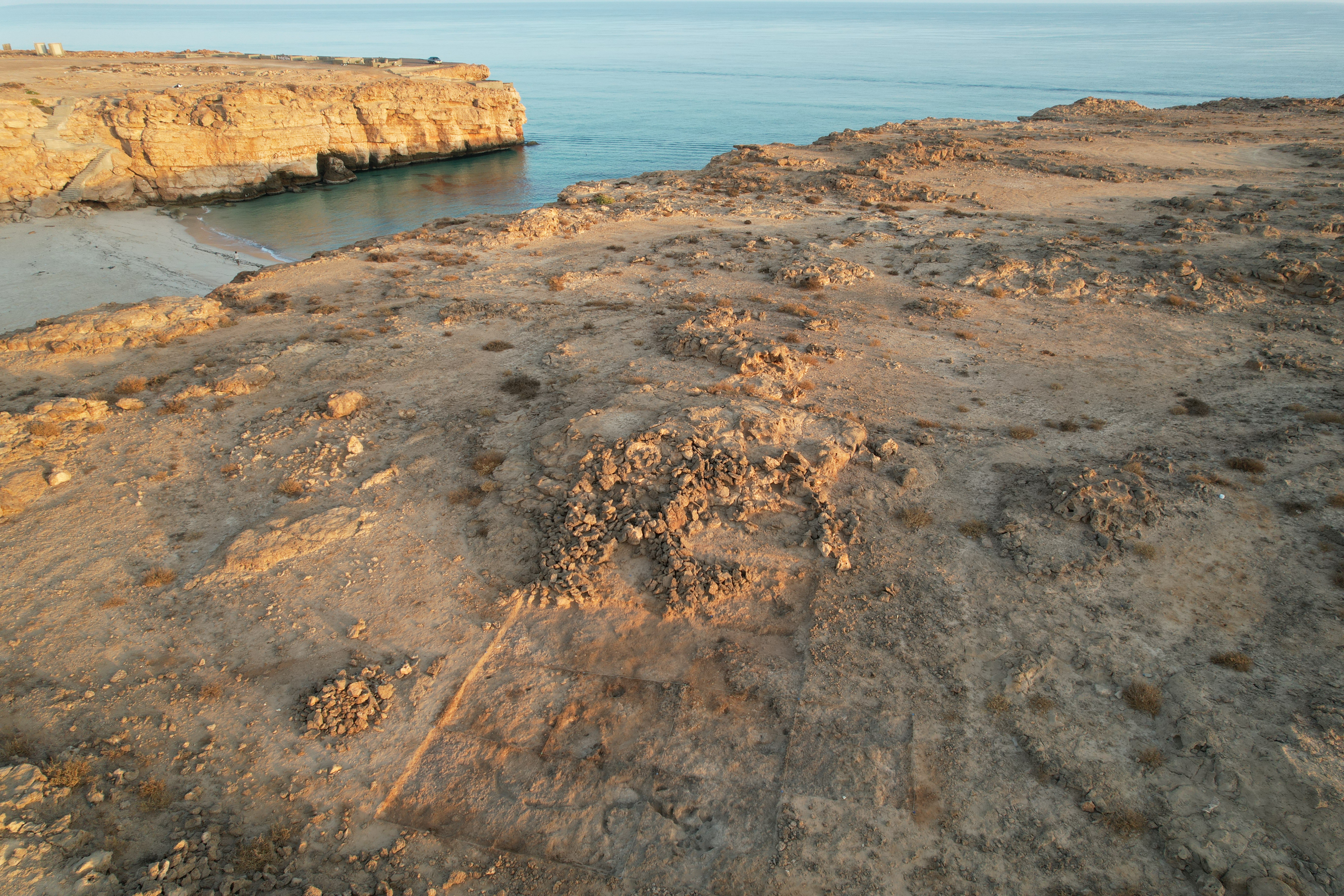
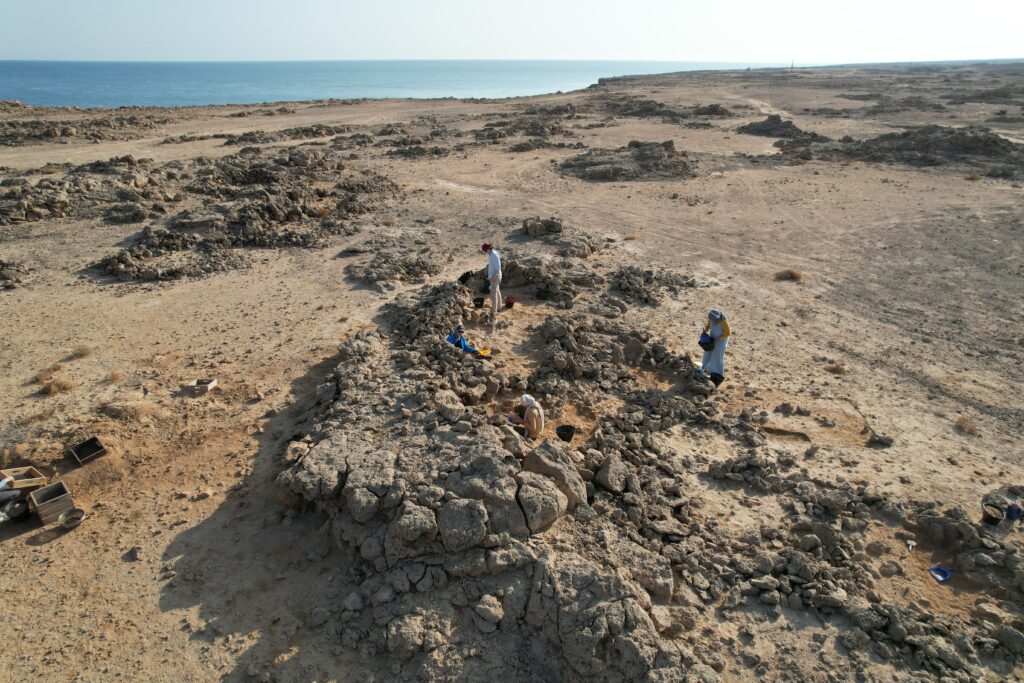
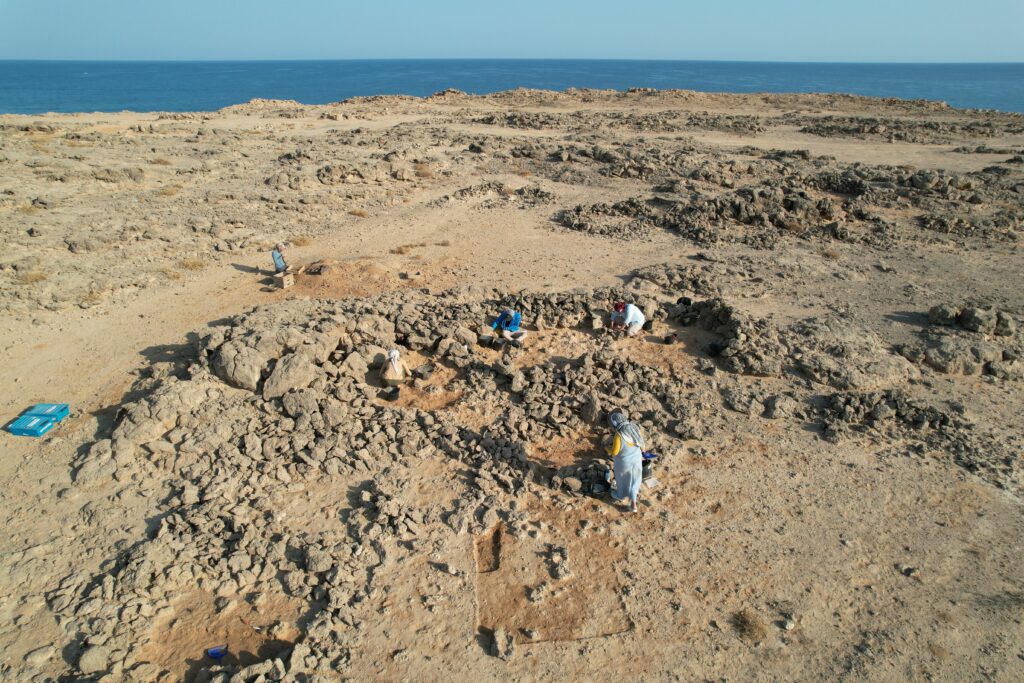
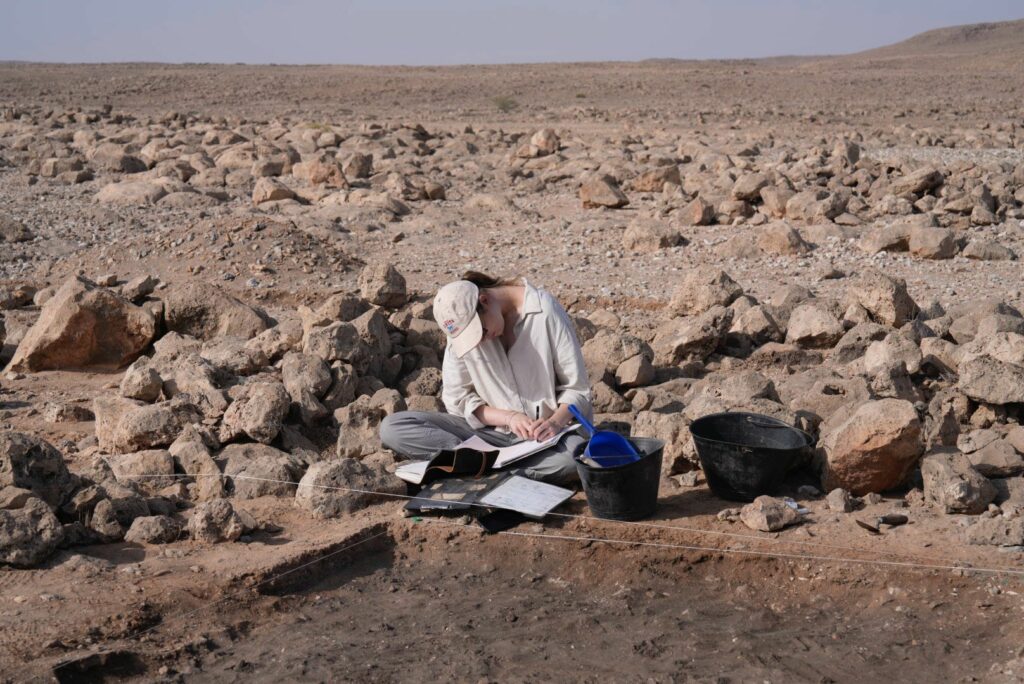
The Shiya and Ras al Jinz Projects, led by Valentina Azzarà and Alexandre De Rorre, focuses on the early phases of the development of socio-economic complexity within the prehistoric populations of Oman and their transformations at the transition between the Late Neolithic and the Early Bronze Age (c. 4300-2000 BCE). The project is centered on the exploration of two settlement sites marked by a series of multicellular stone structures used most likely for domestic purposes, and previously unexplored.
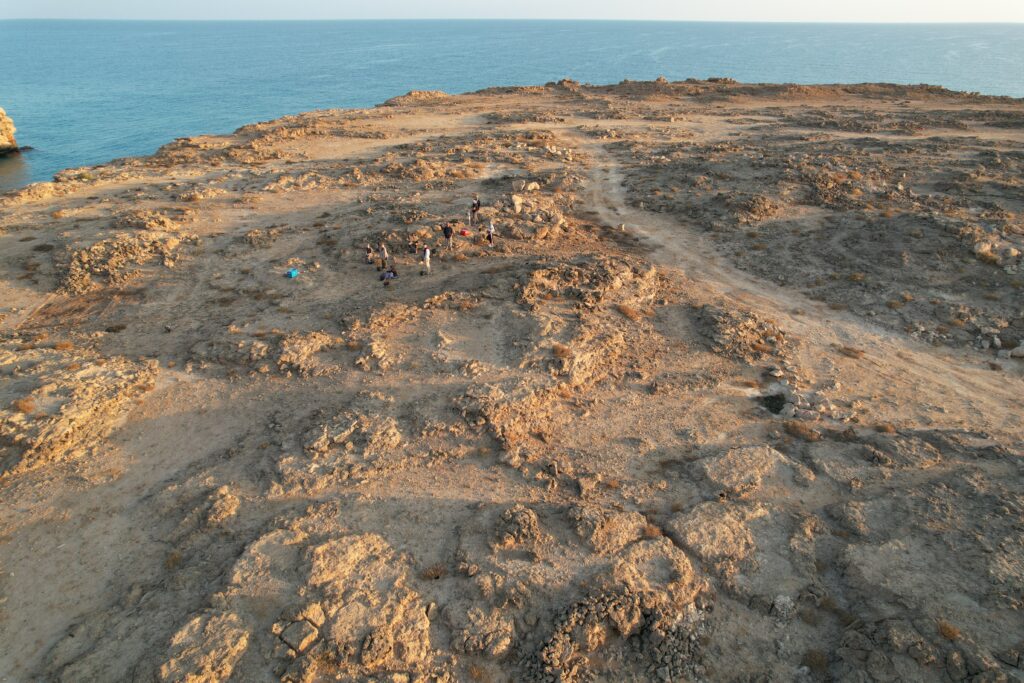
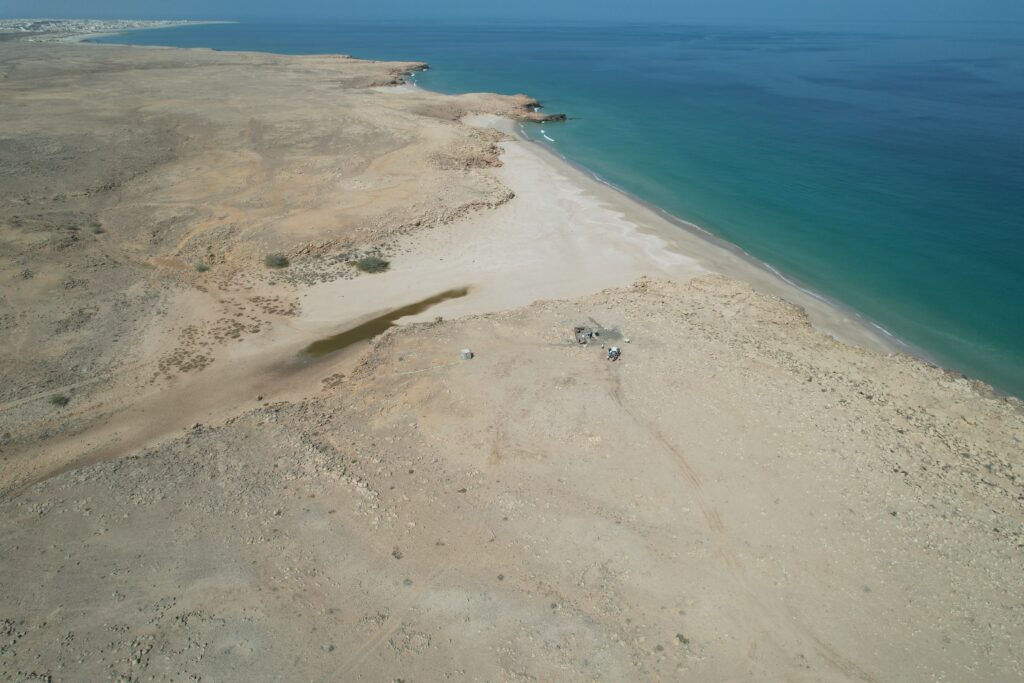
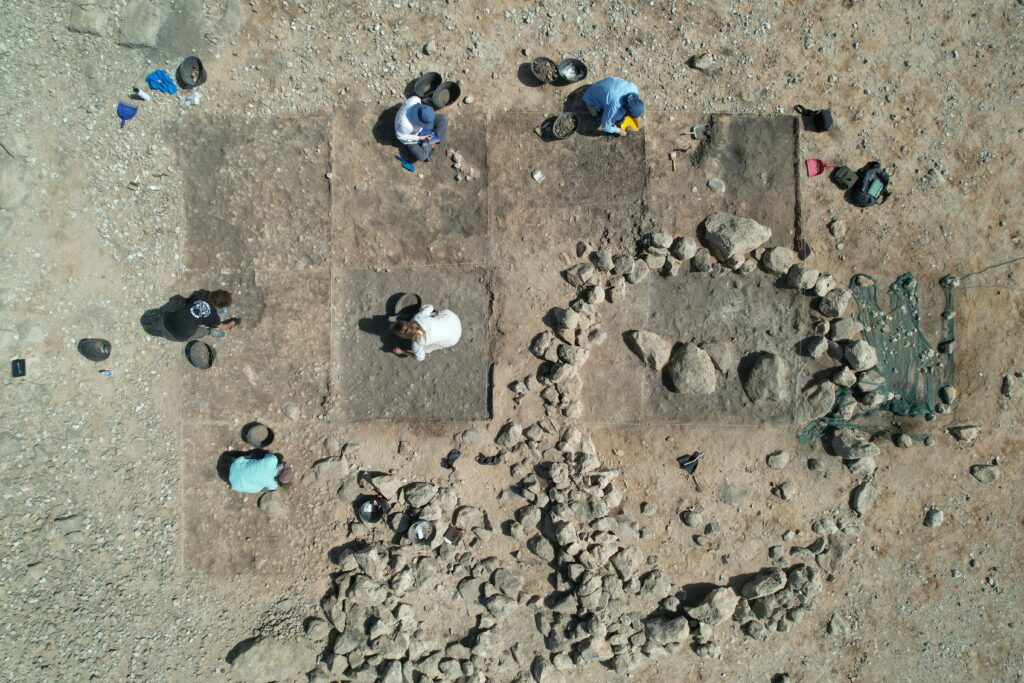
The Shiya Project is centred on the exploration of settlement sites located in the Sur region, and in particular in the area of Shiya. Since 2025, the project has been investigating a site known as SHI-4, marked by a series of multicellular stone structures and dated to the 4th millennium BCE, representing a type of settlement quite widespread in this coastal area of the Sharqiyah region, between Sur and Ras Al Jinz, but which had never been the object of in-depth investigations before.
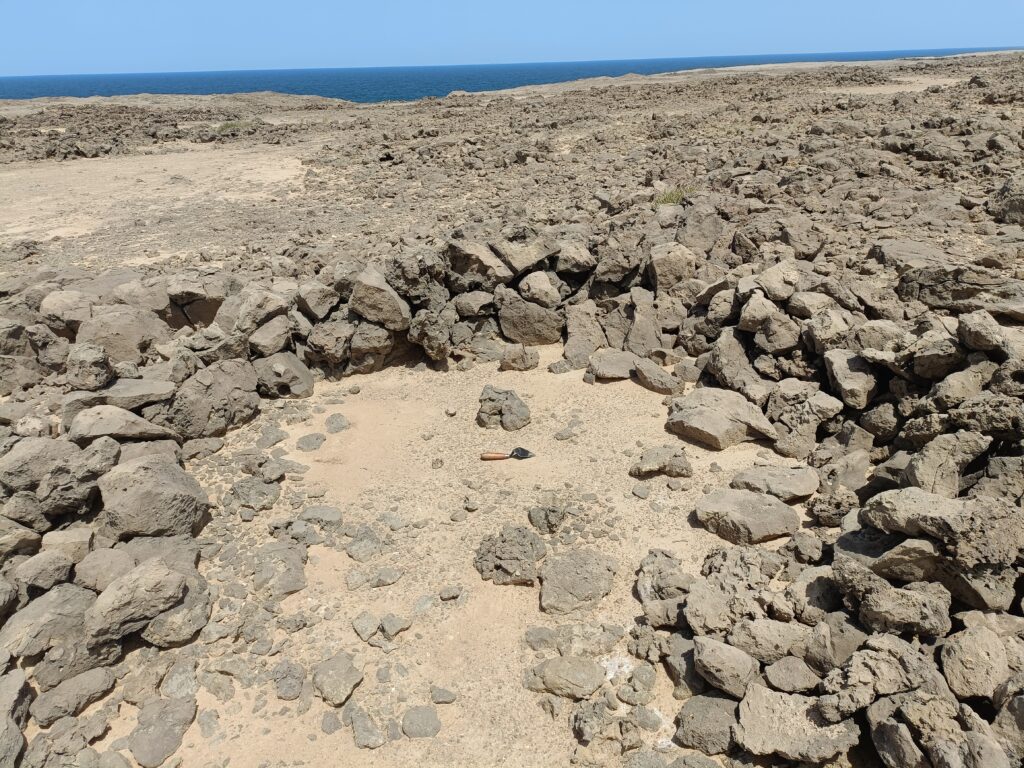
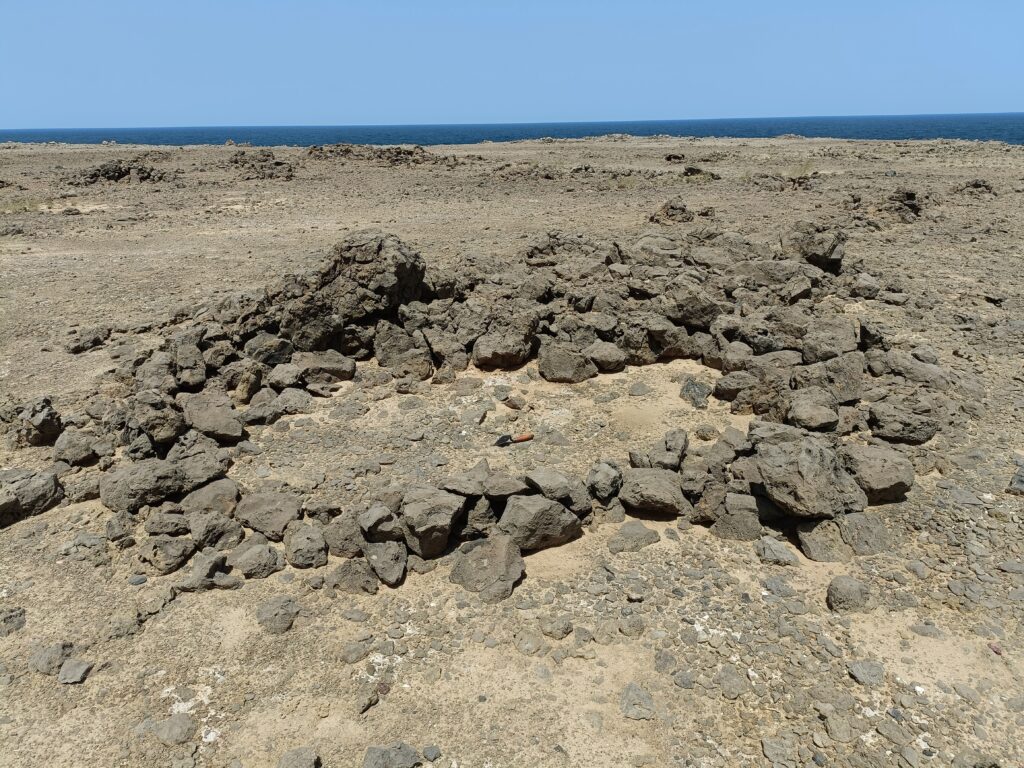
In the same year, Time of Magan also started the investigation of the Bronze Age settlement known as RJ-142, first recorded in the late 1990s as a Bronze Age burial site, and containing over 100 non-funerary structures in addition to Hafit and Umm an-Nar tombs. Architecture includes circular, semi-circular, and quadrangular units with rounded corners all made of stones.
By starting fresh exploration at these sites and collecting a large set of data, the project intends to bring attention to a type of settlement quite widespread in this coastal area of the Sharqiyah region, between Sur and Ras Al Jinz, which has never been the object of in-depth investigations so far. Thanks to the investigation of the two sites, the diachronic perspective will shed light on the formative phases of this type of village community and on their evolution through time.
THE FIELD SCHOOL
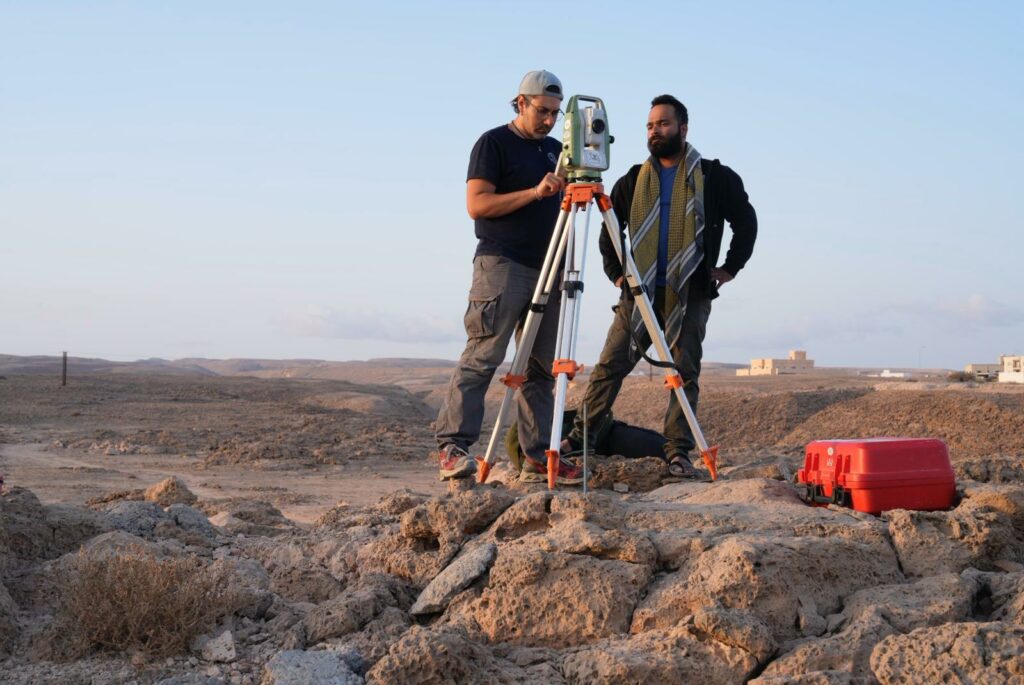
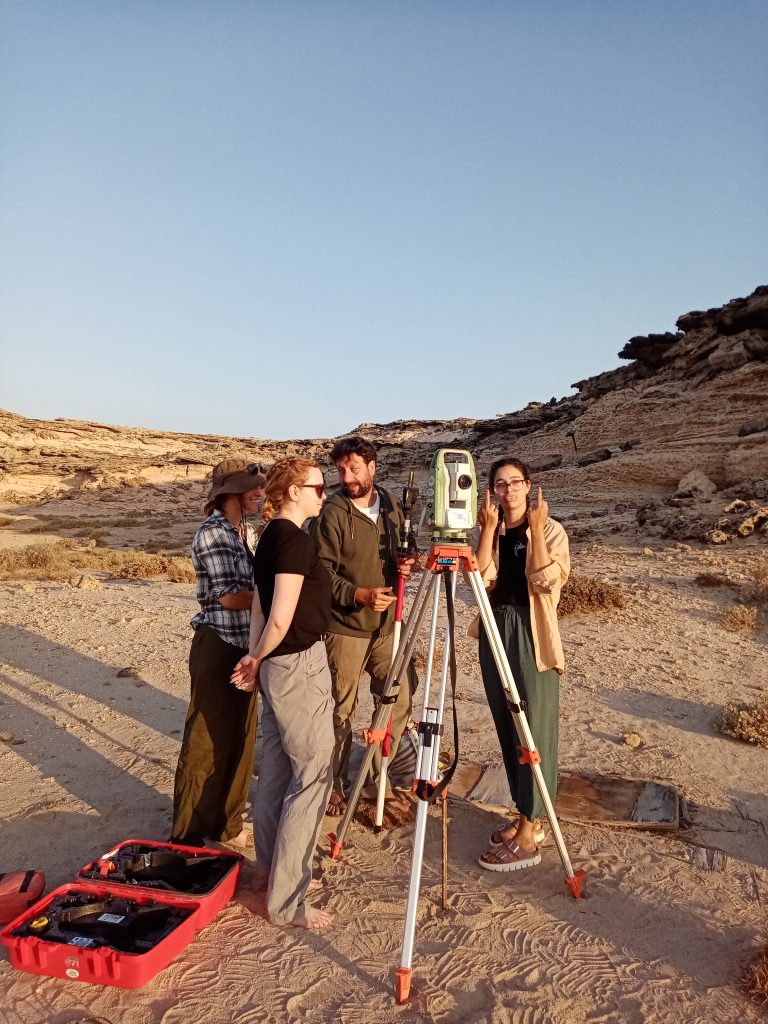
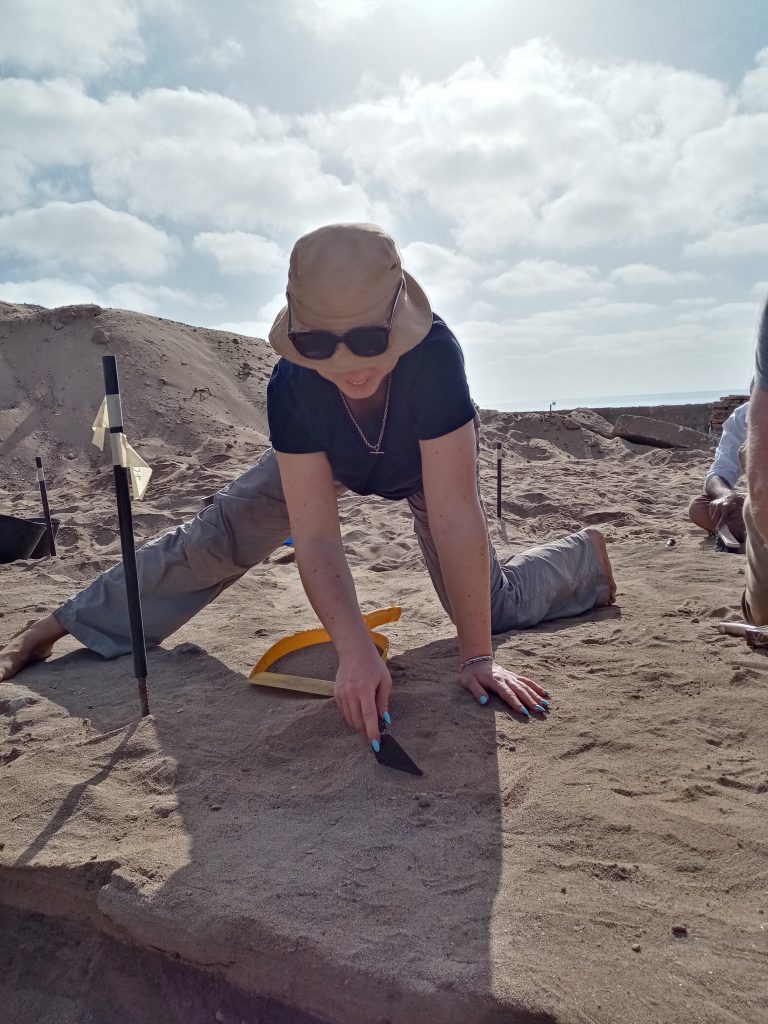
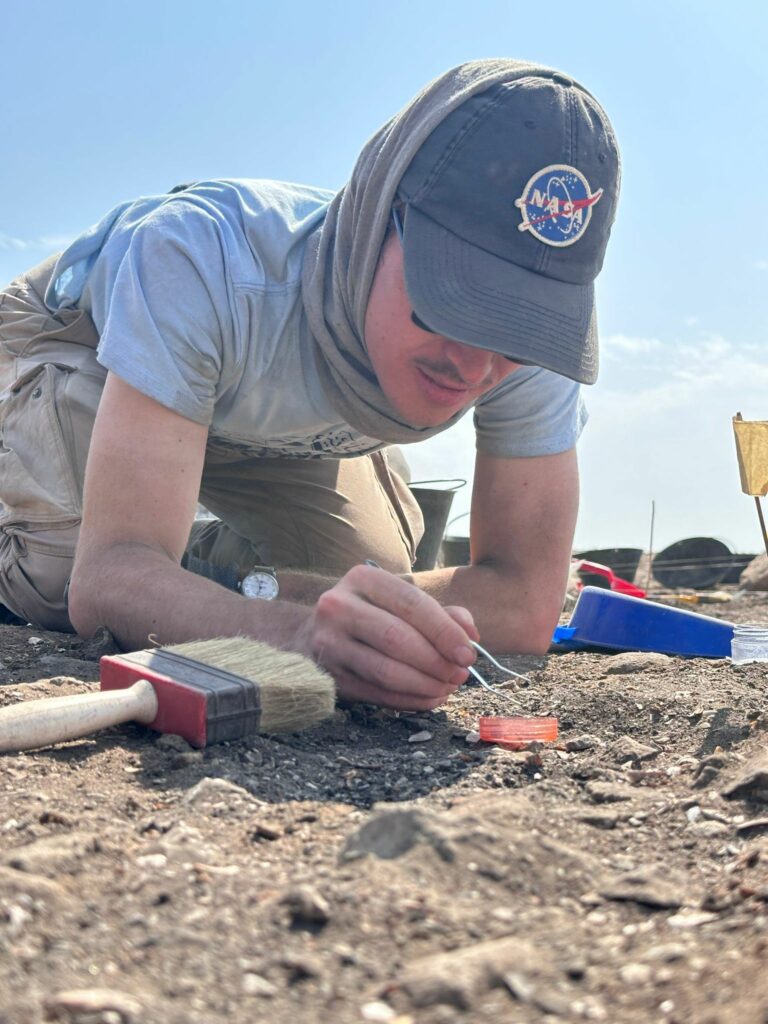
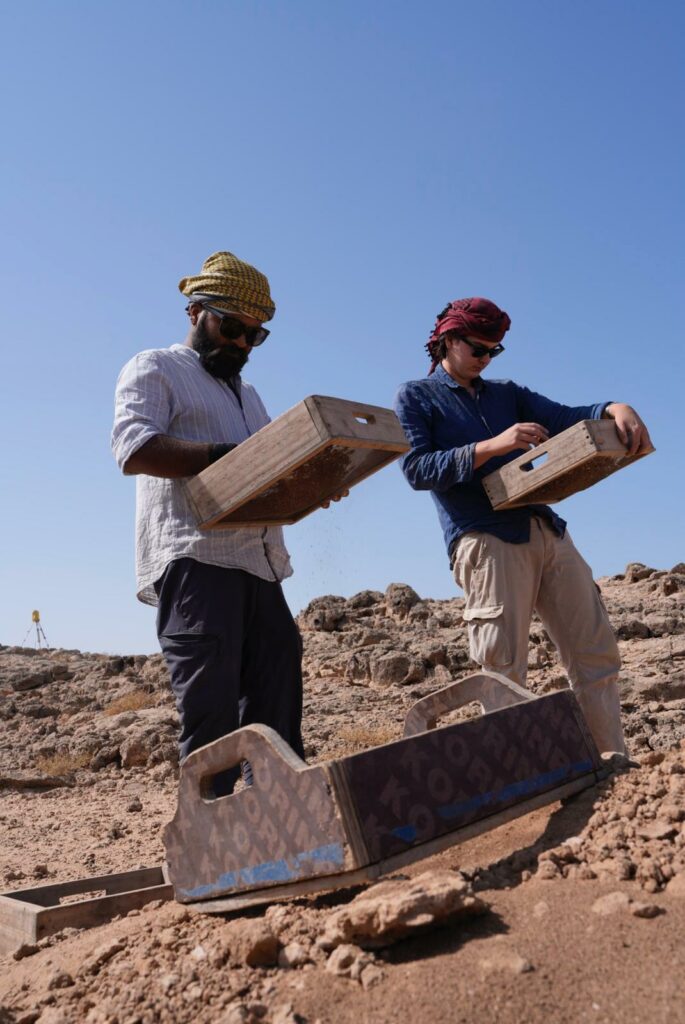
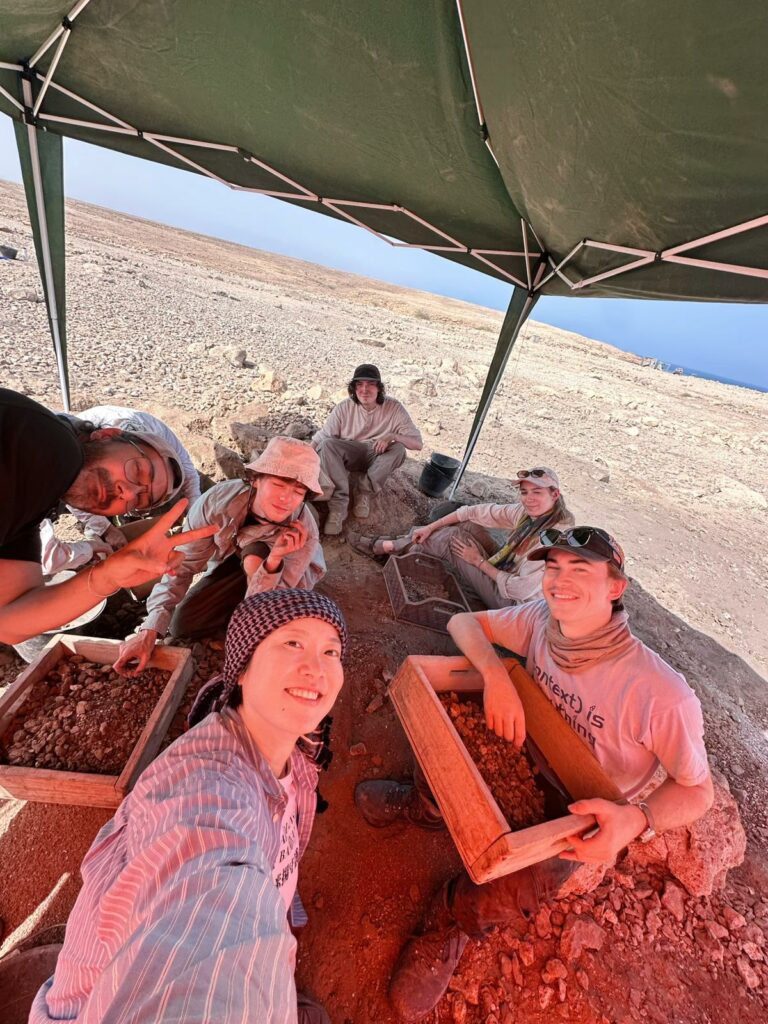
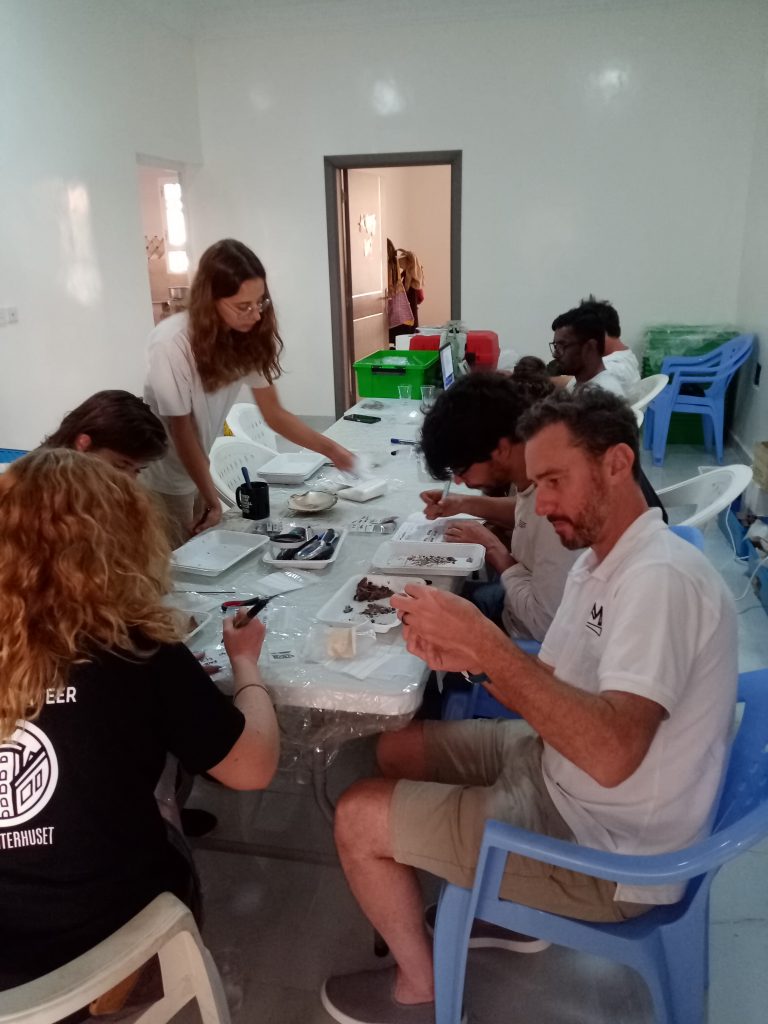
Time Of Magan Field School programs are an excellent opportunity for BA and MA students to gain experience in the field of Arabian Archaeology, and more broadly in settlement archaeology (excavation and documentation) and artefacts/ecofacts processing and recording.
We provide a range of expert-led research focused training designed to introduce students to practical archaeological field methods, and to build and expand on knowledge and experience gained during your university studies.
The training includes:
In-field methods and
post-excavation procedures
In the field
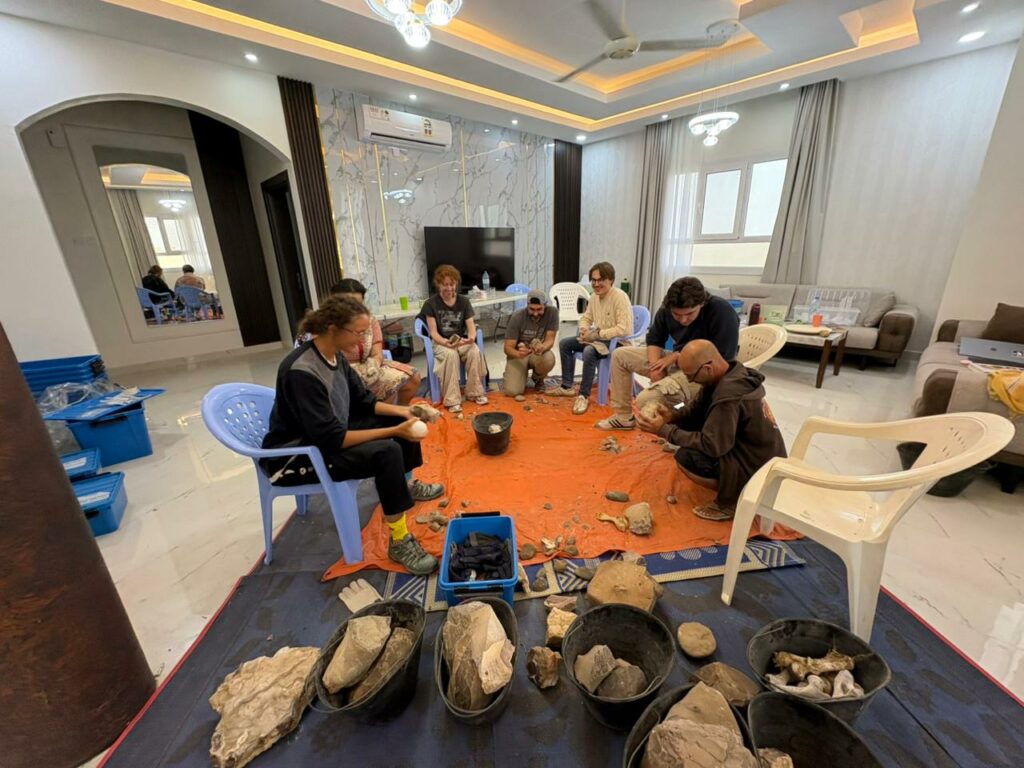
Post-excavation laboratory activities
THE FIELD WORK
Once we start field work, the day is fairly full. We have breakfast at 6:00 am and we leave the house for the field at 6:30 am – arriving there by 7:00 am.
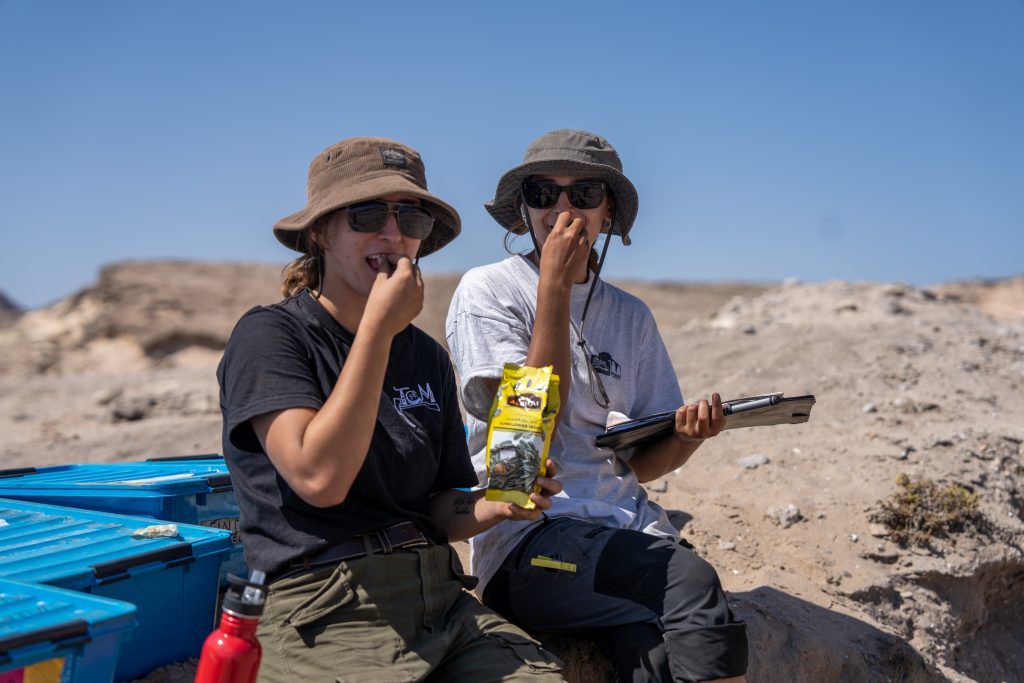
We have a break at around 10:00 am with a quick snack. Work in the field ends each day at 1:30 pm.
After the lunch-break, the afternoons are reserved for lab activities, which can be followed by core and thematic lectures. Around 8:00 pm we eat dinner as a group at the house.
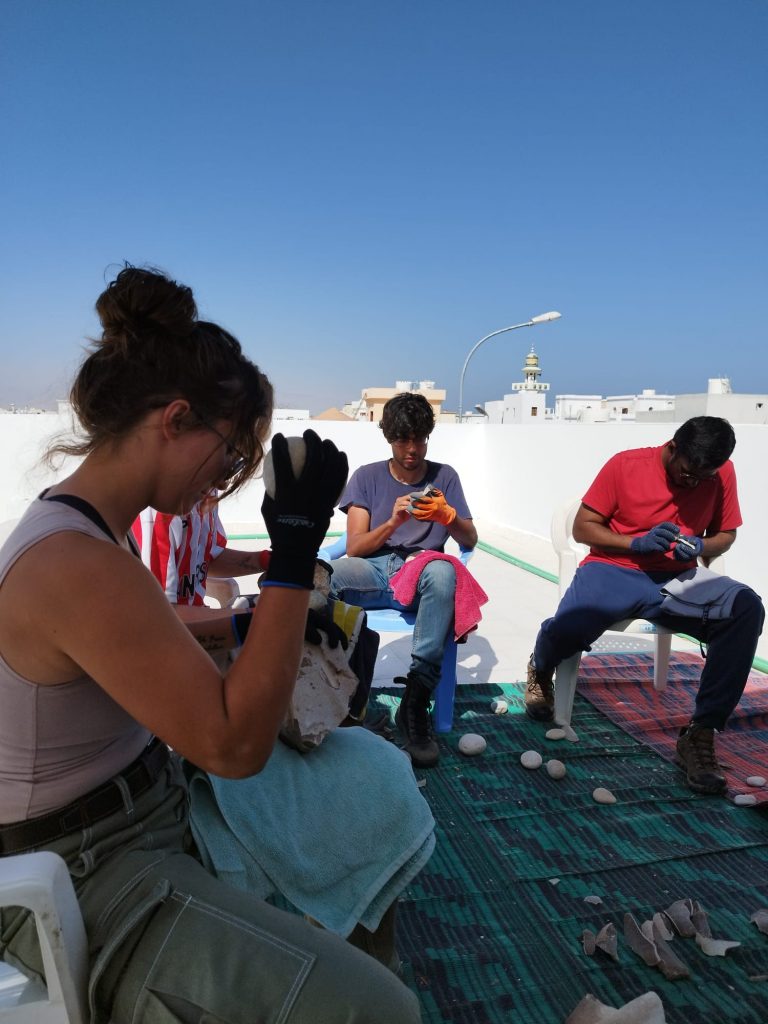
Thursdays are dedicated to core lectures and experimental archaeology projects such as flint knapping, bead making, etc.
Weekend is from Thursday afternoon to Friday night and sometime could be extended for trip purposes. It is advised to arrive in Oman on Thursday to start the field work at the beginning of the working week (Saturday).
OUR HQ
Students and most staff members will be staying in a dedicated house in a quiet neighbourhood in the city of Sur in the Sharqiyah region. The accommodations are shared bedrooms, with three to five persons per room, and usually a basic shower and toilet in each room. Sheets and pillows will be provided, but participants should bring towels and sleeping bags.
FEE OVERVIEW
The field school fees cover in-field transportation, field equipment, accommodation, all meals except Friday, instructor fees.
Weekends are yours to explore the cultural and natural attractions in the area.
Airfare and your personal gear are your responsibility.
At the end of the Field Program, students will receive a certificate of participation stating the hours and activities of the training. Participants that perform remarkably well may receive a letter of recommendation from our organisation upon request.
No prior experience on an excavation is required to participate in this field school.
APPLICATION AND FEES
Minimum 7 / Maximum 20 participants
Period:
SHI-4: January 02, 2027– January 29, 2027
RJ-142: January 30, 2027– February 28, 2027
(arrival on Thursdays, beginning of work in the field on Saturdays)
2 weeks minimum of participation are required. It is advised to participate for 4 weeks.
Other periods and projects available on our website or on AIA website.
https://www.archaeofieldschool.com/
All fees should be paid 1 month before arrival.
Airfare and personal insurance not included in the fees
Participants must operate under an Official Visa issued by the Ministry of Heritage & Tourism at a cost of 55 Euros (see above); the active participation in the Project of individuals who entered Oman under a Tourist visa is not allowed. Documents for issuing the Official Visa (Passport copy, father’s name, and photograph) must be provided as soon as possible and at the latest 30 days before the arrival of the applying individual in Oman.
The field school operates on a first arrived first served policy. Upon acceptance to the field school, a 555 Euros wire transfer will be requested to secure a spot in our program and cover the official visa fees. This fee is not refundable.
The remainder of the fee can be refunded until two weeks before the departure date.
Application method: Send CV and letter of motivation to fieldschooloman@gmail.com
Application deadline: Applications will be considered upon submission and can be sent until 15 November 2026 and no later.
Project leaders:
Valentina Azzarà (Netherlands eScience Center/ National Geographic Explorer)
Alexandre De Rorre (Independent Researcher)
Period(s) of Occupation: 4th/3rd millennium BCE
Notes:
Participating in an archaeological campaign is an exciting work, but it is also sometimes tiring and challenging. It is important that you are ready and fit for outdoor physical activity. The typical day starts early in the morning and runs until late-afternoon.
Project Size: 1-24 participants
Minimum Length of Stay for Volunteers: 2 weeks
Minimum Age: 18
Experience Required: No prior experience on an excavation is required to participate in this field school.
Room and Board Arrangements:
OUR HQ
Students and most staff members will be staying in a dedicated house in a quiet neighbourhood in the city of Sur, in the Sharqiyah region. The accommodations are shared bedrooms, with three to five persons per room, and usually basic shower and toilet in each room. Sheets and pillows will be provided, but participants should bring towels and sleeping bags.
FEE OVERVIEW
The field school fees cover in-field transportation, field equipment, accommodation, all meals except Friday, instructor fees and field trips to sites of interest in the area.
Weekends are yours to explore the cultural and natural attractions in the area
Airfare and your personal gear are your responsibility.
At the end of the Field Program, students will receive a certificate of participation stating the hours and activities of the training. Participants that perform remarkably well may receive a letter of recommendation from our organisation upon request.
Time of Magan
Einsteinweg 2
Leiden
2333 CC
The Netherlands
Phone: +31 71 527 2727