October 23, 2025
by Justine Lefebvre
One of our 2024-2025 Anna C. & Oliver C. Colburn Fellowship winners, Justine Lefebvre, provides us with an update:
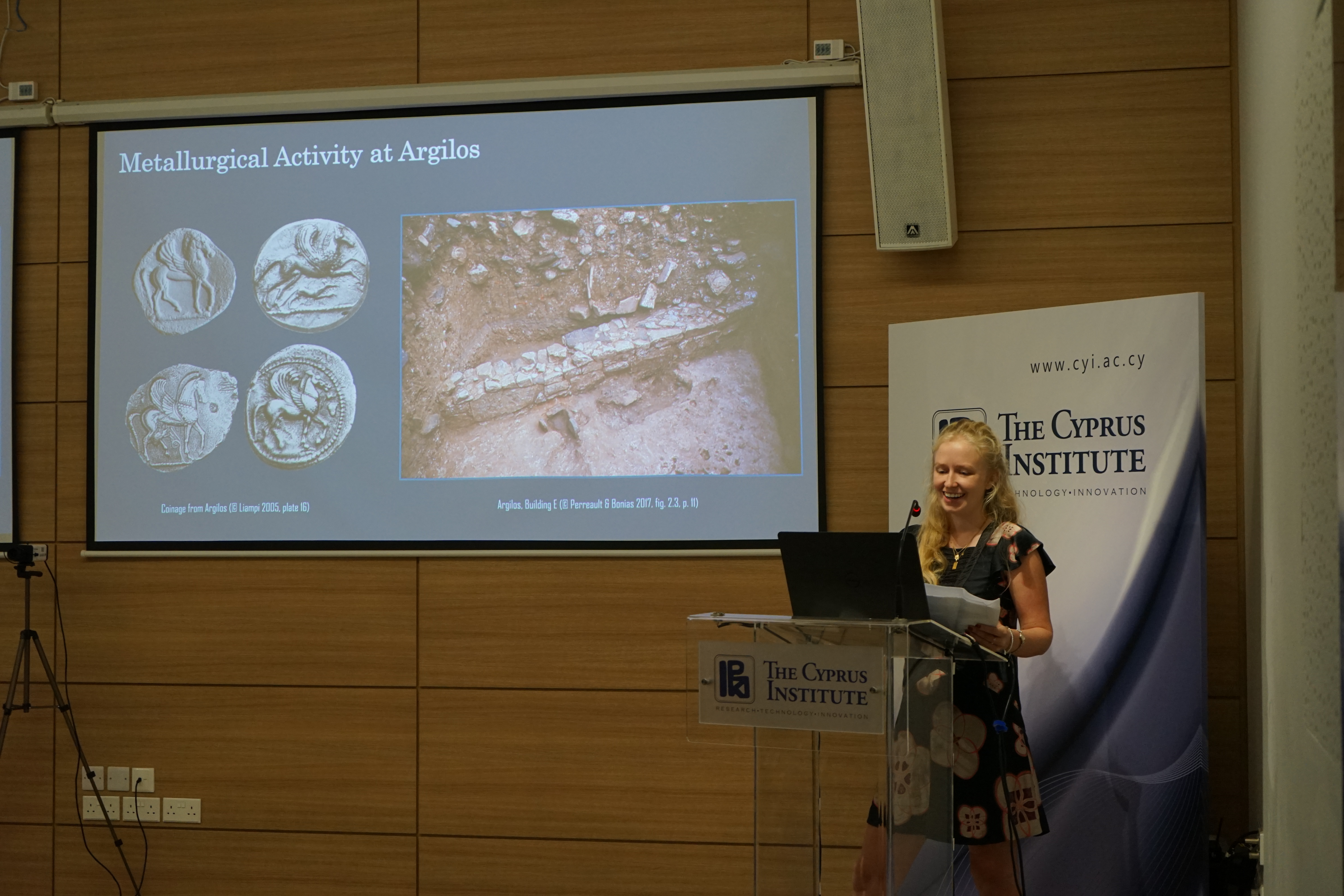
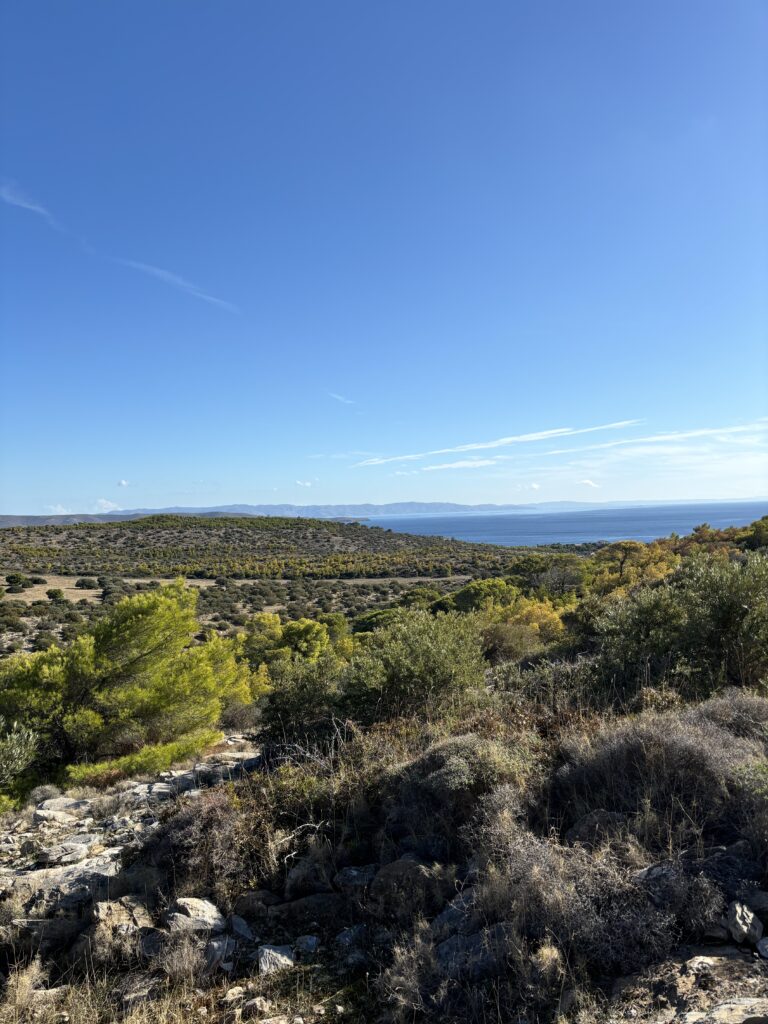
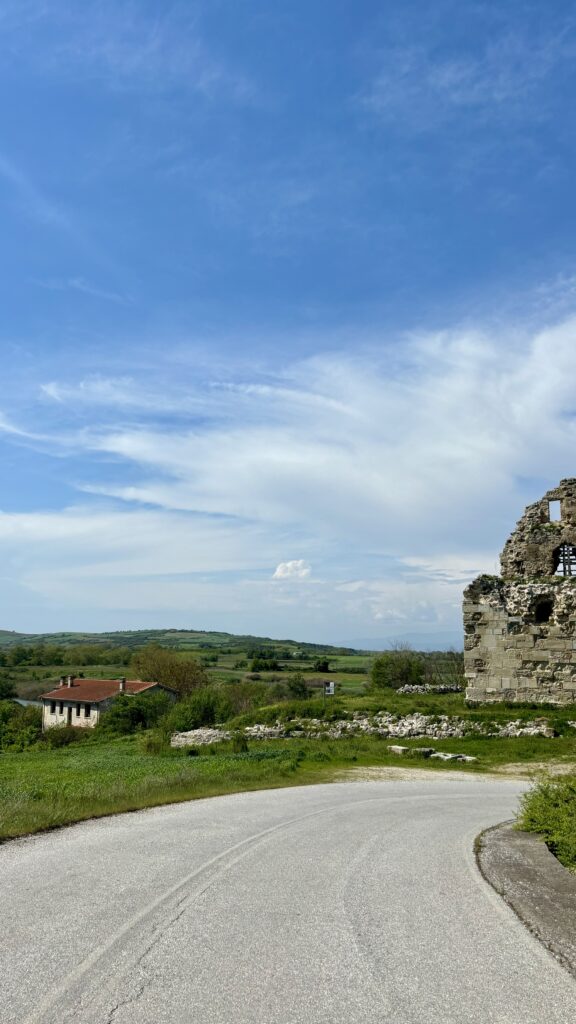
I received the Anna C. & Oliver C. Colburn Fellowship in 2024 to spend the 2024-2025 academic year at the American School of Classical Studies at Athens. My time there was dedicated to my doctoral project, which explores questions of bronze production in Northern Greece during the Archaic and Classical periods through the case study of Argilos, a city of the Lower Strymon Valley, in Northern Greece.
My plan for this period was two-fold, beginning with a three-month stay in Northern Greece. The main objectives were to review Argilos’ excavation archives to gather relevant information about the various known sites of metal production. I also aimed to locate and study archaeological materials related to this metallurgical activity, such as technical ceramics, by-products, and the remains of furnaces still in situ. The second part of my stay involved working at the ASCSA to process and interpret archaeometric data obtained from analysis of samples taken from 150 bronze artifacts found in Argilos, in order to help understand the overall extent of its bronze metallurgical activity. The resources at the ASCSA proved invaluable for this work.
Thanks to the support of the Colburn Fellowship, all the work completed this year has yielded very interesting results that will surely enhance our understanding of ancient metal production from a global perspective, along with the many variables influencing it. Argilos’ craftsmen appear to have developed a very strong local metallurgical tradition, guiding logistical, technical, and technological choices through time.
The academic environment that was opened to me thanks to the generous support of the AIA’s Colburn fellowship, allowed me to extend my research beyond my initial project. This year, I also worked on several projects for academic publication and had the opportunity to travel to Cyprus for a conference aimed at early-career researchers in archaeometry. The chance to exchange ideas with colleagues I met through the ASCSA fostered stimulating dialogues and significantly contributed to developing my academic thoughts and ideas.