


• Cultural Continuity and Persistence in Upland Environments: Insights from an Archaeology Field School in the Homeland of the Okanogan

    Northwest Museum of Arts & Culture 2316 W 1st Ave, Spokane, WA, United States

    Dr. Tiffany Fulkerson will discuss her work on PNW studies. Home to the sʔukʷnaʔqín (Okanogan) people, the Okanogan Highlands of northern Washington is a region characterized by mountainous terrain with diverse habitats ranging from forests to desert shrub-steppe. While oral traditions and archaeological and ethnographic data speak to a long history of cultural use of […]

  • Remembered Places, Significant Spaces: Room Closure Practices in the Pueblo Southwest

    Northwest Museum of Arts & Culture 2316 W 1st Ave, Spokane, WA, United States
    Hybrid Event

    Dr. Samantha Fladd, Washington State University., is an anthropological archaeologist who focuses on the Southwest United States, specifically the Ancestral Pueblos of the Four Corners region. Architectural spaces create and are created by the social practices of and relationships among the people who occupy and interact within them. Just as spaces become places, people become […]

  • A Deep Dive into Deep Time: Archaeology, Underwater

    Northwest Museum of Arts & Culture 2316 W 1st Ave, Spokane, WA, United States

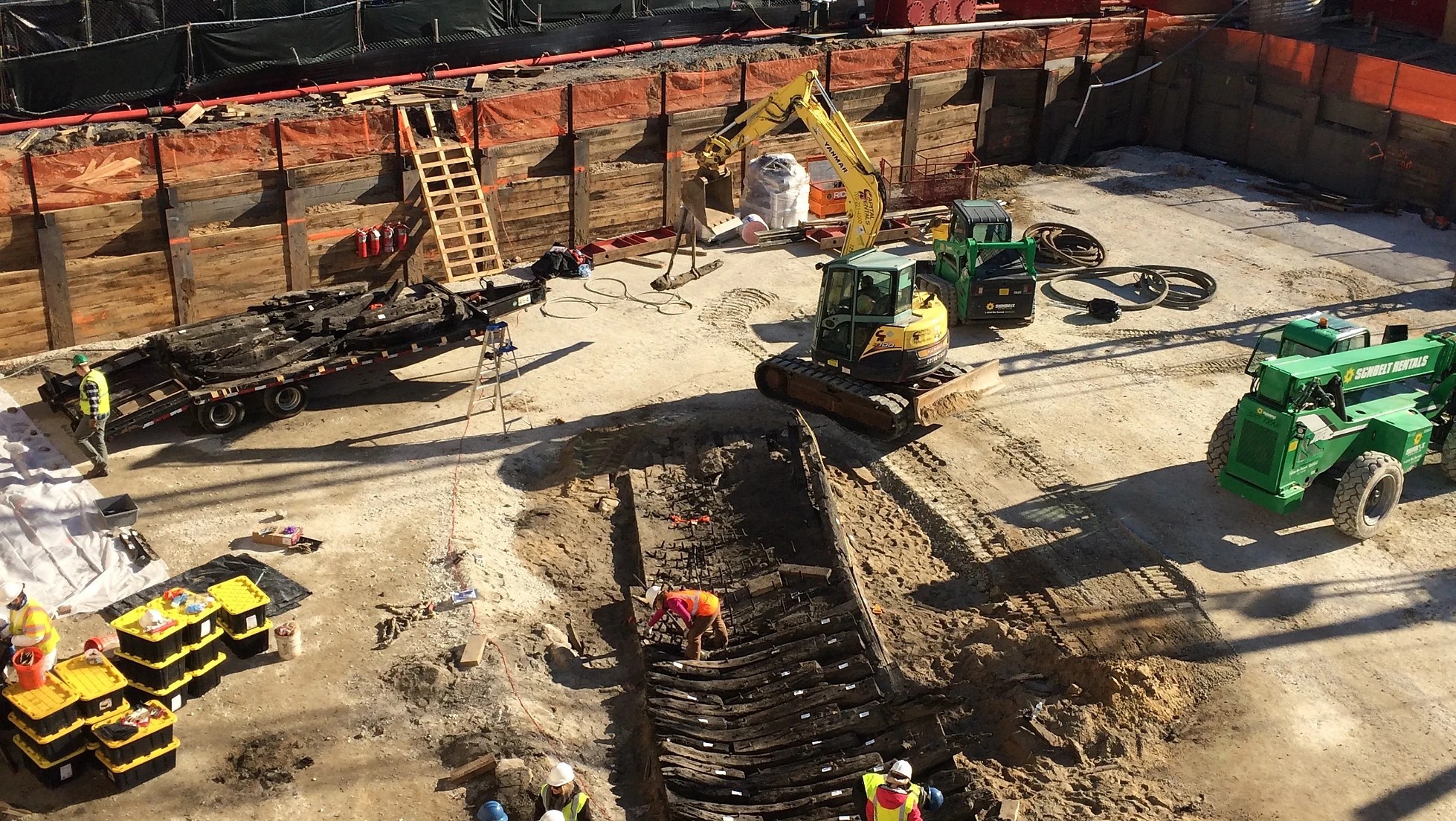
    The phrase "underwater archaeology" conjures up notions of shipwrecks, ships lost at sea, and the dramatic catastrophes that sank them; however, archaeology underwater can also reveal details about ancient landscapes […]

  • Matrilineal Kinship in Aegean Prehistory: Settlements, Figurines, and the Absence of Men

    Northwest Museum of Arts & Culture 2316 W 1st Ave, Spokane, WA, United States

    Dr. Sabina Cveček Were communities in prehistoric Greece matriarchal, matrilineal, or simply centered around women? This question has fascinated archaeologists for decades. Early on, figurines of women were often seen as “Mother Goddesses,” meaning female deities often representing motherhood, fertility, and creation, but feminist scholars later cautioned against such broad interpretations. Still, the idea that […]

  • Poggio Civitate’s Etruscan Workshop: A Cross-Craft Perspective

    Northwest Museum of Arts & Culture 2316 W 1st Ave, Spokane, WA, United States

    Dr. Nora Donoghue, Gonzaga University visiting professor, will present her research into Etruscan workshop crafting interrelationships at Poggio Civitate. Abstract: Craft production in the ancient world is frequently analyzed by specialists who concentrate on a specific material or class of artifact. This approach overlooks the strong probability that ancient production processes were interrelated through shared […]

  • Egyptian Blue, humanity’s first inorganic pigment

    Northwest Museum of Arts & Culture 2316 W 1st Ave, Spokane, WA, United States

    Join us for a lecture by Professor John McCloy, Washington State University, who will present results of an investigation into the materials science and processing parameters to fabricate Egyptian blue faience. Recently, our group at Washington State University, with the Carnegie Museum of Natural History and the Smithsonian Museum Conservation Institute, recreated Egyptian blue to […]

  • Horace and Rodolfo construct the Esquiline: examining garbage and graves at Rome and beyond

    Northwest Museum of Arts & Culture 2316 W 1st Ave, Spokane, WA, United States

    Join us for a lecture by Dr. Kevin Dicus, University of Oregon at Eugene, discussing investigations at Rome's Esquiline Hill. Abstract: Archaeologist Rodolfo Lanciani captivated the public with his account of excavations on Rome’s Esquiline Hill. No doubt influenced by Horace’s Satire 1.8 about the same region, his portrayal of mass graves (puticuli) embedded within […]

  • Crafting and Trade: Stone Tool Production and Ancient Maya Economies

    Northwest Museum of Arts & Culture 2316 W 1st Ave, Spokane, WA, United States

    Join us for a lecture by Dr. Rachel Horowitz, "Crafting and Trade: Stone Tool Production and Ancient Maya Economies ". Abstract: Today, and in the past, economic activities are important […]