December 4, 2025
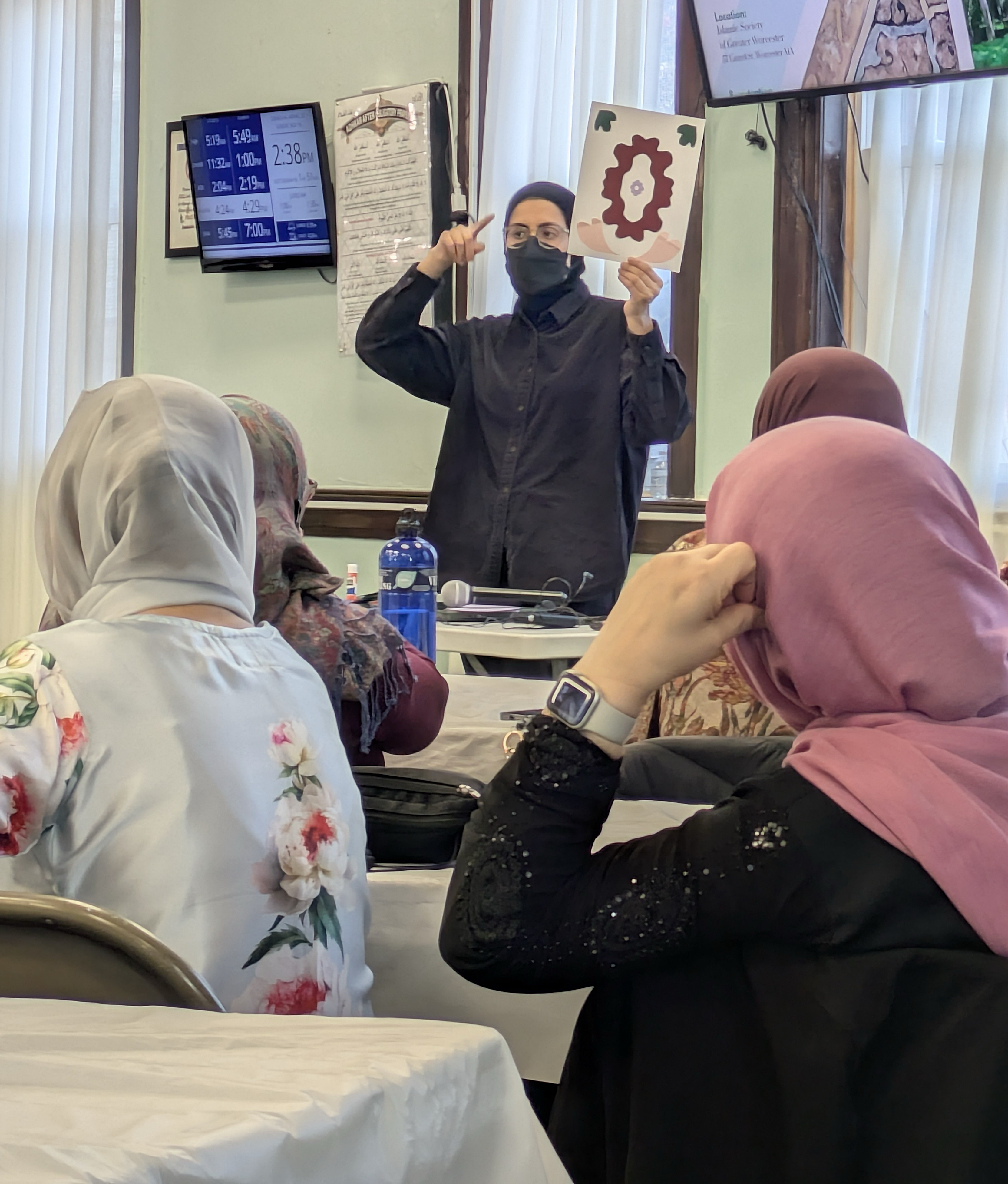
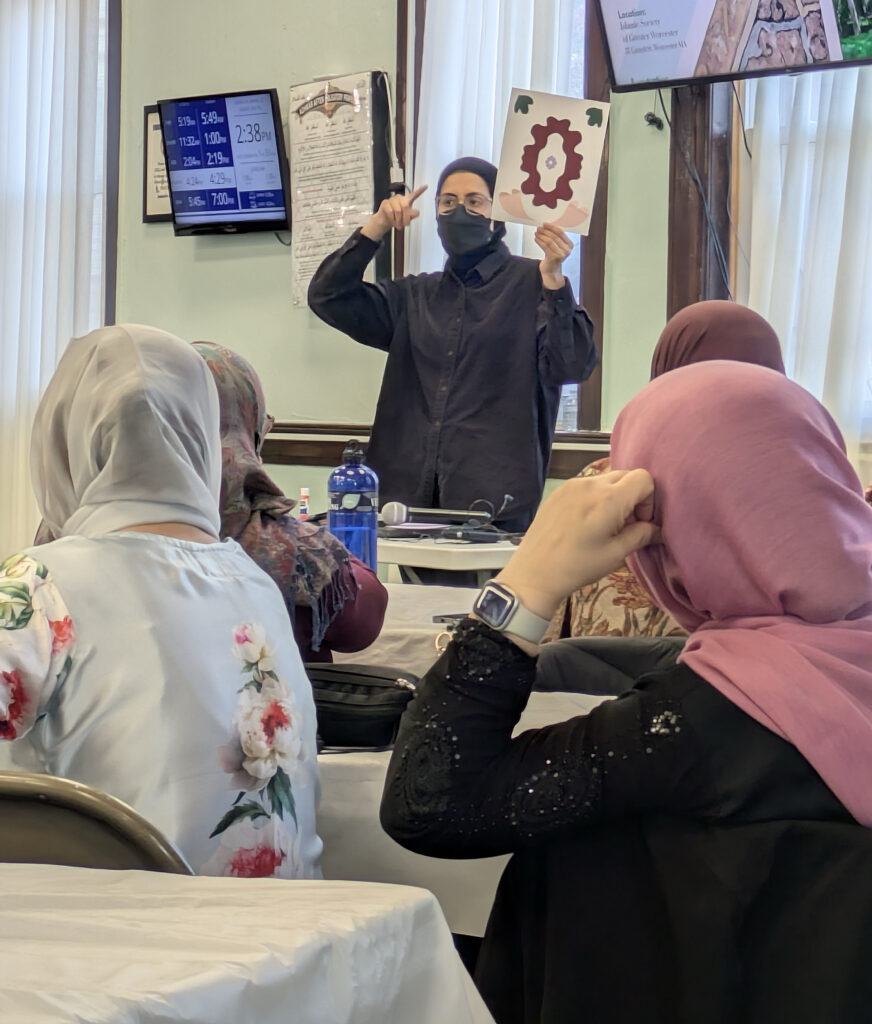
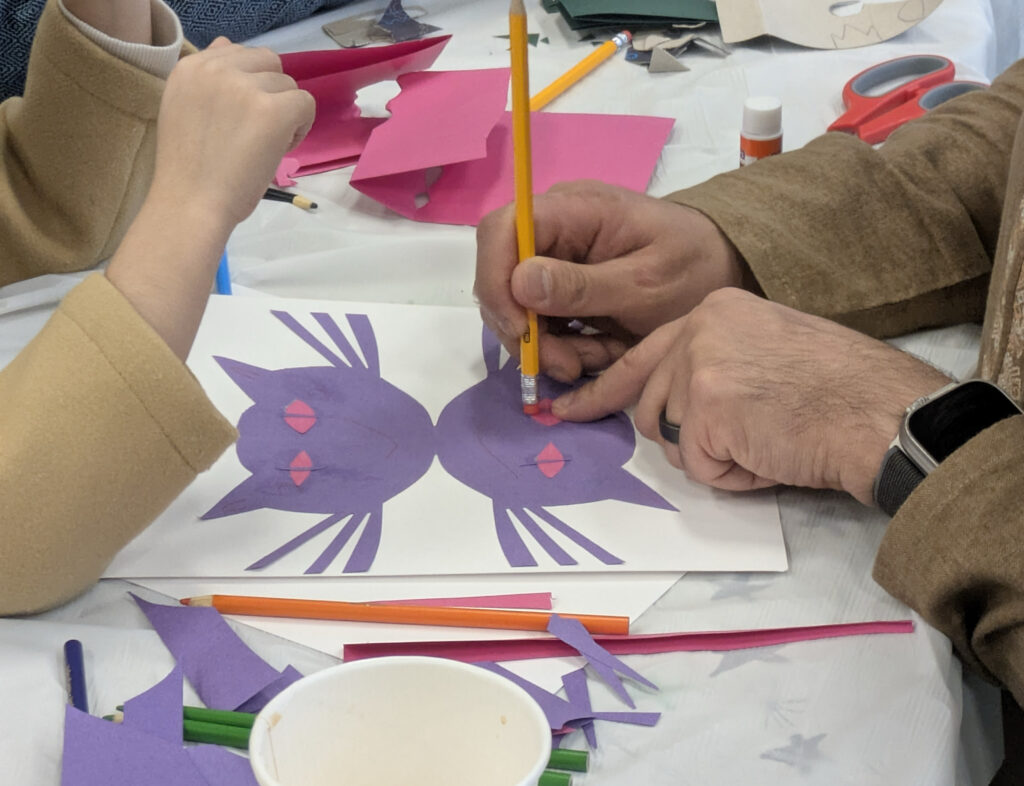
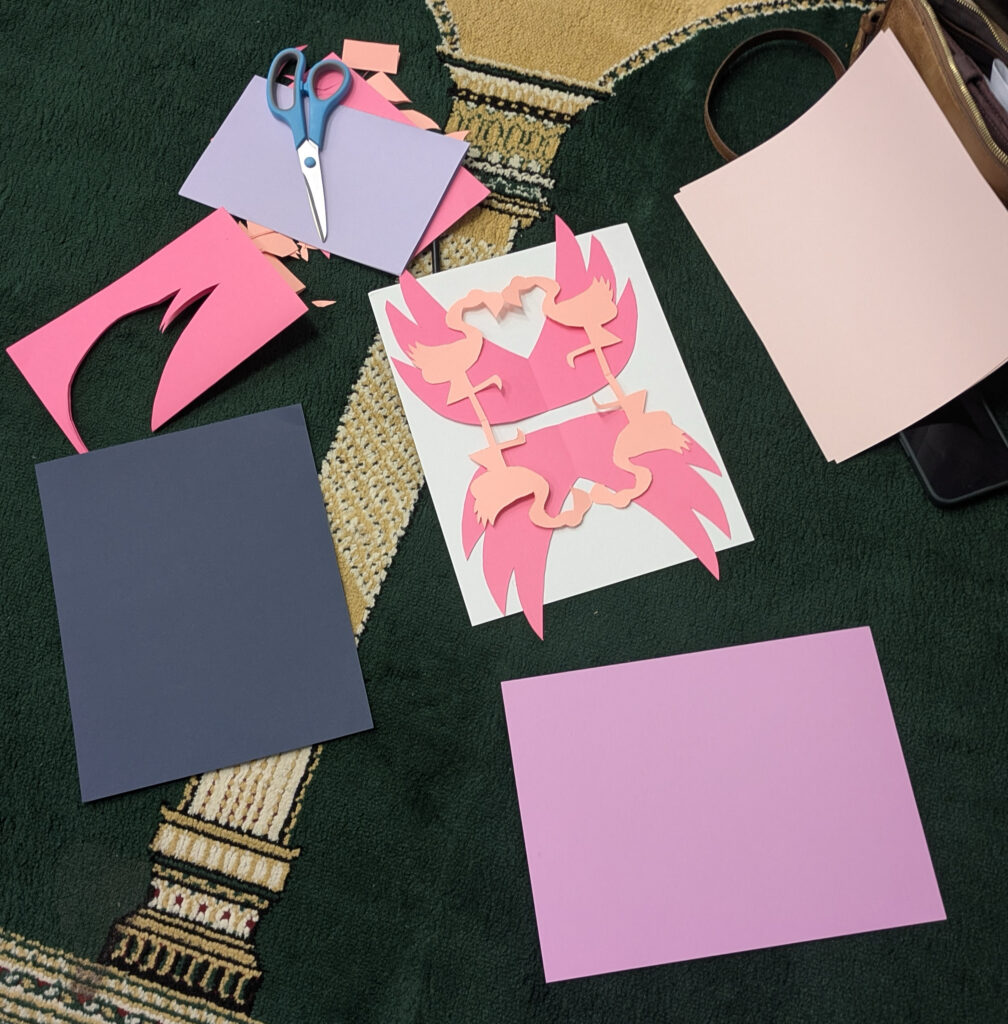
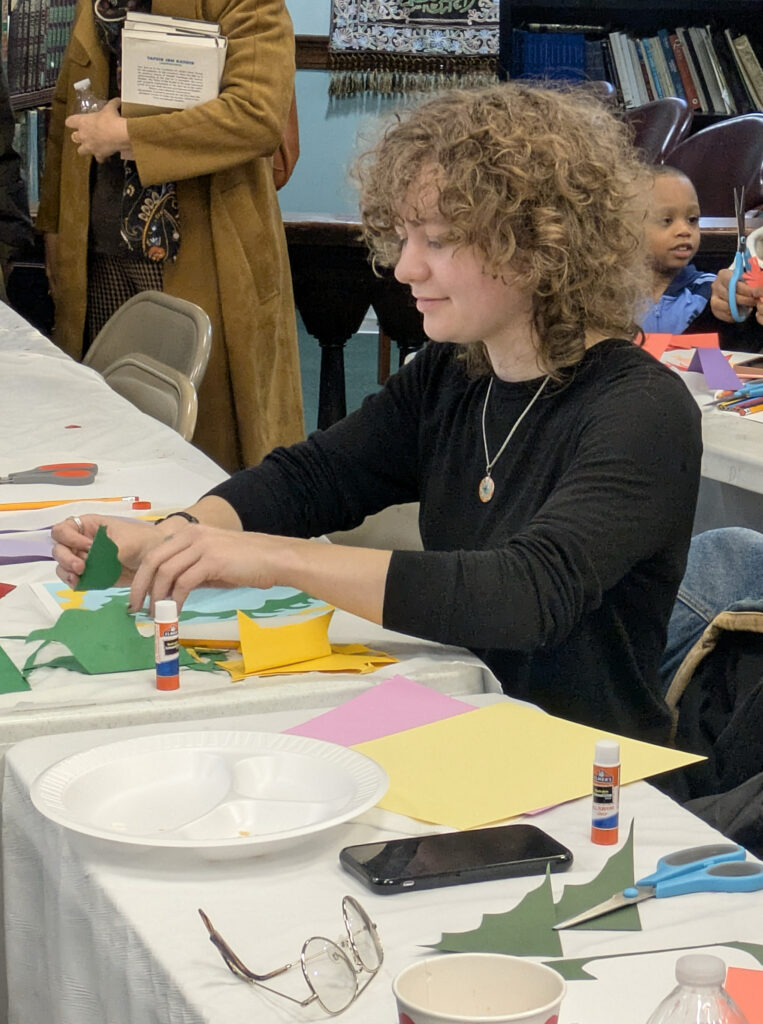
On November 16th, the Worcester Society of the AIA hosted a Society Outreach Event in collaboration with the Islamic Society of Greater Worcester and the College of the Holy Cross. The event was titled “Pattern-making for the Design of Jewelry and Other Items (with Zahra Almajidi).”
The event was organized by Elizabeth Knott, Abdullah Kazi, and Ellen Perry. Zahra Almajidi is a metalsmith and jewelry-maker whose work focuses on found items, patterns and symbols that carry across various art forms (including jewelry and textile design). Her work is inspired by textiles produced by Iraq’s Marsh Arabs as well as historical forms from ancient Mesopotamia.
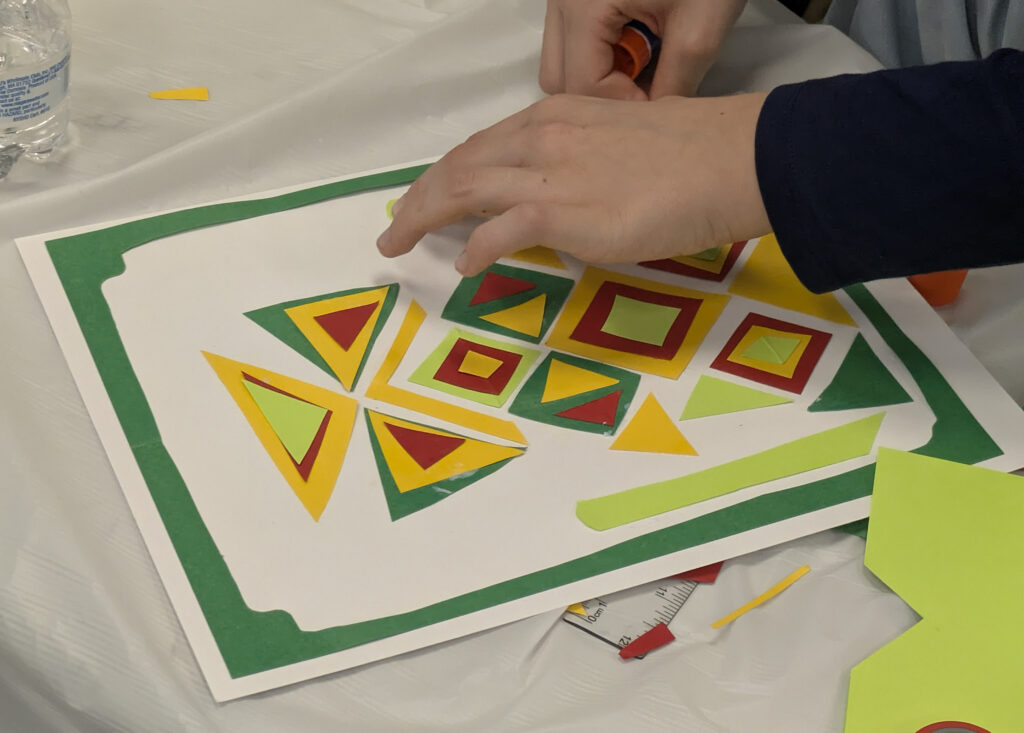
Almajidi spoke for about 45 minutes about her design process, showing workshop participants both finished and unfinished products. Then participants were given art supplies to create their own designs. Zahra circulated around the room, talking with participants about their work and showing them how to simplify, complicate, or otherwise change their designs in order to achieve a desired effect. There were nearly 50 participants ranging in age from five to 80! AIA Worcester Society President Ellen Perry noted that “several participants indicated a real appreciation for the workshop as an act of community building.”
The Society scheduled Almajidi’s visit in conjunction with a lecture they hosted on November 18th. They invited Professor Amy Gansell in as part of the Society Choice Pilot Program. Gansell presented “The Queens of Nimrud’s Northwest Palace: Beauty, Power, and Presence in the Neo-Assyrian World, c. 865–705 BCE.” Following the lecture, Almajidi and Gansell came together for a discussion. Ellen Perry provided a summary:
“Professor Elizabeth Knott moderated their discussion. She began by showing a slide depicting an alabaster Assyrian relief (883–859 BCE) of a winged genie that is on display at the Worcester Art Museum. The genie wears earrings, armbands, and a necklace. Professor Gansell used this relief as a jumping off point for discussing the powerful men and women who wore jewelry in ancient Nimrud, the provenance of the relief. She observed that what kind of jewelry they wore was often specific to their gender, but also that it was possible for individuals to deviate from the norm. She also pointed out how cumbersome much of the jewelry was–exceedingly heavy and so difficult to wear. Ms. Almajidi discussed her own occasional preference for designing jewelry that might be difficult for a person to wear and so is more likely to be hung on a wall. Along with the audience, both speakers considered the role that our most valued jewelry plays in our lives.”
The lecture and discussion garnered an audience of about 50 people, who found the presentation unbelievably interesting.
We recently awarded Society Outreach Grants for fall 2025. Read up on upcoming Society Outreach Events here.