May 13, 2026
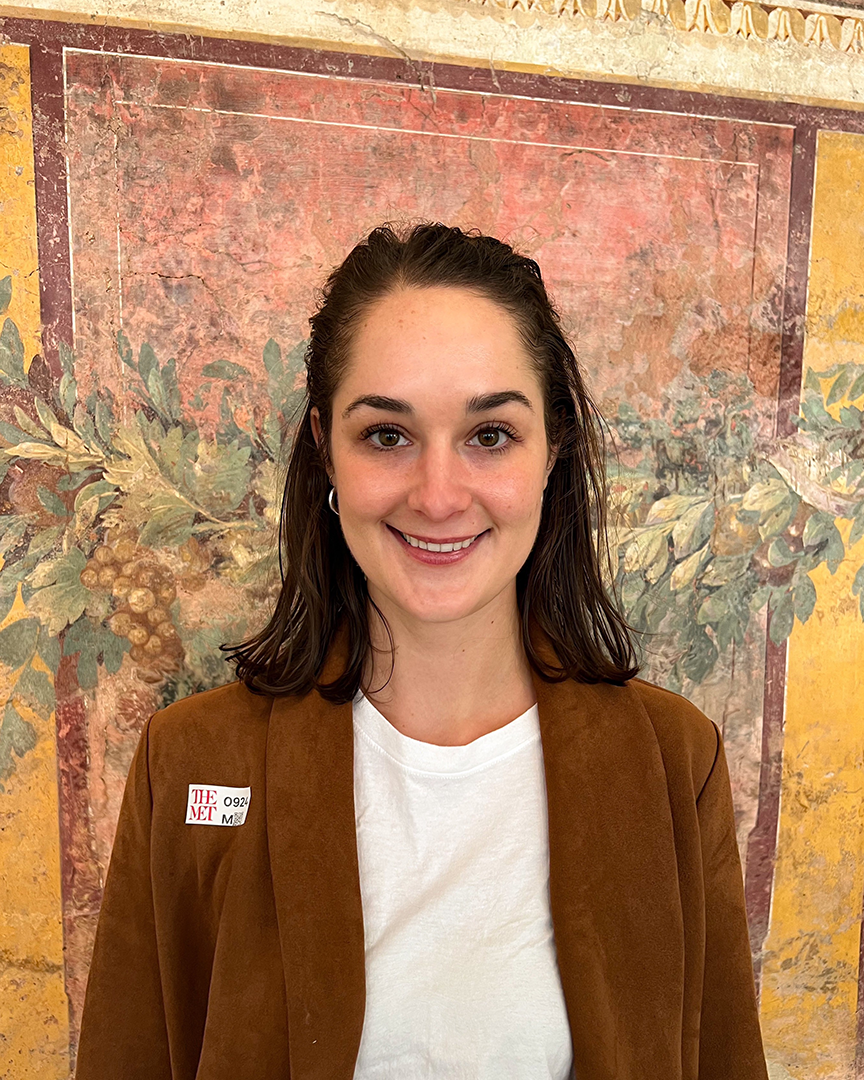
We’re thrilled to introduce Emily Lime, recipient of the prestigious 2026 Graduate Student Paper Award!
The Graduate Student Paper Award (GSPA) was established to recognize graduate students for their substantial contributions to the success of the Annual Meeting. Click here for more information on how to apply for the Graduate Student Paper Award.
We also had the chance to ask Emily a few questions about her background in archaeology and what sparked her interest in the field, as well as what’s next in her academic and professional journey.
Emily Lime (University of North Carolina, Chapel Hill)
Emily’s paper, “Artificial Lighting Systems in Post-Earthquake Pompeian Gardens,” explores lighting systems in Pompeian houses from the late Republican period through the aftermath of the earthquake of 62 CE, offering new perspectives on garden spaces and the role of lighting in Roman domestic life.
What drew you to archaeology?
I was drawn to archaeology through an interest in how material environments shape human experience. I was fascinated by the idea that buildings, objects, and landscapes could preserve evidence not only of daily life, but also of memory, identity, and social change. Archaeology appealed to me in part because it combines careful material analysis with broader historical and cultural interpretation. Over time, I became especially interested in domestic space and the ways built environments mediate memory, social life, and lived experience—interests that continue to shape my research on houses and gardens at Pompeii.
Tell us about your history (if any) with the AIA
I have been a member of the AIA since 2015. As a graduate student, I have especially valued the community of scholars fostered through the organization and the opportunity to participate in the Annual Meeting. I have greatly benefited from the constructive and supportive feedback of colleagues across the field.
The AIA was also instrumental in shaping my early interest in archaeology. When I was eight years old, my grandmother gifted me a subscription to DIG, the now-defunct archaeology magazine for children founded by the AIA. Over the years my interest in archaeology continued to grow , and I eventually subscribed to ARCHAEOLOGY magazine. As a high school student, I was fortunate to participate in my first excavation at the Mayan site of Cahal Pech, a program I discovered through a feature in ARCHAEOLOGY magazine. Without the AIA’s longstanding commitment to both public-facing outreach and academic scholarship, I likely would not have found my path into archaeology so early in life.
What’s next for you professionally?
I will return to Pompeii this May to continue my work as Finds Supervisor and Registrar for the Casa della Regina Carolina Project, where we are excavating two domestic gardens constructed after the earthquake of 62 CE. Over the next academic year, I will complete my dissertation, with plans to defend in May. My dissertation investigates the reconstruction of Pompeian domestic gardens following the earthquake, examining how these renovations reflected broader shifts in aesthetic tastes and elite social practices within the domus. As I enter the next stage of my career, I look forward to continuing my research on Roman domestic space, gardens, and post-earthquake reconstruction at Pompeii.
Learn more about what Award opportunities are available through the AIA.