July 16, 2026
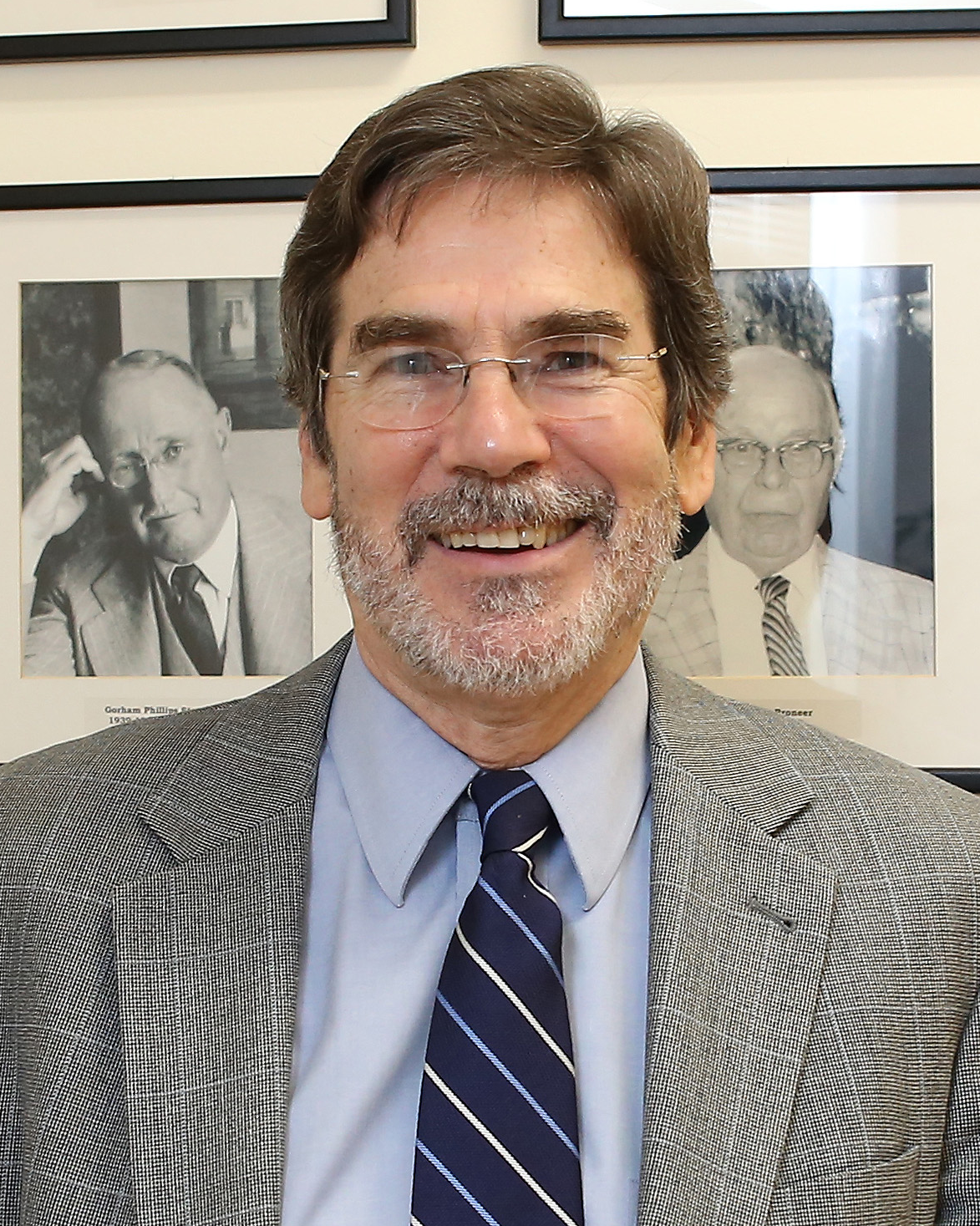
Earlier this year, the Archaeological Institute of America announced Dr. James C. Wright as the recipient of the 2027 Gold Medal Award for Distinguished Archaeological Achievement.
Over a career spanning more than four decades, Dr. Wright has transformed our understanding of Mycenaean society. He has led major projects including the Nemea Valley Archaeological Project and the Ayia Sotira excavations, while championing innovative scientific methods and setting new standards for archaeological practice. He also played a pivotal role in the recovery and repatriation of the looted Aidonia Treasure.
Beyond his research, Dr. Wright has shaped the field through his leadership at Bryn Mawr College and as Director of the American School of Classical Studies at Athens, where he advanced major initiatives in archaeological science, preservation, and education.
Ahead of the Awards Ceremony during the 2027 Annual Meeting, we spoke with Dr. Wright about the discoveries and experiences that shaped his distinguished career.
What drew you to archaeology?
In high school, history and Latin teachers introduced me to the Old World. My parents took me to the Oriental Institute, the Field Museum, and the Art Institute of Chicago. But it wasn’t until I took Archaeology 101 with Bruni Ridgway at Bryn Mawr in the fall of 1966 that I realized archaeology would be my passion. After experiencing an excavation at Wharram Percy in Yorkshire in 1967, I was certain that the combination of fieldwork and research would be my career. Then I bought the AIA T-shirt: “My Career Is In Ruins!”
Tell us about your history with the AIA:
I began attending AIA lectures in 1967. As I recall, in 1971 I joined the AIA and started a subscription to the AJA. In 1979-1980 I was vice-president of the Philadelphia Society and in 1994-1995 the president. From 1988-1997 I was on the Publications Committee and from 1993-1997 Co-Chair of Publications of Conferences and Colloquia. I served for multiple terms (1998-2004, 2005-2007, 2007-2009) on the Professional Responsibilities Committee. Between 2004-2008 I was on and chaired the Student Paper Award. For many years I enjoyed being on the lecture circuit meeting AIA members throughout the US and Canada. Currently I am on the committee for the Anna Marguerite McCann Award for Fieldwork Reports.
What’s next for you professionally?
I’m raising funds to advance the implementation of the master plan for restoration for public access to the remains of the Bronze Age through Roman harbor town and sanctuary at Kommos in Crete. Its location along the beach and under the deep sand dunes means that it is constantly threatened by violent waves, wind, and intense storm cells, whose rainfall needs to be directed away from the standing remains. I’m promoting the importance of this unique site, known to the pharaoh Amenhotep III as Amyklai, likely identified as a place known as mu-ka-ra in the Knossos Linear B tablets, visited consistently by Phoenician merchants during the Iron Age, and the location of a Cretan sanctuary associated with Apollo Amyklaios and the city-state of Gortyn during historic times. There is no comparably well-preserved harbor complex of the Bronze Age and overlying Iron Age sanctuary in the Aegean. I’m hoping in the next several years to finish some writing projects before I truly retire.
Do you have any advice for aspiring archaeologists?
Get experience on multiple excavations to learn different approaches. Read: “Microarchaeology Beyond the Visible Archaeological Record” by Stephen Weiner and “Reconstructing Archaeological Sites (Understanding the Geoarchaeological Matrix)” by Panagiotis Karkanas and Paul Goldberg. They will put you on the right track while you continue to explore all the disciplines of the humanities, social sciences, and hard sciences that inform our understanding of the past.
What achievement are you most proud of?
Realizing that the best archaeology is collaborative. That led to NVAP and to the Anna Marguerite McCann Award for the Ayia Sotira cemetery publication, and then to the publication of “NVAP III: The Mycenaean Settlement on Tsoungiza Hill.” Both of these represented the combined leadership and collaboration of a wide range of scholars and students.
Questions? Learn more about AIA Awards here or reach out to awards@archaeological.org