Affiliation: Texas Tech University
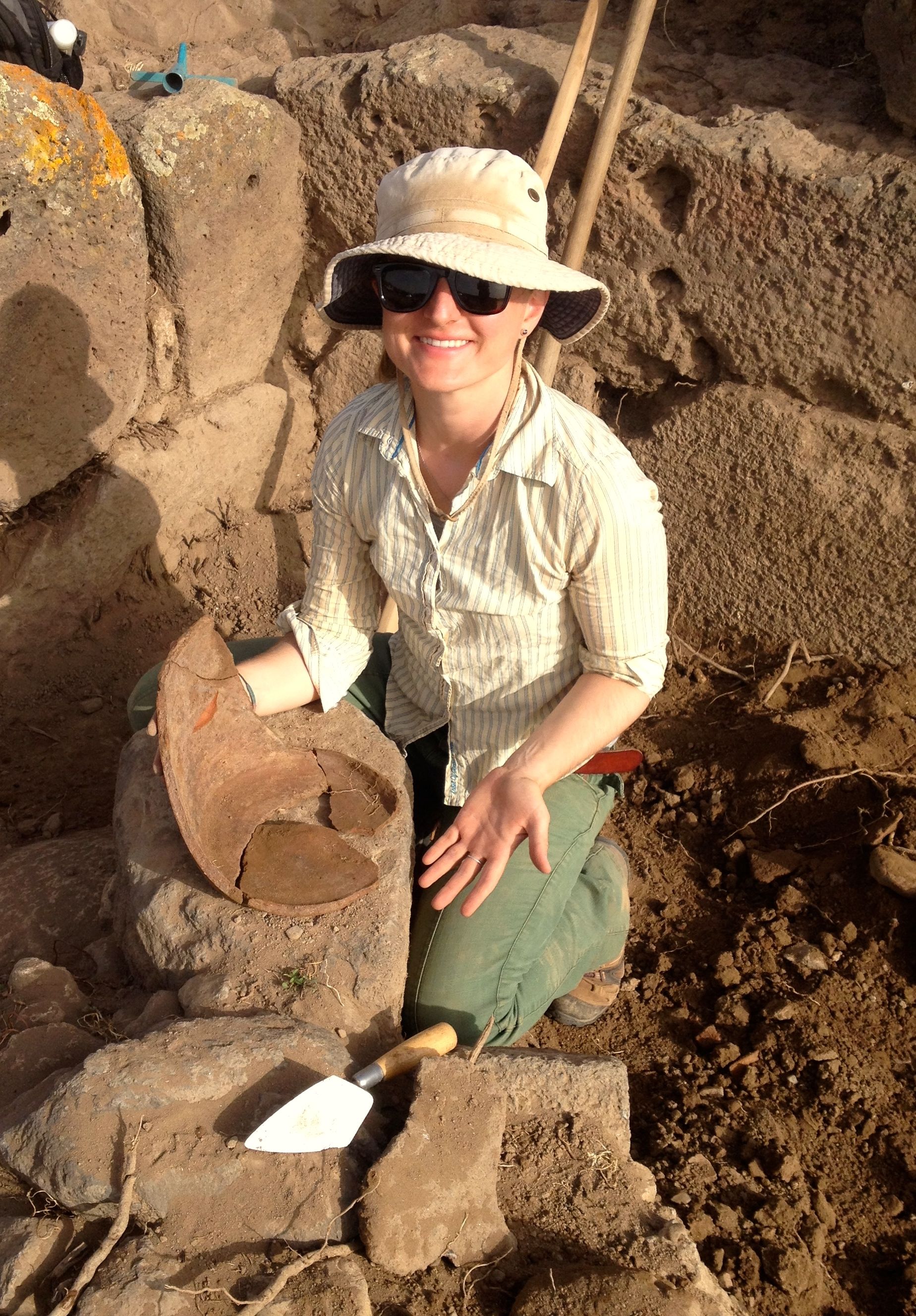
Dr. Linda Gosner is currently an Assistant Professor of Classical Archaeology at Texas Tech University and will join the faculty of the Department of Ancient Greek and Roman Studies at the University of California at Berkeley in 2026. She holds a PhD from Brown University’s Joukowsky Institute for Archaeology and the Ancient World. Dr. Gosner’s research explores local responses to Roman imperialism in rural and industrial landscapes of the western Mediterranean. She studies the impact of empire on technology, craft production, labor practices, and everyday life in provincial communities. Her work engages with broad questions about human-environment interaction, community and identity, labor history, mobility, and culture contact. Much of her current scholarship is about the mining industry in Iron Age and Roman Iberia. Dr. Gosner is also co-director of the Sinis Archaeological Project, a landscape survey in west-central Sardinia. Her recent work has included a co-edited book Local Responses to Connectivity and Mobility in the Ancient West-Central Mediterranean (Equinox, 2024) and articles for such venues as the Journal of Social Archaeology, the European Journal of Archaeology, and Open Archaeology. Dr. Gosner’s recent work has been supported by the Institute for Advanced Study (Princeton), the American Council of Learned Societies, and the Loeb Classical Library Foundation.
After the Iberian Peninsula was conquered and its territory brought into the Roman Empire, its abundant ores were mined on an unprecedented scale, feeding into coinage, lead pipes, and other objects, and contributing to levels of pollution not seen again until the Industrial Revolution. This talk examines mining and its effects on the communities and ecologies of southeast Iberia following the conquest of this region during the Second Punic War. This region also had botanical and marine resources, long exploited by local communities, who reacted to Roman mining in divergent ways. Weavers of local grasses shifted their production strategies, supplying equipment for Roman mining. By contrast, harvesters of a large mollusk species, who once collaborated closely with miners, broke ties with the industry. Ultimately, I show the important role that local decision making played in the organization of production and the experience of empire in Roman Iberia.
The metal-rich landscapes of the Iberian Peninsula are frequently cited as a reason for the early Roman conquest of this territory, and the metals—which supplied Roman mints and became indispensable to urban infrastructure—are often used in discussions of economic growth. Although the monumental scale of Roman mining is widely recognized, the people who made mining possible have often been overlooked in scholarship. This paper explores once such mining community at the early imperial silver and copper mine of Riotinto (southwest Iberia) through the rich archaeological and epigraphic record that they left behind. I show that the Romans counted on a diverse population of local workers and newcomers, brought together by choice and by force, to mine at unprecedented depths. The community relied on long-established traditions, newly imported technologies, and local innovation, stimulated by the changing social and economic conditions Roman rule. Ultimately, I show that understanding local histories of labor and technology in the mining industry provides a window into the dynamics of empire in Iberia and the wider Roman world.