




- This event has passed.
Meanwhile…at Giza: The Central Field Cemetery in the Fifth Dynasty
October 19, 2025 @ 3:00 pm - 4:00 pm
Virtual Event
Sponsored by: American Research Center in Egypt, Northern California Chapter
The American Research Center in Egypt, Northern California chapter, and the UC Berkeley Department of Middle Eastern Languages and Cultures invite you to attend a Zoom lecture by Julia Puglisi, Harvard University:
“Meanwhile…at Giza: The Central Field Cemetery in the Fifth Dynasty”
Sunday, October 19, 2025, 3 PM PDT
This virtual lecture will not be recorded.
Register in advance for this lecture:
https://us02web.zoom.us/meeting/register/yukMKqdBSCO8QInIP4ViPA
After registering, you will receive a confirmation email containing information about joining the meeting.
There are a few things you should know before you join the lecture:
* Advance registration is required. When you click on the link to “Register in advance for this lecture” you will receive instructions by email on how and when to join, along with a link on which you will click to join the meeting. Save the email, as you will need the link it contains to join the meeting. Please register now. Please do not share the join link with anyone, it is unique to your email address. Try to join at least 10 minutes before the meeting. When you do join the meeting, be prepared to be put in the waiting room until the lecture starts at 3 pm. This is a security measure.
* If you haven’t already installed Zoom, you should download and install the Zoom program (app) well before you try to join the meeting. There IS an option to use your web browser to join the meeting instead of the Zoom program, but the browser interface is limited and depends greatly on what browser and what operating system you’re using.
* For tutorials on how to use Zoom, go to https://learn-zoom.us/show-me. In particular, “Joining a Zoom Meeting” should show you what you need to do to join our lecture.
* All meeting attendees can communicate with everyone, or with individual participants, using the chat window, which can be opened by clicking on the chat button and which you can probably find at the bottom middle of your Zoom viewing screen. Participants will be encouraged to hold their questions for the speaker until after the lecture, and will also be encouraged to address their questions for the speaker to everyone, not just to the speaker, so that all can see them. “Everyone” is the default chat option.
If you have any questions, please email glenn@glennmeyer.net or arcencZoom@gmail.com.
About the Lecture:
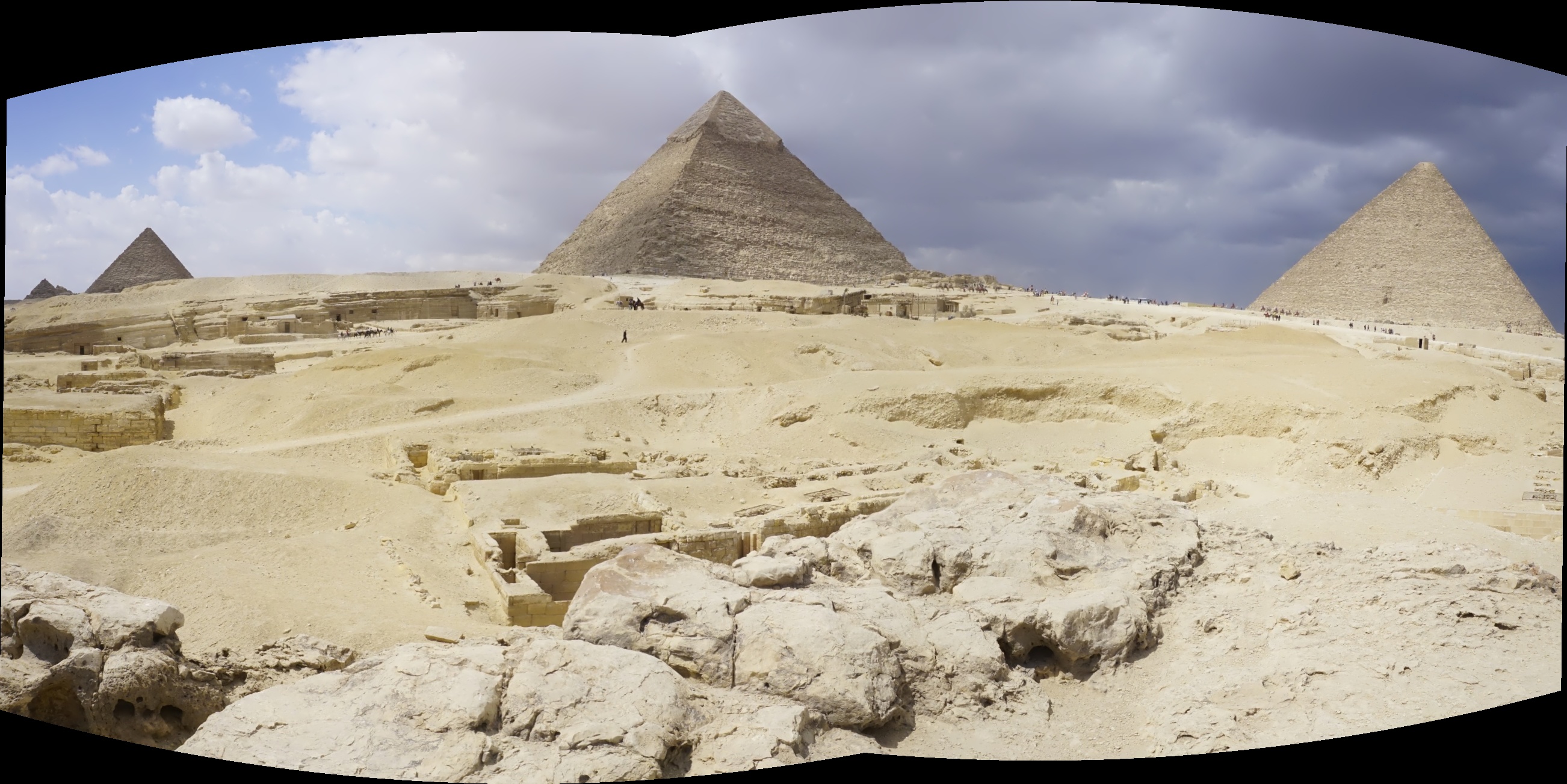
Despite the southern shift of the royal necropolises during the Fifth Dynasty, the Giza Plateau remained an important locus of non‐royal burials until the end of the Old Kingdom. While explanations for choosing Giza as a necropolis after the Fourth Dynasty range from royal cultic activity to the perpetuation of generational funerary traditions, the nearby settlements reveal a more complex picture of human activity on the plateau.
At the heart of this landscape lies the “Central Field,” a cemetery whose characteristic landscape originated from its use as a quarry basin for the construction of Khufu’s pyramid. While often cast in historiography as a Fourth Dynasty site, the Central Field is in fact dominated by tombs of the Fifth and Sixth Dynasties. Despite its significance for understanding the broader history of the Giza Necropolis, the cemetery has not been extensively studied since the excavations of Selim Hassan (1886–1961) in the early twentieth century.
Drawing on my ongoing dissertation research, I here present new documentation from the Central Field, including several previously unpublished Fifth Dynasty mastabas and their unique adaptations to the quarried terrain. Case studies include the tombs of Khafreankh (G 8840) and Nisutpunetjer (G 8740), excavated prior to the Egyptian initiatives, alongside published monuments whose owners may be referenced in the Abusir archives: Rawer (G 8988) and Khuwiwer (G 8764 = LG 95). By combining an analysis of construction practices with the social history of those interred here, this lecture explores the Central Field to understand the enduring draw of the Giza after the construction of its pyramids.
About the Speaker:
Julia Viani Puglisi received her B.A. in Classical Languages at the University of California, Berkeley, and an MA in Egyptology at Indiana University, Bloomington. She is currently completing her PhD at Harvard University, where her dissertation, “Transformation at the Giza Pyramids: The Central Field Cemetery,” examines landscape change in the quarry-cemetery of the Central Field.
Since 2022, Puglisi has been working in the Central Field at Giza with the support of an American Research Center in Egypt-Council of American Overseas Research Centers Fellowship (2022–2024) and the Margaret Weyerhaeuser Jewett Memorial Fellowship (2024). Her research investigates how anthropogenic sites are maintained, reused, and transformed over time. Drawing on archaeological documentation and 3D modeling, she traces these changes to reconstruct a social history of the Giza Plateau after the pyramids were built. As a member of the Giza Project at Harvard, Puglisi is producing improved site maps for use by the Egyptian Ministry of Tourism and Antiquities, while also working to protect the cemetery from human and environmental threats.
About Northern California ARCE:
For more information, please visit https://www.youtube.com/@NorthernCaliforniaARCE, https://www.facebook.com/NorthernCaliforniaARCE, https://arce-nc.org, https://bsky.app/profile/khentiamentiu.bsky.social, and https://khentiamentiu.org. To join the chapter or renew your membership, please go to https://arce.org/membership/ and select “Berkeley, CA” as your chapter when you sign up.
Related Events

support Us
The AIA is North America's largest and oldest nonprofit organization dedicated to archaeology. The Institute advances awareness, education, fieldwork, preservation, publication, and research of archaeological sites and cultural heritage throughout the world. Your contribution makes a difference.