December 4, 2025
Congratulations to all the individuals, projects, and publications honored with AIA Awards! These outstanding contributors to our field will be formally celebrated at the 2026 AIA Awards Ceremony during the 127th Annual Meeting. We’ve reached out to this year’s winners to learn more about the discoveries that drove their projects, the experiences that shaped their journeys, and the inspirations that sparked their passion for archaeology. Stay tuned as we share their stories!
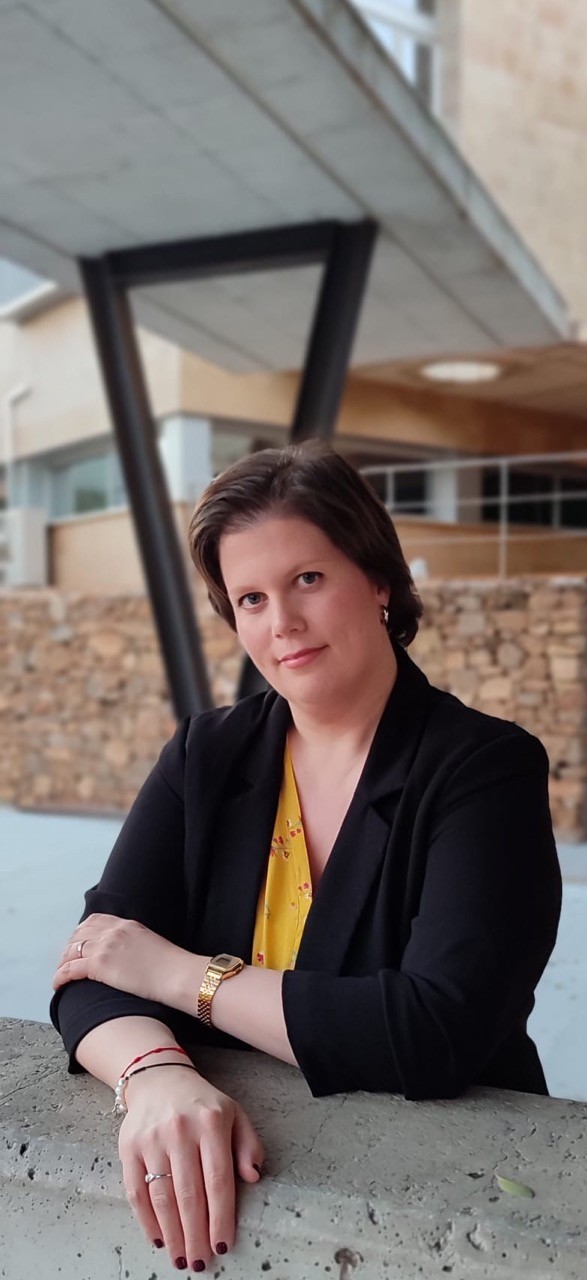
Marta Nicolás-Muelas (Catalan Institute of Classical Archaeology)
Award: AIA-«Telestes» Award for Material Culture Research in Ancient Music and Dance
What drew you to archaeology?
My fascination with archaeology began early in life, when visits to museums and reading art and history books made me aware that objects and architectural remains can reveal traces of past human lives and experiences. What started as simple curiosity grew into a lasting desire to understand how people create, adapt, and leave material expressions of their world. Since then, archaeology has remained at the heart of my life and work, as a way to contribute to a broader understanding of our shared human story.
Tell us about your history with the AIA:
I first became familiar with the AIA through the American Journal of Archaeology, as I have often consulted its publications over the years. My first direct contact came through the opportunity to participate in the colloquium organized by the Archaeomusicology Interest Group during the 2025 Annual Meeting in Philadelphia. It was a meaningful event that allowed me to learn more about the organization, its programs, and its vibrant community.
What’s next for you professionally?
After receiving the AIA «Telestes» Award, I am continuing to develop my research in archaeomusicology, focusing on how performance and sensory experience can be explored through material and visual evidence, particularly within ancient Mediterranean contexts. I am also interested in how this field can connect with broader audiences, since dance and music offers a powerful way to make the ancient world more tangible and emotionally resonant. In the coming years, I hope to build collaborative projects that integrate research, teaching, and public outreach, and to keep contributing to the dialogue between archaeology and performance studies.
How did you get started with your project/publication?
It all began with a conversation. While I was studying certain iconography of ancient Greece and its connections to ritual and spirituality, I spoke with Professor Jesús Carruesco (Rovira i Virgili University and Catalan Institute of Classical Archaeology), whose research on how the Greek chorus articulated the polis opened up a new way for me to think about the performative dimension of archaeology. From that exchange came the idea of examining how choral activity and monumental sculpture reflected and shaped the public spaces of ancient Greece. That became the foundation of my doctoral research, in which I combined archaeology, iconography, and philological analysis to explore how movement and space defined civic and ritual practice in the ancient world.
Questions? Learn more about AIA Awards here or reach out to awards@archaeological.org