Affiliation: Wayne State University
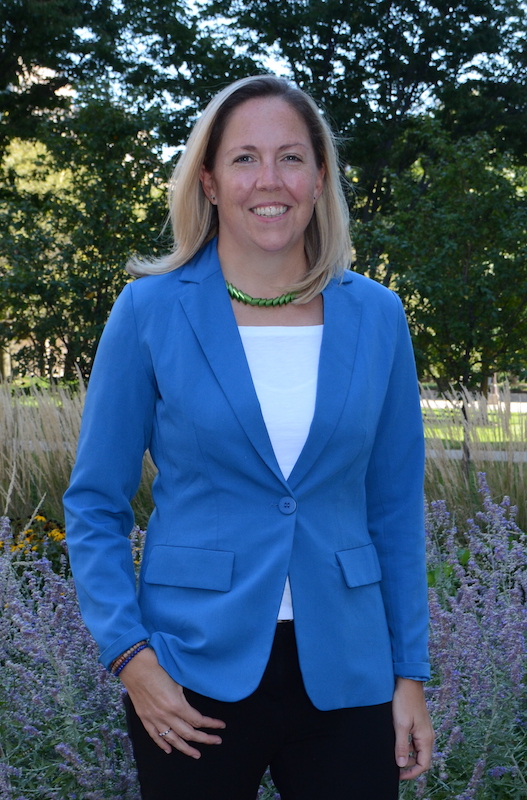
Dr. Ryzewski is a professor of anthropology with expertise in archaeology and interdisciplinary social science scholarship. Her research combines historical, archaeological, and other data to understand how people navigated social and environmental transformations in the past and how legacies of those relationships continue into the present. She focuses her research on the people, landscapes, and socio-political processes associated with the development of North American cities and Caribbean island settlements. Her archaeological work overlaps most closely with the sub-fields of historical and contemporary archaeology, but in the Caribbean she works with material culture and sites that span the past 6,000 years.
Dr. Ryzewski’s practice of archaeology involves collaboration with local residents, community organizations, museums, and government agencies. Through these partnerships she applies archaeological findings to examine a variety of topics, including urbanization, identity, migration, and historic preservation. Her expertise in archaeometry (materials science) and digital humanities (deep mapping) is also integrated into her work.
Over the past three decades, she has conducted fieldwork on land and underwater in the Midwest, New England and Caribbean. Her current work involves projects on sites in (Metro) Detroit, Hamtramck, and Montserrat. Along with her colleagues at Michigan Tech University, she is a founding member and co-director of the NEH Community Deep Mapping Institute, whose first cohort of 70 fellows are drawn from 13 different disciplines.
Montserrat is a small Caribbean island whose landscape has been dramatically changed over the past 30 years by the devastating eruptions of the Soufrière Hills volcano. The Survey and Landscape Archaeology on Montserrat (SLAM) project launched in 2010 with the intent of completing the first comprehensive survey of archaeological sites across the still-accessible areas of the island. A decade’s worth of pedestrian survey, remote sensing, and excavations located 60 sites and hundreds of smaller features, all of which are at risk of damage from the direct and indirect effects of the volcanic crisis. Intensive excavations and analyses of materials from five sites located by the SLAM project generated new insights into the 6000-year human history of the island, spanning from earliest foragers to inhabit the island to the first institutions in the 19th century established by formerly enslaved laborers post-emancipation. This presentation details the archaeological history of the resilient communities who inhabited Montserrat over time and the methods archaeologists used to reassemble their stories.
What can archaeology reveal about the activities of organized crime and illicit activities? This presentation details archaeological investigations of Detroit’s Prohibition-era underworld at the site of the Little Harry Speakeasy. The century-old speakeasy was associated with the notorious Purple Gang, a group of Russian-Jewish criminals who controlled liquor trafficking between Canada and the United States during Prohibition (1918-1933). Archaeological investigations sought to verify the existence of the speakeasy, identify its operators, and understand its role in Detroit’s underground social scene. The legacies of clandestine activities surrounding the Little Harry Speakeasy generated considerable present-day public interest, bringing archaeologists into conversation with descendants of Purple Gangsters, police officers, and the Jewish community who either participated in Detroit’s underworld or sought to eradicate it during the 1920s.
Hamtramck, Michigan is a small century-old city completely enveloped by Detroit. Promoted by its leadership as “the world in 2.1 square miles,” Hamtramck’s slogan is a reference to the city’s long-standing reputation as a welcoming home for immigrants, from the Polish and Ukrainian newcomers who arrived in the early 1900s to work in the automotive industry to the Serbian, Bangladeshi, and Yemeni residents who now comprise the Muslim-majority city. This presentation details the creation of the Hamtramck Explorer digital atlas, the first successful “deep map” to integrate historical, archaeological, and geospatial data. The purpose of the Hamtramck Explorer is to preserve historical information, support research, and facilitate public storytelling about places and people associated with the city and its residents, past and present. Its open-access web-based design is aimed at maximizing inclusivity, accessibility, and sustainability by promoting increased participation in local history, archaeology, and historic preservation among a city population that continues to struggle with the decades-long effects of deindustrialization. The “deep map” consists of an interactive digital atlas, powered by a robust historic spatial data infrastructure (HSDI). Using manual and AI-based approaches, the deep map connects millions of data points between myriad bodies of historical evidence, including archival, archaeological, and spatial data related to Hamtramck across a 150-year time span.
Music tends to be an ephemeral and sensory activity, and experiences of performance, production, or listening are assumed to leave few physical traces. An archaeological approach lends different perspectives to understanding music as a creative process with ties to social networks, physical spaces, and community histories. Taking Great Migration-era Detroit (ca. 1914-1970) as a case study, this presentation considers the places, technologies, and community histories behind the city’s modern music industry. Archaeological surveys of the Blue Bird Inn jazz club, the Grande Ballroom, and the United Sound Systems Studio have produced findings that detail the inner-workings of Detroit’s music industry and amplify the role that Black business networks and creative entrepreneurs played in its success.
In the Detroit suburb of Inkster there stands a small house where Malcolm Little was living in 1952 when he assumed leadership roles in the Nation of Islam, changed his name to Malcolm X, and rose to international prominence as a civil rights leader. In 2020, a local non-profit partnered with archaeologists and historic preservationists to secure funds to purchase and restore the derelict house into a museum and community center commemorating Malcolm X’s legacy. Three sessions of archaeological fieldwork focused on recovering information about the house’s mid-century architecture and objects associated with the period during which Malcolm and his family lived there. This presentation details the roles archaeological finds and archaeologists played in the process of restoring the Malcolm X House, illustrating the daily lives of a prominent African American family, empowering an underrepresented community, and elevating the profile of Civil Rights heritage.